Stem and leaf control
Define stalk, leaf, calyx and other extraneous plant-matter limits for the receiving sample.
China-based B2B supply of frozen vegetables, fruits and mushrooms

CHINA-BASED B2B SUPPLY
We supply whole IQF blackcurrants, crushed fruit, puree and juice for beverage, fruit-preparation, preserve, dairy and retail programs. We coordinate berry cleaning, stem and leaf tolerance, tartness, dark color, free-flowing condition, packing and documents order by order.
For a useful quotation: send the form or grade, application, quantity, pack, destination, document needs and timing.
Blackcurrants are usually purchased for a strong color and tart flavor contribution. The right form depends on whether buyers need visible berries, controlled particles or a pumpable ingredient.
Define stalk, leaf, calyx and other extraneous plant-matter limits for the receiving sample.
Confirm the tartness and soluble-solids direction in the signed specification or approved sample.
Review natural dark-purple color, oxidation and color release in the intended formulation.
Choose whole, crushed, puree or juice according to dosing, screening and finished-product texture.
STANDARDS & PROGRAMS
Tell us the standard, destination and customer requirement. We provide certification and production details with the product and quotation.


Certificates, registrations and organic documents are included with the quoted product and destination-market file.
Use whole berries when identity must remain visible, crushed fruit for textured preparations, puree for uniform dosing and juice when a filtered liquid ingredient is required.


| Declared form | Size | Within size | Off-size |
|---|---|---|---|
| Whole | 6–10 mm diameter | At least 90.0% by mass within the declared size | Maximum 10.0% by mass |
| Crushed | maximum 6 mm particles | At least 90.0% by mass within the declared size | Maximum 10.0% by mass |
| Puree | maximum 2 mm screen | At least 90.0% by mass within the declared size | Maximum 10.0% by mass |
| Juice | maximum 1 mm filtration screen | At least 90.0% by mass within the declared size | Maximum 10.0% by mass |
no unit more than 20.0% below the lower limit or above the upper limit.
We match origin, crop timing and stock with a suitable partner factory route. Repeat orders should retain agreed berry condition, tartness and color references rather than rely only on a variety name.
| Decision field | What we confirm | Why it matters |
|---|---|---|
| Cleaning | Stem, leaf, calyx and foreign-material limits | Protects process yield and finished texture |
| Sensory profile | Dark color, typical aroma and tartness | Drives beverage and fruit-preparation consistency |
| Format | Whole, crushed, puree or juice | Determines line handling and dosing |
| Continuity | Quantity, destination and call-off plan | Supports current stock and production matching |
Confirm whole-berry or particle definition, stem and leaf limits, damaged fruit, clumps, color, foreign matter, chemistry, microbiology and any agreed residue or contaminant tests.
| Control | Quality limit | Method summary |
|---|---|---|
| Colour | Characteristic ripe colour of blackcurrants; maximum 5.0% by mass materially pale, dark or oxidized. | Visual, sensory or mass-fraction inspection |
| Flavour and Odour | Clean, characteristic blackcurrants flavour and odour after cooking or thawing as relevant; no sour, fermented, musty, rancid or other foreign odour. | Visual, sensory or mass-fraction inspection |
| Texture and Maturity | Sound ripe fruit with at least 90.0% by mass at commercial eating maturity; tissue firm enough to retain the declared form after thawing. | Visual, sensory or mass-fraction inspection |
| Broken or Damaged | Maximum 5.0% by mass broken, crushed or mechanically damaged pieces. | Visual, sensory or mass-fraction inspection |
| Discoloration | Maximum 5.0% by mass materially discoloured units. | Visual, sensory or mass-fraction inspection |
| Surface Ice | Maximum 5.0% by mass loose surface ice and frost. | Frozen sample inspection at −18°C |
| Clumps | Maximum 5.0% by mass units remaining in clumps after one gentle manual separation at −18°C. | Frozen sample inspection at −18°C |
| Extraneous Matter | Maximum 0.10% by mass extraneous plant or mushroom matter. | Visual, sensory or mass-fraction inspection |
| Hazardous Foreign Material | 0 pieces of glass, hard plastic, stone, metal, wood or other hazardous foreign material in each 10 kg inspection sample. | Defined sample visual inspection |
| Decay, Mould and Insects | 0 mouldy, decayed or insect-infested units in each 10 kg inspection sample. | Defined sample visual inspection |
| Free-Flowing | Minimum 95.0% by mass free-flowing for IQF piece formats. | Frozen sample inspection at −18°C |
| Thawing Loss | Maximum 10.0% by mass after thawing for 24 hours at 4°C and draining for 2 minutes. | Controlled thaw-and-drain test |
| Metal Detection | Every packed unit passes a validated detector set at Fe 2.0 mm, non-Fe 2.5 mm and stainless steel 3.0 mm test-piece sensitivity. | Validated detector verification |
| Control | Quality limit | Method summary |
|---|---|---|
| Soluble Solids | 10.0–16.0 °Brix | Refractometry at 20°C |
| pH | 2.60–3.40 | Calibrated pH meter at 20°C |
| Titratable Acidity | 1.80–3.50% as citric acid | Titration to pH 8.1 |
| Sulphur Dioxide | <10 mg/kg; no sulphur dioxide or sulphite added | Validated total SO₂ method |
| Food Additives | 0 added food additives | Ingredient and process-record review |
| Preservatives | 0 added preservatives | Ingredient and process-record review |
| Pesticide Residues | Every analyte at or below the destination-market MRL relevant to Blackcurrants | Destination-market multiresidue method |
| Heavy Metals and Regulated Contaminants | Every analyte at or below the product-specific destination-market maximum level | Validated ICP-MS or destination-recognized method |
| Control | Quality limit | Method summary |
|---|---|---|
| Aerobic Plate Count | ≤100,000 CFU/g | ISO 4833-1 / FDA BAM Chapter 3 |
| Coliforms | ≤100 CFU/g | ISO 4832 / FDA BAM Chapter 4 |
| Escherichia coli | <10 CFU/g | ISO 16649-2 / FDA BAM Chapter 4 |
| Yeasts | ≤1,000 CFU/g | ISO 21527-1/2 |
| Moulds | ≤1,000 CFU/g | ISO 21527-1/2 |
| Salmonella | Not detected 25 g | ISO 6579-1 / FDA BAM Chapter 5 |
| Listeria monocytogenes | Not detected 25 g | ISO 11290-1 / FDA BAM Chapter 10 |
How the documents work: our master targets guide qualification and quotation. The signed specification defines your order, and the COA reports the identified production lot against the agreed test scope.
Cleaning and destemming deserve special attention before freezing and grading. We match the process route to the agreed form and keep inspection and packing records connected to the lot.

Sound ripe fruit selected, washed and cleared of stems and leaves, cut to the declared form, individually quick frozen for piece formats or frozen in sealed packaging for puree, juice and concentrate formats, graded, metal detected, packed and stored frozen.
These equipment photos show common frozen-food processing checkpoints. The quotation includes production capacity and the quality-control plan.Explore the processing-flow library →
We check product identity, crop condition and lot reference before processing. The image shows a key processing checkpoint; final line details are confirmed in the quotation.

The team follows the agreed form, size and handling requirement. The image shows a key processing checkpoint; final line details are confirmed in the quotation.

We align the freezing method and control plan with the product form, specification and order volume. The image shows a key processing checkpoint; final line details are confirmed in the quotation.

We connect release checks, packing and lot records to the purchase order. The image shows a key processing checkpoint; final line details are confirmed in the quotation.
Confirm product identity, origin direction, condition and lot-identification requirements.
Clean, sort and prepare the declared blackcurrants form and size.
Apply the confirmed treatment, freeze the product and check separation, condition and foreign material.
Verify packing, lot code, label, metal-detection control and agreed release records.
Whole berries, crushed fruit, puree and juice require different handling. We coordinate carton, liner or other relevant pack formats against frozen-store, dosing and shipment requirements.

Application — updates the recommendation below
Packing family — updates the image and case options above
Pack construction: Food-grade PE liner and export carton; plain bag, adhesive label or printed bag; barcode and customized carton marks.
Loading plan: Pallet loading, floor loading or food-grade tote format as stated in the confirmed purchase order.
We use the sample and specification to align berry cleanliness, stem tolerance, color, tartness and particle condition, then coordinate relevant lot and shipment records.

Photograph supplied by XMG for buyer review. We confirm which facility, test scope and release record apply to the quoted product.


We confirm product, origin, process, certification scope, capacity and delivery timing before quotation.
We connect the confirmed form, size, tolerances, packing and release criteria to the purchase order.
Where required, we organize a representative sample and keep the approval reference with the order.
We coordinate the agreed COA, inspection and laboratory records for the identified production lot.
We confirm pack construction, label or artwork, carton marks, coding and loading basis.
Our commercial team keeps product, document, cold-chain and shipment milestones connected.
Our commercial team keeps the approved specification, release records, packing details and shipment file aligned from order confirmation through dispatch.
Tell us whether the product will be whole, crushed, puree or juice, plus the application, quantity, pack, destination and testing scope. We will identify the documents relevant to the quoted route.
Build the document request your team actually needs. Select one or several items. Your choices will travel with the product inquiry.
The order file includes certificate, production, product, lot and destination-market documents.
Your qualification request is ready to carry into the inquiry.
Tell us the application, form or size, pack, quantity, destination and timing.
We provide the specification, sample plan, certification scope, packing and quotation basis for review.
Your written approvals and purchase order lock the production, document and shipment plan.
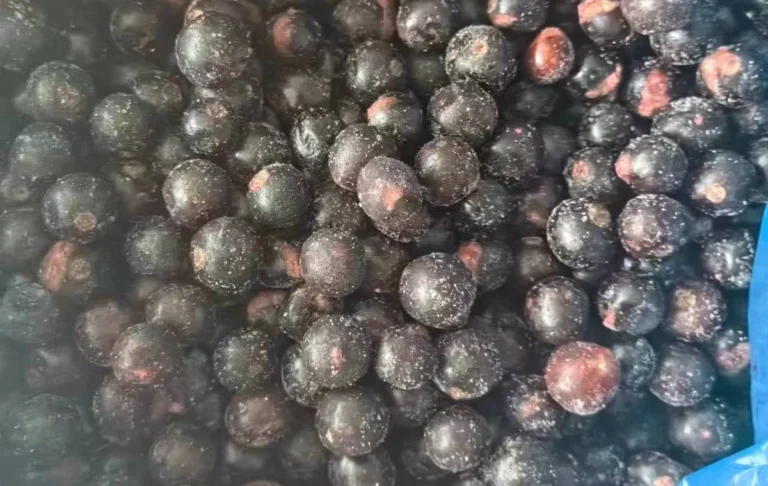
Agree how attached stalks, loose stems and leaves are classified in IQF blackcurrants. This guide explains count and mass measurements, sample integrity, photographic references and the written instructions needed to compare inspection results without borrowing another supplier's limits.
Read the guide →
A blackcurrant sample can suit a drink while missing the texture target for a fruit preparation. Define separate extraction, dilution, piece-retention and colour observations, then connect each application result to the ingredient identity, process and specification used for approval.
Read the guide →Use these answers to prepare your product inquiry. The quotation states product availability, specification, packing and delivery timing.
Working options include whole berries, crushed fruit, puree and juice. Final availability and particle or screen details are confirmed with the order.
The specification should set clear limits for stems, leaves, calyces and other extraneous plant matter, together with the agreed sampling and inspection basis.
Yes, tart flavor is characteristic. Confirm the desired sweetness-acidity direction or measurable chemistry with an approved specification and, where useful, an application sample.
Color release can be significant. Test the proposed form in the real formulation and agree the acceptable appearance before commercial approval.
Not automatically. State the screen and seed or particle requirement so we can review a suitable puree specification.
We can review consumer pack size, film, artwork, coding, case marks and destination label needs with a suitable packing route.
Depending on the route and order, we coordinate the specification, sample record, production facility certificates, lot COA, agreed test reports and packing or shipment records.
Send the form, cleanliness limits, application, quantity, pack, destination, document needs and timing. Existing specifications or benchmark samples help shorten review.
Only options you deliberately select are attached. Unselected form, size, packing and application fields remain blank.