


On this page
The right first frozen-food shipment is the smallest order that can test the product and supply route while remaining usable in your operation. Start with what the trial must prove, calculate demand and freezer capacity by SKU, then ask for the actual product, production, pack and shipment minimums. If the supplier’s minimum is above the amount you can use within the trial window, change the pack, SKU mix, timing or test design before you commit. A mixed reefer may help distribute volume across products, but it does not erase a minimum that applies to an individual SKU or printed pack.
Our current request-a-quote form accepts a target quantity even when the specification is still open. This guide helps you choose that target and decide what a first shipment should teach you. It is especially useful for importers, distributors and food manufacturers moving from samples to a first commercial lot. There is no universal XMG minimum: the applicable product, partner facility, run, pack, destination and schedule determine the offer.
Size the first shipment around the question it must answer
Swipe to read the figure on a narrow screen.

Illustration: seek overlap between the order minimum and quantity the buyer can use.
A first order should answer a limited set of questions. Can the frozen product meet your application and written specification? Can the proposed pack survive receiving and normal handling? Can the supplier connect the approved sample, production lot, documents and shipment record? Will your team use the stock at a realistic pace? More tonnes do not improve a trial if they only add inventory before these questions are answered.
There are two boundaries. The supply floor is the smallest quantity the selected route can make, pack and ship under the proposed conditions. The buyer ceiling is the largest quantity you can test and sell or use without exceeding freezer capacity, shelf-life policy, working capital or a sensible demand horizon. The first-order window exists only where those boundaries overlap. If it does not, the answer is to redesign the order rather than to force a number into the middle.
That distinction matters because “MOQ” may describe different objects. A factory’s production-run minimum may differ from the minimum for one carton format. A printed pouch can have its own material order minimum. A mixed container can have a minimum quantity for each SKU as well as a combined shipment requirement. Ask the supplier to label the level, unit, facility or pack assumption, and validity of each minimum. A single number with no basis cannot support a first-shipment decision.
Separate sample, production trial and replenishment order
Swipe to read the figure on a narrow screen.

Illustrative stages; carton lot codes are fictional and do not represent an XMG shipment.
Use three stages and give each a pass rule. A sample lets your quality or development team check identity, cut, appearance and application behavior on a small quantity. It can rule a product out, but it may come from stock or a different run and cannot by itself prove that the final pack, documents and shipment will work. Record the sample lot, form, pack and test method so you know what was approved.
A production-representative first order should test the supply route you intend to repeat. Ask what production or stock lot it comes from, whether the normal pack and carton will be used, what inspection and documents will identify the lot, and how the shipment will travel. Define receiving and use checks before dispatch. A trial packed in an easier format than the future retail program may be acceptable, but it answers a narrower question. Write down which part of the future order remains unproven.
A replenishment order tests repeatability over time. It should be compared with the approved specification and first-order observations, not with memory of an attractive sample. If a product form, facility, ingredient source or pack changes, decide which approval checks must be repeated. Reorder volume can rise after the first lot proves fit and sell-through. An annual forecast is useful planning information; it is not a substitute for the quantity you will actually buy in the trial.
Keep sample quantity, trial purchase quantity and prospective repeat volume in separate RFQ fields. Otherwise a supplier may quote an annual-volume price for a one-time test or treat a small sample request as a production order. The specifications and sampling process provides a useful framework for connecting each approval to the selected product and order.
Calculate a demand-bound quantity by SKU

An original frozen baby-corn photo shows the visible form; the order specification still needs written confirmation.
Estimate the weekly amount your customer or production line can reasonably consume after launch, not the best week in a sales presentation. Choose a trial horizon long enough to see routine handling and repeat orders but short enough that slow-moving stock does not become the main outcome. Add the quantity needed for application and receiving tests, known promotional or safety stock, and a measured allowance for normal variation. Then compare the total with available frozen storage and your internal remaining-shelf-life requirement. Any unusually tight constraint should be visible in the worksheet rather than buried in a general “one container” request.
For each SKU, record target net kg, minimum useful test kg, maximum usable kg, carton multiple, and acceptable alternative pack. The minimum useful test may be greater than a laboratory sample if you need to run the product through your actual processing line or distribute it to several receiving sites. The maximum may be lower than a supplier’s standard run if you have limited cold storage or uncertain early demand. Use consistent net weight; cartons, pallet spaces and gross transport weights remain separate operational measures.
Consider a hypothetical first order for frozen baby corn. A buyer expects to use 400 kg a week during a six-week trial and needs another 200 kg for application and receiving tests. Its demand-bound target is 2,600 kg net. This is illustrative arithmetic, not a forecast or a current XMG MOQ. If its usable freezer allocation holds only 2,400 kg, the current first-order ceiling is 2,400 kg unless a verified replenishment or storage plan changes it. A supplier minimum of 3,000 kg for the proposed pack would leave no overlap. The buyer might use a standard bulk pack with a different minimum, reduce the number of custom features, schedule two deliveries, select another feasible source, or delay until demand supports the run. Each alternative requires a new quote and approval; none should be assumed available.
Do the calculation by SKU even if the products share one container. A small trial item with a separate printed pack may set an inconvenient minimum. A high-volume anchor item can make the reefer viable but cannot automatically make the small item’s production run viable. The line-item worksheet prevents a container total from hiding those constraints.
Find the MOQ that actually controls each SKU
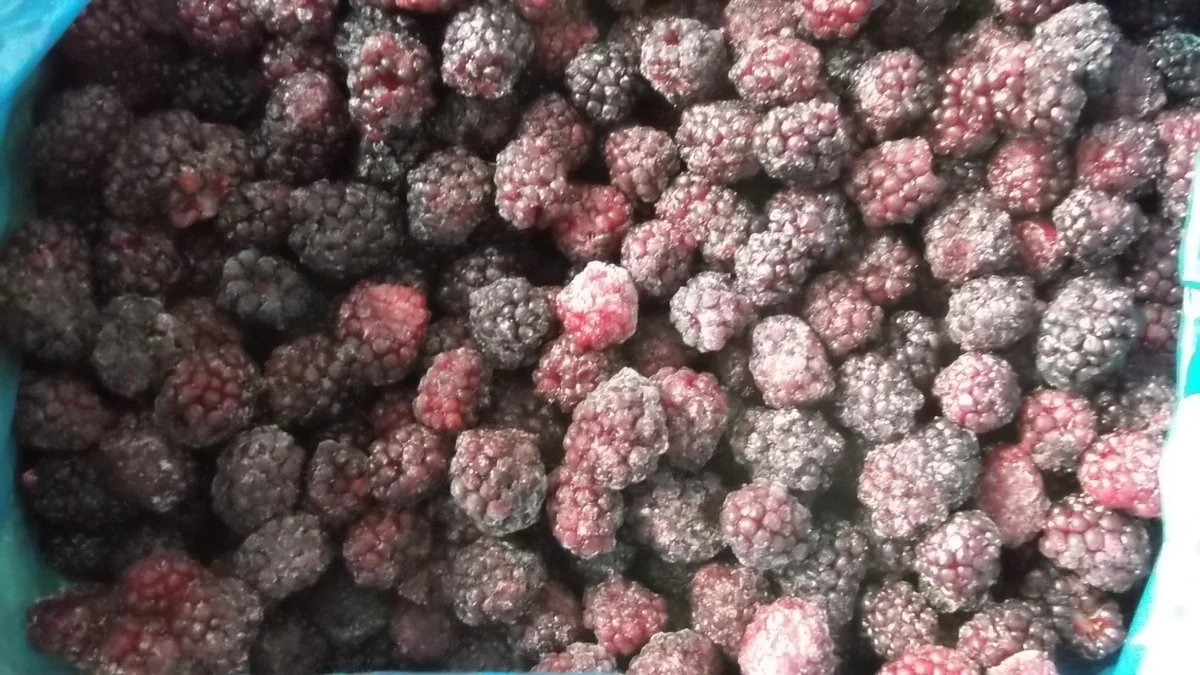
The fruit form remains a separate SKU with its own pack and quantity requirements.
Ask the supplier which constraint is binding for the exact proposed product and pack. Is the product already available in an approved standard format, or does your cut, blend or grade need a separate run? Is there an inner-bag or printed-material minimum? Are cartons and labels standard or customer-specific? Does the chosen facility have a production slot in your shipment window? Is there a minimum per SKU for consolidation, beyond the overall reefer target? A written answer should identify the unit and any assumptions that could change it.
This is where a trial pack decision can save time. A plain bulk carton may let the buyer test food quality and import execution before investing in final retail artwork. It will not prove retail-bag filling or shelf presentation. A printed private-label pouch may be important to the launch, but its material and artwork requirements can control quantity and schedule independently of the food. Our packing-options guide explains the separate product, material, print and outer-carton decisions that need confirmation.
Do not treat a supplier’s advertised MOQ as a sitewide promise. Current XMG guidance is that product, facility, process, packing and printed material affect the minimum. Our practical question is: for this SKU, this pack and this shipment window, what is the minimum sellable net quantity and why? Ask the supplier to quote the nearest feasible case multiple above your target and, if available, an alternative standard configuration. Keep the price, lead time and evidence requirements beside each option.
The cost of a smaller trial also deserves a fair comparison. Spread any one-time setup, artwork, sample freight, inspection and consolidation charge over the usable net quantity, and show those items separately from recurring product cost. A low per-kg price attached to a quantity you cannot use may be more expensive than a modestly higher unit price for a controlled trial. Do not assume that a small shipment always has a simple per-kg ocean freight rate; obtain a route-specific logistics quote.
Use a mixed reefer only when the trial still works
Sharing a reefer across SKUs can reduce overbuying of one product, but it creates a coordination task. It can be useful when each selected SKU meets its own minimum and the products share suitable carriage conditions, timing, packing geometry, documentation and receiving arrangements. The detailed operational checks belong in our guide to whether different frozen products can share a container. Here the question is whether the mix improves the first-order learning plan.
Start with one or two anchor SKUs that have real demand, then label every trial SKU as required or optional. Give each an independent quantity and latest acceptable readiness date. If a small fruit line misses approval, will you delay the entire shipment, replace it with an already approved line, or move that test to the next order? Decide before the booking deadline. This protects the main trial from an attractive but late optional item.
Do not confuse a mixed product with a mixed shipment. A premixed vegetable blend is one product with a composition and pack specification. Several separately packed fruits, vegetables and mushrooms in one reefer are multiple SKUs with separate lots, documents and often separate supply minimums. Your quotation should show which meaning applies and how the proposed goods will remain identifiable.
The full container target is a logistics check, not a mandate to fill every available space. Carton dimensions, pallets, permitted payload, airflow and loading method change feasible mass. The carrier or forwarder and the selected loading team should validate the actual plan. For a first import, leave room for proper load integrity and traceability instead of treating a theoretical maximum as an order quantity. A mixed-load solution is successful only if the receiving team can separate and verify what it bought.
Build a first-shipment worksheet
Swipe to read the figure on a narrow screen.

Hypothetical figures show no overlap; revise the proposed order before buying.
Use one row per SKU and make the decision visible. The figures below are hypothetical planning examples; they are not XMG order minimums, container capacities or product commitments.
| Planning field | Example baby corn | Example whole blackberry | Decision to confirm |
|---|---|---|---|
| Use during trial | 2,400 kg net | 1,200 kg net | Is the demand supported by customers or a line schedule? |
| Test and contingency allowance | 200 kg | 100 kg | What test actually needs this stock? |
| Buyer target | 2,600 kg | 1,300 kg | Confirm usable freezer and shelf-life window |
| Buyer ceiling | 2,400 kg | 1,500 kg | Baby corn target already exceeds storage; revise before RFQ |
| Supplier minimum | To be quoted for exact pack | To be quoted for exact pack | Get per-SKU and print minima in writing |
| Carton multiple and readiness | To be quoted | To be quoted | Convert net kg to cases and align dates |
The example intentionally contains an inconsistency: baby corn’s 2,600 kg target exceeds its 2,400 kg current freezer ceiling. That is a planning signal, not a rounding problem. The buyer must secure more qualified space, shorten or stagger the order, or lower the trial target with a reasoned test plan. It should not send the 2,600 kg number and hope the problem disappears after the quotation arrives.
Add columns for the supplier’s proposed pack, actual minimum, price at the accepted case count, shipment term, destination, availability, sample or specification status, and documentary gaps. A color code can make open items easy to scan, but write the status in words too: approved, clarification needed, alternative under review, or not feasible. That record lets procurement see why an item belongs in the first reefer or should wait.
Agree an acceptance and learning plan before dispatch
Quantity alone does not make a valid trial. Define what will be checked on the first production lot: product form and agreed tolerances, net weight and pack, lot marks, relevant certificate or test scope, temperature and condition evidence where required, document accuracy, and performance in the real application. Pick a practical sample and inspection method in the purchase documents. A warehouse visual check and a controlled processing trial answer different questions; neither should be assumed to cover the other.
Record when and by whom each check occurs. The supplier should know the agreed release requirements before production and shipment. The importer should know its destination obligations and receiving checks. When the buyer asks XMG to coordinate samples, packing, documents or a shipment plan, we connect the request to the selected product and partner-factory route; the applicable facility, certificate holder and lot evidence must be confirmed for that route. We do not infer universal coverage from a company-level list.
Plan the downside before placing the order. If the trial fails a critical specification, what evidence must be collected and how will the lot be held? If it passes technically but sells slowly, was the SKU or the opening quantity wrong? If it arrives well but document correction consumes time, change the document approval gate. Separate product, process, commercial and logistics lessons so a single disappointing result does not erase useful learning.
Decide whether to repeat, change or stop
After receiving and using the trial, compare the observations with the stated goals. Repeat the same configuration only if the product meets the critical acceptance points, the pack works, the documents and shipment are traceable, and the actual use rate supports replenishment. If performance is acceptable but order size was too large, change the next quantity or call-off pattern. If a cut or pack caused the problem, request a revised sample and specification before reordering. Stop or switch routes when a mandatory requirement cannot be met on acceptable terms.
Document what the first order did not test. A plain-carton trial may not validate future printed bags. One crop or production lot may not prove year-round consistency. One successful shared shipment may not make every later SKU combination compatible. That record makes the second order more disciplined and gives the supplier a concrete brief for the next quotation.
How we review a first-shipment proposal
We supply frozen fruits, vegetables and mushrooms through suitable partner factories and review the product, form, quantity, packing and timing together. We can clarify the order-specific minimum for the proposed route, coordinate the sample or specification questions, and compare standard-pack and mixed-shipment options where they are feasible. You gain a clearer first-order choice: which SKU is ready, which constraint controls it, and what remains to approve.
Send your first-order SKU plan
Share each product and form, target net quantity by SKU, desired pack, destination and shipment window. Tell us what the trial must prove. We will review the proposed frozen-food supply routes and respond with the current minimum, pack and sample questions that need confirmation for your order.
