


On this page
Frozen sweet potato can make a satisfying breakfast hash when its centres are properly prepared before the other ingredients become overcooked. Start with the product’s actual processing state and directions, then coordinate the components around the largest sweet potato piece. Brown edges are a quality observation; they do not tell you that the centre or an accompanying egg has been prepared correctly.
The main challenge is scheduling. Sweet potato pieces, onions, peppers and eggs do not necessarily need the same time or treatment. Preparing some components separately gives you more control than putting them all into a crowded pan and waiting for the slowest piece. Combine them when their individual preparation requirements and the intended final texture can be met together.
Start with the sweet potato product you have
A bag of plain frozen chunks, a blanched dice and a coated frozen fry are different starting ingredients. Check the label, ingredient list and preparation directions instead of treating the word “frozen” as the method. Some products may be intended for a particular appliance or cooking arrangement. A hash adaptation must still respect those requirements.
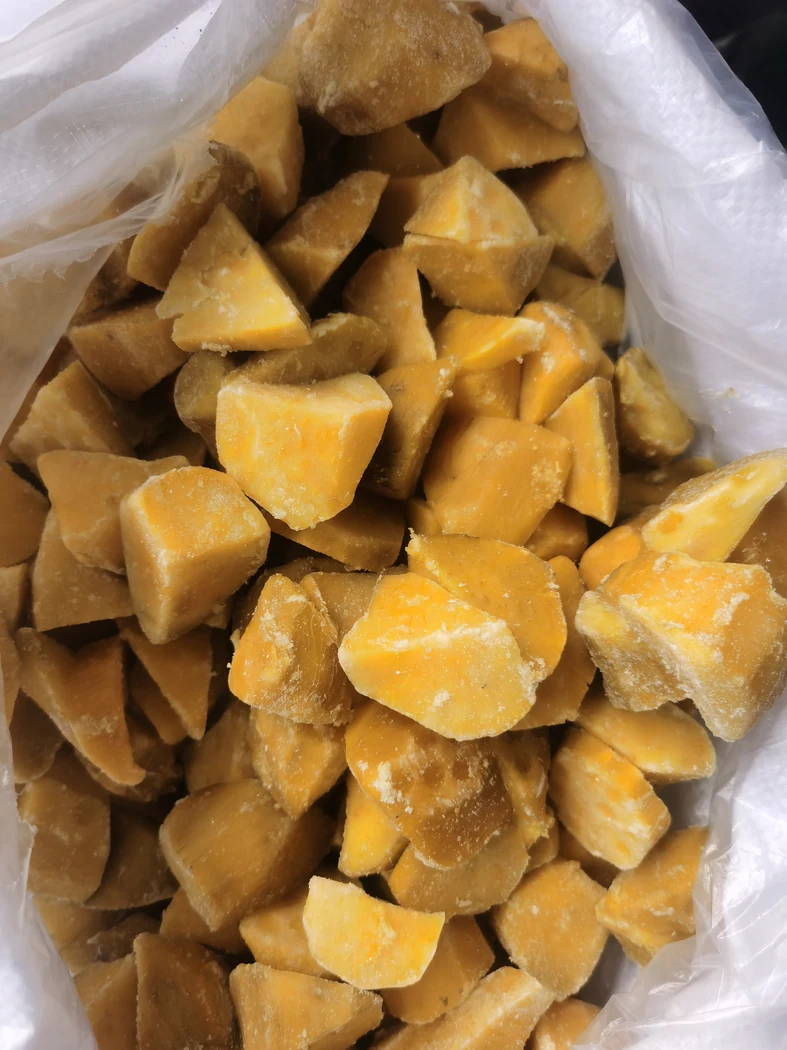
The largest irregular chunks help frame the product-form question; the photograph cannot establish blanching or pre-cooking history.
Look for added ingredients as well as the cut. Coatings, oil, seasonings and prior cooking can affect how a product is handled and how it tastes in a mixed dish. Do not describe a coated or prefried product as equivalent to plain sweet potato. Equally, a plain product is not automatically ready for a short finishing toss merely because its edges colour quickly.
Our sweet potato browning-trial guide deals with a related ingredient question. A breakfast hash adds coordination with other foods. Keep that distinction visible: a favourable result from a standalone potato trial does not establish the addition order, egg preparation or final mixed texture of the whole breakfast.
If a recipe calls for fresh cubes and you have frozen fries, decide whether the adaptation is sensible before starting. A published hash using cooked frozen fries is a precedent for that specific ingredient route, not a reason to ignore another bag’s instructions. Record the starting state clearly if you want to repeat the result.
Plan around the largest piece in the pan
Spread out a representative portion and look at the size range. A few unusually thick pieces can remain behind the rest. The nominal cut name may hide that variation, especially with irregular chunks. Plan the preparation stage around representative large pieces while watching what happens to the smaller ones. Do not choose only the smallest piece for your readiness check.
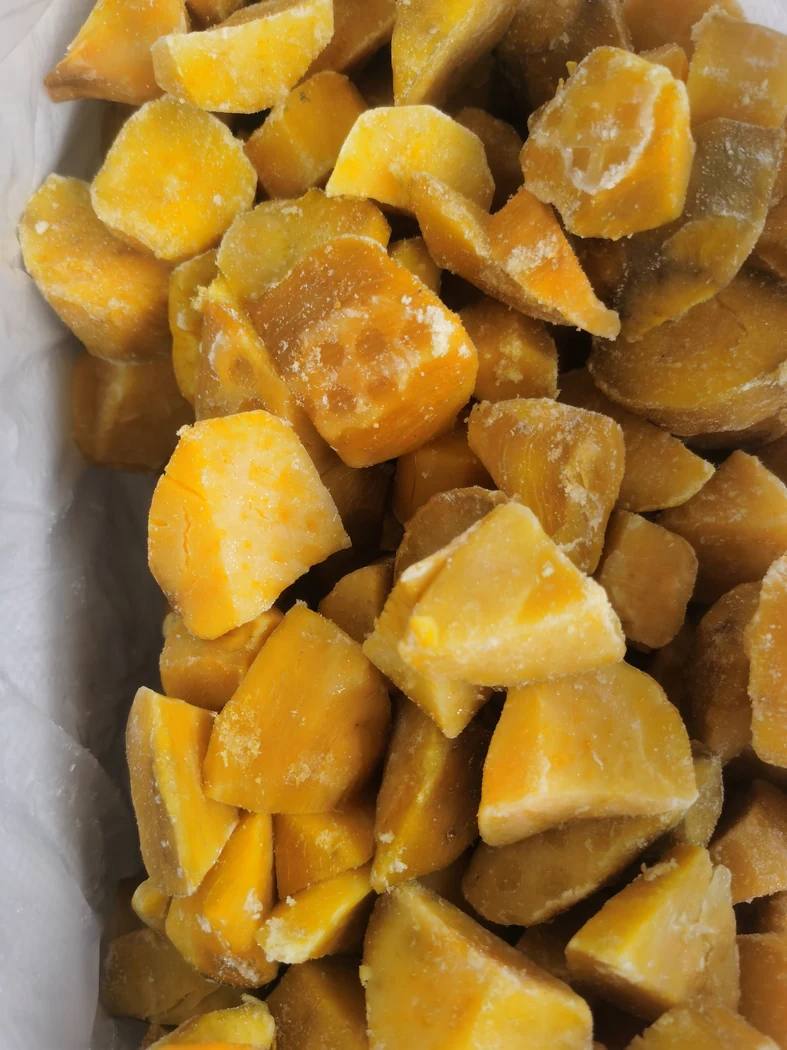
Different visible piece sizes provide context for planning the pan around the largest piece, not proof of crispness after cooking.
A cube and a long baton do not present the same geometry to the pan. Their surfaces, thickness and arrangement affect how they contact the cookware. If you intend to use fries chopped after cooking, follow the product’s cooking directions first, then cut and combine where appropriate. Chopping a frozen specialty product before preparation may change the method that its directions assume.
The University of Minnesota explains that ice formation can alter plant structure and contribute to softer produce after thawing. That is a reason to be cautious about promising fresh-like bite, not a prediction of the result of this hash. Starting product, cut and cooking conditions still need to be observed in the actual dish.
Keep the potato portion reasonably consistent when comparing another method. If one pan contains small dice and the next has large chunks, their difference does not isolate the effect of adding onions earlier or later. Match the cut where practical, or describe the change openly and make the application decision on that basis.
Make room for both centre cooking and browning
Think of centre preparation and surface colour as separate observations, even when the same appliance produces both. A recipe may use an initial covered stage to help pieces prepare, followed by an uncovered stage to reduce moisture and develop colour. Another may cook the potato on a tray before combining it with pan-cooked aromatics. Use a route suitable for the actual product.
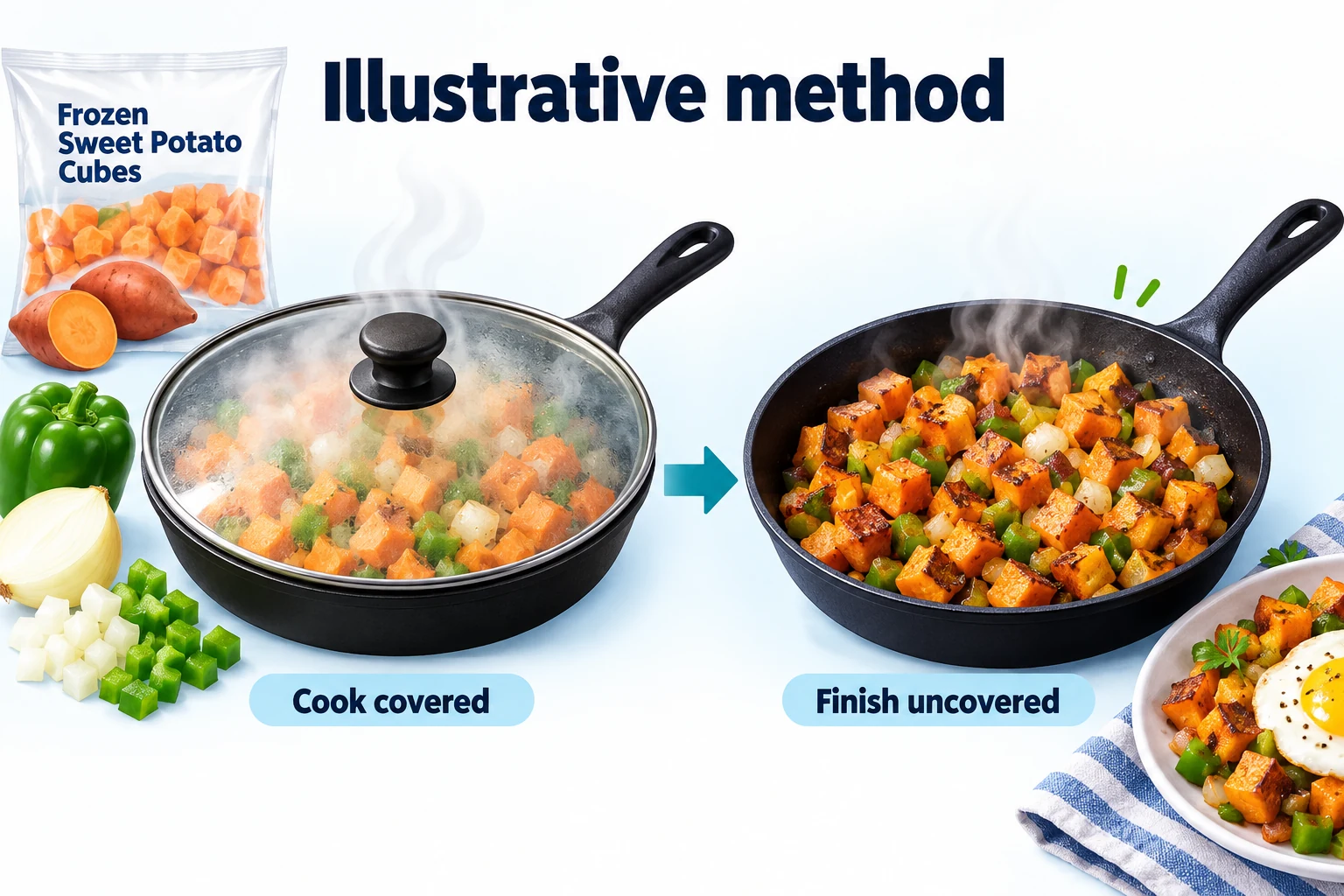
Illustrative method: separate the covered cooking phase from the uncovered finish. This mixed-pan example is not a fixed sequence for every product or a universal timing guide.
Swipe to view the diagram on smaller screens.
Do not keep increasing the heat simply because a browned outside hides a centre firmer than you want. That can darken the contact surfaces without solving the mismatch. Check the largest pieces and review the cut, load and permitted preparation method. An appropriate change to the first stage may be more effective than extending an aggressive final browning stage.
Crowding also changes the task. A deep pile gives pieces less direct contact and leaves released moisture among the ingredients. More oil does not create more pan area. A smaller batch, a larger suitable pan or separate preparation can be a better next comparison. Consider the heat source available instead of assuming that the same load will perform identically on every cooker.
When the centres have reached the intended state within the product’s directions, inspect whether the surfaces need a short final finishing stage. Give pieces contact time without constantly breaking them apart with the spatula. Use movement that preserves the texture you want. The target might be lightly coloured edges and a tender centre, rather than a dark crust on every face.
Give onions and peppers a separate timetable
Decide what you want from the aromatics. Soft sweet onions, distinctly browned onions and peppers with a little bite lead to different methods. They need not enter at the same moment as the frozen potato. Keeping their preparation separate at first lets you stop or adjust them without waiting for a thicker potato piece.
Frozen peppers can contribute liquid as they prepare. If you add them late to an already coloured potato portion, that liquid may soften the finish you just developed. Prepare them to the desired state, manage the liquid appropriately and combine deliberately. A pepper blend containing onion or other vegetables needs its own check rather than being treated as plain peppers.
Fresh onions and prepared frozen onions also begin differently. Read the product information and consider how their liquid and cut fit the recipe. Avoid making a large simultaneous change in onion type, pepper cut, potato portion and heat setting while trying to diagnose one wet hash. Start with the ingredient most likely to be changing the pan conditions.
We would taste the aromatics before final combination, then assess them again in the hash. A pepper that seems pleasantly soft on its own may disappear among similarly soft potato pieces. Conversely, a firmer pepper can give useful contrast. The right answer depends on the whole forkful, not on choosing maximum firmness for every ingredient.
Keep eggs and cooked meats out of the waiting stage
Eggs should not be used as a signal that the potato must be ready. If egg enters too early, you may be tempted to stop while a large piece still needs further preparation, or continue until the egg becomes dry. Prepare the egg separately where practical, or add it only when the recipe and remaining potato stage make that timing appropriate.
The FDA’s egg-safety guidance calls for firm whites and yolks and scrambled eggs that are not runny. Follow the applicable requirements for the egg method you choose. Inspecting a sweet potato centre is a quality check; it does not replace the egg’s preparation requirements. A browned hash cannot certify the condition of a partly hidden egg.
Treat a cooked meat addition according to its own handling and reheating requirements. “Already cooked” does not mean it can wait anywhere or only needs a cosmetic toss. If you use raw meat instead, its full preparation needs become part of the method. This article does not supply a universal meat time or temperature for a mixed breakfast.
Use clean utensils and an appropriate sequence for the different foods. Separate components can make the dish easier to coordinate, but that separation needs a sound handling plan. Do not leave finished egg or meat at room temperature while repeatedly experimenting with the potato. For foodservice, retain the operation’s established cooking, holding and service controls alongside the quality observations.
Combine only when the components are ready
Bring the prepared potato and aromatics together for the finishing stage once their individual requirements can be met. Add the intended seasoning and mix gently enough to preserve the pieces. A small quantity of recipe sauce may fit a soft hash, while a dryer browned finish may need a different treatment. Judge against your chosen dish rather than assuming every hash must be crisp.
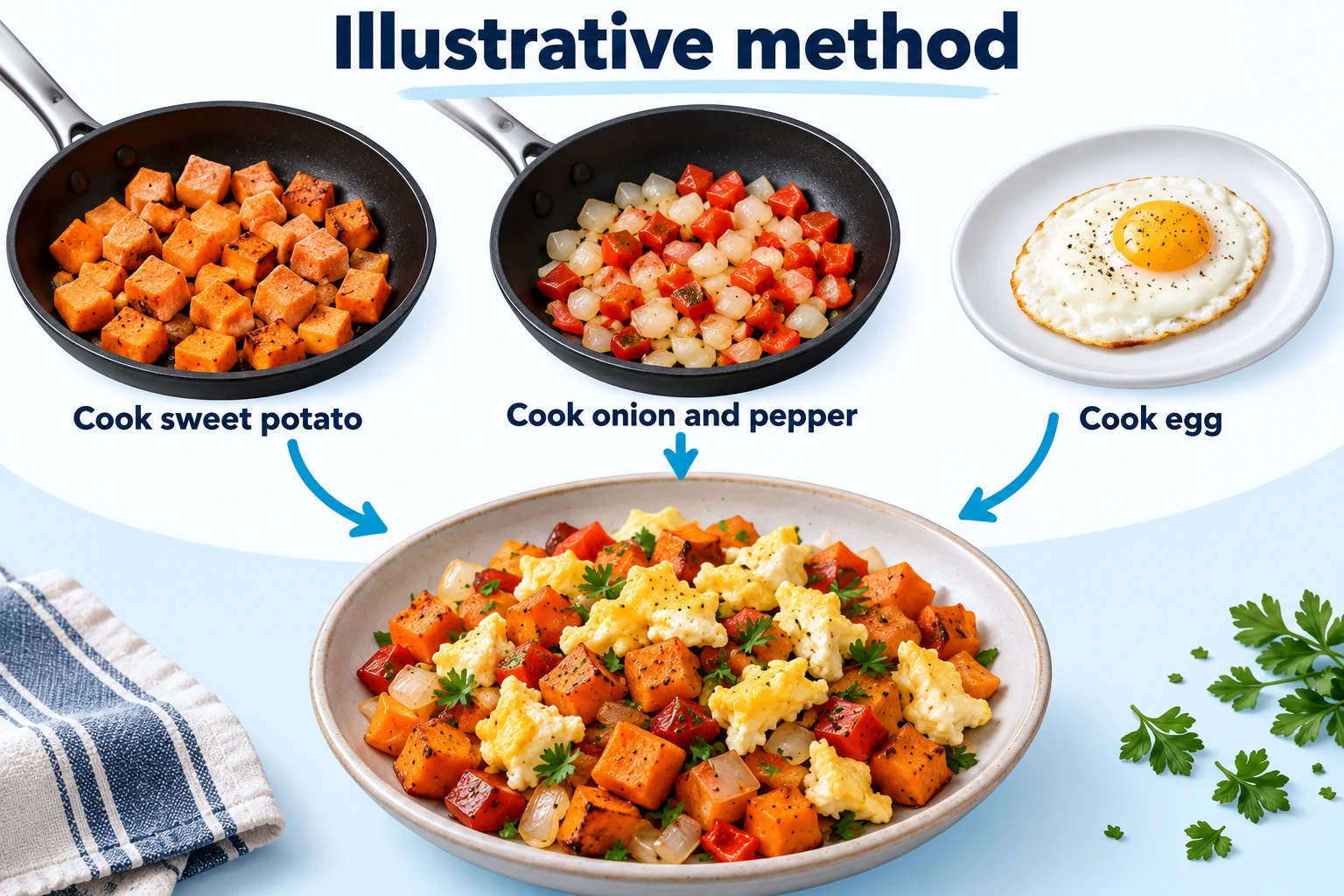
Illustrative component method: prepare sweet potato, aromatics and egg separately before combining. The drawing does not establish egg doneness; follow the actual preparation and safety checks.
Swipe to view the diagram on smaller screens.
Keep final additions controlled. A large pour of liquid seasoning can change a dry pan finish into a wet one, and a thick sweet sauce can scorch on hot contact surfaces. Add according to the recipe and taste the whole mixture. If you are comparing approaches, keep the same sauce and amount rather than allowing that final adjustment to obscure the potato method.
Add the prepared egg in the form that suits the serving. Scrambled pieces can be gently folded through; a separately cooked egg can be placed alongside or on top. In either case, coordinate final temperature and handling with the breakfast service. Do not treat the illustration of separate components as a prescribed holding system or a validation of a particular kitchen procedure.
Before making a larger batch, try the finishing step at the load you intend to use. Combining several small prepared portions in one deep pan can create a new moisture and heat problem. Record both the preparation loads and the final combining load. A method that worked in a single shallow portion may need a different arrangement when the serving quantity grows.
Check a forkful from the finished hash
Look first at representative large potato pieces. Cut or pierce one with a clean utensil and assess its centre against the intended texture, while ensuring the pack’s preparation requirements have been met. Then taste a mixed forkful containing potato and aromatics. These checks answer different questions and should not be collapsed into a single judgement about colour.
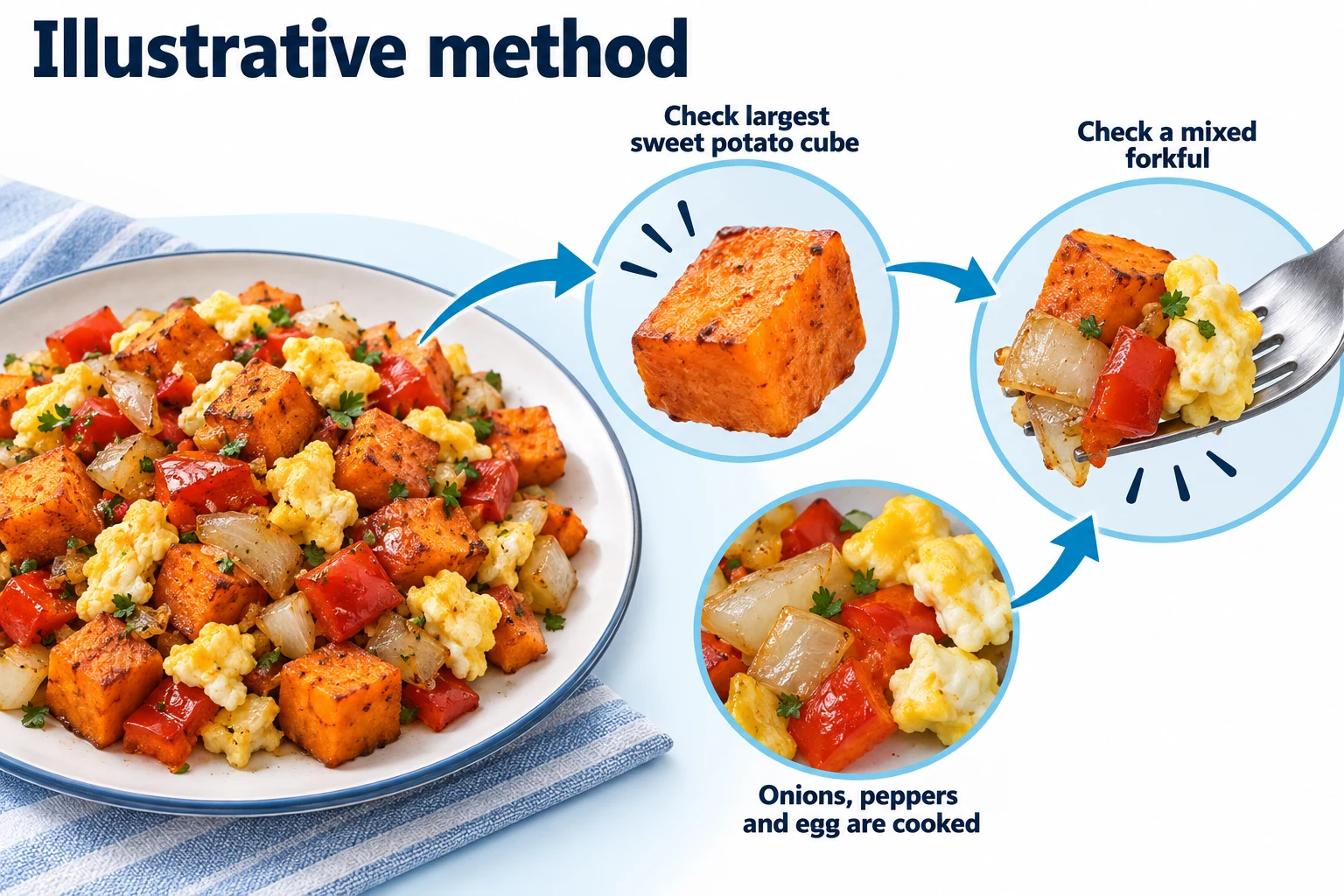
Illustrative serving check: assess a large piece and a mixed forkful. The drawing cannot verify the centre texture or safe cooking of egg in an actual portion.
Swipe to view the diagram on smaller screens.
Ask whether the potato holds enough shape to sit comfortably among the other ingredients. Some softened edges may be appealing. A pan of loose mashed pieces and intact firm peppers may feel unbalanced, even if both components taste good alone. Check whether the egg, seasoning and accompaniment contribute the intended contrast rather than compensating for a problem you have not resolved.
Inspect the plate for free liquid. A glossy coating is different from a pool that runs toward toast or another accompaniment. If the dish becomes wet only after serving, identify whether it came from the vegetables, a sauce or the chosen plate assembly. Draining every component indiscriminately can remove flavour without identifying the actual source.
Compare cuts under the same breakfast conditions
Use the same recipe base and intended serving when comparing another cut or preparation route. Record the product, preparation state, portion, cookware, heat arrangement and component order. Keep observations at the same stage. Comparing one hash straight from the pan with another after a different service interval makes the result harder to interpret.
The following worksheet describes a proposed comparison, not a trial we have carried out. Note the observations in ordinary words before applying a rating. If a commercial team wants a pass/fail standard, define that standard and its method before using it to accept a product. A photograph of an attractive plate is not such a standard.
| Checkpoint | Inspect in the finished hash | Relevant next change |
|---|---|---|
| Large potato centres | Representative large pieces, not only small dice | Cut consistency or permitted first preparation stage |
| Surface colour | Browning without scorched seasoning | Finishing heat, space or addition order |
| Aromatic texture | Onion and pepper within the same forkful | Separate preparation or combination point |
| Free liquid | Plate and accompaniment as well as pan | Source ingredient, pan load or sauce quantity |
If you change the cut, keep the other factors reasonably steady for the first comparison. After finding a useful route, repeat it with the same product and a fresh portion. That second attempt helps show whether the method is repeatable in your conditions. It does not prove a universal advantage for a cut or establish another product’s safety requirements.
Fix dark edges, hard centres and a wet finish
For dark edges and firm centres, review the first preparation stage and the largest pieces. The final high-heat stage may have arrived too soon for that product or cut. Choose an appropriate permitted method that brings the centres to the intended state before chasing colour. Avoid treating extra oil or more seasoning as a correction for underprepared pieces.
For tender centres but little colour, assess free liquid and usable pan space. An uncovered finish with suitable contact may help where the product directions allow it. If the pieces are already too soft to move without breaking, a longer finish may not be useful. Record the outcome and choose a different initial method or cut for the next portion.
For a wet mixed hash, inspect the prepared components individually before combining the next batch. Change the source of the liquid rather than drying out egg and onion along with everything else. A smaller final load may also help if the same ingredients worked separately but became wet when piled together.
Review available frozen sweet potato forms for the next attempt, then keep the preparation state and finished-dish check consistent. The aim is a breakfast where potato centres, coloured edges, aromatics and egg arrive ready together. That requires a sequence fitted to the actual ingredients, rather than one minute count assigned to the entire pan.
Source guidance: University of Minnesota: freezing and food quality [1]. FDA: egg safety [2]. Alabama Cooperative Extension: sweet potato hash [3].
