


On this page
Blanching can help an IQF sweet potato piece retain an appealing colour through frozen storage and final cooking, but it does not guarantee a firm bite. The treatment adds heat before the product is frozen. Depending on its intensity, the cut, the starting flesh and the later cooking step, that first heat exposure may protect colour while also leaving less texture to survive a second one. We would compare two declared products in the same finished application, recording the frozen piece, the result immediately after reheating and the result at the normal point of service.
Ask which pretreatment was applied to this cut and how the specific lot eats after your reheat. A bright frozen cube that becomes soft in a sauce, or a firm cube that turns dull on the tray, has not met the complete brief. Appearance in the bag and an enzyme test each answer only part of the application question.
What blanching changes before the freezer
Blanching exposes prepared sweet potato to hot water, steam or another controlled heating method before cooling and freezing. A processor may use it to reduce enzyme activity and manage later colour or flavour change. It also begins to alter the structure of the piece. The degree of change depends on the actual time and heat transfer through the chosen cut, rather than a process label printed on a specification.
The scientific evidence supports a conditional view. In one orange-fleshed sweet potato study [1], blanched and unblanched samples were frozen and then cooked. The blanched samples had less change in several physical properties under that experimental sequence. A separate comparison of water, steam and microwave blanching [2] found different colour and firmness outcomes among treatments. These results establish that pretreatment matters; they do not supply an interchangeable setting for every cultivar, factory line or ready-meal recipe.
That distinction matters because the heat is cumulative. A piece that has already been partially cooked can receive more heat during tray assembly, a later meal-freezing step and final consumer or foodservice reheating. A mild prepared vegetable side, a moist curry and an oven-finished filling place different demands on the same ingredient. The right endpoint is the planned service condition, including any hold after the heat source stops.
Enzyme control and eating quality are separate decisions. A treatment may be sufficient for the processor’s enzyme-control criterion and still produce a cube that is too soft for a visible meal component. Conversely, a piece with a pleasant immediate bite may not have the documented pretreatment needed for the agreed frozen product. Ask the applicable partner facility what was actually supplied, then test whether its declared state works for the application.
Start with the declared piece, not a blanching number

Real IQF dice establish the exact cut to keep constant in a blanching trial.
Before comparing samples, identify the purchased product. XMG’s IQF sweet potato range includes diced, large-dice, baton and sliced forms. Those forms do not share one heat path. A thin slice warms through sooner than a large cube; an irregular baton may have a different edge-to-centre result. If the cut changes between samples, any difference in bite cannot fairly be assigned to blanching.
Record the stated variety or flesh-colour direction where available, the cut dimensions and distribution, peel condition, ingredients and supplied processing state. Plain blanched dice should not be judged as if they were coated, seasoned, prefried or fully cooked pieces. Even within a plain line, “blanched” may not state whether the product was water- or steam-treated, how its centre was affected or how it was cooled. Request the relevant declaration and partner-process confirmation for the specific quoted route. Do not infer a facility’s setting from another supplier’s technical sheet.
Use at least two distinct sample lots if repeat supply is the decision. A single particularly favourable sample can establish recipe feasibility, but it does not show whether the approved result repeats across lots. Keep the original packaging and lot identification with your notes. If one sample has been partly thawed during handling while the other remained hard frozen, separate that handling event from the pretreatment comparison.
Starting colour also deserves a baseline record. Orange, yellow and pale sweet potatoes will not give the same visual target. Photograph the same number of pieces under consistent lighting against a neutral background, recording frozen colour, cut-face colour and any obvious blemishes before heating. A phone image may help the team compare samples, but keep its lighting and exposure consistent; photographs alone are a weak substitute for a physical reference sample or instrument reading when a tight colour tolerance matters.
Compare matched pieces through one reheat
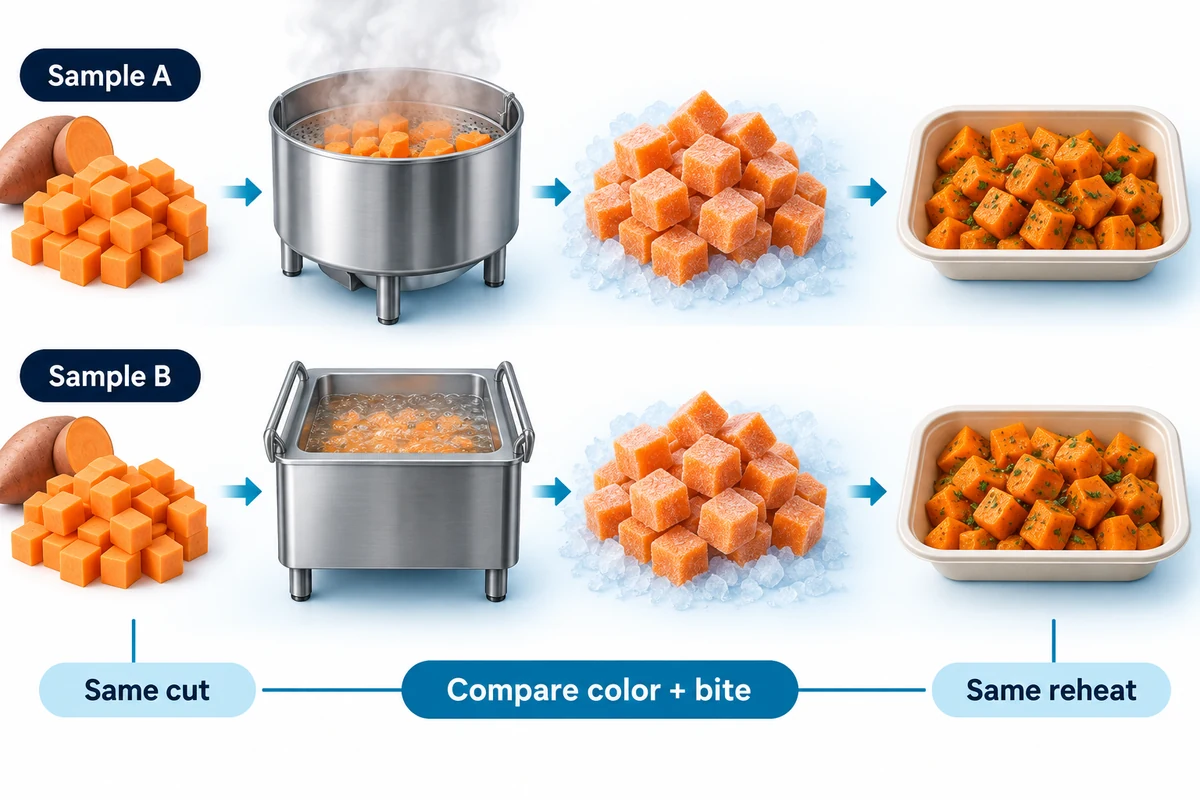
Conceptual buyer comparison; illustrated outcomes are not measured XMG samples. Swipe to see the full illustration on a narrow screen.
Our recommended buyer trial treats the meal as the test system. Select the intended cut and recipe, then hold the variables as steady as practical: equal sweet-potato mass and piece count, the same other ingredients, tray size, fill depth, mixing order, frozen storage, heat appliance and service hold. The deliberate comparison is the confirmed pretreatment or the candidate supply route. Do not call two samples a “blanching trial” if they also differ in variety, cube size, coating and recipe position.
First record the frozen ingredient. Count intact pieces and obvious fragments using a written definition. Note colour, clumping, piece separation and surface damage. Then put equal portions through the actual assembly process. If the sweet potato is warmed in sauce or briefly cooked before the tray is frozen, include that step; omitting it understates total heat exposure. Record whether the tray is frozen after filling or assembled and sold chilled. Those are different process paths.
Run the same validated reheat method used for the finished meal, including its normal standing time. The development team should use its own food-safety controls for the complete recipe; this ingredient comparison is not a substitute for validating the heating instruction. Record appliance setting, tray position, starting state and measured product conditions under the company’s method. If microwave reheating is part of the brief, test the expected range of positions and tray fill patterns rather than a single ideally placed tray.
Assess colour and bite immediately after reheating, then again after the expected service interval if the meal is held before eating. Remove and examine several pieces from different tray locations. A cube buried in sauce may behave differently from one exposed at the surface. Record its actual location. If one sample looks better at minute one but loses shape before the customer reaches it, the service-point result should guide approval.
A small comparison table keeps the judgment honest:
| Fixed across samples | Deliberate difference | Observe at receipt | Observe after meal reheat |
|---|---|---|---|
| Cut, recipe, fill mass, tray and heat path | Declared pretreatment or candidate lot | Starting colour, intact pieces and visible defects | Colour, centre bite, sloughing, intact pieces and free liquid |
This is a trial design, not a promised direction of change. A candidate that performs well under one sauce and reheat setting still needs checking if the finished recipe changes.
Read colour at the right point
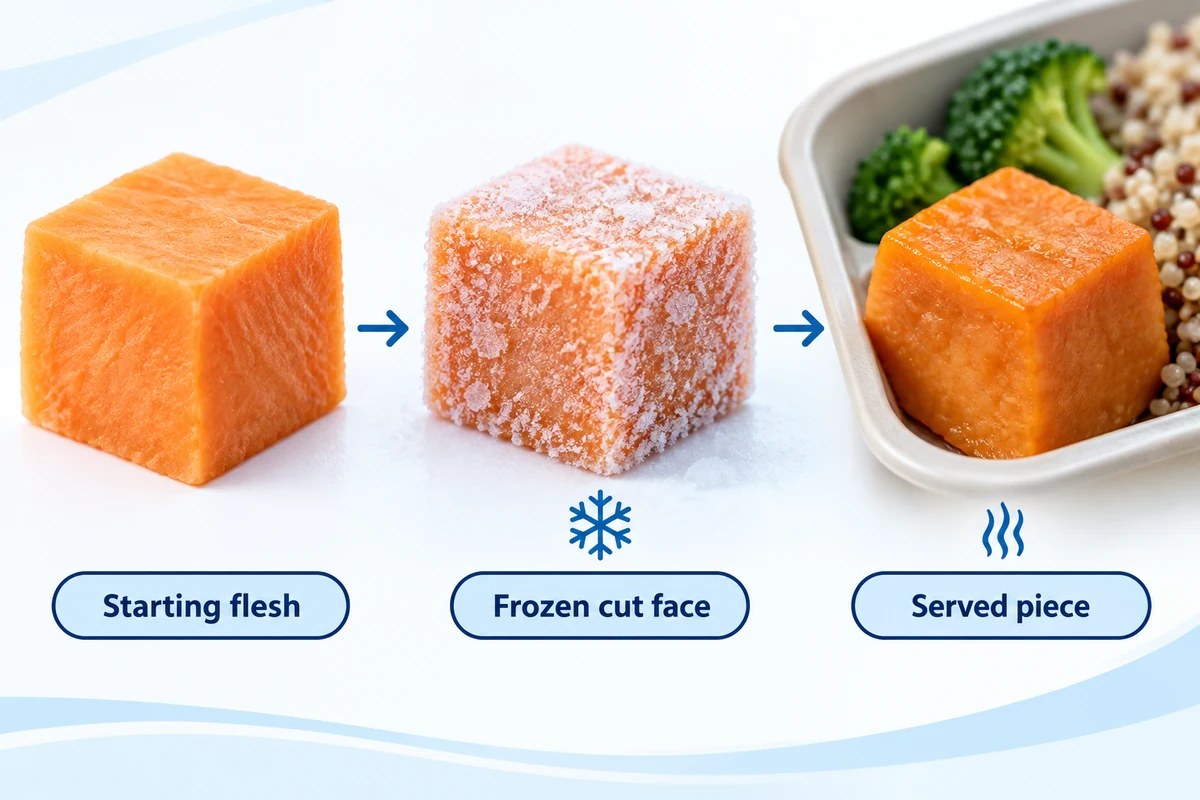
Conceptual state sequence distinguishes when colour is observed; no batch result is implied. Swipe to see the full illustration on a narrow screen.
“Colour after reheating” can mean several different observations. The first is the flesh colour supplied by the crop and variety. The second is any discolouration already visible on the frozen cut face. The third is the surface appearance after cooking in the final recipe. These stages should be recorded separately. Otherwise a darker cooked edge may be blamed on insufficient blanching when the pieces started different, or when the recipe’s exposed surface received more heat.
For a fair visual assessment, compare pieces under the same light and at the same temperature. Sauce coating can mask a cut-face change; rinse or blotting can alter the surface again. Decide in advance whether the product is judged as served or after removing sauce for diagnosis. Both views may be useful, but they answer different questions. A tray’s overall appearance matters commercially, while the cleaned piece helps identify which ingredient changed.

These original batons show why cut geometry and starting colour must be recorded.
If colour variation matters to the consumer, write a description that the development and quality teams can apply: acceptable flesh-colour range, unacceptable dark areas and the stage at which the judgement is made. Avoid a made-up universal orange target. An instrument can supplement a visual reference if the programme warrants it, but agree the measurement surface and lighting method. The apparent difference between a wet, hot cube and a cold, dry one is not a reliable treatment comparison.
Do not turn blanching into the sole explanation for every brown mark. Starting raw material, cut damage, formulation, contact with other ingredients, cooking surface and storage history can all complicate interpretation. Our existing sweet potato dry-matter and browning guide addresses that broader incoming-composition and surface-browning question. Here the additional decision is whether the documented pretreatment survives the specified final reheat with acceptable colour and bite.
Measure bite and usable pieces together
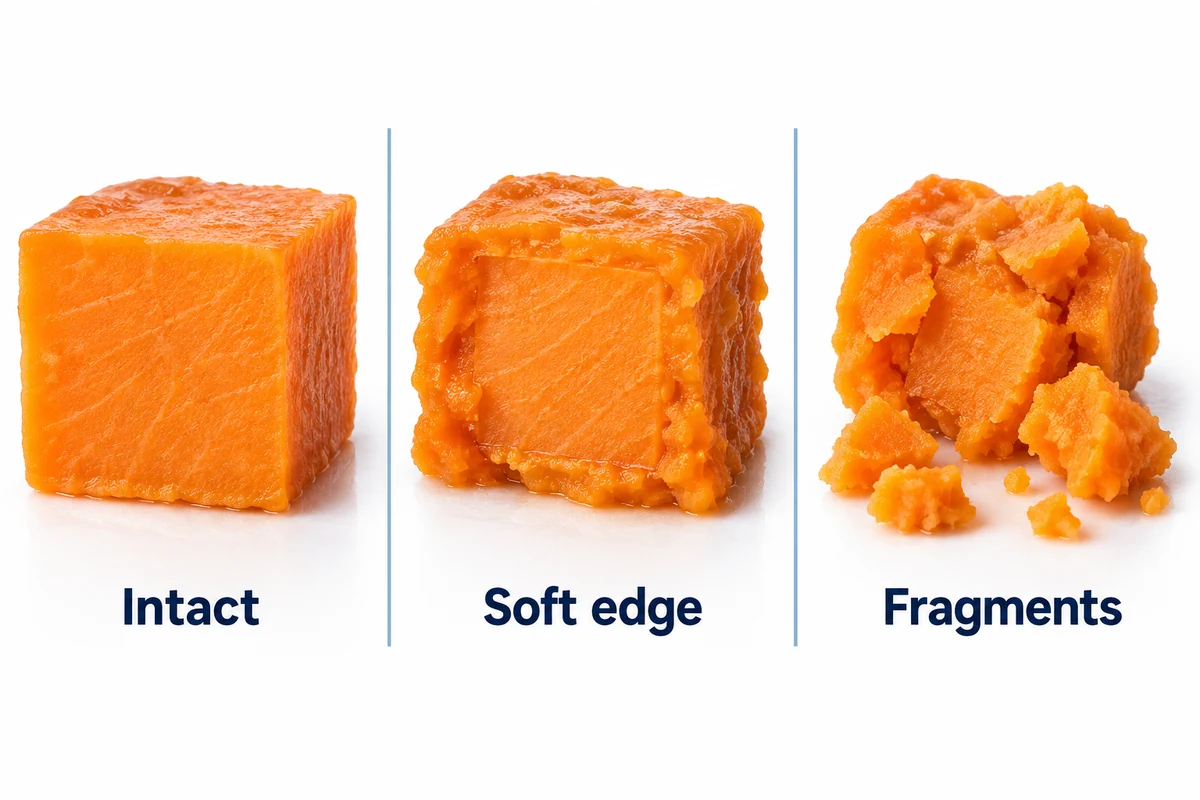
Three conceptual outcomes are observation categories, not assigned to a process or lot. Swipe to see the full illustration on a narrow screen.
Visual survival is only half the result. A cube may remain roughly cube-shaped but collapse in the mouth. Another may have a firm outer edge and a soft, watery centre. State the desired sensation in language your panel can repeat: distinct centre resistance, tender without graininess, or a soft puree-like bite if the meal calls for it. “Good texture” gives a supplier no useful target.
Use a small trained or calibrated internal group to compare coded samples in the same serving temperature range. Ask each assessor to judge centre resistance, edge breakdown, perceived dryness or wateriness, and any fibrous or coarse feel. Keep the recipe and order of tasting consistent. If an instrument is used, choose a fixture and sample orientation that suit the piece; the resulting force value is not interchangeable with another lab’s method. A sensory result remains necessary because a force measurement may miss a grainy or wet eating quality.
Count or weigh pieces that remain usable for the intended presentation. Define “usable” before examining the trial: for a visible diced vegetable, a softened but recognisable cube may pass, while a smear or detached crumbs may not. A puree filling may welcome breakdown that a premium tray vegetable would reject. The same lot can therefore be suitable for one application and unsuitable for another without any contradiction.
Observe free liquid separately. It may come from the sweet potato, the sauce or other vegetables. If a wetter tray accompanies a softer sweet-potato piece, do not automatically assign all released water to that ingredient. A control tray without sweet potato, or a separately reheated sweet-potato portion, may help narrow the source. Keep those diagnostic controls distinct from the primary finished-meal approval trial.
When a result is hard to interpret
The most common comparison problem is more than one change at once. Different cube sizes cause different centre heating. Different starting flesh colours change the visual score. A coated sample can hold or shed water differently from plain dice. An ingredient that was fully cooked before freezing has a different remaining heat tolerance from a minimally treated piece. Write these differences beside the outcome rather than treating them as background.
The meal matrix can also obscure the result. A dense sauce slows or redirects heat transfer; an exposed corner dries faster than a submerged piece. Acid, salt and other formulation features can change flavour or appearance. Those effects do not make the buyer trial invalid. They mean it must reproduce the actual meal, with location and recipe recorded, before a preference becomes a purchasing requirement.
Where one candidate fails, make a smaller follow-up test that changes one factor. If both colour and softness are poor, ask whether the starting pieces were comparable and whether the meal overcooked them. If colour passes but the centre is too soft, investigate cut size, degree of previous cooking and reheat exposure before asking for a new blanching schedule. If the centre is acceptable but edges break, inspect handling and mixing as well as heat. This prevents an unverified process change from being written into a purchase specification.
Research on pretreatment, freezing rate and sweet-potato structure [3] reinforces this multi-variable caution, although that study examined fried products. It supports the need to control cultivar, geometry and process; it cannot tell us how a particular sauced meal tray will eat.
Write a repeatable sample brief
Keep the approval record short enough to use and precise enough to repeat. Identify the product and cut; obtain the declared processing state from the applicable supply route; attach the meal formula version; and record the frozen and final service observations. Include photographs of both the received piece and the cooked tray under a stable method. If a numeric limit is useful, derive it from enough representative trial and production samples, then state its denominator and measurement method. Do not borrow a blanching time or a firmness figure from a study of another cultivar.
The record should specify who decides on a changed lot. A new variety, cut-size distribution, pretreatment, partner facility or recipe can change the result. Decide which changes trigger a quick confirmation trial and which need a full reapproval. Keep the visible piece and eating quality inside the range the finished product can use.
We can coordinate the sample discussion around a real cut and application. Our specification and sampling process provides the framework for confirming the proposed product details and sample basis. A partner factory’s exact heat treatment and available format are confirmed for the order, rather than inferred from XMG’s product catalogue. That division gives the development team a more useful question to ask and a cleaner comparison to run.
Discuss Your Trial with XMG Food
Send the product form, intended use and trial criteria; we will review the brief and confirm suitable frozen produce and supply options.
Send Your Trial Brief →