


On this page
Frozen lotus root slices can make crisp chips, but only when the slices are thin and sound enough to dry before their surfaces brown. A frozen slice that is thick, heavily broken, or carrying a great deal of thaw liquid may become a pleasant fried lotus-root side while never snapping like a chip. Start by sorting a small sample by thickness and intact versus broken rounds. For the most informative first trial, thaw one portion, drain and dry it, then cook it in a single layer or a controlled small oil batch. Judge the cooled center as well as the edge. Direct-from-frozen cooking is a separate trial because melting surface ice consumes heat and adds steam at the moment you are trying to dry the slice.
The question is about the finished chip, not whether frozen lotus root remains pleasantly firm in a stir-fry. XMG’s frozen lotus-root page describes several cut options; none should be assumed to be a chip-ready thickness without checking the actual lot. If you are testing for a menu item, record the cut, defect level, pretreatment and cooking method together. A good result in one fryer or one bag cannot be promised for every frozen slice.

Authentic frozen lotus rounds; visible form only.
Quick answer: crispness is conditional
Think of crispness as a combination of geometry, moisture removal and final cooling. Thin rounds have a short path for internal water to escape. Intact rounds lie flatter and expose more surface to hot oil or moving air. A broken fragment may brown early while a thicker neighboring slice remains flexible. Seasoning, sauce or a covered holding tray can then reverse some of the texture you worked to create. These are separate checks; golden color alone is a poor verdict.
A practical target is a chip that feels dry on both faces and fractures rather than bends after a short cooling period. That target is a sensory description, not a guaranteed specification. If the intended product is a hot plated garnish, a slight chew might be acceptable. If it must sit in a sealed snack cup or top a moist dish, the same batch may fail after holding. Define the use before selecting the cut. For another question about cut choice in ordinary cooking, see our lotus-root slice thickness guide; this article focuses on the chip outcome.
What changes when the slice was frozen
Frozen produce does not behave exactly like a newly cut root. Water held inside plant tissue freezes, and thawing can release liquid as the structure softens. The University of Minnesota Extension explanation of freezing and texture [1] describes that general effect. It does not supply a measured crispness loss for every lotus-root slice, and neither do we. Frozen products may also have been blanched or otherwise prepared before freezing; confirm the product’s actual treatment and follow its package instructions.
The extra water shows up in different places. Ice can sit on the outside of a piece. Water can gather in the thawing tray. A slice can appear dry after patting yet still release moisture once heated. These conditions ask different things of the fryer. Surface ice makes a direct-from-frozen air-fryer load steam before it can dry. Liquid on a thawed slice can cause oil spattering. Internal moisture can leave a browned edge around a pliable center. A careful trial observes each stage rather than treating all disappointing chips as a temperature problem.
Frozen slices may still be an excellent starting point because they remove peeling and slicing work, and the cut is already standardized to some degree. But “standardized” is a claim to test: spread out a representative handful and look at actual variation. A bag of thick rounds may be better suited to sautéing or roasting. Do not try to correct a thick cut by driving the exterior darker while the middle stays damp. The finished dish sets the useful limit.
Sort thickness and breakage before cooking
Lay out enough frozen rounds to see the lot, not just the prettiest pieces on top. Group intact rounds, half-rounds and fine fragments. Then compare the thickest and thinnest visible examples against the intended chip. A ruler or caliper can help a foodservice trial, but the important point is to record what you actually received. Do not infer a nominal thickness from a product photograph. If the pieces are still frosted, make the cut check on a small thawed sample as well, because ice can disguise edges.
A Japanese lotus-chip recipe from RecipeTin Japan [2] uses thin rounds and explicitly notes that frozen slices come in different thicknesses. That recipe is useful as a culinary example, not proof that every commercial frozen lot produces the same snap. The author also emphasizes drying each slice before oil frying. Our decision rule is broader: choose a cut with enough thin, intact rounds for your actual yield target, then test the thaw and cooking method. Record the proportion that breaks during handling because a wonderfully crisp fragment may still be unsuitable as a full garnish.

A second original slice view for checking the received form.
Thickness is only one part of the shape. A round with damaged edges presents more thin spots that can scorch. Nested or stuck slices block airflow and can enter oil as a wet cluster. The open holes in a lotus-root cross-section add visual appeal, but they do not compensate for excessive thickness or trapped liquid. Separate attached slices gently while they are still manageable; do not force apart brittle frozen clusters and create a large fraction of small pieces. If separation itself causes unacceptable breakage, that is a product-handling finding worth recording.
Thaw, drain and dry versus direct-from-frozen
For a first chip trial, use the thaw-and-dry route as the reference. Place one measured portion in a food-safe shallow tray or sieve under appropriate chilled handling, follow the supplier’s instructions, and collect the liquid that comes away. Pat the slices with clean towels without crushing the holes or edges. Let the pieces rest briefly on a dry rack while the cooking equipment heats. Do not leave thawed vegetables out for an extended wait. Drying is about removing free surface water; it cannot reverse every structural change caused by freezing.
Keep a second equal portion for the direct-from-frozen route. Cook it in the same equipment with the same loading pattern and seasoning, then record the difference. In an air fryer, frozen pieces may first release steam and can stick or overlap; spreading and turning them matters. In hot oil, ice and water increase splattering risk, so a heavily frosted load should not be dropped in as though it were dry. We recommend trying any direct-frozen oil method only within the equipment’s safe operating instructions and with a conservative small load. Do not infer from a crisp edge that the center has dried.
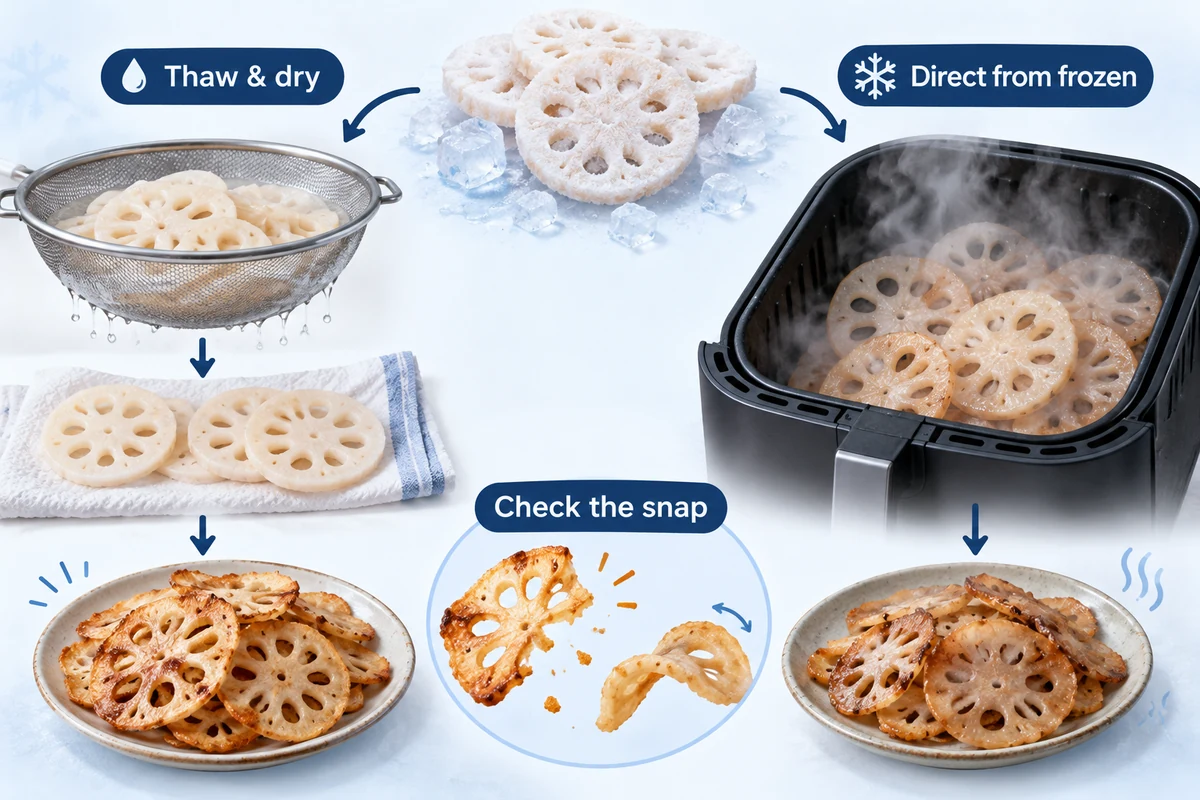
The diagram scrolls horizontally on smaller screens.
Conceptual comparison of moisture handling, not a measured chip result.
The fair comparison is not simply “which finished first?” Note the initial mass or count, visible free water, slice thickness, breakage, cooker load, temperature setting, movement during cooking and cooled texture. If you change the oil depth, basket density and slice cut simultaneously, the answer is impossible to interpret. A direct-frozen trial might be convenient in a high-throughput kitchen even if it needs longer or yields a different bite. A thawed trial may give a better chip while adding labor and drip handling. Both outcomes are legitimate; the application decides which matters more.
Oil frying and air frying are different tests
Hot oil contacts much of a thin slice rapidly and carries heat efficiently. Moving hot air relies on open space around the pieces and typically a light oil film for the desired surface. Neither method makes a wet or thick slice automatically crisp. Use a thermometer and the oil manufacturer’s instructions for frying; add a small dry test portion carefully. Remove the chips to a rack or absorbent surface, and avoid covering them while steam is escaping. In an air fryer, preheat if the appliance calls for it, arrange a single layer, and turn or shake without shattering delicate slices.
Published fresh-lotus recipes are helpful starting points but are not a universal setting for frozen cuts. Just One Cookbook [3] demonstrates a traditional fried chip, while an air-fryer lotus-chip recipe [4] shows a moving-air route. Their preparations do not replace a trial with the actual frozen product. A frozen slice that looks pale after the suggested time may simply need more water removal; raising heat sharply can brown the outside before the center is ready. Conversely, a very thin round can darken quickly. Check the pieces, not a copied clock time.
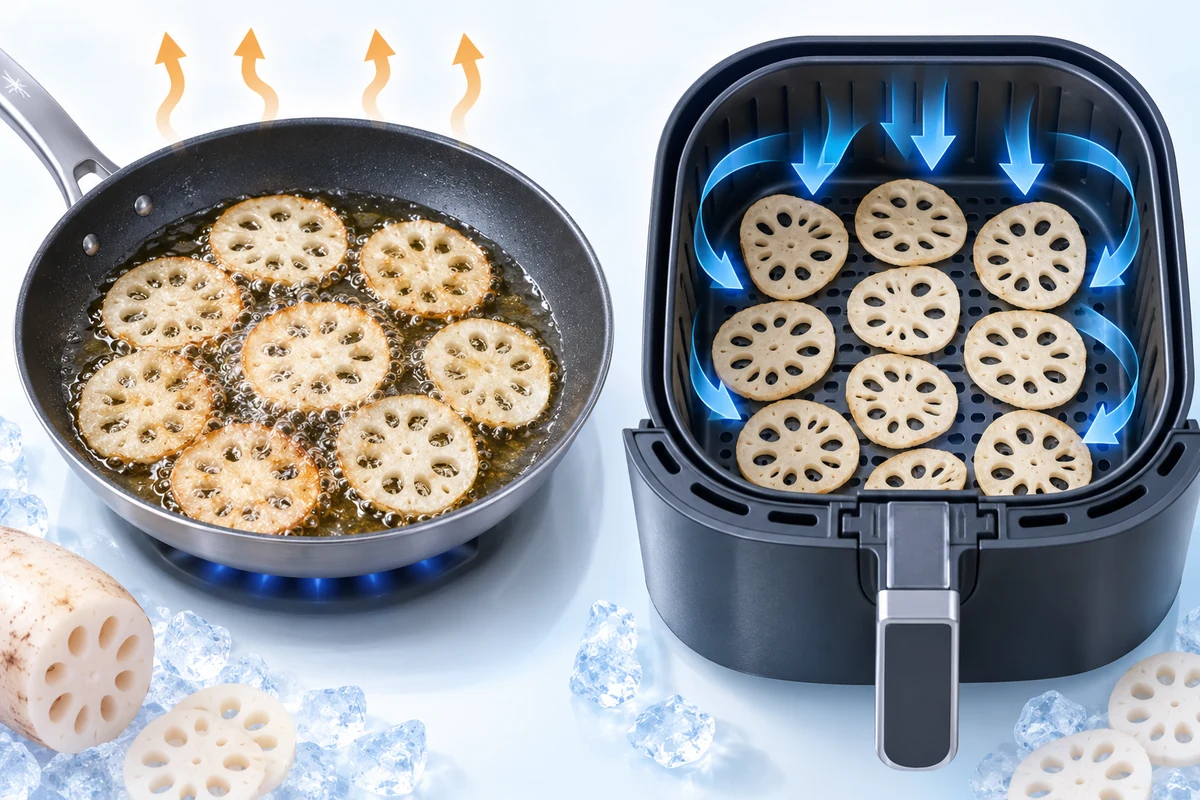
The diagram scrolls horizontally on smaller screens.
Different heat environments for a frozen lotus chip trial.
For service, ask what texture survives the plate. A chip laid on a wet sauce or packed warm in a closed container may soften rapidly. If the chips are a garnish, cool them separately and add them at the end. If they are a snack, test the intended holding and packaging conditions rather than rating them only at the fryer. These handling observations are more useful than announcing one method as categorically superior.
How to compare two fair batches
Set up a small, repeatable test. Use slices from one lot and sort them into comparable thickness and intactness. Weigh or count equal portions; photograph the starting cuts if specification matters. Cook one thawed-and-dried batch and one direct-frozen batch using the chosen method, with the same basket area or oil load. Record visible steam, splatter, sticking, turning damage and the time until the surface appears dry. Cool samples on separate open racks for the same short interval. Bend or break several typical pieces, including a thick one, rather than choosing only the best-looking chip.
Then repeat only the most promising route in the other cooker if you genuinely need to compare oil and air frying. Keep the first comparison simple. A useful score sheet has columns for thickness group, starting breakage, post-cook intact yield, center snap, surface greasiness and texture after the required holding period. Use these observations to choose the cut and cooking route for your application. A customer specification might weight full-round yield more heavily than pure crunch, while a plated garnish may tolerate fragments.
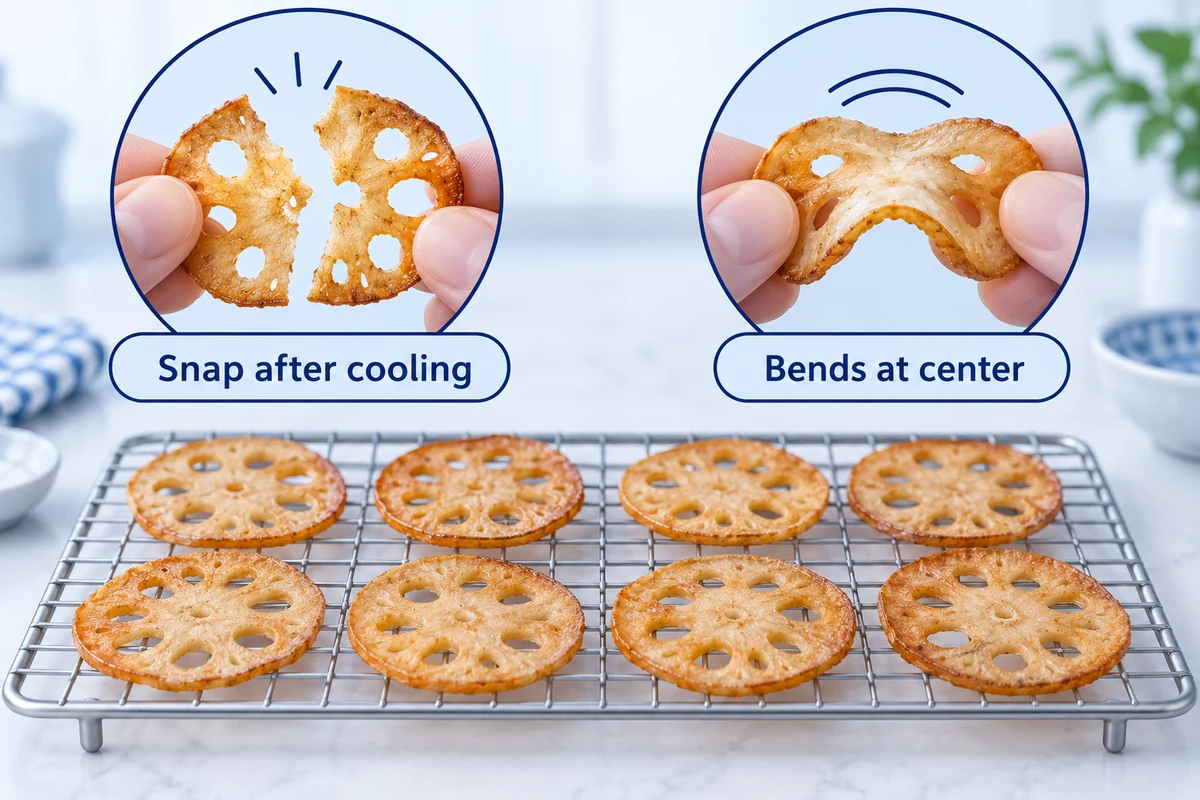
The diagram scrolls horizontally on smaller screens.
Judge the cooled center rather than edge color alone.
Do not score a chip while it is still steaming and then assume the same bite after cooling. A very hot slice may feel flexible and firm as it cools; another may be crisp for a minute and then soften in a humid container. Use the same evaluation moment for both batches. When results vary widely within one lot, record the distribution rather than one average verdict. That variation may reveal mixed thicknesses or inconsistent frost levels that a different cooking time cannot fix.
When to choose another application
If most slices are too thick or too broken for a chip, stop trying to force a snack outcome. A thicker frozen lotus round can still offer an appealing bite in a stir-fry, braise or roasted side. Small fragments may work in a mixed vegetable dish where full decorative rounds are irrelevant. The best use is the one that fits the received cut. This is why the question cannot be settled by a label such as “IQF lotus root” alone.
Darkening needs separate judgment. A slice may brown from the cooking method, from earlier oxidation, or from uneven drying; visual darkness alone does not identify the cause. Our related guide to lotus-root darkening after cutting or thawing addresses that question. Here the decision is whether the cooked piece meets the chip’s texture and appearance at service. Keep color, crispness and safety observations separate.
Source form and next decision
When you choose frozen lotus root for this application, ask for the actual cut and a representative sample rather than an assurance that “slices” will make chips. Record desired thickness, full-round yield, acceptable broken fraction, pretreatment and the cooker you will use. Our frozen lotus-root product page is the starting point for the available forms. We can review an order-specific form and sample request, but your cooking trial determines the final chip performance.
A useful decision after one round of testing is specific: “This lot’s thinner intact rounds, thawed and dried, hold a snap for the garnish interval,” or “The current cut is better as a cooked vegetable than a chip.” Either statement is more reliable than a universal yes or no. Frozen lotus root gives you a possible shortcut to a chip; careful cut selection and water control determine whether that shortcut works in your kitchen.
View frozen lotus root
Review the listed ingredient forms and preparation information for this application. Choose the cut and processing route that suit your intended result.
View product forms →