


On this page
Freshly cut lotus root can turn tan or brown after the cut surface meets air. Researchers studying fresh-cut lotus root have linked that change to phenolic compounds and oxidizing enzymes, including polyphenol oxidase (PPO) and peroxidase (POD). A blue-black mark can involve a different pathway. If a frozen slice looks darker after thawing, however, its color alone cannot tell you whether the cause was fresh-cut browning before freezing, a treatment or storage change, contact with another material, or a change revealed as the ice melts. Direct evidence for one universal cause in frozen lotus root is limited.
Start with the product’s identity and handling history. Note whether the root was freshly cut or previously frozen, what the label says about preparation, how it was stored, and when the color was observed. Compare samples at the same thaw or cooking stage under consistent light. Record color, free liquid and texture separately. A color change is a quality observation; it is not, by itself, a food-safety test.
Why freshly cut lotus root can brown in air

Fresh-cut tissue mechanism illustration; it does not establish the cause of darkening in a thawed frozen lot.
Cutting breaks cells and exposes their contents to air. In fresh-cut lotus root studies, researchers have measured changes in browning alongside phenolic content and the activity of enzymes involved in oxidation. One study followed slices stored at different temperatures and found that browning development varied with storage conditions and with changes in phenolic and enzyme activity. That work supports a mechanism for the fresh-cut material tested. It does not establish how a commercially frozen slice will look after thawing.
“Oxidation” is often used as a catch-all explanation. Fresh-cut lotus root has a documented enzymatic-browning pathway, but not every tan, gray, blue or nearly black area must come from it. The starting rhizome, its prior treatment, the time between cutting and observation, temperature, moisture and contact materials may all affect what is visible. A photograph usually cannot identify which factor produced a mark.
Recipe advice to put freshly cut slices into water is consistent with reducing exposure of the fresh surface to air. For example, Kikkoman’s lotus-root preparation guide [1] suggests placing freshly cut pieces in cold water; Just One Cookbook’s pickled lotus-root recipe [2] uses a short vinegar-water soak in its fresh-root preparation. These are culinary instructions for their recipes. They are not evidence that the same treatment is suitable for every frozen product, nor do they replace the product label or a commercial specification.
Laboratory studies have tested specific blanching, acid, antioxidant, packaging and other treatments on fresh-cut lotus-root samples. Their concentrations, times, temperatures, package conditions and endpoints are part of each experiment. A result for one treatment does not establish a universal home remedy or the process used for an individual frozen lot. If the original treatment matters, check the product declaration or its written specification.
Why blue-black marks may follow another route

Schematic pathways are not a color-based diagnosis or an XMG sample image.
Fresh-cut browning research commonly examines enzyme-catalyzed oxidation. Other lotus-root research has investigated blue or blue-black staining associated with interactions between polyphenols and iron. A 2025 study examined material from different regions, seasons and rhizome tissues and reported variation in the compounds associated with bluing. Shade alone therefore cannot identify the pathway in an individual slice.
This evidence does not make color a diagnostic tool. It does not show that every blue-black mark came from iron, identify the source of any iron, or prove that a dark slice is acceptable. The location and pattern of a mark can help an evaluator describe an observation, but they cannot by themselves establish a chemical mechanism or a lot’s safety. If a contact-material explanation is suspected, document the equipment or container involved and compare under a controlled method rather than treating the color as proof.
Cooking can create yet another color change. Heat, recipe ingredients and browning reactions in a finished dish can shift lotus root away from its raw or frozen appearance. A pale slice before cooking and a darker cooked slice are different observations. To assess an ingredient specification, inspect the product at the state named in that specification; do not substitute a finished-recipe color for an incoming-product check.
What thawing can reveal—and what remains unknown
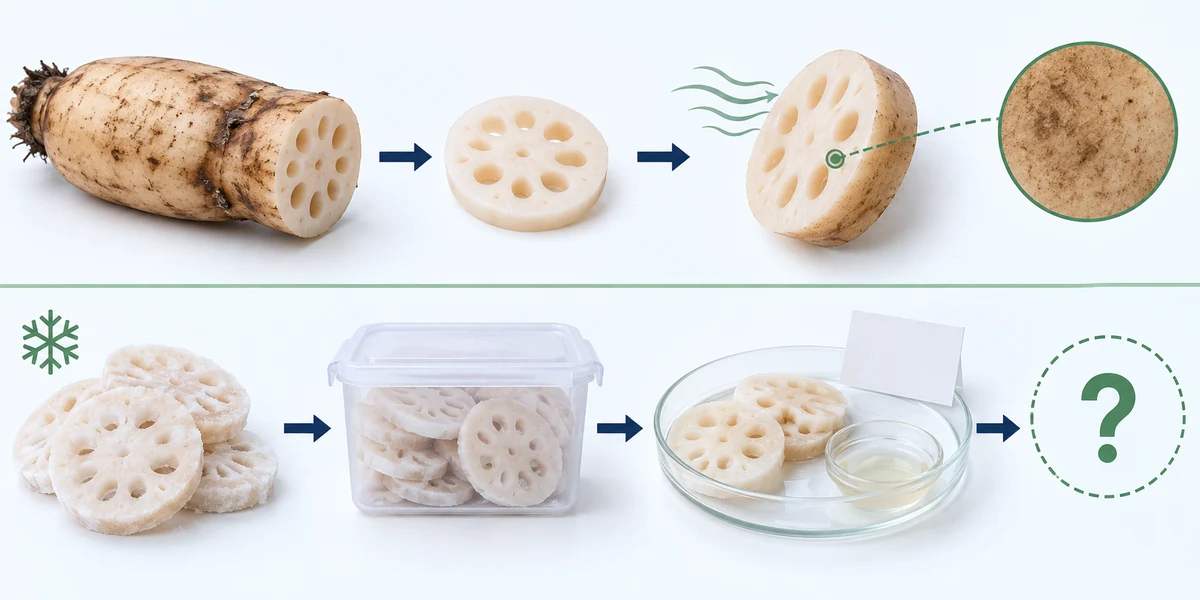
Conceptual paths separate documented fresh-cut browning from a frozen lot whose thaw-color cause remains unverified.
Frozen and thawed are not interchangeable observation states. Freezing and thawing can affect plant-tissue structure and cause liquid to leave the pieces. General frozen-fruit-and-vegetable reviews describe how thawing method and ice-crystal damage can influence drip, texture and other quality attributes. General USDA guidance also notes that excessive drying from poor packaging or long storage can dull the color of frozen vegetables. These sources offer context for a post-thaw inspection; they do not establish a lotus-root-specific color mechanism.
When a slice seems darker after thawing, several questions are still open:
- Was the same area already darker while frozen, or was its color first noticed after ice and surface moisture changed?
- Was the product cut, blanched, acid-treated or otherwise prepared before freezing? Is that stated on the package or specification?
- Was there excess frost, a damaged package, a long or fluctuating storage history, or visible free liquid?
- Did the thawed piece contact a tray, utensil or container that could affect its appearance?
- Is the observation on the surface, around a cut edge, in the holes, or throughout the tissue?
These are useful records to gather, not a list of proven causes. No direct study located for this article establishes one universal cause of darkening in commercial frozen lotus root after thawing. The fresh-cut browning literature should not be stretched to fill that gap. The product’s documented preparation and storage history still matter when interpreting its post-thaw appearance.
The product page for XMG’s frozen lotus root currently describes color, oxidation and browning among the fields that can be specified and inspected. It also describes an applicable processing route that may include steam- or water-blanching. The exact form, process declaration and written color requirement need to be confirmed for the order. A product page’s described route is not proof of a particular lot’s treatment, and a specification is not a universal color rule for every market or use.
Fresh, frozen and thawed are different observation states

Approved original product photograph shows cut forms only; it is not a before-and-after color trial.
| Observation state | What the evidence supports | What a color observation cannot establish |
|---|---|---|
| Freshly cut raw root | Fresh-cut lotus-root research supports an enzymatic-browning pathway involving phenolic compounds and oxidizing enzymes. | The cause of every shade or mark; the later appearance of a frozen product. |
| Frozen product | Product form, declared treatment, packaging and storage history provide relevant context. General frozen-food guidance identifies drying and storage as possible quality influences. | A specific defect cause from color alone; the intended preparation or acceptance limit unless documented. |
| Thawed product | Thaw stage, elapsed time, free liquid, location of discoloration and contact conditions can be recorded and compared. | A universal lotus-root thaw mechanism, safety status or XMG lot result. |
| Cooked dish | Recipe, heat, ingredients and serving point affect the final appearance. | The incoming frozen product’s color compliance if the specification is for another state. |
Keep the sample state in the record. “White when frozen,” “cream after thawing,” and “tan after cooking” are not contradictory until the evaluator confirms that product, preparation, light, time and acceptance basis were the same.
Read the observation without diagnosing it
The location and timing of a change can help you decide what to check next. A tint that develops along a newly exposed cut surface while fresh root sits in air is consistent with the fresh-cut question studied in lotus root. A slice that is already mottled while frozen calls for a check of the incoming product, package and written color requirement. A difference that becomes noticeable only during thawing should be recorded with the amount and location of free liquid, the thaw endpoint and the time of observation. These descriptions narrow the investigation; none proves a chemical cause.
Also separate overall color from a localized mark. A broadly dull surface, one isolated blue-black spot and a gray area beneath damaged packaging are not interchangeable defects. Do not assume that the same inspection tolerance applies to each, and do not calculate a defect percentage from a small photograph. If a written criterion is mass-based, use its sampling and classification method. If it is a visual reference, compare the product under the agreed viewing conditions. Ask the specification owner to resolve any mismatch between the visible example and the written limit.
For a home cook, the practical rule is simpler: follow the package directions and handle the food using current food-safety guidance. A fresh-root soaking tip does not answer whether a thawed frozen product needs cooking, rinsing or another preparation step. For a product developer or receiver, preserve the sample identity and preparation record before escalating a quality difference. Either way, appearance is useful evidence to describe, but it is only one part of the decision.
How to compare a specific frozen lot
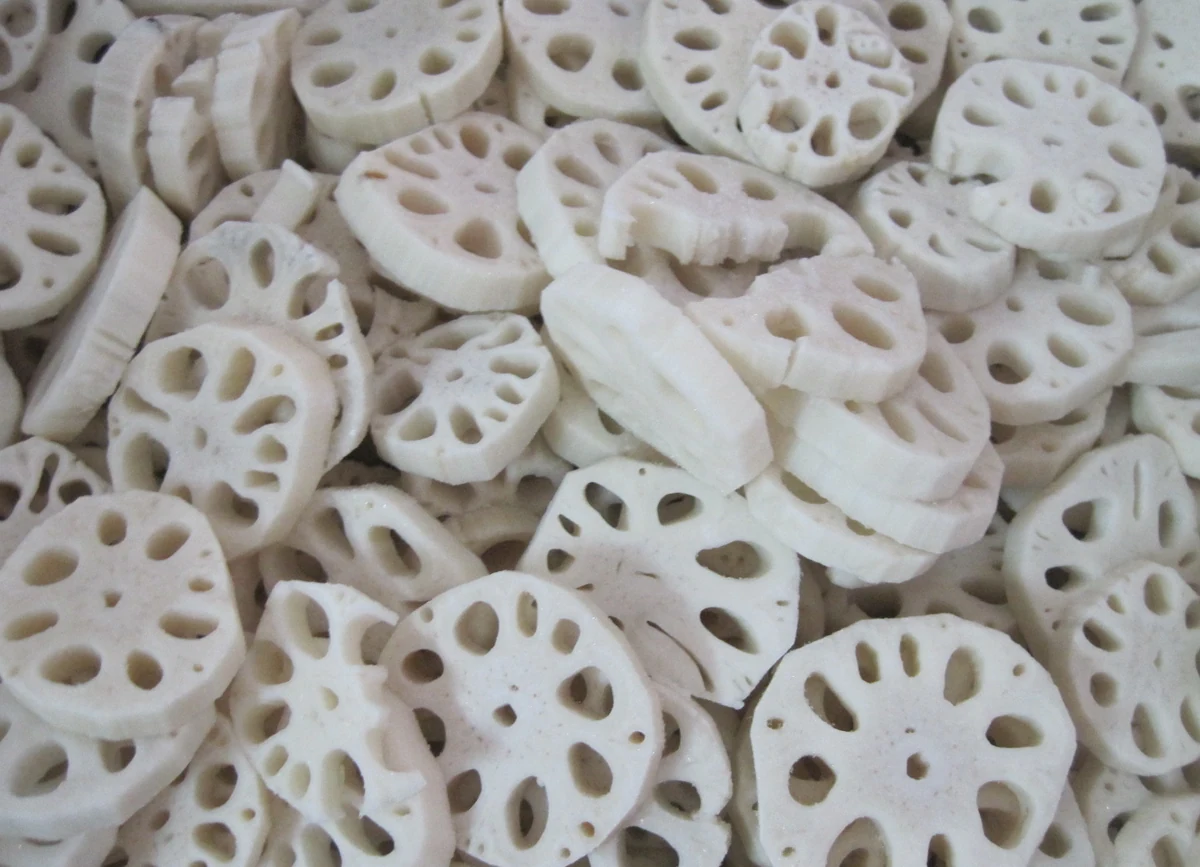
Approved original product photograph identifies the cut form; it does not document thaw discoloration.
For a useful quality comparison, first write down the question. Is the concern a discolored frozen slice at receipt, an edge that darkens during thawing, liquid release, or a shade change after cooking? The observation point determines the method. Avoid combining these into one score called “color” if they involve different states.
Record the product name, cut, lot or production reference, ingredient declaration, package condition and any declared blanching or anti-browning treatment. Follow the product’s instructions for thawing or cooking. If the specification calls for inspection in the frozen state, inspect there; if it calls for a thawed or cooked state, use that stated preparation and endpoint. Do not improvise a treatment to improve appearance before an acceptance check.
For a side-by-side evaluation, use matched portions from the same identified lot and container where possible. Keep the amount, thaw endpoint, elapsed observation time, tray, background, lighting and camera distance consistent. Note whether a piece was in contact with a particular utensil or surface. Photograph the full sample and a close view with a neutral background. Do not enhance contrast or white balance in a way that could hide a difference.
Record at least four things separately: the color and where it appears; the presence and amount of free liquid; the texture or tissue integrity at the selected stage; and the product’s handling history. Use the same written color scale or acceptance criteria for every sample. If a commercial limit matters, agree on the sampling plan, state, viewing conditions and method before comparing lots. A visual image can preserve what an evaluator saw, but it cannot supply a missing threshold or explain the chemistry.
The comparison method below is a proposed evaluation plan, not an XMG trial. No XMG cut/thaw measurements or results were located for this topic. Do not report a color-retention percentage, darkening rate or yield result unless the responsible team has measured it under a documented method and approved its use.
What a simple observation record should include
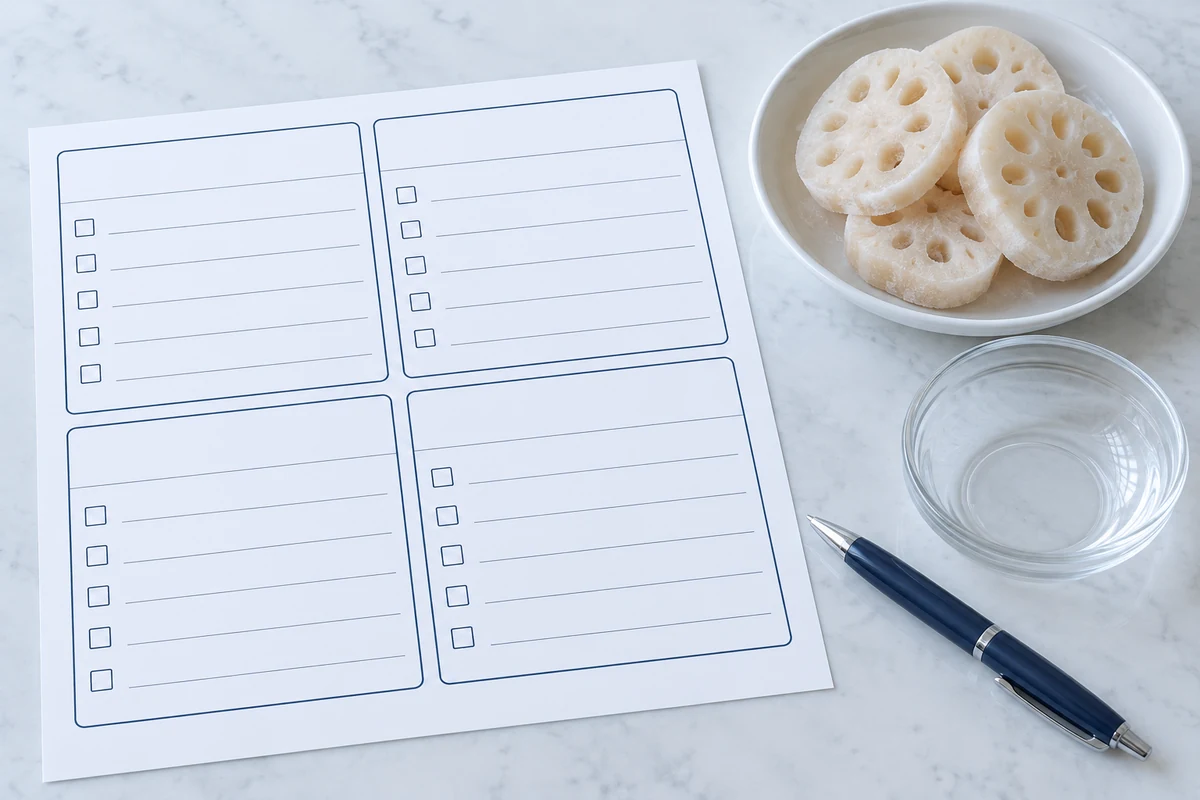
Conceptual blank sheet; no XMG lot, reading, score or thaw result is supplied.
- Product, cut, lot/reference and package condition
- Declared ingredients or treatment, when available
- Observation state: frozen, thawed, cooked or another specified point
- Preparation directions followed and the time at which the observation was made
- Lighting, background, container/contact material and photograph reference
- Color location and appearance, written separately from free liquid and texture
- The applicable written specification, inspection basis and decision
Does a darker color mean lotus root is unsafe?
Color alone cannot establish food safety. Nor does a normal color prove that a product was handled safely. Use the product’s label, applicable preparation directions and temperature history. USDA food-safety guidance cautions against relying on appearance as a safety test; the context and handling record matter. If a package is damaged, the product has been temperature-abused, or there are signs that conflict with the product instructions, follow the relevant food-safety procedure rather than trying to diagnose it by shade.
For commercial receiving, separate the safety review from the visual-quality decision. The receiving team should use its approved temperature, package-integrity, traceability and sampling procedures. The color decision should refer to the agreed product form, inspection state and written requirement. A dark spot may trigger a closer review, but it cannot, by itself, prove spoilage, a safe condition or a failed specification.
Frozen Lotus Root
Review our frozen lotus root range, product forms and specification options.
View Frozen Lotus Root →References
- The effect of different temperatures on browning incidence and phenol compound metabolism in fresh-cut lotus root (PII S092552141630237X) — fresh-cut research; not a frozen-lotus-root trial.
- [3] Effect of Blanching Treatments on the Quality of Fresh-cut Root Vegetables — selected root vegetables and experimental blanching conditions.
- Geographic and seasonal variations in non-enzymatic bluing of lotus rhizome (PII S0889157525010142) — polyphenol–iron-associated bluing in the studied material and conditions.
- [4] USDA FSIS: Why does the color of food change when frozen? — general frozen-food color context.
- [5] Review: Effect of conventional and emerging thawing technologies on drip loss, microstructure and post-thaw quality of frozen fruits and vegetables — general thawing review; not lotus-root-specific evidence.
- USDA FSIS, Freezing and Food Safety — general handling and safety guidance; see the linked USDA FSIS color guidance above for why appearance is not a standalone safety check.
- [6] Penn State Extension: Let’s Preserve—Freezing Vegetables — general frozen-vegetable quality factors.
