


On this page
To keep a defined bean bite in a casserole, choose the frozen bean cut and the sauce together, then count all the heat the beans will receive: any preparation before assembly, the oven, the time the dish waits, and any reheating. A thawed, well-drained bean in a thick sauce follows a different route from a bean added frozen to a looser sauce. Neither route is automatically superior. The right choice is the one that meets the product’s cooking instructions and leaves the beans distinct at the moment the dish is served. Green colour alone does not establish that frozen beans or the centre of a casserole have been heated adequately.
Food Network’s recipe [1] uses thawed frozen beans. Campbell’s classic recipe [2] lists thawed frozen beans as an option. These recipes establish workable formulations, not a universal texture result for every bean cut, sauce and baking dish. Use them as points of comparison, then judge your own cooked casserole rather than copying a clock time.
Choose beans and sauce as one casserole system
A casserole is not simply a pan of beans that happens to be baked. The beans sit in a sauce that may contain mushroom liquid, milk, stock, starch and fat. A sauce that seems suitably thick before the beans go in can loosen as frozen beans release water. A sauce that starts too thick can make even pleasantly firm beans seem dry once the oven reduces the exposed edges. The bean cut, amount of sauce and shape of the baking dish all affect what the fork encounters.
Decide what “defined bite” means for this dish. It can mean a bean segment that remains recognizable when lifted from the sauce, has some resistance when chewed, and is neither cold or hard inside nor so soft that it collapses into the sauce. It does not require the crisp snap of a raw bean. The expected bite in a creamy casserole also differs from a hot side dish with no sauce. Taste the fully heated food under its actual sauce, because tasting a drained bean before baking can mislead you about the finished texture.
Look at the pack for the cut: whole, cut, French-style, or another declared form. Thin strips expose more surface and may feel softer after the same oven route; thicker segments can show a more obvious core bite. The variety and processing also matter, so do not reduce the choice to dimensions alone. A kitchen trying a new bean should compare like cuts under the same sauce and oven conditions. If two suppliers’ products differ in cut and blanching history, timing alone cannot explain the final difference.
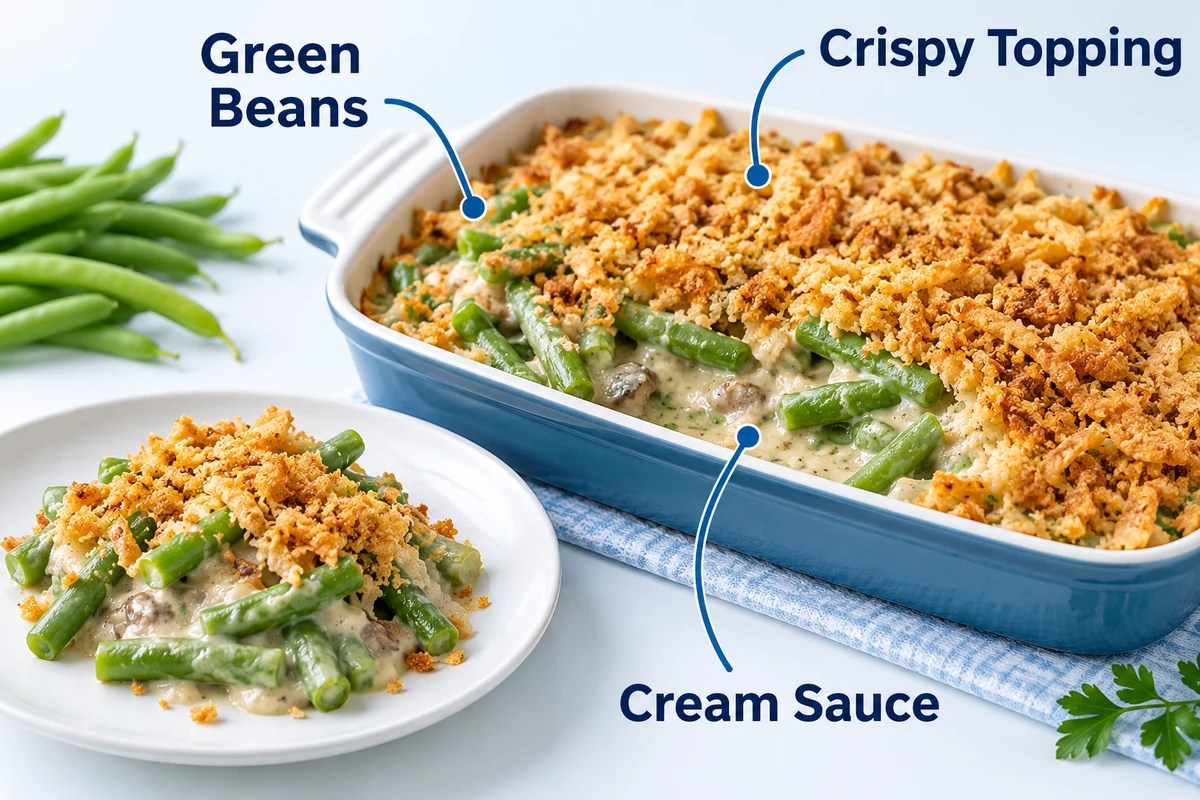
Illustrative casserole context. Brown topping and visible beans do not establish the center condition or readiness.
Set a serving target before changing the recipe. Is the casserole going straight to the table, resting for a buffet, or prepared ahead and reheated? A bean that feels ideal immediately after the first bake may soften during a hot hold. A sample that survives reheating may be preferable for prepared meals even if it seems a little firmer at first service. The evaluation point belongs in the recipe brief, not only in the cook’s memory.
Direct addition and pre-cooking take different routes
Direct addition means frozen beans go into the assembled sauce without a separate cooking step. This can reduce handling and avoid an extra heat cycle, but the frozen load absorbs heat during baking and can introduce water as it thaws. A casserole with a large frozen load may take longer for the centre to reach its intended state than one assembled with thawed beans. The sauce may thin before it thickens. Whether the route is suitable depends on the package directions, dish depth and actual oven result; a direct-add illustration is not evidence that any particular product can skip its required cooking.
A thaw-and-drain route removes at least some free surface liquid before beans meet the sauce. It also lets the cook spread the beans more evenly and inspect clumps. Thaw only by a method allowed by the pack and safe handling guidance. Draining is about reducing water entering the sauce, not a guarantee that the beans will remain firm. If they sit too long in a warm kitchen or undergo an additional cooking step, the texture can still soften.
Pre-cooking gives more control over the bean’s initial state before baking, but it adds another heating stage. This can be useful if a casserole has a short finishing bake or if the beans must meet a package cooking requirement first. It can also cause unwanted softness if the pre-cook takes them to the final bite and the oven continues cooking them. Think of the first stage as part of the total heat exposure. If you pre-cook, drain thoroughly and evaluate the bean before it enters the sauce. Plan the full process to meet the product and prepared-dish heating requirements; partial heating is not a texture strategy.
Do not mix up these routes in a comparison. “Thawed and drained” is not the same as “cooked and drained.” “Frozen directly into sauce” is not the same as adding a previously frozen casserole to the oven for reheating. Name each state accurately so a colleague can repeat it.
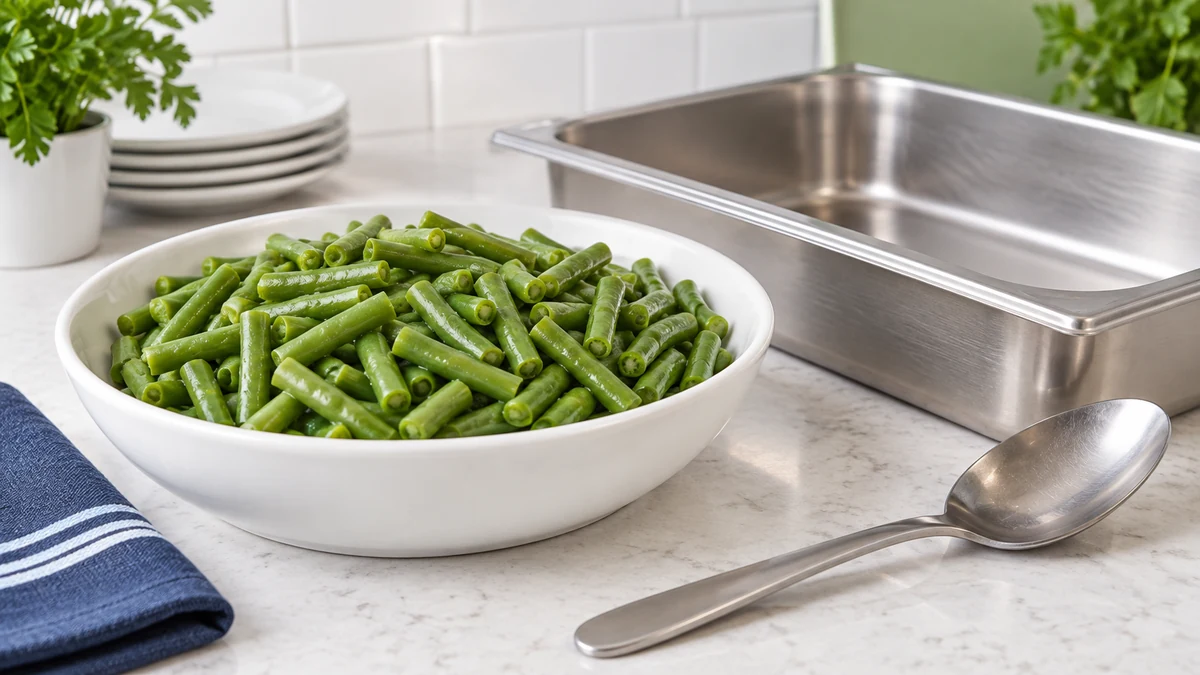
Conceptual green-bean form and service context; not a product photograph or a casserole trial.
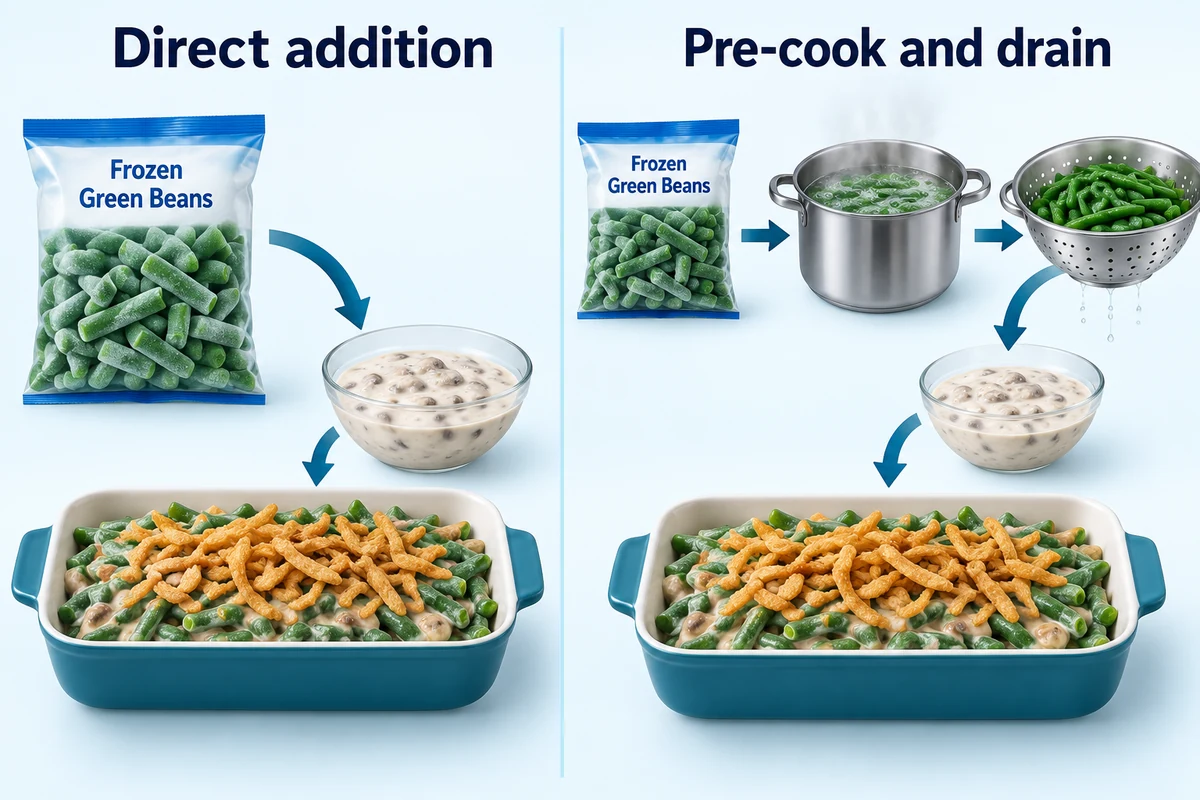
Two preparation routes to compare in the same casserole. Neither depicted route is a universal instruction for every frozen bean product.
On a narrow screen, swipe this table sideways to read the remaining columns.
| Route | Possible advantage | Main condition to verify |
|---|---|---|
| Frozen directly into sauce | One heat stage and less handling | Pack permits it; centre heats adequately; sauce handles thaw water |
| Thawed and drained | Less visible free water at assembly | Allowed thaw route and safe handling; oven finishes the dish |
| Pre-cooked and drained | Known bean state before a short finish | Combined first and second heating does not erase intended bite |
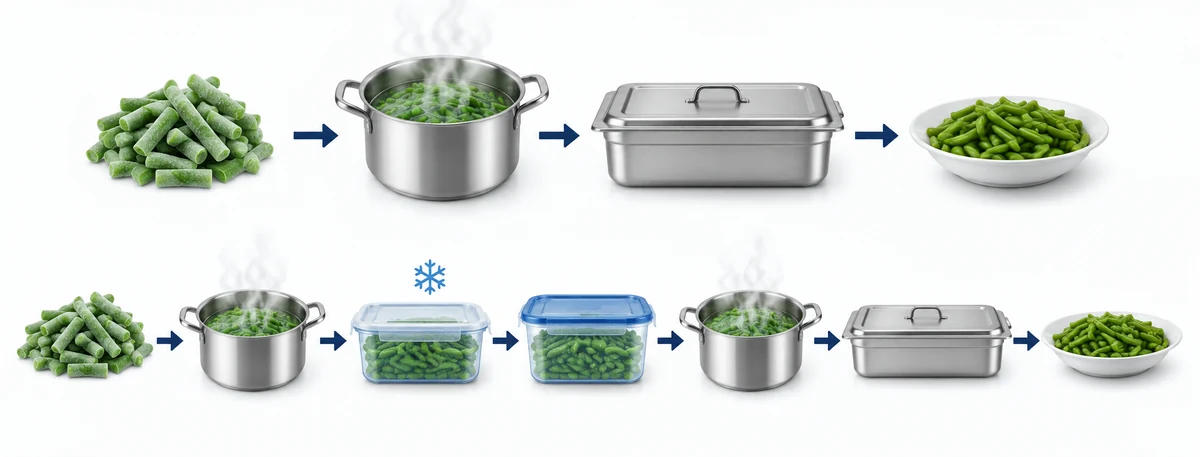
Conceptual process routes only; no temperature, time, or casserole outcome is established.
Account for thaw water before thickening the sauce
Water balance is often the hidden variable behind a disappointing casserole. Frozen beans can carry ice or release liquid as they warm. Mushrooms may release moisture while cooking. Condensed soup, homemade roux, cream and stock bases have different thicknesses. If a cook changes the bean route and the sauce formula together, a watery result says little about which change caused it.
Start with the sauce independently. Cook mushrooms or other wet additions until their excess liquid is managed according to the recipe. Make a sauce that can coat a spoon and bind to beans, rather than relying on the oven to fix a thin mixture. Then note how much liquid the prepared beans bring in. If beans are thawed, let them drain in a colander and inspect the water remaining on them. Squeezing them aggressively to eliminate all water would distort the ingredient; the aim is a repeatable preparation, not a dry bean. For a repeatable trial, note how the sauce coats a spoon before assembly and whether free liquid appears after baking. Those observations help separate the starting sauce from water introduced while the beans heat.
For direct-frozen assembly, allow for the possibility that some water will enter the sauce later. Do not respond by arbitrarily doubling thickener. Too much starch can create a pasty coating and hide the bean bite. A better trial is to keep the sauce formula fixed, observe whether the baked centre is loose, and make a measured change in the next batch if needed. The route may also require a different dish depth or heat distribution rather than simply more starch.
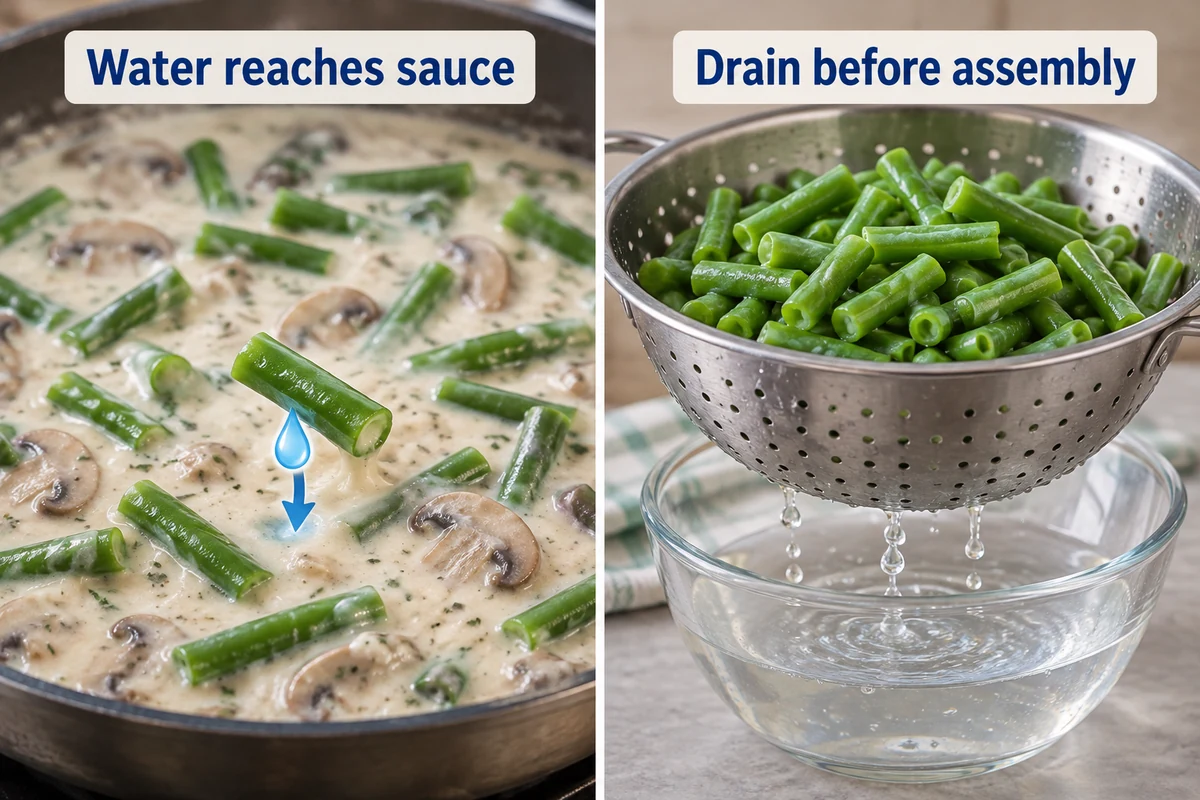
Conceptual water balance in the casserole. Compare the actual bean preparation and sauce; no moisture volume is measured.
Balance the hot centre with the exposed edges
Look at the casserole as a small heat-distribution problem. The top and edges can bubble and brown while the centre lags. A browned onion topping is appealing, but it does not show what happened to beans under the sauce. Nor does a vivid green bean at the surface prove that a frozen centre has been heated through. Use the package directions and, where appropriate for the whole dish, check the centre with suitable food-safety practice rather than using appearance alone.
Assemble in an even layer and avoid one dense mound of frozen beans under a thin rim of sauce. Stir or distribute components as the recipe permits so that the central portion resembles the edge in ingredient ratio. If the topping browns before the casserole is adequately heated, protect the top or add it later rather than stopping the bake too soon. Several published recipes add or finish the crisp topping near the end for this reason. The topping is a separate texture from the beans, and optimizing it must not obscure the bean result.
Evaluate a spoonful from the middle and one near the edge. Record sauce coating, bean integrity and actual bite. If the edge is dry while the centre is watery, the problem is not solved by declaring all beans overcooked or undercooked. Check dish depth, sauce ratio, distribution and oven behaviour. If the centre is hot and the beans are soft everywhere, reduce avoidable prior heat or shorten unnecessary holding next time, while keeping the required heating intact.
Check bite at serving and after reheating
A casserole often waits on the table or a service line. During that period the sauce continues to settle and beans remain hot. The first spoon from the oven may not represent the plate served later. Define a realistic serving interval and compare both points. Use an actual bite test, not a colour scale: lift several bean pieces, check that they remain distinguishable, and taste their centre under the sauce.
Reheating is a second endpoint. If the dish is designed for make-ahead service, prepare equal portions, cool and store them safely, and reheat by the intended method. Compare their bean bite and sauce after this second cycle. Food Network’s make-ahead version [3] illustrates how a recipe can be designed around freezing and a later bake, though it uses fresh green beans and therefore cannot predict the outcome for a frozen-bean ingredient.
Keep safety and texture measurements in the right order. First meet the applicable product and prepared-food heating guidance. Then compare bite. A bean that remains firm because the middle of the casserole was insufficiently heated is not a successful texture solution. Likewise, a casserole cooked safely can be improved without pretending that the pan must remain in the oven until every bean loses resistance.
Compare two casserole routes fairly
A practical comparison needs only two small equal dishes. Use one bag or one matched lot of the same frozen bean cut, the same sauce batch, equal bean-to-sauce amounts and identical dishes. Label one route “direct frozen” and the other “thawed and drained,” but include only routes allowed by the product instructions. If the pack requires a separate cooking step, design the two routes around that requirement rather than creating an unsafe control. Place the dishes in the same oven under comparable conditions and rotate them only if the normal recipe calls for it.
Record the state of the beans at assembly. Were they loose or clumped? Was visible water left after thawing? Did the sauce coat them before baking? Note the dish depth and topping stage. After adequate heating, serve equal spoonfuls from centre and edge. Compare the bean’s defined shape, resistance to biting, sauce thickness and free liquid in the dish. Repeat at the actual serving delay. A route that looks better in the baking pan but tastes soft on the plate should not win a service decision.
Change one factor in the next trial. If the direct-frozen dish is watery but the bean bite is good, adjust the sauce first or compare an allowed thaw-and-drain route before changing the bean cut or oven. If the thawed dish is thick but too soft, investigate thaw duration and any pre-cook before adjusting the bake. If both dishes are soft, the cause may lie in the bean form or total heat exposure. A short record of conditions turns a vague “mushy” complaint into a reproducible decision.
Troubleshoot softness without undercooking
When beans collapse into the sauce, trace the heat stages backwards: supplier processing as stated on the pack, any thaw or pre-cook, oven time, hot hold, and reheat. You cannot reverse every effect by shortening only the final bake. If a pre-cook is necessary but leaves no margin for the oven, consider assembling with the beans later in a tested process, adjusting the baking dish or using a bean form with a better outcome. Do not simply stop before the centre is adequately heated.
When the beans are pleasantly firm but the sauce is runny, separate texture from liquid balance. Drain if allowed, reduce wet mushrooms, or adjust the sauce after observing a matched trial. When the sauce is tight and beans seem dry, check whether the dish sat hot too long or the sauce reduced unevenly. A little sauce adjustment may help; another bean cut will not necessarily fix the problem. If the topping loses crunch while the beans remain fine, revise the topping schedule rather than overcooking the entire casserole.
Select the bean form for the dish
Choose whole, cut or French-style beans in light of the service. Whole beans show a strong visual identity but may distribute unevenly in a small portion. Short cut beans can spread through sauce and fit a spoonful; thin strips may integrate more fully. Compare actual products under one cooking method instead of assuming the names predict identical bite. Check broken-piece share and visible cut uniformity because they can alter how much of the dish reads as bean rather than sauce.
For a product-development or foodservice trial, describe the bean cut, sauce, dish depth, heating method and evaluation point together. A note saying only “frozen beans stayed firm” is too thin to reproduce. A sample comparison with fixed preparation conditions lets ingredient teams see whether a different cut solves the real problem or simply changes the look of the dish. The bean form should be selected for the baked and served casserole, not for how attractive the pieces look straight from the freezer.
The most reliable path is to satisfy the package cooking directions, control water entering the sauce, and assess the centre and edge at service. Use a matched test if the dish must be repeated at scale or reheated later. Those steps preserve the possibility of a defined bite without turning undercooking into a texture tactic.
View frozen green beans
Review frozen green bean forms and cuts. Compare the actual preparation in your casserole sauce, then check center heating and serving bite.
View product forms →