


On this page
Choose the handling route for frozen baby corn skewers by testing whether the actual cobs can be threaded without splitting, then follow the pack’s cooking instructions before judging the grilled bite. A controlled thaw and drain may make some products easier to pierce and give a drier grilling surface; another product may be designed for cooking from frozen. Neither route should be declared universally better without trying the specific pack. A skewer is optional: if cobs crack or slip, a grill tray or flat plate can cook them without forcing a stick through them. Grill marks show what happened at the surface, not whether the centre has met the product’s heating directions.
Most visible grill recipes use fresh or canned baby corn rather than frozen whole cobs. A cookbook author [1] notes that baby corn can be brittle to skewer and uses a flat plate instead. BC Living’s skewer recipe [2] advises a rack so small cobs do not fall through grill bars. Those are useful handling clues, but neither provides a proven heating time or texture outcome for every frozen product. Treat the frozen package as the preparation authority and the recipe as an equipment idea.
Choose a handling route that fits the pack
First read whether the frozen baby corn is whole or cut, whether it is described as ready to cook or subject to a specific heating method, and whether thawing is allowed. A product that requires cooking should not be treated as ready to eat because its exterior browns quickly. If the instructions specify a preparation method, build the skewer or tray process around it. If the pack gives a safe alternative for thawing, use that method rather than leaving cobs on a counter while preparing the rest of the meal.
Next examine the physical lot. Are cobs straight enough for a skewer, or do many have bent or broken tips? Are pieces stuck together? Is the centre of the cob dense enough to take a stick without splitting? A photograph can show shape but cannot answer all of those questions. Prepare a small sample under the intended route and note how many pieces remain whole after handling. That is a practical kitchen check, not a claim about XMG’s or any supplier’s historical result.
Choose the equipment before choosing a decorative presentation. A grill with wide gaps may need a perforated tray or rack to keep small cobs from falling. A flat plate can give contact browning without piercing fragile pieces. If bamboo skewers are used, follow the skewer maker’s guidance for preparing them and keep exposed ends away from direct heat where possible. A metal skewer changes handling again; its heat conduction and grip differ. The basic decision is whether the cob remains secure through turning and service.
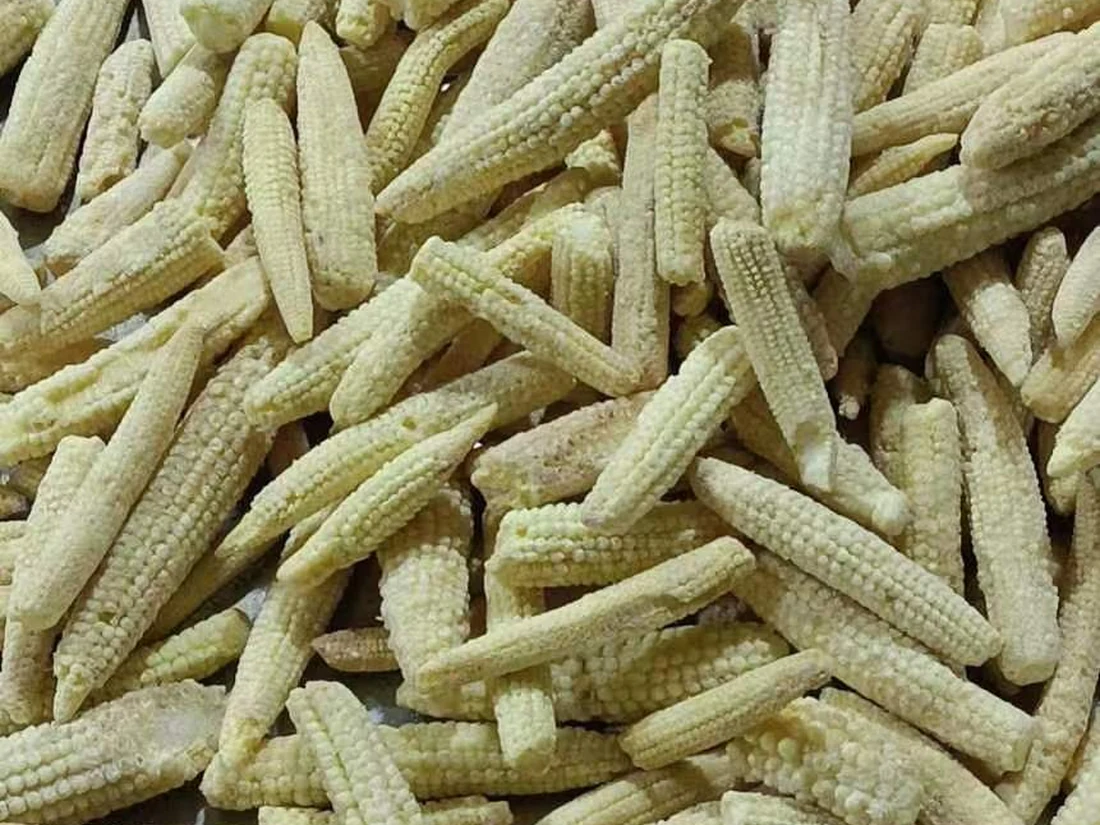
The photograph shows baby corn product form before threading or grilling.
Keep food safety and bite as separate checks. First confirm that the chosen route meets the frozen product’s cooking instructions. Then decide whether the finished cob is warm and tender with the resistance desired for the menu. Charred patches are a flavour and appearance feature, not a substitute for checking the centre or following the label.
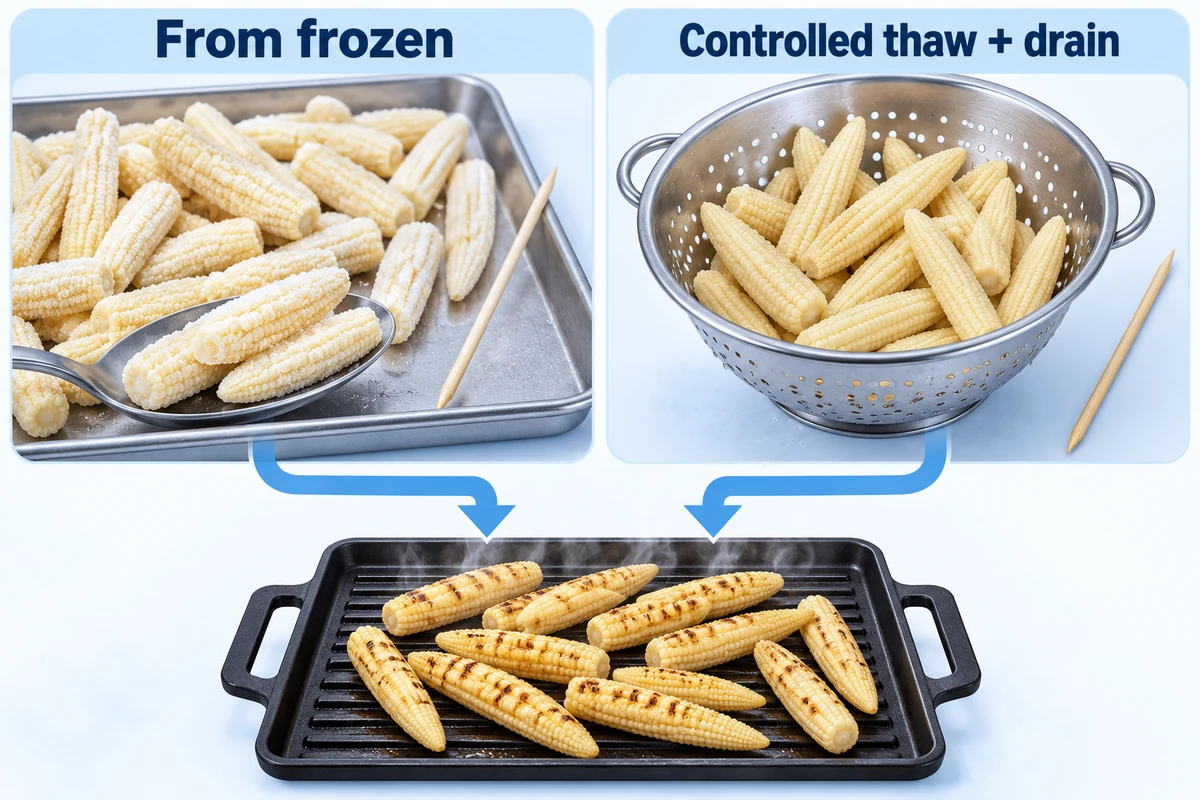
Illustrative handling routes. Controlled preparation and drained surfaces can affect threading; follow the actual product instructions.
Why frozen baby corn can be awkward to thread
Baby corn is small, with a relatively narrow core. A skewer that is too wide for the cob, pushed across a thin end, or driven through a bent piece can split it. A hard-frozen cob may resist the stick; a fully thawed cob may bend or tear depending on its structure. These are handling possibilities, not fixed properties of all frozen baby corn. The outcome depends on cob diameter, cut, previous processing, temperature and skewer type.
Support each cob on a stable board or tray and keep fingers away from the skewer’s path. Select a straight, sound piece for the first test. If it cracks under gentle pressure, do not force every cob in the bag to behave like that sample. Try a narrower skewer, a different orientation or a tray method, provided the product instructions still work with the chosen heating route. If the cob simply rotates or slides after piercing, the issue may be grip rather than breakage. A double-skewer arrangement may help on an appropriate cob, but it adds punctures and should be tested rather than assumed to solve the problem.
Threading before thawing and after a controlled thaw answer different questions. A frozen cob may keep its shape but resist penetration. A thawed cob may accept a stick more easily but carry water that later steams on the grill. Compare both only if the pack permits the two states. Record the number of cobs tried, visible splits, pieces that fall off during turning, and finished bite. This small sample is more informative than a general instruction to “thaw first.”

The caliper is visible for scale context only; this image does not establish a verified measurement.
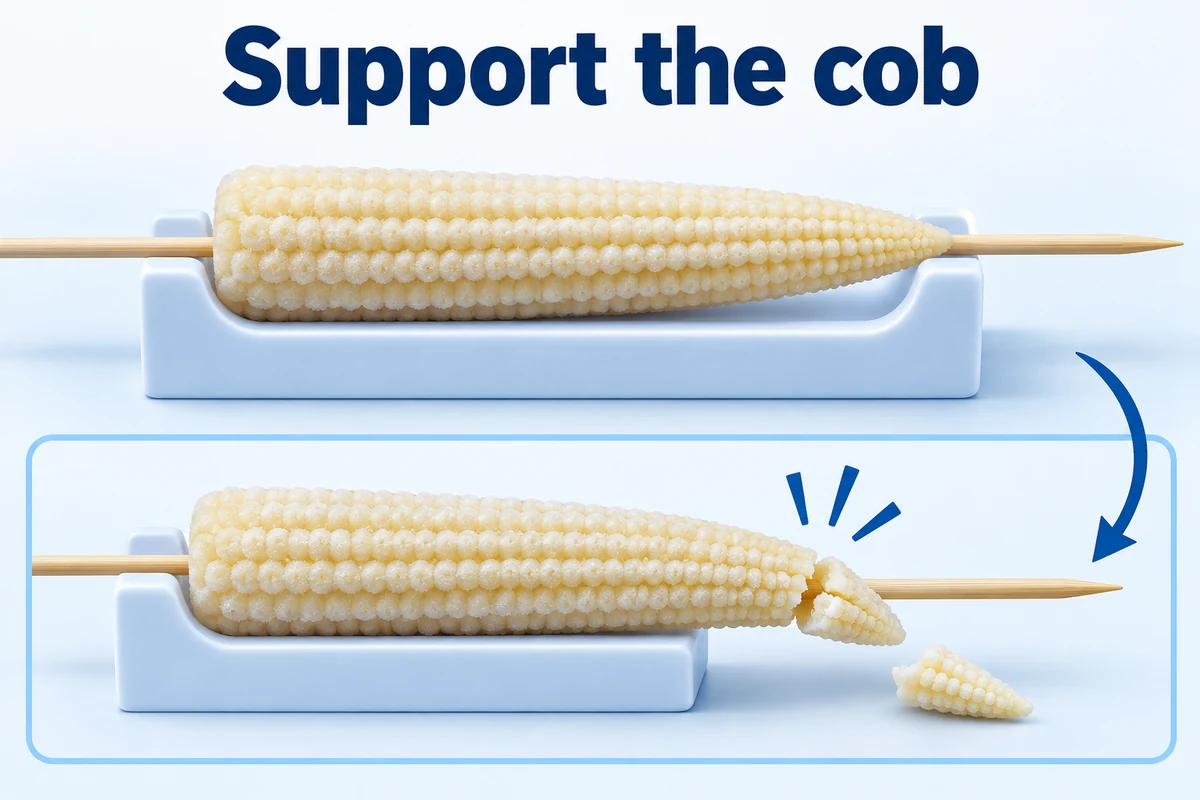
Conceptual threading comparison: support the cob and assess splitting in the actual size and thaw condition. No strength result is claimed.
Do not confuse baby corn with small ears of mature sweet corn. Their structure and eating experience differ. A recipe for frozen mini sweet-corn cobs may involve a tougher cob and a different heating route. Use baby-corn-specific examples for presentation ideas, and use the frozen baby corn product’s own label for preparation.
Control surface water before seeking grill colour
A damp cob can steam against a tray or grill surface before it browns. Thawed frozen baby corn may carry droplets or thaw liquid; from-frozen pieces may develop surface moisture as ice melts. In either case, examine the actual product. When the permitted route includes thawing, drain it and gently dry the surface before applying a light coating or marinade. Do not squeeze the cob to remove water, because that can damage the texture you are trying to preserve.
Marinades introduce another layer. A watery marinade can add liquid to the grill; a sugary glaze may colour or char before the centre is heated. For the first comparison, use a simple, light coating so the corn’s own bite is easy to judge. Add a more complex sauce only after the heating and handling route works. If several vegetables share a skewer, remember that each piece has a different thickness and heat requirement. A browned pepper does not tell you the baby corn has followed its pack directions.
A grill tray and an open skewer do not evaporate surface water in the same way. The tray supports fragile cobs and reduces loss through the grate, but crowded pieces may trap steam. Spread them rather than piling them. A skewer exposes more surface, yet pieces touching one another may brown unevenly. Turn carefully and assess both contact faces. The goal is a pleasing grilled surface after the preparation requirement is met, not a dramatic mark obtained by overheating one face.
Separate grill marks from heating the centre
Grill marks are produced where the surface touches hot metal or receives intense radiant heat. The centre warms by a different path. A cob can look striped and still be cool within, especially if it began frozen or was surrounded by other ingredients. Conversely, a correctly heated cob may show only light marks if cooked on a tray or flat plate. Neither appearance proves safety. Follow the product’s cooking instructions and use an appropriate check for the finished food rather than relying on colour.
For a mixed skewer, also consider any meat, seafood or other ingredient with its own safety requirement. Their cooking directions govern that ingredient independently. If the baby corn finishes earlier than a protein, it may be simpler to use separate skewers or a tray, then combine at service. That prevents the vegetable from being kept over heat solely to finish a slower component. The same logic applies to large mushroom pieces, dense onion wedges and soft tomatoes: one attractive skewer can still contain parts with incompatible schedules.
When tasting, cut a representative cob from the batch and assess the centre as well as the browned exterior. Is it tender, pleasantly resistant or fibrous? Does it break cleanly or collapse? Use several pieces of different sizes, not only the easiest one to thread. The customer eats the whole range in the serving, so a single perfect cob is weak evidence for a mixed bag.
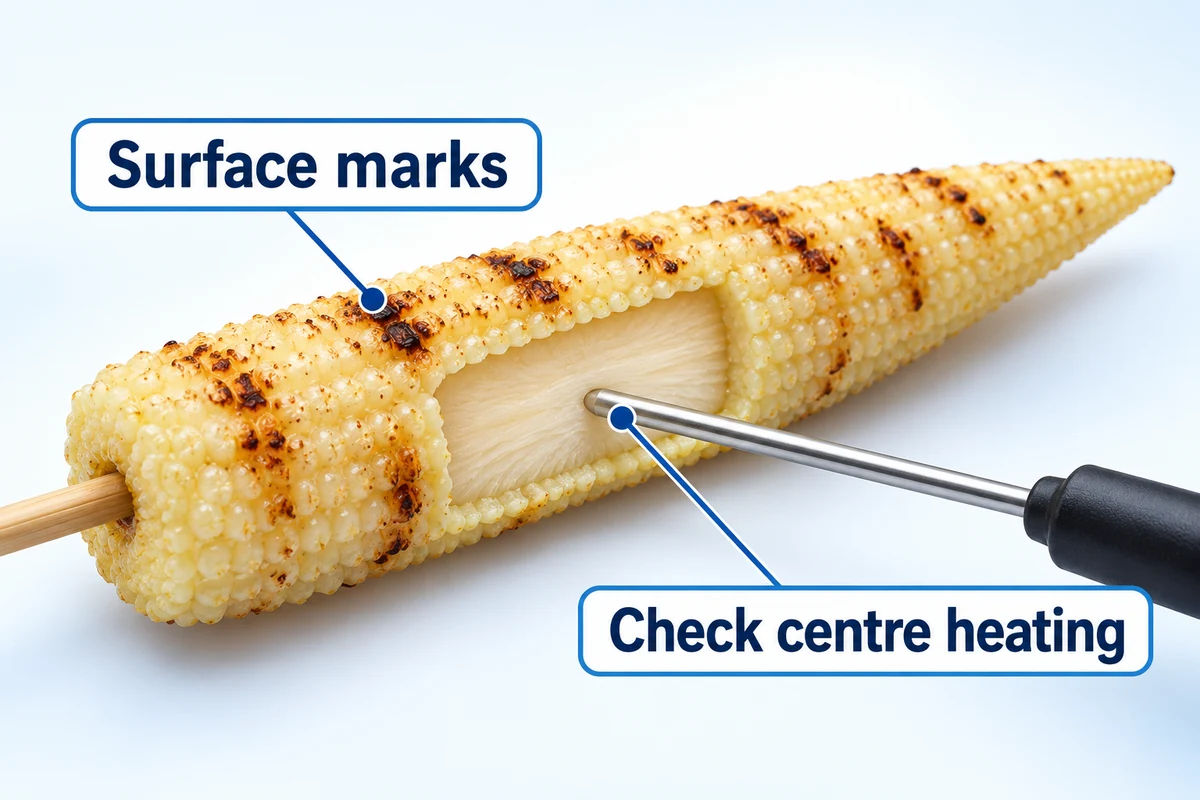
Surface marks and center condition answer different questions. Finish preparation according to the product instructions; browning alone is insufficient.
Compare breakage before and after grilling
Breakage can happen at three points: preparation, turning and serving. Count them separately. A cob that splits at threading signals a handling mismatch. A cob that falls from a skewer during turning signals poor grip or an unsuitable piece shape. A cob that breaks only when bitten may point to a texture preference or a heating route that changed its structure. One total “broken pieces” number hides the cause and makes the next adjustment harder.
Use a small tray to collect rejected pieces rather than discarding observations. Note whether the damage concentrates in thin tips, large cobs or pieces with visible prior cracks. If nearly all damage occurs while forcing a stick through the smallest cobs, using a tray may preserve more usable pieces than changing the grill heat. If intact skewers survive handling but the finished bite is too soft, change the heat exposure or initial state within the pack’s allowed process. Equipment and texture need separate diagnosis.
The visible grill result should be compared with bite at the same service point. A cob may remain intact but be watery when served; another may look attractive from the grill but soften while waiting in a covered tray. Record both appearance and eating quality after the realistic delay. This is especially useful for a buffet, catered event or prepared meal where plating and eating are separated.
Build a skewer trial around your equipment
Choose one frozen baby corn lot and two handling routes that are both permitted by its instructions. A useful first trial might compare controlled thaw-and-drain on skewers with permitted from-frozen cooking on a grill tray. If the pack does not allow the latter, compare two supported methods that do. Hold the portion weight, coating, grill setting, turning method and service delay as constant as possible. State which route meets the required preparation before judging texture.
Record the equipment: open grate, rack, perforated tray or flat plate; skewer material and width; approximate piece size; and whether pieces touch. Count cobs that split while threading and those lost while turning. After appropriate heating, compare surface water, browning, centre warmth and bite. A route that creates strong marks but loses half the cobs is not automatically a better service method. A tray route that preserves every piece but steams them into an unwanted soft texture also needs adjustment.
Repeat the promising method once at the scale you will actually serve. A single short skewer may turn easily while a full grill of mixed vegetables behaves differently. More food can cool a cooking surface and lengthen recovery. Crowding may make drainage or browning inconsistent. A small trial selects a direction; a service-scale trial checks whether the direction survives the real workflow.
On a narrow screen, swipe this table sideways to read the remaining columns.
| Keep constant | Compare deliberately | Record |
|---|---|---|
| One lot, portion size, seasoning and required heating endpoint | Allowed handling state and support method | Threading splits, turning losses and finished bite |
| Same service delay | Skewer, rack or flat plate as appropriate | Surface moisture, grill character and piece integrity |
Troubleshoot splitting, slipping and a wet surface
If cobs split as soon as they are pierced, stop forcing the skewer. Check whether the stick is too wide, the angle crosses a thin side, or the cob state is unsuitable. Try a supported approach or a flat plate. If cobs remain intact during threading but spin, choose a route that holds them more securely for turning. If pieces fall through grill bars, add a rack or tray. Each change addresses a different failure mode.
If the surface stays wet, inspect drainage and crowding before turning up the heat. A thawed product may need more time to drain under safe conditions; a crowded tray may hold steam. If the exterior chars before the centre meets the pack directions, reduce the intensity of direct contact or use a staged process that completes the required heating. If the centre is appropriately heated but the bite is too soft, look at total heat exposure, waiting and the product form. Do not solve softness by serving an underheated cob.
If the seasoning burns, separate surface flavour from cooking the vegetable. Add a sugary glaze later or use a lighter coating in the test, then check the centre independently. If a mixed skewer forces baby corn to wait for slower ingredients, cook components separately and assemble for service when practical. These adjustments are more precise than declaring frozen baby corn unsuitable for grilling.
Select whole baby corn for the service
Whole baby corn can give a clear visual identity on a skewer, but the piece must fit the skewer and the cooking method. Inspect length, diameter spread, broken tips and the share of curved pieces. Smaller cobs may be better on a tray or in a mixed vegetable grill; straighter, sturdier cobs may be candidates for threading. Those are selection hypotheses to test with the actual product, not guaranteed grades.
For an ingredient trial, describe whether the end use is open-grate skewers, a flat plate, buffet service or a reheated prepared meal. Note the handling state and the product instructions. A sample comparison under one defined grill method can reveal whether piece size or breakage is the limiting factor. Compare the finished, served cob rather than judging only frozen appearance.
The useful choice is the method that keeps pieces secure, satisfies the pack’s heating requirements and gives the bite you intend at service. Skewers are a presentation tool, not a compulsory measure of quality. When the cob’s shape or the grill makes threading unreliable, a supported grill route can be the more practical answer.
View frozen baby corn
Review whole frozen baby corn forms. Match the cob size and required preparation to threading, breakage and the grilled center condition.
View product forms →