


On this page
Yes. Frozen mango can be cooked into a sweet-sour chutney with vinegar and spices. Choose the finish first: recognisable soft pieces in a spoonable base, or a finer condiment that spreads through a sandwich or wraps around a bite of food. The starting cut, ripeness, released liquid and simmering method all influence that result.
Use a recipe that fits the mango you have and follow the pack’s preparation directions. Plain frozen ripe mango is not automatically equivalent to the hard green mango used in some traditional or validated preservation recipes. It can still make a useful cooked condiment, but the flavour balance and piece texture need to be assessed in the finished batch.
Keep home cooking and shelf-stable canning separate. This article concerns preparing chutney for chilled use, not inventing a canning process. A sour taste, a thick texture or a sealed jar does not establish shelf stability. If room-temperature storage is the goal, follow a currently validated recipe exactly, including its fruit requirements and processing instructions.
Choose a chunky chutney or a finer condiment
Imagine where the chutney will go. A spoonful alongside a curry can contain larger pieces that give a recognisable mango bite. A spread inside a sandwich usually benefits from smaller particles that distribute without falling out. A condiment for a small appetiser may need to sit in a modest mound rather than release liquid onto the plate.
A chunky finish does not require firm raw-fruit crispness. Cooked mango pieces can be soft while retaining enough boundaries to be identifiable. A finer finish does not require eliminating every visible fleck of spice. Define the actual mouthfeel you want rather than equating “smooth” with good and “soft” with failed. The best texture is the one that fits the serving.
Choose the starting cut with that aim in mind. Small dice can reduce preparation work for a fine chutney. Larger pieces give you material to assess and cut as needed. If you intend to blend the finished mixture, the purchased geometry matters less, though it can still affect the early cooking stage. A pack labelled chunks does not guarantee that the pieces will survive any length of simmering.
| Desired serving | Useful texture | Check before choosing |
|---|---|---|
| Alongside a meal | Recognisable soft mango pieces | Piece comfort and liquid around the fruit |
| Inside a sandwich | Finer spreadable condiment | Even distribution and bread wetting |
| Small appetiser portion | Spoonable base with controlled particles | Portion stability and balanced bite |
Check what is actually in the frozen mango pack
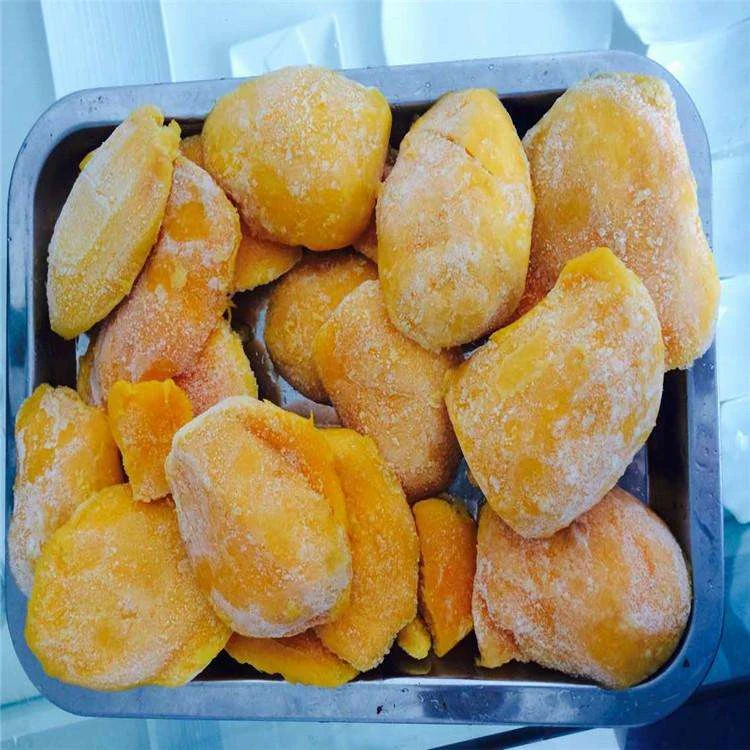
The photograph shows mango cheeks and visible frost; it cannot establish the sweetness or ripeness of another pack.
Read the ingredients and preparation directions before choosing quantities. Plain mango, sweetened puree and mango in a prepared blend bring different things to the pan. Added sugar or another fruit can change the sweet-sour balance. A puree may also have a different particle texture from mango dice even if both are described informally as frozen mango.
Inspect the pieces once prepared according to the instructions. Notice their size range, visible fibres and how easily they separate. Do not use colour alone as a sweetness or ripeness measurement. Yellow or orange flesh identifies appearance, while tasting a properly prepared sample gives information about flavour. A large piece that looks intact may still soften quickly when stirred.
The mango product forms illustrate the distinction between dice, chunks, slices and puree. For a home batch, the same practical question applies: how much cutting, softening or blending will be needed to reach the intended condiment? Choose the form for the process rather than assuming that the smallest cut must always make the best chutney.
Ripeness changes the sweet-sour direction

Mango cubes provide product context for the chutney discussion. Taste and ripeness require assessment of the actual batch.
A ripe-fruit chutney and a green-mango preparation can have different flavour and texture goals. If your frozen fruit is sweet and soft after preparation, a formula intended for firm unripe fruit may need more than a casual substitution. For chilled cooking, select a recipe with an appropriate ripe-mango option and adjust flavour by tasting the finished condiment with its intended food.
Evaluate sweetness and acidity separately. A pleasing sweet bite is not evidence that the fruit has enough acidity for preservation. An intensely sour taste is not a pH measurement. Those sensory observations can guide a meal, but they cannot validate a canning adaptation. Avoid turning a preferred flavour balance into a claim about the jar’s safety.
Soft fruit may work particularly well when you want the mango to contribute to the surrounding base. If distinct pieces are the priority, begin with a preparation that is gentle enough to let you observe how they change. Keep the first comparison small. Do not assume that a second pack with a similar colour will need the same simmering period or sugar addition; repeat the texture and flavour assessment.
Decide whether to retain the thaw liquid

Illustrative component separation: drained mango and collected juice are shown separately. Neither pan represents a complete compared chutney recipe.
Swipe to view the diagram on smaller screens.
Frozen mango can contribute liquid as it thaws or heats. Decide whether your chosen recipe includes that liquid rather than losing track of it between the bag, bowl and saucepan. If you thaw first, use the product’s directions and suitable refrigerator handling. Keep the fruit and collected liquid in clean containers, separate from raw animal foods.
Retained liquid becomes part of the cooking base. Draining it changes what enters the pan and may shorten the work needed to reach a concentrated texture. Neither choice is universally correct: a recipe designed around drained fruit should be followed on that basis, while one designed to cook from frozen may manage the liquid differently. Do not mix the two methods while keeping every other quantity unchanged and expect an identical result.
For a small comparison, record the starting fruit amount and whether released liquid is included. This helps distinguish a change in mango from a change in preparation. Drainage is a physical separation step, not a sanitation process. The National Center for Home Food Preservation [1] notes that freezing does not sterilize foods, so the preparation requirements still matter after the pieces leave the freezer.
Vinegar, sugar and spices perform different jobs
Vinegar supplies acidity and its own flavour. Sugar changes sweetness and contributes to the character of the cooked base. Ginger, garlic, chilli and other spices create the savoury aromatic direction. More of one is not a direct substitute for another. A chutney that is too watery cannot always be corrected simply by adding sugar, and a weak aroma does not necessarily call for more vinegar.
For a chilled condiment, use a recipe as the starting structure and taste small cooled portions as cooking progresses. Keep track of additions. A particularly fragrant vinegar can dominate the mango before the mixture is thick, while a strongly spiced base may cover the fruit. The serving food matters too: a small condiment beside a rich meal can taste different from a generous spread in a plain sandwich.
Preservation recipes impose a different boundary. Their specified vinegar strength and quantities are part of the tested formula. Do not replace vinegar with an arbitrary splash of citrus or reduce it because the mixture seems sharp if you intend to can the result. Sensory adjustments described for a refrigerator condiment are not permission to change a validated canning recipe.
Simmer for the texture you intend to serve

Illustrative method: mango enters a vinegar and ginger base; a chunky preparation can be worked toward a finer texture. This is a schematic sequence, not two measured parallel outcomes.
Swipe to view the diagram on smaller screens.
Bring the mixture through the cooking sequence in the chosen recipe, observing both the pieces and the surrounding liquid. As fruit softens, stirring can change how much remains as identifiable chunks. A vigorous mash produces a different result from gentle movement around the saucepan. Choose the tool and action that fit the desired finish rather than using the same treatment for every batch.
Watch the base as it becomes more concentrated. A spoon drawn through the pan can help you notice the change, but no single trail length or bubbling pattern establishes the right texture for all recipes. A wide pan, a deep saucepan and a larger batch will behave differently. The endpoint is the properly prepared chutney at its intended serving consistency, not an exact time borrowed from another quantity.
If the fruit reaches a suitable softness while the liquid still needs work, consider the recipe’s permitted handling before continuing to cook everything vigorously. For a future batch, managing starting liquid or changing the cut may preserve more pieces. If a finer condiment is wanted, softer fruit can be useful. Longer cooking is not automatically an improvement; it may shift the balance from distinct fruit to a more uniform base.
Assess a cooled spoonful before making corrections
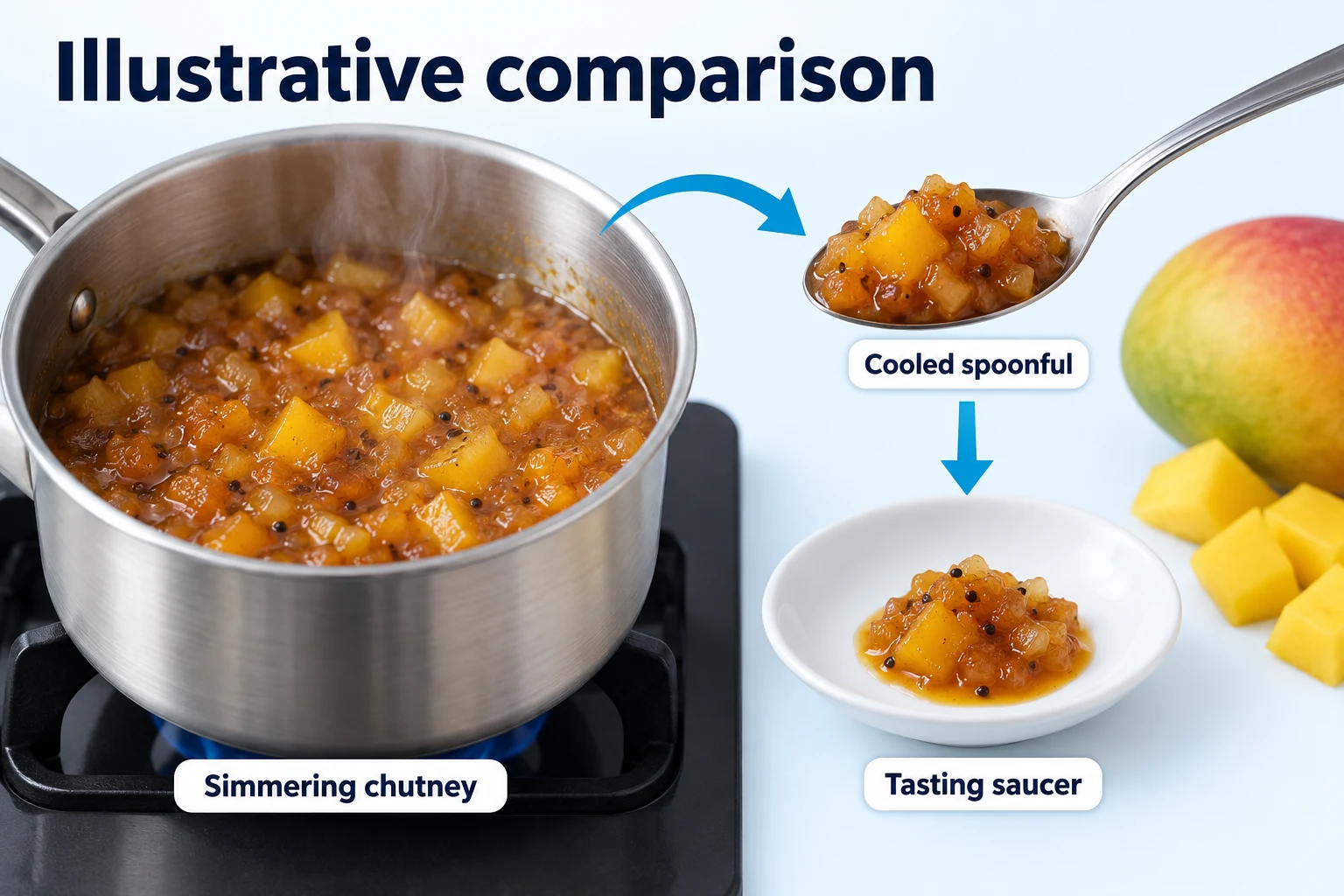
Illustrative serving check: inspect a cooled spoonful and a small tasting portion before correcting the whole pan.
Swipe to view the diagram on smaller screens.
Take a small portion into a clean dish and let it cool enough for comfortable tasting. Notice whether the base stays with the fruit, whether free liquid collects around it and whether the pieces are pleasant to eat. Compare that spoonful with the texture needed for serving. A chutney that pours easily while hot may be considerably less fluid later.
Taste the cooled portion with the intended food before adding another round of seasoning. In a sandwich, bread and cheese may change how the acidity and sweetness are perceived. Beside a curry, the spice balance of the meal affects whether the chutney feels refreshing or repetitive. A good standalone spoonful is a useful check, but the combined bite makes the final decision.
Correct one problem at a time. If the cooled mixture is too loose, inspect whether there is excess free liquid or simply a fine, soft fruit base. If it is too sweet, identify whether the mango, added sugar or another ingredient caused the imbalance. Acid can change flavour balance without undoing the amount of sugar already present. Keep a small sample for adjustment before altering the whole batch.
Use the chutney with the rest of the meal
A fruit-forward chutney can accompany savoury food without needing to become aggressively hot or sour. Choose its portion and particle size for the plate. Larger soft pieces can work as a side condiment; a finer mixture can spread more evenly. Try a small amount first when the main food already has a sweet sauce or glaze, since doubling the sweet element may overwhelm the meal.
For sandwiches and wraps, check whether the chutney releases liquid that wets the bread or tortilla. Use a modest spread and assess the assembled food after the interval you realistically expect before eating. A texture that seems perfect in the jar may be awkward when combined with a warm filling or carried in a packed meal.
For a shared table, use a clean serving spoon and avoid moving utensils from raw-food preparation into the condiment. Refrigerate the batch promptly according to appropriate handling guidance and the chosen recipe. The FDA’s handling advice [2] covers prompt chilling and clean separation. Recipe-specific storage instructions do not automatically apply after changing ingredients, quantities or preparation, so do not assign an unsupported shelf life to an improvised chutney.
Keep refrigerator chutney separate from canning
The University of Georgia’s validated mango chutney formula [3] specifies hard unripe mango of named varieties, vinegar strength and processing conditions. It is not evidence that any bag of ripe frozen mango can be substituted into the same canning process. The fruit requirements are part of the recipe rather than optional flavour suggestions.
A lid that closes or a jar that appears sealed does not prove that a modified recipe is suitable for room-temperature storage. Neither does a thick base or a tart taste. If canning is your aim, choose a validated formula that explicitly covers your ingredients and follow its full instructions. When your fruit does not match, choose another appropriate validated recipe rather than guessing a new processing time.
For ordinary chilled use, keep the batch within the recipe and food-handling guidance you are following. This approach leaves room for culinary choices without presenting them as preservation research. You can enjoy a ripe frozen-mango chutney as a cooked condiment while recognising that its storage method is a separate decision from whether it tastes good with dinner.
Compare another pack without losing the recipe
When you find a finish you like, record the mango form, preparation basis and final cooking observations. Include whether juice was retained, how finely the fruit was cut, and whether the mixture was mashed or left in pieces. Keep the recipe itself alongside these notes. Otherwise, a later change in the saucepan may be blamed on the fruit when the preparation has also changed.
For a repeat comparison, hold the recipe and serving food steady. Observe piece survival, fibre sensation, free liquid and cooled spoonability before making flavour adjustments. XMG’s mango pieces versus puree guide explores the separate roles of those forms in desserts; chutney uses the same distinction for a different finished condiment. The sampling guidance can help commercial readers document their own application basis.
Choose the pack that gives the texture and flavour your meal needs after its actual preparation. A familiar-looking frozen cube is only the starting point; the useful result is a properly handled, spoonable condiment with a deliberate balance of fruit, vinegar and spice.
