


On this page
Blueberries can look wrinkled after thawing because their skin has less support from the softened tissue underneath. Freezing and thawing alter the fruit’s water distribution and structure; some liquid may escape, leaving the skin slack rather than smoothly stretched. Drying before freezing or during frozen storage can also contribute. A photograph of a wrinkled berry cannot tell you which history occurred.
The useful distinction is between a berry that has lost its neat shape and a product that is unsuitable for a particular use. A slightly collapsed blueberry may blend well into a cooked sauce while looking disappointing as a whole-fruit garnish. Appearance also cannot establish food safety. Follow the pack’s preparation instructions and applicable local advice independently of the texture assessment.
Quick answer: Wrinkling usually reflects a change in support beneath the skin. Check softness, broken skins and free liquid separately, then judge the fruit in the application you actually need. Do not infer a cold-chain accident or safe raw consumption from wrinkles alone.
A wrinkled skin is a shape change, not a diagnosis
Look closely at what you mean by wrinkled. Fine folds on an otherwise whole berry differ from a deeply collapsed berry, a split skin or a pale dry patch. These observations can occur together, but recording them as one defect hides useful information. A berry may have a wrinkled surface with little liquid visible because the liquid has already been drained away. Another may remain fairly rounded while releasing juice through a small split.
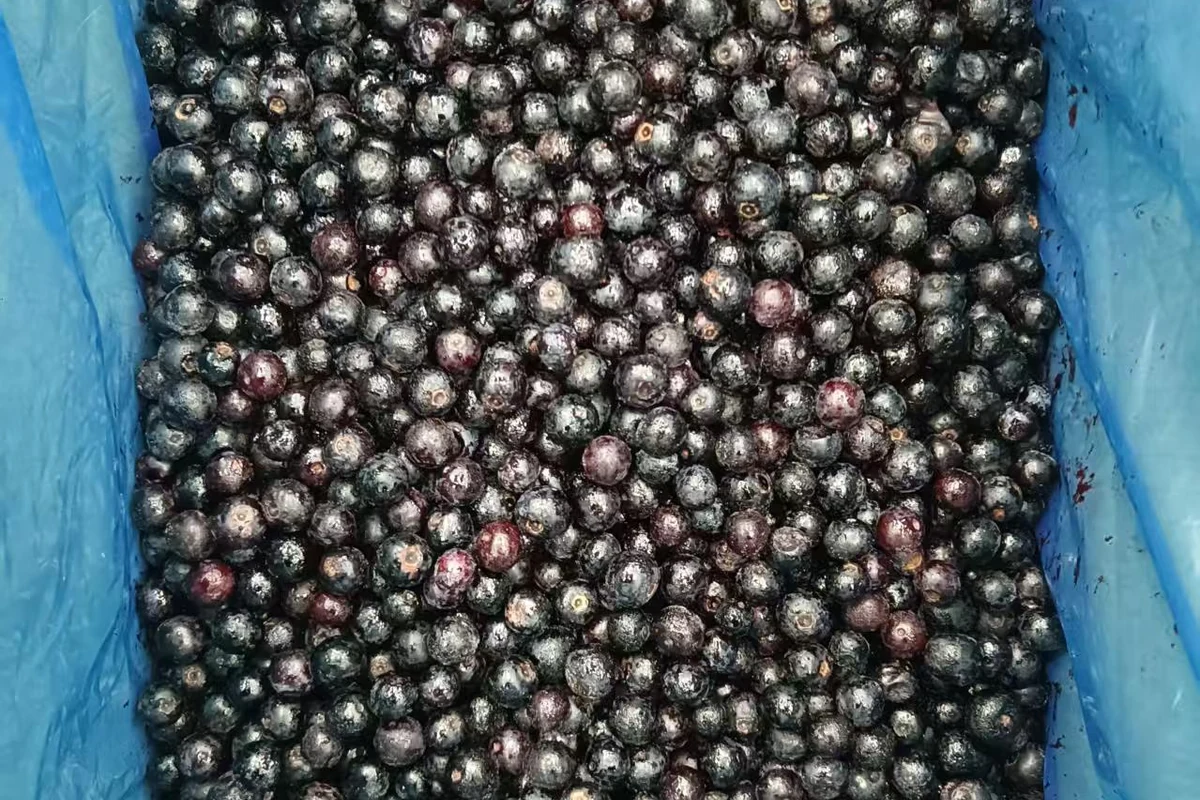
The dark-blue surface and the pale bloom also deserve separate attention. Bloom is a surface feature; it does not measure firmness inside. Frost on a frozen berry can obscure its shape, and wet skin after thawing changes how light reflects from it. Comparing a photograph of frosted fruit with one of wet thawed fruit can exaggerate the impression of deterioration even before you examine texture.
For a household decision, begin with the label, the known storage and handling history, and the intended dish. For a product trial, retain the lot identity and the actual sample conditions. The question “Will this work in a puree?” has a different acceptance basis from “Will this look plump on top of a chilled dessert?” Neither can be settled by counting wrinkles alone.
Why the skin loses support after thawing
A blueberry is not a hollow bag of juice. Its flesh consists of plant tissue containing water, cell walls and membranes. The skin follows the shape of the supported interior. During freezing, ice formation and associated water movement can alter that tissue; after thawing, the fruit generally has less of the crisp structure associated with fresh berries. The University of Minnesota’s freezing guidance [1] describes this structural softening in produce.
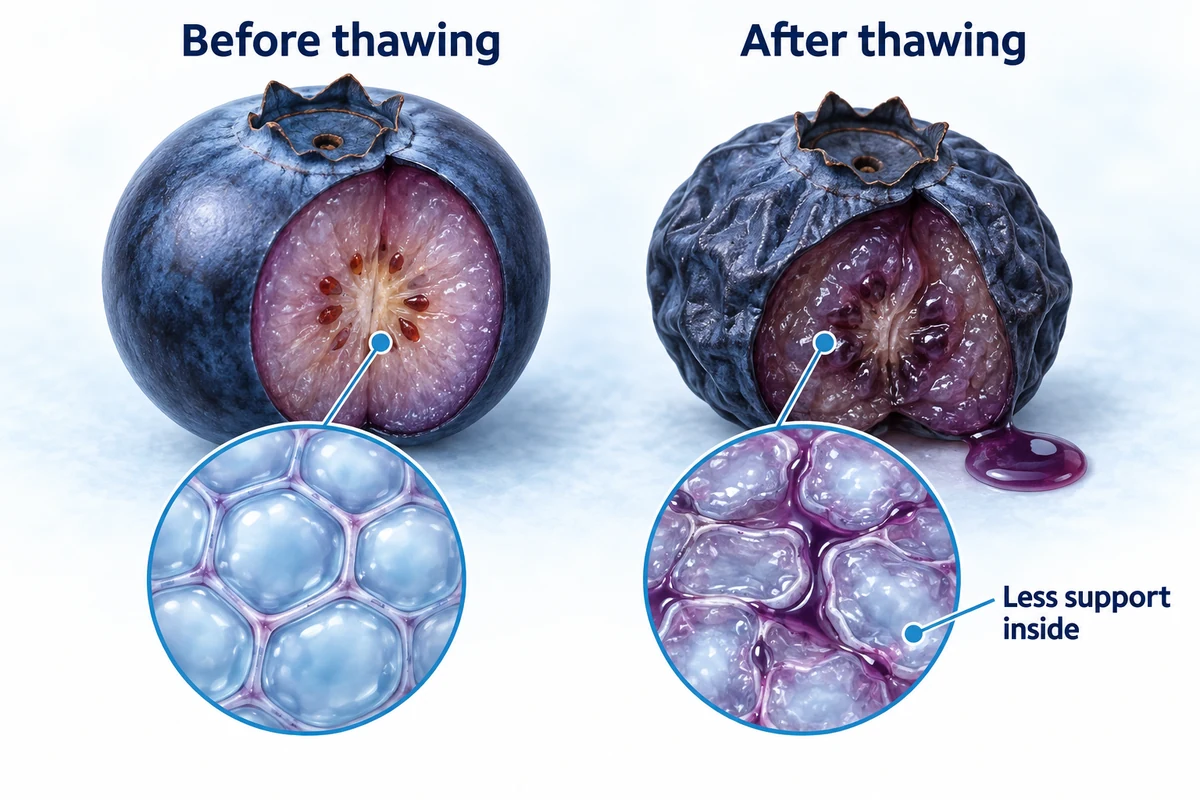
When the interior softens or loses some of its liquid, the same skin may have to sit over a smaller or less firm volume. Folds can then become visible. This is a practical explanation of the shape change, not a claim that every wrinkle represents a specific number of damaged cells. You cannot calculate drip loss, freezing speed or residual firmness from the surface alone.
The original fruit matters too. Different berries start with different size, maturity, firmness and condition. A berry already losing water before freezing has a different starting point from a firm, recently prepared berry. Handling that breaks the skin changes the route by which liquid can escape. These variables help explain why not every berry in the same thawed portion looks identical.
Blueberry research compares freezing and thawing conditions rather than treating all frozen fruit as one material. A study of thawing methods in Ventura blueberries [2] found differences under its specified experimental conditions. Its result does not establish a universal household thawing ranking for every variety, pack and storage history. Use research to identify variables worth controlling; use the actual product instructions to decide how to handle your pack.
Separate thaw drip from drying during storage
Thaw drip is liquid released as frozen fruit becomes thawed fruit. Drying during storage is moisture leaving the product over time, for example when packaging offers inadequate protection. Both can reduce the fruit’s water content, yet they occur at different stages and call for different questions. One is observed during a defined thaw; the other requires evidence about the earlier fruit and its packaging history.
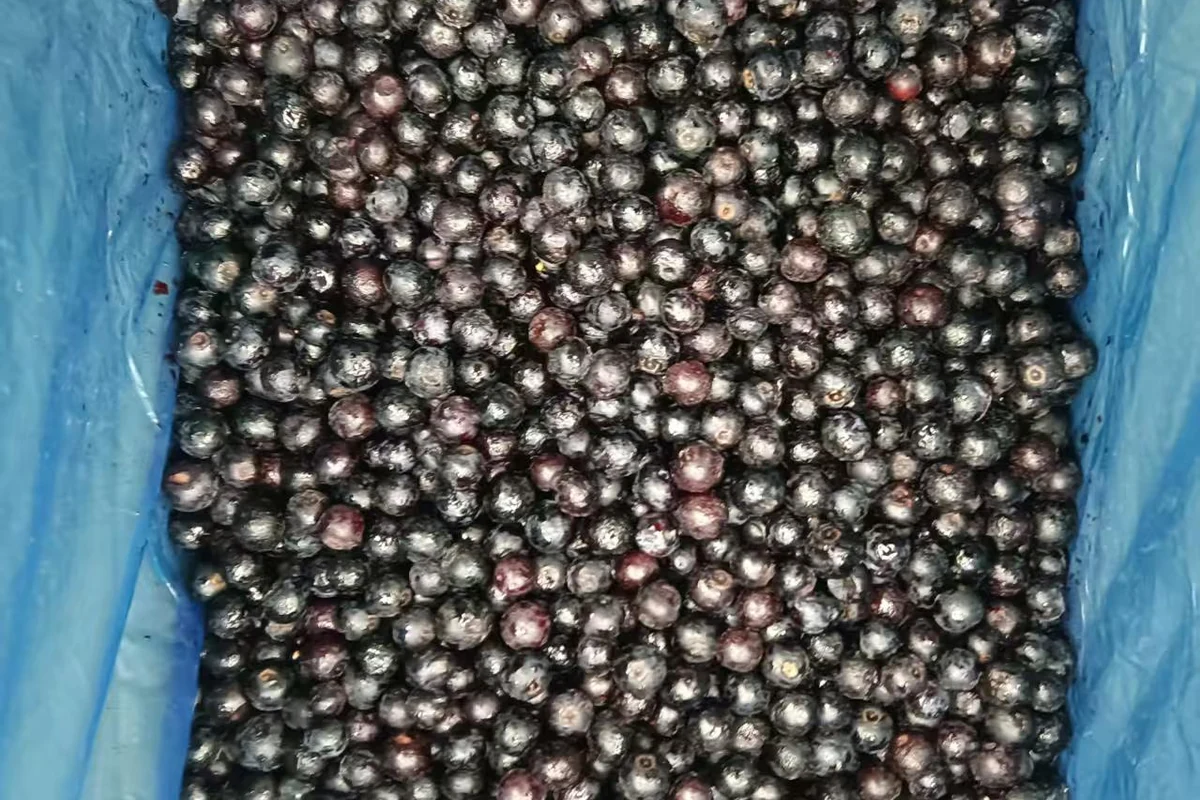
If the berries were already visibly shrivelled while frozen, investigate the initial condition and storage protection before attributing everything to the final thaw. If they looked rounded while frozen but became slack as liquid collected below them, the thaw observation points toward loss of support and liquid release. It still does not identify the complete cause. Frozen appearance can conceal softness that only becomes apparent later.
The New Mexico State University guide to freezing fruit [3] explains the relationship between ice formation and softer thawed texture. Its home-preservation guidance is useful background, not a specification for a commercial blueberry lot. The meaningful application question is how much of the original shape remains under your conditions and whether that shape is needed in the finished food.
A pool of juice also depends on what happened after release. A shallow dish displays liquid differently from a sieve; absorbent paper can hide it; rinsing adds water that may later collect underneath. Record those differences before treating two photographs as comparable. Purple liquid on a plate is a visible observation, not by itself a diagnosis of repeated thawing.
Compare berries under the same conditions
A simple comparison becomes useful when you control the handling that could otherwise explain the difference. Use comparable portions from identified packs or lots. Follow their instructions. Keep the containers, thaw conditions and observation point consistent. If one sample is still partly frozen while another is fully thawed, their firmness and apparent liquid release do not describe the same state.
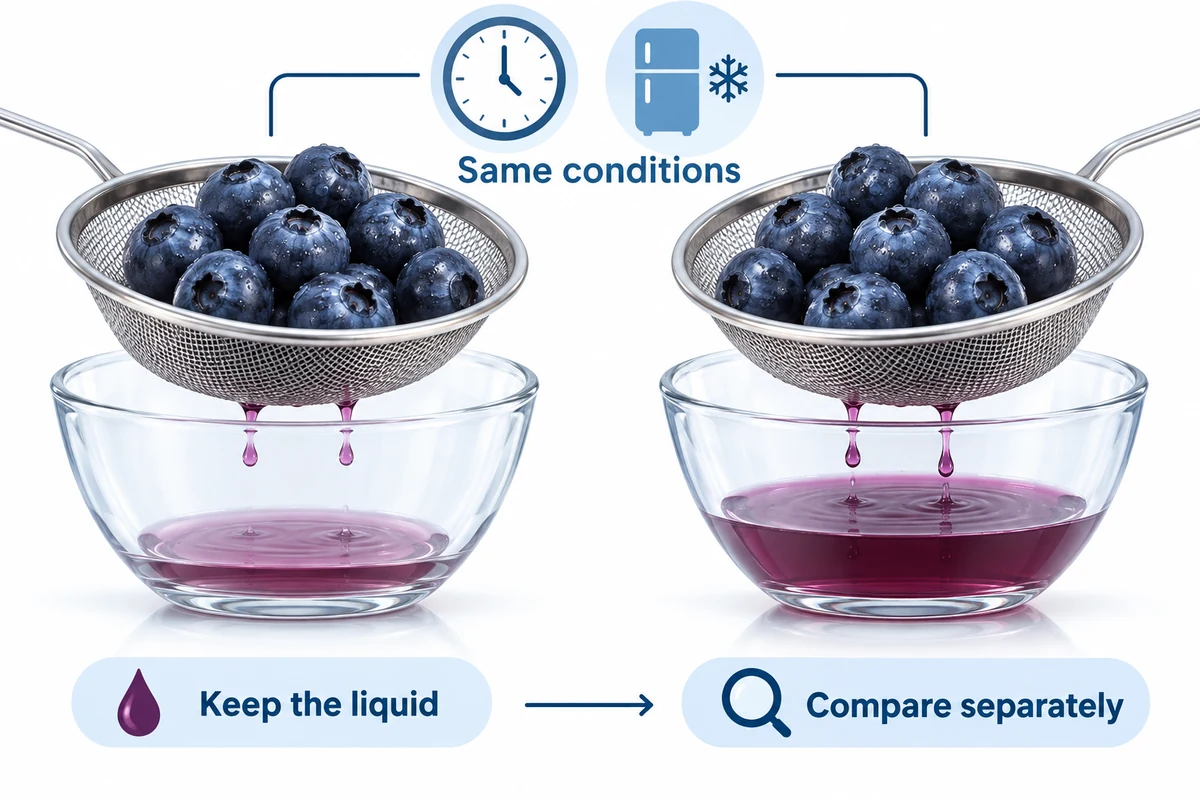
Photograph each portion before draining, using the same lighting and background. Record whole berries, visibly collapsed berries and split skins separately. If free liquid is important, collect it using the same draining arrangement rather than squeezing one sample and leaving the other untouched. A mass measurement is more informative than judging liquid depth in bowls of different widths.
Define the denominator if you calculate a drip fraction. The starting mass of the frozen portion, the mass of drained fruit and the collected liquid are different quantities. Ice adhering to the fruit, liquid left on the sieve and handling losses can affect the balance. A kitchen comparison can reveal practical differences, but it is not automatically a validated laboratory method or a food-safety test.
| Observation | Useful record | What it cannot establish alone |
|---|---|---|
| Wrinkled surface | Frequency and degree at the same thaw state | Storage temperature history |
| Split skin | Count separately from intact folds | When the split occurred |
| Free liquid | Collected mass with a stated starting basis | Whether every berry lost the same amount |
| Softness | A consistent handling or application assessment | Microbiological suitability |
Keep the comparison small enough to repeat. If you change the thaw method, portion size and draining time simultaneously, an improved appearance does not tell you which change helped. Start with one difference that matters to the actual recipe or presentation, then decide whether another comparison is necessary.
Choose the use before judging the appearance
Whole-fruit decoration makes surface shape conspicuous. A neat row of berries on a cake or a transparent dessert cup exposes folds and collapse directly. If this is the intended presentation, evaluate the berries after the same holding conditions the finished food will experience. A berry that looks acceptable immediately after handling may look different after sitting in a topping or being moved onto a plate.
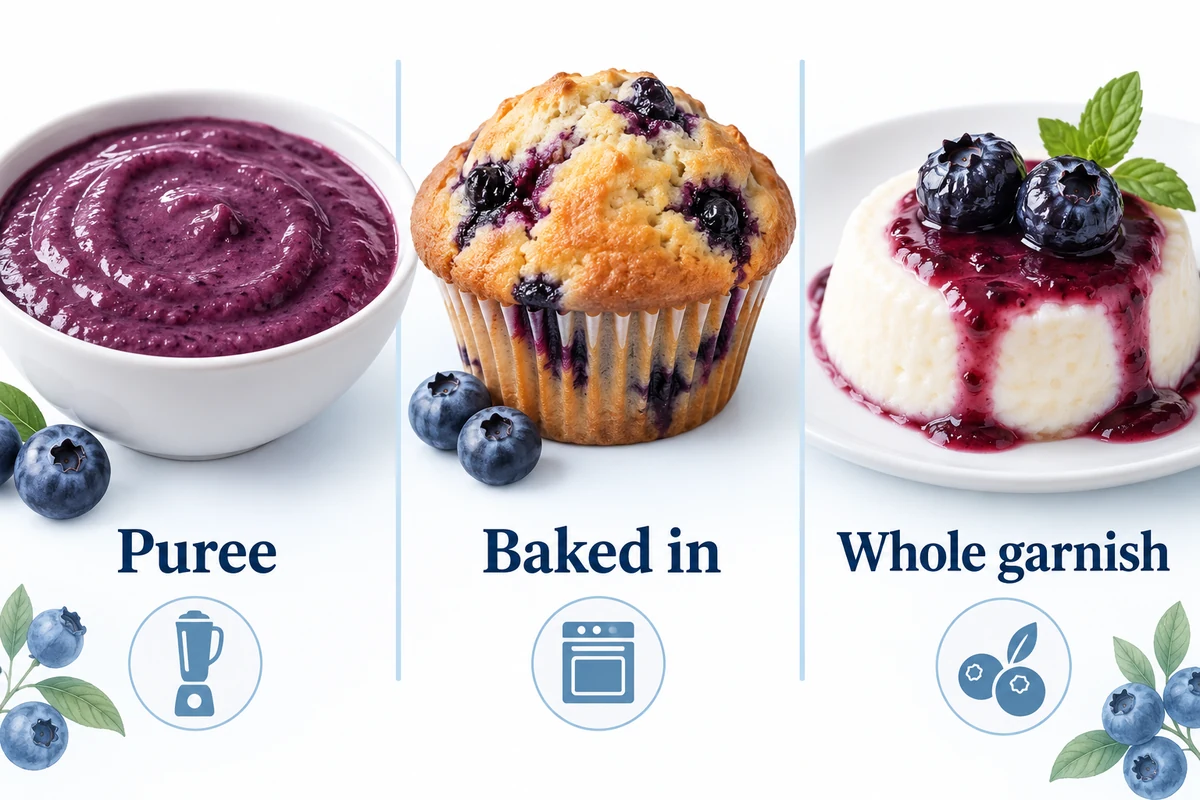
Puree, cooked fruit sauce and some baked applications place less weight on a plump outer shape. Here the useful checks include flavour, skin fragments, consistency and how the released juice fits the recipe. Wrinkles may cease to be visible after blending, while the liquid can still change thickness. A successful puree use does not mean the same berries will satisfy a garnish specification.
For baking, follow a recipe designed for the fruit state you are using. The King Arthur guidance on frozen fruit in baking [4] discusses structural differences and recipe adjustments. It is not permission to add an arbitrary amount of thawed blueberry liquid to any batter. Extra free liquid is a recipe variable even when berry appearance no longer matters.
At XMG Food, we keep the intended form and use connected when reviewing a product requirement. Whole berries for a visible inclusion and fruit destined for further size reduction need different trial questions. Our comparison of frozen and fresh blueberries in food production addresses the broader ingredient choice; the present issue is the narrower appearance change within thawed fruit.
What to record when a lot looks different
If a new portion looks markedly different from your usual one, retain the pack details before discarding the packaging. Note the product identity, lot, labelled instructions, opening date and known handling. Describe the difference in plain terms: more collapsed whole berries, more splits, a larger collected liquid mass or an altered flavour assessment. “Poor quality” gives another person little to compare.
For a commercial review, include the sample preparation and the required application. We would first separate a complaint about visual whole-berry performance from a complaint about puree consistency. This keeps the evidence useful without pretending that a photograph proves a transport failure. The specification and sampling discussion explains why the sample basis belongs with the acceptance requirement.
Retain uncertainty where the record is incomplete. Without an initial sample, continuous temperature information or comparable thaw records, several histories may remain possible. Do not turn a plausible mechanism into a confirmed accusation. A supplier review can investigate product condition, pack integrity and recorded handling; it cannot reconstruct missing evidence from one skin fold.
Handle the fruit according to its instructions
Texture and safety are separate decisions. Freezing is not a reliable kill step for all hazards, and draining or blending does not supply one. The Food Safety Authority of Ireland advises boiling imported frozen berries for one minute [5] before consumption. That is jurisdiction-specific guidance; check the advice applicable where you are and the instructions for the actual product.
If a pack requires cooking, do not serve it raw simply because a few berries look smooth or taste pleasant. Equally, a wrinkled surface does not itself prove contamination. Avoid tasting a questionable product to determine safety. Resolve uncertainty through the handling record, product instructions and applicable official advice.
The practical outcome is a use decision supported by an observation. Keep whole berries where their actual thawed shape meets the presentation. Use suitably prepared fruit in a sauce or puree where its structure fits the recipe. Investigate a significant change with comparable records. These actions preserve the useful information in the fruit’s appearance without asking that appearance to answer questions it cannot answer.
Explore the product forms behind this application.
IQF Frozen Blueberries →