


On this page
Frozen green onions can flavor dumpling filling, but an equal scoop of green pieces does not guarantee an equal scallion aroma or the same moisture balance. The cut may contain different proportions of pale lower stem and green leaf. Thawed pieces can bring free liquid into a filling that already contains deliberately added water. For a useful first test, hold the filling, onion mass, wrapper and steaming method constant. Compare direct addition with a small chilled-thaw-and-drain trial, then taste the cooked dumplings and look for liquid in the bowl and wrapper. Judge onion aroma after steaming, not only the raw green color.
This is a formulation question, so the answer is conditional. A stronger raw onion smell does not automatically become a better cooked dumpling. A wetter filling may carry flavor yet lose its clean bite or leak at the seam. The best approach depends on the white-to-green proportion, cut size, inclusion rate, timing of mixing and water already in the recipe. A paired test in your kitchen or product team will show how the selected cut behaves after steaming.
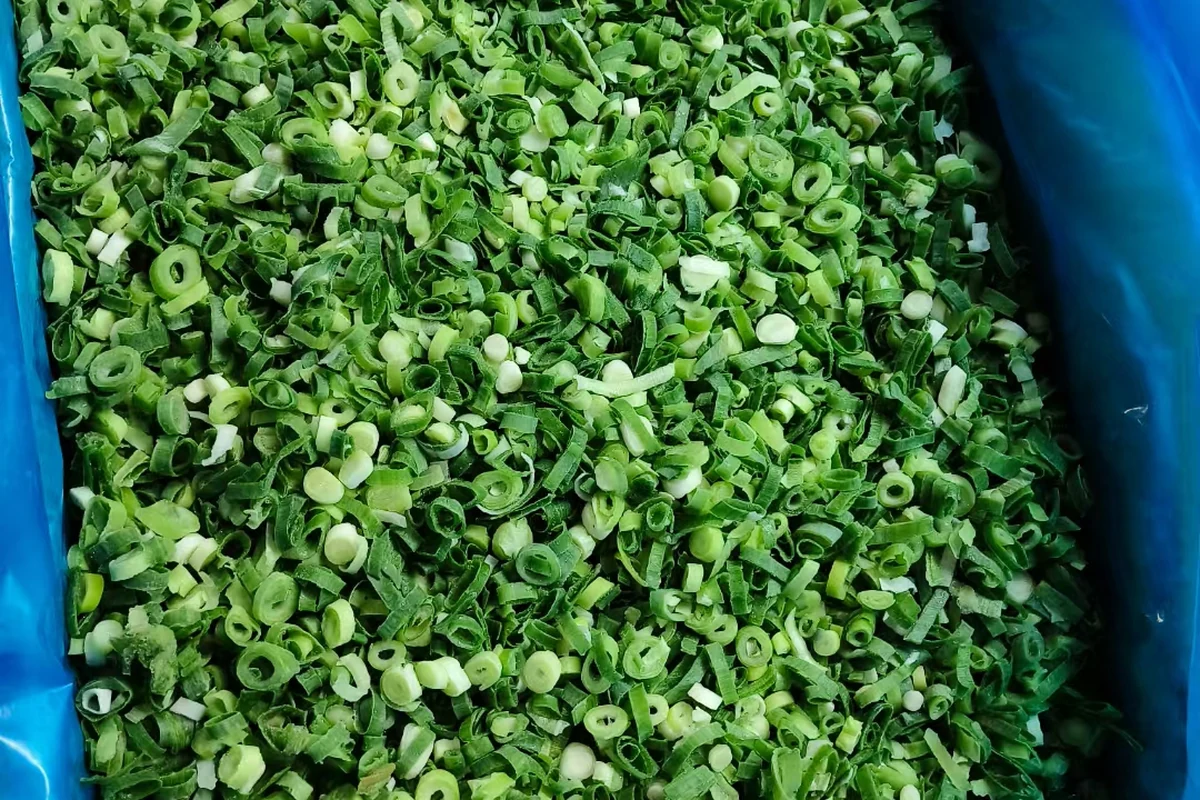
Authentic green onion cut and white-green visual mix.
Quick answer: manage dose and free liquid
Start with two separate ledgers: onion solids added and liquid added. Weigh the frozen green onion portion rather than dosing by a loose cup, because frost and clumping change volume. If you thaw a test portion, collect and note liquid that drains away. If the recipe adds water or stock to meat or vegetable filling, record that amount independently. Now you can answer two questions after steaming: did the green onion deliver a recognizable flavor, and did the change disturb filling structure?
There is no universal rule to thaw every cut. Direct frozen addition can shorten handling and keep the ingredient cold, but an icy clump may mix unevenly and later release a pocket of liquid. Controlled thawing reveals the liquid and lets you distribute pieces, but extended warm holding can weaken fresh aroma and handling quality. Use chilled, food-safe thawing where appropriate, follow the product’s instructions, and keep the comparison consistent. A single outcome is meaningful only for the actual form and process tested.
Aroma is not the same as visible green flecks
Green flecks tell you where the ingredient went; they do not measure the aroma it contributes after heat. White and green parts differ in appearance and culinary character, but the balance a cook prefers varies with filling type, seasonings and how strongly the wrapper or other aromatics compete. Taste the dumpling with the same dipping sauce condition each time—preferably first without a strong sauce—so vinegar or chili does not hide the comparison. Record a simple description such as “clear onion note,” “mostly green visual presence” or “sharp raw note” instead of claiming a numeric aroma value you did not measure.
Handle the sample consistently. A batch mixed just before wrapping may smell different from one held for a long time. Cut surface, packaging and storage can affect how much aroma is apparent when opened, while steaming changes the final profile again. If the ingredient seems weak, do not immediately double the dose; that may add more free water and a heavier visible fleck without fixing the desired cooked flavor. Check the cut, white/green mix, product condition and mixing sequence first.
Published dumpling recipes confirm scallions are a familiar aromatic component. Food.com’s steamed pork-and-scallion dumplings [1] and a Cornell Cooperative Extension dumpling filling recipe [2] both include green onion. They are recipe examples, not tests of the frozen cut in your filling. Treat their amounts as context for the culinary role, then evaluate your own ingredient mass and finished aroma.
Choose white and green pieces for the filling
Pour out a representative frozen sample and identify rings, diced pieces, strips, pale lower-stem portions and darker green leaf portions. If the ingredient is stuck in clumps, break up a small amount without crushing the cut and inspect both the outside and center. The visible white-to-green mix may vary between products. No one ratio is automatically best for pork, shrimp, vegetable or mushroom filling. A mild filling may reveal small changes that a heavily seasoned filling masks.
Our published guide to measuring the white-to-green ratio deals with how to classify pieces for a specification. Here the ratio is one variable in a steamed-dumpling flavor trial. If your current cut gives a good appearance but insufficient onion note, compare a second form while keeping the dose and recipe fixed. If the bite feels fibrous, check whether long leaf strips or larger lower-stem pieces are visible in the cooked cross-section. The solution may be a more appropriate cut rather than more onion.

A distinct original cut view with white and green pieces.
Describe the sample in concrete terms before asking a supplier to change it: predominant ring size, proportion of pale and green pieces, number of long strips, frost or clumps, and whether pieces separate after brief handling. Photographs of the received material can help align expectations, but a photograph alone cannot establish the aroma of the steamed filling. Keep the sensory trial alongside the visual form record.
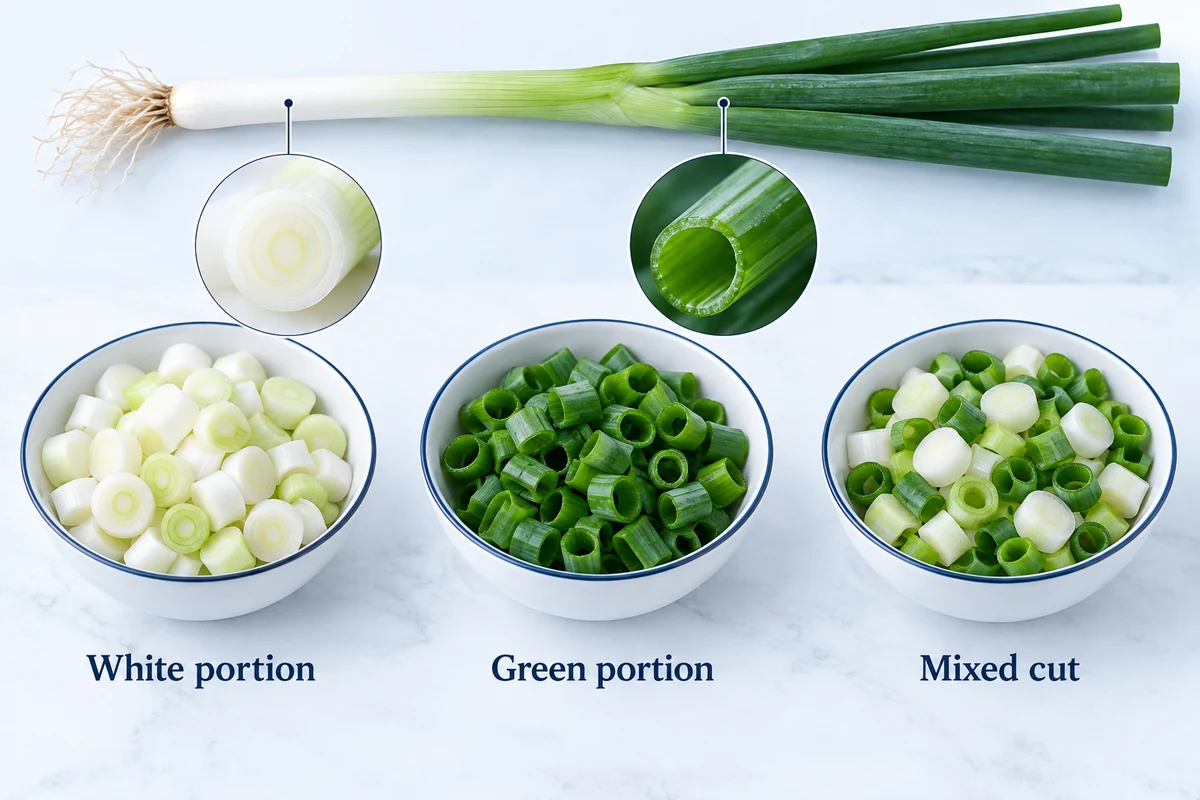
The diagram scrolls horizontally on smaller screens.
Physical cut comparison without a universal flavor ratio.
Compare frozen addition with a controlled thaw
Prepare one base filling, then divide it evenly before adding green onions. Weigh equal frozen onion portions. Add one portion directly to bowl A and mix until dispersed. Thaw bowl B’s onion portion under appropriate chilled conditions, drain its free liquid into a separate measured cup, and add the drained pieces to bowl B. Keep other ingredients identical. If you want to test retaining the thaw liquid, make that a third arm; do not quietly pour it into the thawed arm and call the two bowls equal.
Mix for the same time and with the same tool. Note whether frozen pieces separate or remain as local green clumps. After a short consistent hold, inspect the bowl bottom and spoon: is there new free liquid? Wrap equal portions from each bowl. The test is designed to reveal where water enters and whether flavor shifts; it does not assume thawing will always improve the result. The general reason to watch released liquid is supported by the University of Minnesota Extension account of frozen produce texture [3], though that source does not quantify water release for XMG green onions.

The diagram scrolls horizontally on smaller screens.
Conceptual matched-dose dumpling comparison.
Our separate article on green-onion clumping and sauce dosing discusses how a frozen clump affects delivered portions in a liquid application. Dumplings add another constraint: the filling must hold together inside a wrapper while steaming. If a clump leads to one strong onion pocket and several bland pieces, distribution is a real flavor problem even when the total recipe dose is correct.
Account for water already added to the filling
Many dumpling fillings deliberately incorporate water or aromatic liquid into a protein mixture. A dumpling-filling method using scallion aromatic water [4] illustrates that water can be a purposeful component. The point for frozen onion is to count all incoming liquid. Free thaw liquid and added aromatic water may not behave identically in the filling, but both affect the total. If you change the onion form, keep the water addition fixed for the first comparison. Then adjust deliberately if the formula needs it.
A wet bowl is not automatically a juicy dumpling. Free liquid can leak before wrapping, weaken a seam or soften the wrapper. A dry, crumbly filling has the opposite problem. Check whether the base was mixed enough to hold its intended water before blaming the frozen onion. If the filling was already near its limit, even a small extra release might show up. In contrast, a well-structured base may absorb some vegetable moisture without visible pooling. The product team needs to observe its own formula rather than rely on a universal drain percentage.

The diagram scrolls horizontally on smaller screens.
Inspect cooked filling distribution and watery base separately.
Keep the sequence of additions in the record. Seasoning, salt and liquid added before or after onions can change how the mixture looks during holding. Do not hide a watery onion trial by adding a last-minute binder in one bowl only. If a rescue is needed for service, record it as a separate adjustment and retest against the original control. The purpose of this first trial is to locate the cause of excess liquid, not to manufacture a perfect one-off result.
Steam a controlled sample and judge aroma
Use the same wrapper, fill weight, seal and steaming cycle for both arms. If the filling contains meat, poultry or seafood, apply the validated cooking method and appropriate temperature controls for those ingredients; visible onion color does not indicate that the filling is safely cooked. Taste several dumplings from different points in each bowl, ideally without knowing which method you are tasting. Evaluate cooked onion aroma, balance with other aromatics, apparent juiciness, free liquid in the wrapper and whether flecks are evenly distributed.
Take two observations at different times if the product will be held. A freshly steamed sample may show a pronounced aroma that fades before service. A wrapper that looks sound at removal may soften in a closed container. If this is a retail or prepared-food product, the consumer preparation method and any later freeze/reheat cycle require their own trial. Avoid drawing conclusions about those later stages from one fresh steam test.
Describe the result specifically. “Direct frozen gave more uneven green pockets but a similar onion note” tells you what to change next. “The thawed sample had less free water but weaker aroma after steam” points toward a cut or process comparison, not simply more draining. Write down what the finished samples actually show, including any uneven distribution or loss of aroma after steaming.
Diagnose weak aroma or loose filling
When aroma is weak, check whether the received product is truly green onion, what cut it contains, its storage condition and the intensity of other seasonings. Compare white/green form at a fixed mass. If the onion is present in only some dumplings, solve dispersion before changing the formula dose. If the raw mix smells strong but the steamed product does not, evaluate the cooked recipe and hold time rather than promising a particular frozen ratio will fix it.
When filling is loose, look first for liquid in the onion portion, in the base before onions were added and after the hold. Check whether the recipe’s deliberate water addition was kept constant. If a bowl becomes watery only after the onion goes in, repeat the test with a drained arm and a direct arm; if both are wet, the base formula or hold may be the larger issue. A change in mixing time can also make the comparison misleading, so keep it fixed.
What to specify in a frozen onion sample
For an order-specific discussion, send the intended dumpling filling and the cut behavior you need: ring or dice form, desired white/green balance, approximate inclusion rate, whether the onion will be added frozen or after controlled thawing, and the steaming and holding conditions. Our frozen green-onion page is a starting point for available forms. We can coordinate a relevant sample and clarify its cut; your finished-dumpling trial establishes which form best serves the flavor and moisture target.
The useful final decision is not that frozen scallions are categorically good or bad in dumplings. It is whether the selected cut gives a perceptible cooked onion note at the desired dose while the filling stays cohesive and the wrapper stays sound. Track aroma and water separately and the next adjustment becomes much easier to choose.
View frozen green onions
Review the listed ingredient forms and preparation information for this application. Choose the cut and processing route that suit your intended result.
View product forms →