


On this page
For a menu, the useful difference between white and green asparagus is the eating and visual result after preparation, cooking and service. White spears grow without light and commonly give a quieter color and milder flavor; green spears grow in light and bring a stronger green note and visible contrast. Neither is automatically the better ingredient. A white spear that needs substantial peeling and a green cut that is already prepared are not comparable on pack weight or a single cooking time. Start with the form you can actually buy, measure usable yield, and taste both in the finished dish after the same service conditions.
That distinction matters even more in a frozen program. A carton may contain whole spears, tips or cuts, with preparation completed before freezing to different degrees. The fresh-market rule “peel white, trim green” is a useful starting question, not a description of every frozen lot. We ask for the product description and a representative sample before suggesting a substitution. A dish can succeed with either color when the product form, texture target and production method agree.

An original product photograph shows whole white spears; a quoted frozen form still needs its own sample review.
Why the colors differ
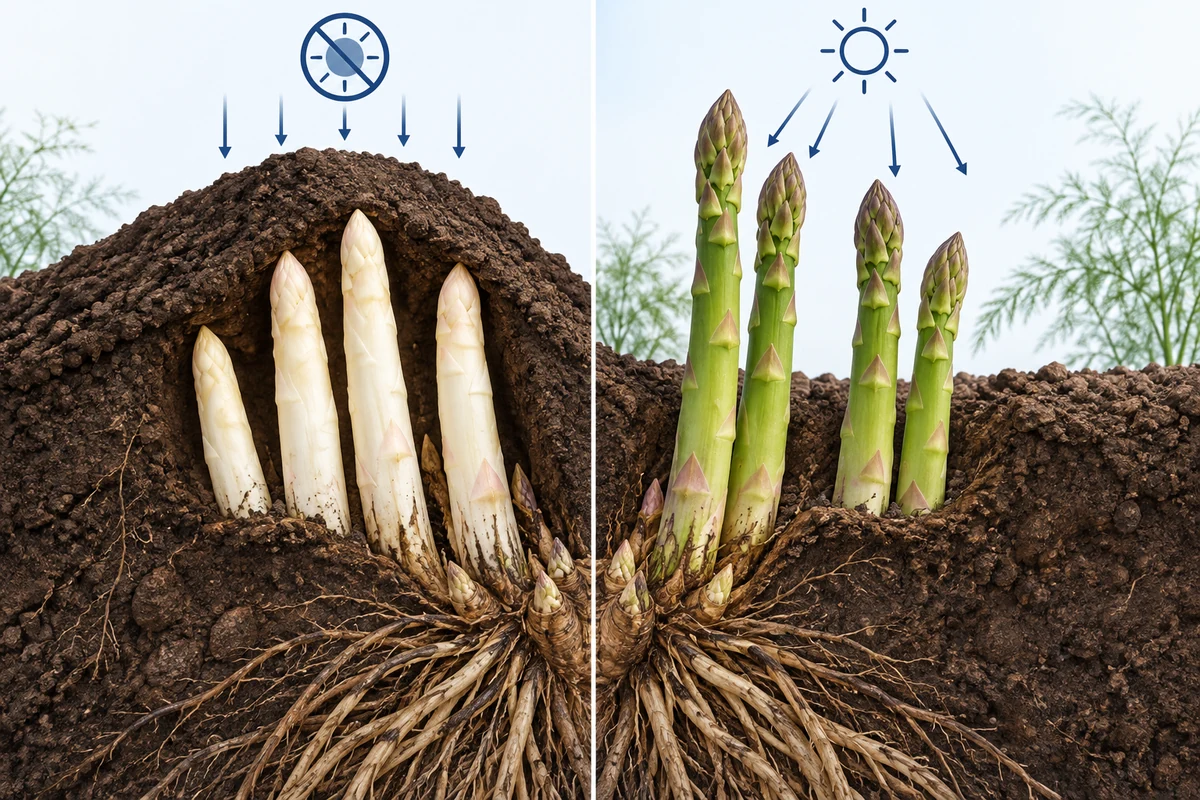
Conceptual illustration: white spears develop without light; green spears are exposed to light.
White and green asparagus are both asparagus. The familiar white appearance comes from shielding the emerging spear from light, often by mounding soil or covering the growing bed. Without light, the spear does not develop the same green color. [1]; it also describes white asparagus as generally mild. Color therefore tells you something about how the spear was grown, but it does not disclose its cultivar, age at harvest, diameter, peeling state or behavior after freezing.
Those missing details are often the details a kitchen needs. A thick lower stem can feel fibrous regardless of color. A tip can be attractive in a plated entrée but fragile in a stirred sauce. A short cut may portion neatly in a ready meal while failing to communicate the premium whole-spear look that justified white asparagus in the original dish. Treat the color as one design variable among several, not a shortcut for quality.
The difference should be tested in the recipe’s own seasoning. White asparagus is often described as delicate, sometimes with a faint bitterness that becomes less prominent after cooking. Green asparagus can read as more herbaceous. Those are tendencies in ingredient guides, not guaranteed scores for your supply lot. A cream sauce may conceal the difference; a lightly dressed side dish may amplify it. In a mixed vegetable entrée, color can be more decisive than a subtle flavor contrast.
Read the supplied form before judging color
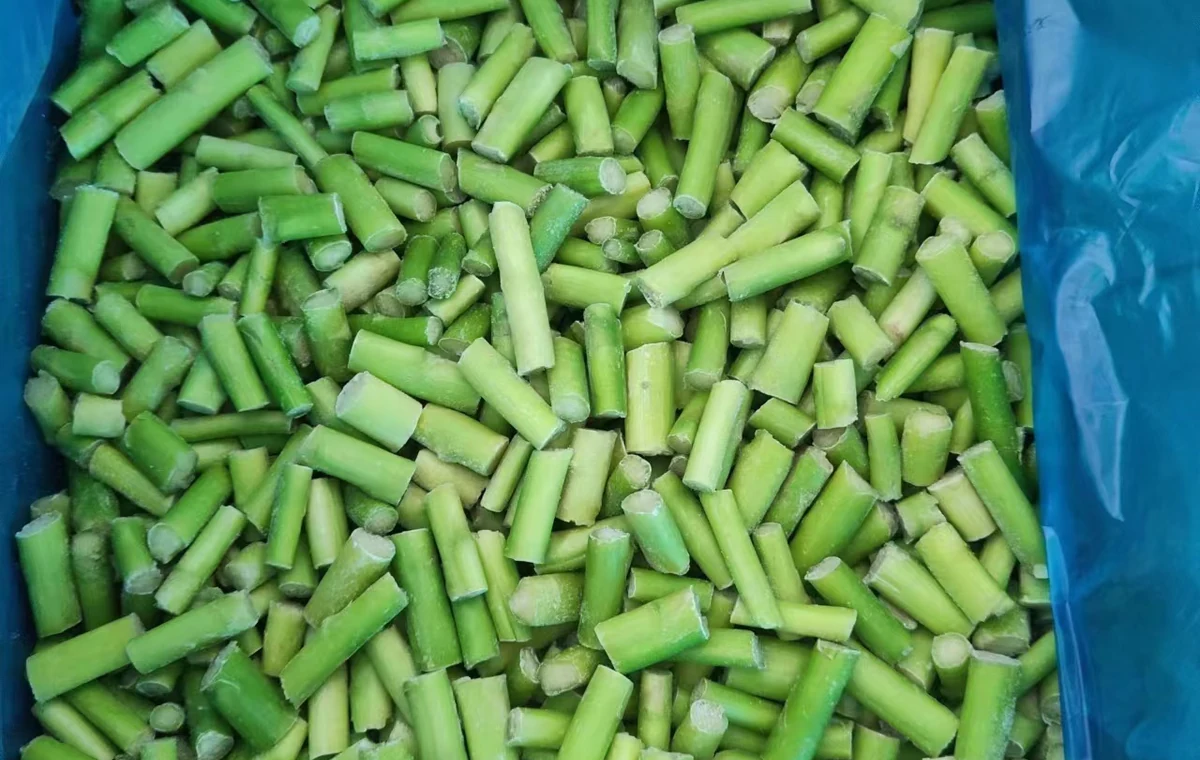
A separate original photograph shows a cut green form, so cut geometry must be held in mind during comparison.
Request the same level of detail for both candidate products. Is each supplied as a whole spear, tip, short cut or mixed cut? Are the thick ends removed? Is the white product peeled? What was done before freezing, and what does the supplier’s cooking instruction require? These answers change labor, yield and texture. They also prevent a common comparison error: judging a fully prepared green cut against an untrimmed white whole spear and attributing every difference to color.
Look at a representative sample while it is still in the supplied state. Record length and diameter distribution, tip integrity, broken pieces, exposed cuts and surface ice. After preparation, inspect the lower stem for fibre. The Illinois Extension preparation guide [2] explains why trimming or peeling a tough lower end is a practical step for fresh asparagus. In a frozen supply discussion, verify which of those operations are already complete. A fresh produce instruction cannot simply be pasted onto a processed frozen pack.
A comparison photograph should have a scale and a label identifying the supplied form. Our white-asparagus and green-asparagus photographs show different cuts, so they help identify real product appearance but cannot prove a like-for-like sensory result. For procurement approval, ask for two actual samples with the declared form and batch identity, then photograph them under the same lighting and scale. If whole spears are required for a plate, a photograph of short cuts cannot approve that requirement.
Measure prep yield in the supplied form

Conceptual trial setup: weigh each supplied form, its trim and its usable portion separately.
Peeling and trimming create a cost that a pack price alone misses. We recommend weighing each sample as received, then weighing the parts removed by the kitchen and the usable portion. Record whether the product arrived frozen, whether surface ice or loose fragments are counted, and whether the chef made any further trim. That simple mass balance gives a usable-yield percentage on a stated basis. Repeat it on more than one pack when the decision is material; one tidy sample can hide variation within a carton.
Suppose the menu calls for a visible, tender spear. The white product may arrive already peeled and trimmed, reducing prep labor, or it may need substantial removal at the base. The green product may come as cuts with almost no kitchen trim but give fewer attractive intact tips. Comparing the two by “waste percentage” alone would still miss the menu role. Separate usable edible mass from pieces that meet the visual specification. A soup can accept a wider range of shapes than a whole-spear side dish.
Use a worksheet with columns for received mass, loose ice or fines, peel/trim removal, cooked mass and portions meeting the presentation target. Keep the measurements from your own trial; do not copy a percentage from a fresh-market article or a supplier’s unrelated grade sheet. The key commercial question is cost and labor per acceptable finished portion, not only kilograms delivered. Ask the supplier whether trim and cut tolerances are described in the offered specification so a trial can become a repeatable order.
Choose the menu role first
White asparagus has a strong visual identity on a light plate, especially when the spear remains whole and the sauce leaves its shape visible. It may suit a composed side, an entrée garnish, a pale soup or a softly braised preparation where a quieter vegetable flavor is useful. Green asparagus gives clear color contrast next to white proteins, grains or cream-based sauces; it can also read as a fresher green vegetable in a mixed entrée. These are menu design options, not rules for taste or quality.
Decide whether guests will see the spear, a short segment, or a blended ingredient. In a soup, color affects the whole bowl and the garnish can be chosen separately. In a pasta filling, small cut geometry and fibre are more important than an intact tip. In a tray meal, the vegetable must survive the full heat cycle and still look intentional after a holding period. A substitution that works immediately after cooking may fail at service if the cut softens, bleeds color into a sauce or becomes hard to portion.
Write the target before cooking: for example, “clearly visible pale whole spear with a tender lower stem,” or “short green cuts that stay identifiable after reheating.” Use plain sensory descriptors such as firm, tender, stringy, watery or bitter. Avoid making “premium” a score; it is a positioning word, not an observation. If two evaluators disagree, define the bite target with a reference portion and ask them to taste blind to color where possible, then judge the plate visually as a separate step.
Run a menu trial that respects each product

Conceptual comparison: use the same dish and evaluate each product after its suitable cooking and holding process.
Begin with a matched baseline. Use equal intended serving mass, the same sauce, salt, pan or kettle type, loading rate and service schedule. Record starting product temperature and whether the frozen item was cooked directly or handled under a supplier-approved thawing procedure. Follow each supplier’s preparation and cooking instructions. Do not treat blanching before freezing as evidence that a commercial frozen asparagus product is ready to eat. A competing frozen-white-asparagus sheet, for example, explicitly directs users to follow its packaging for cooking time [3].
A single identical heating duration is useful as a diagnostic baseline, but it is a poor final verdict if spear diameter and prior processing differ. First note what happens under the current kitchen process. Then adjust each product within its own validated preparation range until it reaches the same agreed tenderness target. Compare those best workable results as well as the effort needed to obtain them. Record time, batch load and temperature controls in the kitchen’s own food-safety system; this article cannot prescribe a universal safe time for every frozen form.
Serve the first portions immediately and keep another set through the normal hold and reheat sequence. Score tip integrity, lower-stem bite, fibrous residue, color, water release, sauce appearance and portion consistency. Measure any liquid released into the tray or plate on the same basis for both options. Photograph the original plate and the held/reheated plate from the same angle. If a product only works when cooked separately or added late, count that as a process requirement rather than calling the ingredient defective.
Make the decision with the people who own the outcome: culinary development for flavor and appearance, operations for prep and timing, QA for the stated handling and acceptance plan, and procurement for the repeatable specification. A taste panel cannot compensate for an undefined cut or a process that cannot be reproduced in service. Conversely, a tidy specification does not tell you whether the dish still looks and eats well after a hot hold.
Compare on the same finished-dish basis
| Decision point | White asparagus candidate | Green asparagus candidate | What to record |
|---|---|---|---|
| Visual role | Pale spear or pieces may be the design feature. | Green contrast may be the design feature. | Photographs before and after service hold. |
| Preparation | Check whether peeling and lower-end trim are already done. | Check cut, tip integrity and any lower-end trim. | Received, removed and usable mass. |
| Flavor and bite | Assess mildness, bitterness and fibre in this lot. | Assess green note, firmness and fibre in this lot. | Blind sensory notes plus separate visual score. |
| Kitchen process | Confirm product-specific cooking and holding behavior. | Confirm product-specific cooking and holding behavior. | Actual method, batch load and reheated result. |
| Repeatability | Specify form and acceptable variation. | Specify form and acceptable variation. | Sample ID, cut definition and approval record. |
The table is a trial plan, not a declaration that either color always needs more work. It deliberately avoids a fixed number of minutes, peeling percentage or superiority score. The supplied form and application change those answers. If an item succeeds only after a major recipe or process change, include the change in the commercial decision. The unit of comparison is the acceptable portion at service, not the visual impression of a frozen carton.
Know when a substitution changes the dish
If the current menu promises white asparagus by name, switching to green changes a visible and often expected ingredient. Even when the two are acceptable culinary substitutes, update the menu description and allergen/ingredient record as required by your local process. If the vegetable is an unnamed supporting ingredient in a complex entrée, the substitution threshold may be more about cooked bite, portion appearance and supply continuity. The same switch can be minor in a blended soup and major in a plated whole-spear dish.
Do not use color to infer nutrition or a health advantage. Also avoid judging an offered frozen form by the fresh seasonal presentation it cannot deliver. A well-specified frozen cut may be exactly right for a repeatable prepared meal. A whole fresh spear may be the right choice for a seasonal restaurant special. Those are different buying situations. State which one you are testing, then keep the comparison fair.
One useful exception is a mixed white-and-green plate. The colors can make each other clearer, but the cook still has to manage potentially different size and texture requirements. If both forms enter the same pan, test whether one needs a separate start or late addition. If separate cooking is necessary, record the extra handling. The point is not to force operational symmetry; it is to make the visual result reproducible.
Turn the trial into a buying brief
Once the recipe team chooses a direction, translate its observations into a short specification. Name the color and product form; define whole, tip or cut; state the acceptable size range and tip condition; identify peeling/trim status; and attach reference photographs from the approved sample. Describe the cooked sensory target in words your receiving and kitchen teams can use. Include the supplier’s preparation instructions in the file and note the tested cooking, holding and reheating process separately. A trial report without a linked product identity and sample ID is difficult to repeat.
Ask for confirmation of the current supply route, pack format, order volume and destination only after the menu form is clear. When the product is sourced through several origins or partner facilities, the same menu name may need a renewed sample check. The XMG specification and sampling process is the right place to formalize that approval. Our white asparagus product page and green asparagus product page show the two commercial product routes; an individual quotation must confirm the offered form.
We can coordinate the product description and a representative sample against your finished-use brief. Tell us whether the dish needs intact spears or calibrated cuts, the target texture after service, the pack size, approximate quantity and destination. We will review which frozen asparagus option and preparation detail can be confirmed for that order. That discussion is more useful than asking whether white or green asparagus is “better” without a plate, process or specification in view.
Calculate the operational cost of the acceptable portion
A menu team can prefer one plate and still choose the other supply route when the full service process is counted. Start with the quoted price on the same currency, destination and pack basis. Divide by the usable yield observed from the trial, then account for preparation minutes, any separate cooking step, the number of acceptable portions after holding and the rate of visible breakage. These are your measured inputs, not generic white-versus-green multipliers. A higher pack price may be offset by cleaner preparation or stronger plate acceptance; a lower pack price can lose its advantage if the kitchen removes substantial fibre or if many pieces fail the visual target.
Count waste according to the actual recipe. Lower ends that cannot appear on a whole-spear plate might be suitable in a planned soup, but only if that use is real, controlled and costed. Do not treat every trim as valuable by assuming it will find a second use. Likewise, a convenient cut may be excellent for portioning yet unsuitable where the menu photograph promises whole spears. Put the decision rule in advance: for example, a minimum proportion of attractive served portions at the end of a defined hold. That prevents the team from changing its target after seeing a preferred price.
If the menu is sold through several kitchens, test the approved method at the least forgiving location or equipment setup as well as the development kitchen. Pan loading, staff time and service delay can expose differences that a small tasting cannot. Record who can make a process adjustment and how the replacement product will be reapproved if form, factory or crop lot changes. This is where a useful specification protects the recipe rather than merely documenting the ingredient name.
The result may be a two-option strategy. Whole white spears can serve a distinctive plated dish, while green cuts cover a prepared entrée or a high-volume side. If you retain both, keep their cooking instructions, sample identities and purchasing descriptions separate. Combining them under a generic “frozen asparagus” line would erase the reason you tested them in the first place.
Frozen White Asparagus
Review frozen white asparagus forms and specification options for menu use.
View Frozen White Asparagus →