


On this page
Use whole frozen sweet corn kernels when you want a distinct bite in chowder. Blend some or all of the cooked corn when you want corn distributed through the soup body. A split batch can provide both: a blended portion builds the base, while separately retained kernels remain visible and chewable. The best balance belongs to your recipe and serving preference, not to a universal blending percentage.
Blending does not create more corn sugar. It changes how the ingredient is distributed and which particles you encounter in a spoonful. Compare methods with the same total corn and liquid amounts, and keep potatoes, dairy and seasoning consistent. Then judge broth body, kernel bite, husk fragments and the result after one safely handled reheating cycle. A chowder that seems creamy fresh from the blender may still need a different finish for later service.
Quick answer: Whole kernels supply discrete pieces; blended corn supplies dispersed solids. Combine them if you want both functions, but test your actual frozen kernels in the intended base. More blending is not automatically more smoothness or more sweetness.
Choose the bowl texture before the blending method
Start with the spoonful you want to serve. A chunky chowder can have a fairly light broth carrying corn and potato pieces. A corn-forward puree can coat the spoon without many intact kernels. A hybrid has a continuous corn base and distinct pieces within it. These are different structures, and they should not all be judged against the same definition of “creamy.”
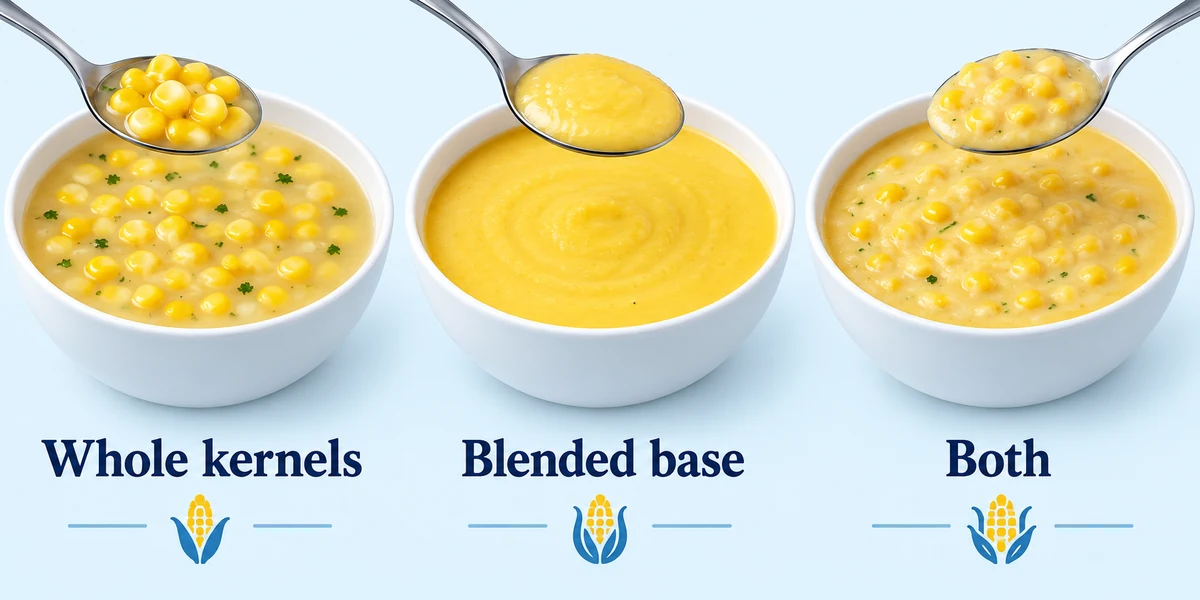
Conceptual comparison of kernel bite, blended body and a combination; no preferred ratio is claimed.
Consider the other pieces in the bowl. Potatoes, onion, fish or bacon can supply most of its bite even when the corn is blended. Conversely, a simple corn-and-stock soup may rely on the kernels for nearly all visible texture. Decide which ingredient should give the main chewing contrast before blending the whole pot. Once every kernel is pureed, the original piece structure cannot be put back.
Colour and thickness do not prove corn intensity. Cream can lighten a yellow base, flour can thicken a modest corn portion, and other seasonings can dominate its flavour. If you want to understand what corn blending changes, keep those ingredients steady during a comparison. You can adjust the final recipe after you identify the difference.
The usual frozen ingredient is a kernel form rather than canned creamed corn. Our sweet corn product page gives context for the available product family. Confirm whether your bag is plain kernels or a prepared sauced mixture before comparing it with a recipe. Added salt, thickeners or dairy make it a different starting system.
What whole kernels contribute
Whole kernels remain recognisable food pieces. They give the diner repeated small bites rather than a uniform mouthful. Their outer tissue can remain noticeable even when the interior is tender. That contrast can be desirable in a chowder; it only becomes a problem when it conflicts with the texture you intended.
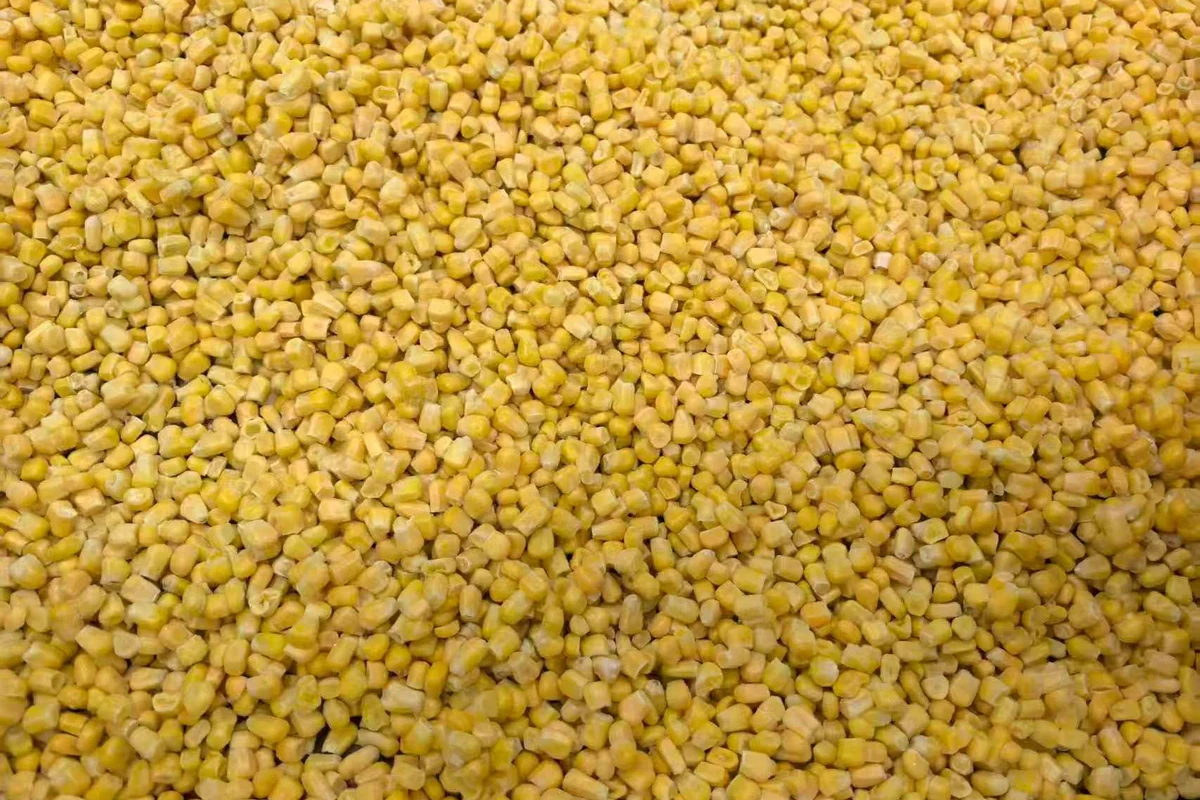
Whole pieces contribute a distinct bite in the finished bowl.
Follow the package cooking instructions and check a representative spoonful, including the larger kernels. A tender potato does not establish that the corn has reached the preferred bite. The ingredients may need different cooking durations. One useful approach is to cook the slowest base ingredients first, then add the corn at the stage allowed by its instructions and the recipe.
Look at the balance of intact and broken kernels. Broken pieces do not automatically make a poor soup, but they do change the proportion of distinct bites. Smaller fragments can disappear into the base while larger kernels remain obvious. Two equal weights of corn may therefore give different visible kernel counts in each ladle.
Taste the kernels separately from the broth as well as together. A sweet impression in the liquid and a pleasant kernel bite are different observations. Salt, onion, cream and the starting corn influence the complete spoonful. Do not use kernel colour, a commercial grade name or its appearance in a photograph to guarantee that one finished chowder will taste sweeter than another.
What a blended corn base changes
Blending breaks kernels into smaller material and spreads that material through the liquid. This can give the soup more continuous corn character and a fuller body. The result still contains plant particles unless they are removed. A blended base is not automatically a perfectly smooth liquid, even when whole kernels are no longer visible.
Thin pieces of outer kernel tissue may remain after the interior is well dispersed. A strong blender can reduce their size, but equipment performance, cooking condition and batch circulation all matter. Examine a cooled spoonful for gritty or papery fragments. If you want a very fine finish, test a strained portion before straining the whole batch.
The blender needs a workable mixture. Too little liquid can prevent circulation; too much makes a base that pours easily but contributes little body. Use measured additions and respect appliance limits. When blending hot soup, follow the manufacturer’s hot-liquid and venting instructions. Some sealed personal blenders are unsuitable for this use, so do not assume that a small trial is exempt from those limits.
Potato changes the interpretation. If you blend a ladle containing both corn and potato, the thicker result belongs to their combined contribution. Flour, cream and other thickeners also affect the bowl. To compare corn preparation specifically, keep those ingredients and their processing consistent. Otherwise, “the blended corn made it creamy” may overlook the main source of thickness.
Blending also changes the distribution of flavour across mouthfuls. An intact kernel delivers corn in a discrete bite; a puree mixes its material throughout the liquid. That may change perceived sweetness without changing the total corn sugar in the batch. Assess flavour and structure separately rather than using one as a numerical estimate of the other.
Use a split batch to preserve both functions
Reserve part of the appropriately cooked corn before blending the base. Keep the retained portion separate so it does not accidentally enter the blender. Blend the intended base portion with enough recipe liquid, then combine it with the reserved kernels. This sequence gives you control over both continuous body and the remaining pieces.
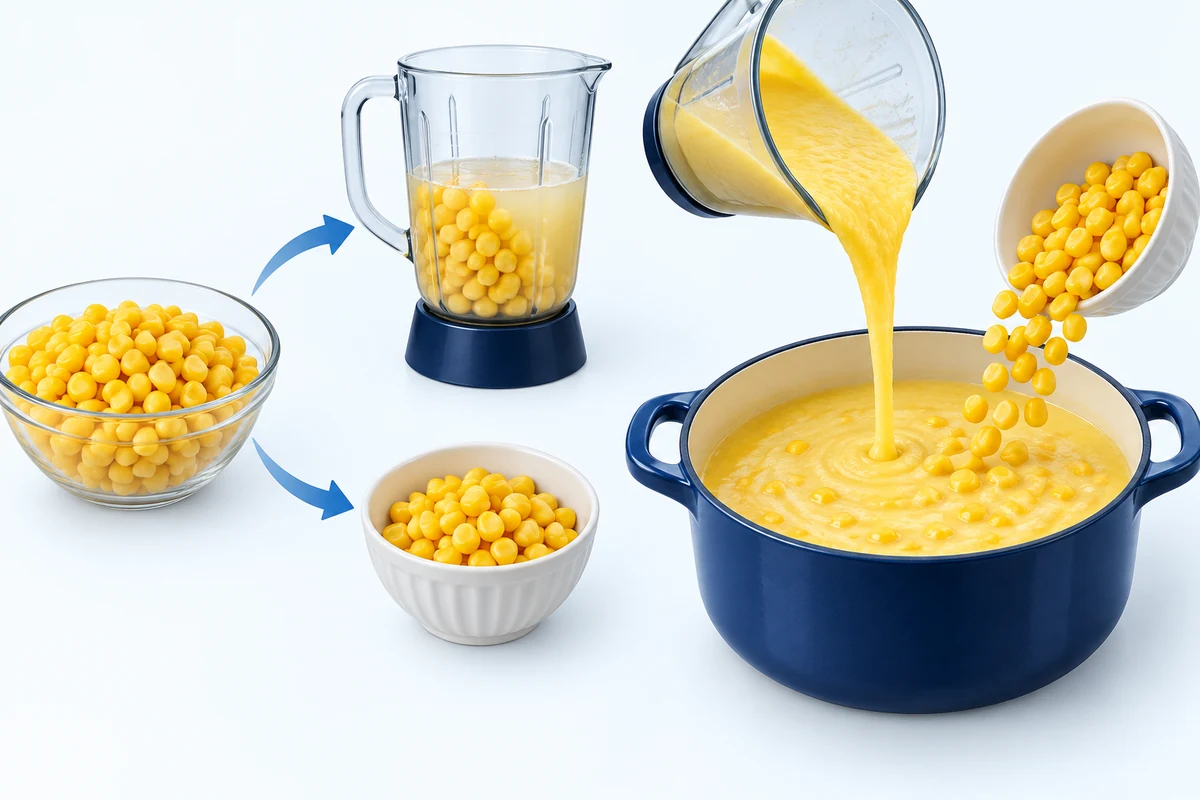
Conceptual split keeps some kernels intact while another portion becomes the base.
The reserved portion should be representative of the corn you want in the bowl. If all the largest kernels are reserved and all fragments are blended, that is an intentional selection method, not a random division. It may suit the recipe, but write it down if you want to repeat the outcome. A randomly scooped portion will not always contain the same mix.
Add the puree gradually to the kernel-containing base and check the spoon texture before using it all. A small recipe test may show that the preferred body arrives before the entire blended portion is added. Retain the unused portion safely if appropriate, and record the final quantities. Do not call a recipe balanced only because every measured ingredient was used.
Another route is partial blending in the pot with an immersion blender. It is convenient but less precise about which kernels survive. The blender can repeatedly pass through a locally dense area while leaving another part largely untouched. Stir and sample several ladles. For a closely controlled comparison, separately dividing the corn makes the remaining intact portion easier to describe.
| Preparation | Texture to assess | Trade-off to watch |
|---|---|---|
| Whole kernels | Distinct bite and distribution in each ladle | Broth may need body from another ingredient |
| Blended corn | Continuous corn base and residual small particles | Loss of intact pieces; husk fragments may remain |
| Split batch | Blended body plus reserved kernel bite | Additional handling and a division that needs recording |
Keep corn and liquid amounts comparable
A meaningful trial holds the total corn amount steady. Divide one batch of kernels into comparable portions and record whether the weighed state is frozen, cooked with retained liquid or drained. The basis matters. Equal bowls by volume can contain different corn weights, especially if one portion is clumped or loosely filled.
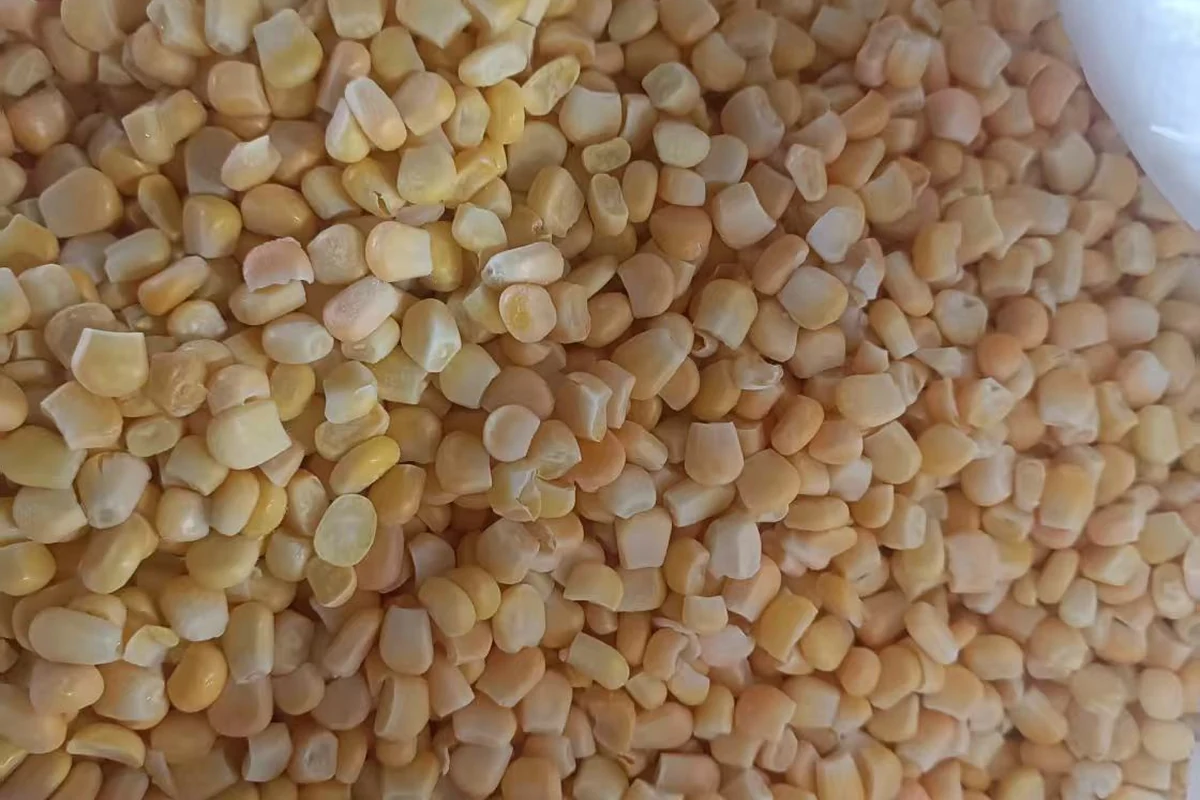
Colour and appearance do not establish the sweetness of a cooked chowder.
Control the total added liquid and the liquid retained from cooking. If one version has extra stock to help it blend, either bring the other version to the same liquid basis or record that difference as part of the method. Comparing a concentrated whole-kernel pot with a diluted blended pot cannot isolate the effect of blending.
Use the same potato, dairy and seasoning base wherever practical. A recipe with more potato and less liquid can be thicker even when it has fewer corn solids. A heavily seasoned version may seem less sweet or less corn-forward because another flavour dominates. You can deliberately create either recipe, but the test should describe the actual changes rather than attributing them all to corn form.
For a small kitchen comparison, prepare a common base, divide it consistently, then add the different corn treatments. Keep some unblended base aside if you need to adjust the finish. Weigh or measure the final portions and taste at comparable serving temperatures. Use the comparison to choose the balance that suits your served bowl.
Our article on comparing sweet corn sweetness and texture separates the incoming ingredient observations. Chowder adds the base and serving conditions to that question. A corn sample judged pleasant on its own still needs to work in the intended bowl.
Check kernel bite after reheating
If you plan to serve the chowder later, assess more than its first hot spoonful. Store and reheat it according to current food-safety guidance, then inspect a representative serving. Observe broth thickness, kernel tenderness, separated liquid and any change in the dairy finish. Reheating can expose a recipe limitation that was not obvious immediately after blending.

Conceptual comparison method; the pictured samples are not measured kitchen results.
Keep the reheat comparison controlled. Use a similar portion, record the vessel and heating method, and note any added stock or milk. Stir before ladling so the sample includes both liquid and pieces. If you add a large unrecorded splash of liquid, a thinner reheated bowl does not prove that the original blending method failed.
Assess the kernel itself. Does it still provide the intended bite? Has it become too soft for the contrast you wanted, or does the outer tissue now seem more noticeable against a thicker base? Compare softness, toughness and preference as separate notes. “Hard” can mean a resistant interior or a papery outer piece, and those observations need different follow-up.
Repeated boiling is not a universal texture rescue. It changes the whole formulation, including potato, dairy and liquid concentration. For a repeat service recipe, choose a corn addition and reheating sequence that delivers an acceptable final bowl, while satisfying safe handling requirements. Do not chase the first-cook appearance by repeatedly changing the pot without a record.
Adjust a thin, gritty or overly thick chowder
For a thin soup, first check the liquid basis and intended thickener. Blending a little more cooked corn may add body, but it also removes more whole pieces. Test a small portion before committing. If preserving kernel bite is the priority, a recipe-compatible adjustment to another base ingredient may be more suitable.
For a gritty puree, check cooking tenderness and circulation, then test a finer blend or a strain. More cream adds richness without necessarily removing outer kernel fragments. Inspect what the mesh retains and measure the passing soup. Any broth added during straining changes the concentration and should be included in the comparison.
For an overly thick bowl, add recipe liquid gradually and stir thoroughly. Taste again because dilution changes the balance of seasoning as well as flow. A chowder that looks good on the stove may become too heavy as it waits; record the service stage at which you judge it. The target is the served spoonful rather than a photograph of the pot.
For repeated preparation, record ingredient form, corn amount, liquid basis, blended portion, intact portion and reheated bite. The product specification and sample approval process gives context for confirming a consistent starting ingredient. The recipe still needs its own practical check. Choose whole, blended or combined corn by the bowl you want, then verify that the method delivers it at service.
Frozen sweet corn kernels and forms
See product forms and specification information for this ingredient.
View Frozen sweet corn kernels and forms →References
- [1] Michigan State University: corn chowder — an institutional recipe using frozen corn, not a universal formulation.
- [2] National Center for Home Food Preservation: blanching vegetables — preparation and quality context for frozen ingredients.
- [3] USDA FSIS: safe food handling and leftovers — follow current storage and reheating guidance.
