


On this page
Yes, plain frozen pumpkin can make gnocchi. Prepare it as a thick, cooled puree first, then add only the flour needed for the dough style you have chosen. The weight of frozen cubes is not the same thing as the weight of usable puree. Released thaw liquid, water taken up during cooking and water evaporated afterward can all change the ingredient that reaches the mixing bowl. Adding flour until a wet puree feels like bread dough usually trades a handling problem for a heavy dumpling.
The useful question is whether your prepared pumpkin can form a tender dumpling that survives cooking. A small cooked sample answers that better than a photograph of a smooth dough ball. Some recipes include potato, ricotta, breadcrumbs or egg; those ingredients change the structure and liquid balance. Follow one complete recipe as your starting point, rather than combining the flour quantity from one with the pumpkin treatment from another.
Frozen pumpkin is especially convenient when you want an orange ingredient that will be mashed anyway. It does not need to retain the firm edges expected in a roast vegetable dish. What it does need is a consistent preparation: the same cooking method, the same drainage decision and a cooled puree weighed at the same stage each time.
Start with the pumpkin that will actually enter the dough
Check whether the pack contains plain cubes, slices, cooked puree or a seasoned preparation. A sauce, sugar addition or other ingredient makes it a different starting point. Follow the package cooking instructions; freezing and blanching should not be treated as proof that the product is ready to eat. For gnocchi, the pumpkin needs to be soft enough to mash without hard pieces, but the final puree should not be surrounded by a watery ring.
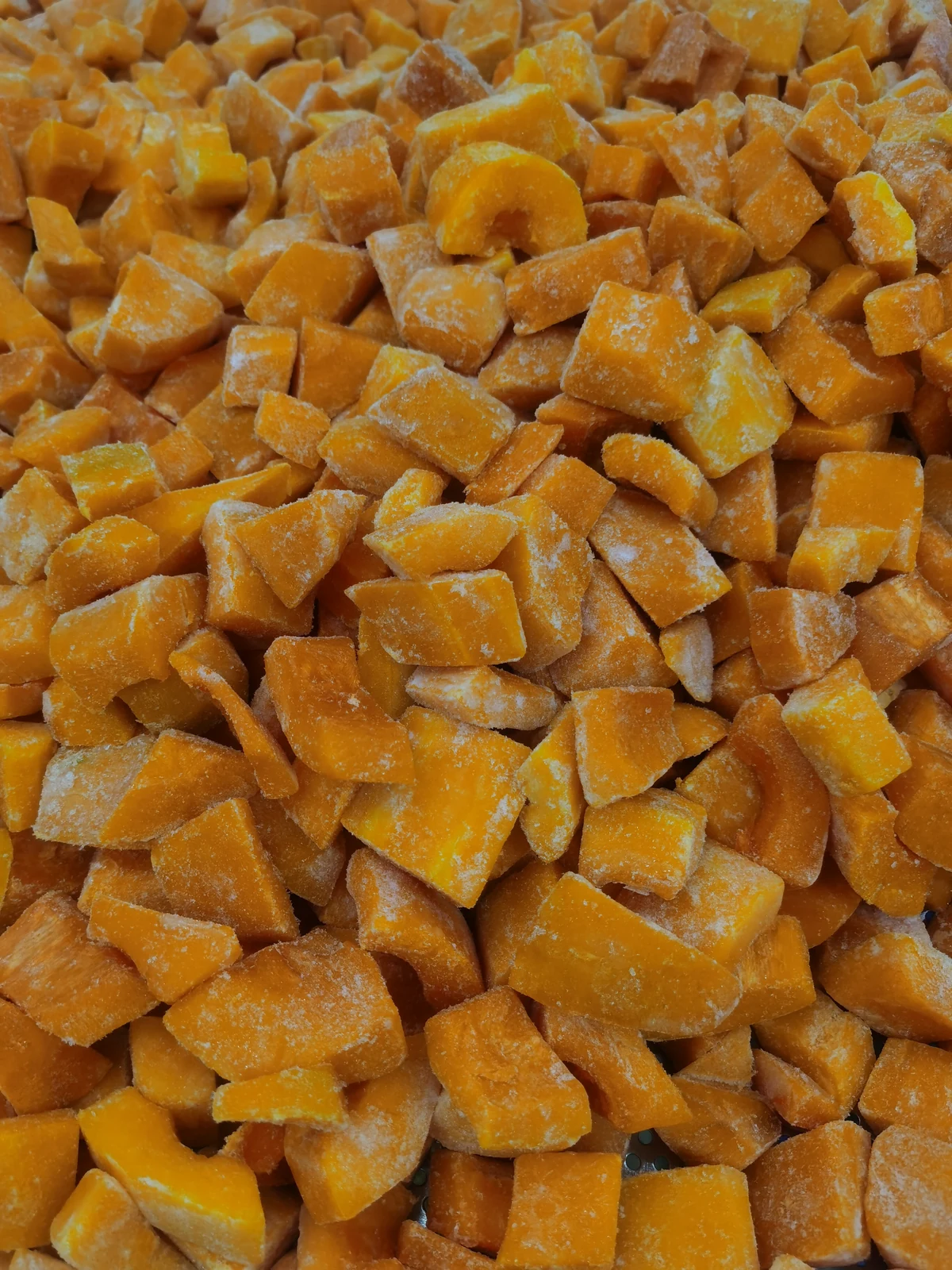
Keep three weights separate if you want to repeat a batch: frozen ingredient weight, cooked and drained weight, and cooled puree weight after any reduction. You do not need all three for every home dinner, but they become useful when one bag makes a very different dough from the last. A recipe asking for cooked pumpkin is normally asking for an ingredient at that prepared stage, not the original bag weight.
Inspect the puree before flour arrives. Fibrous strands can make shaping awkward even when the water balance is reasonable. Mash thoroughly or use the smoothing method in your chosen recipe. Adding more flour will not remove stringy tissue. Similarly, a visible chunk needs more appropriate pumpkin preparation, not extra kneading after the dough is mixed.
Variety, maturity, cut and prior processing can change the flesh you receive. Avoid assuming that orange color predicts dry matter or dough performance. Our separate guide to pumpkin dry matter and cooked yield explains the ingredient comparison. Here the decision is narrower: whether the prepared puree makes the gnocchi you want.
Remove free water before adding flour
Water sitting outside the pumpkin tissue is the easiest water to manage. If the product and recipe allow a thaw-and-drain preparation, thaw it in the refrigerator in a covered container that catches liquid. Drain through a sieve. Do not leave it on the counter to speed the process. If you cook from frozen instead, remove the released liquid during the cooking stage as the recipe permits.

A wide pan can evaporate water from a cooked puree without adding another dry ingredient. Stir to prevent sticking and stop before the puree scorches or develops dry crusts. An oven method may also work when it belongs to the recipe, but do not assume that a fixed roasting time produces identical moisture in thick and thin pieces. Pan size, load and puree depth all change the practical drying rate.
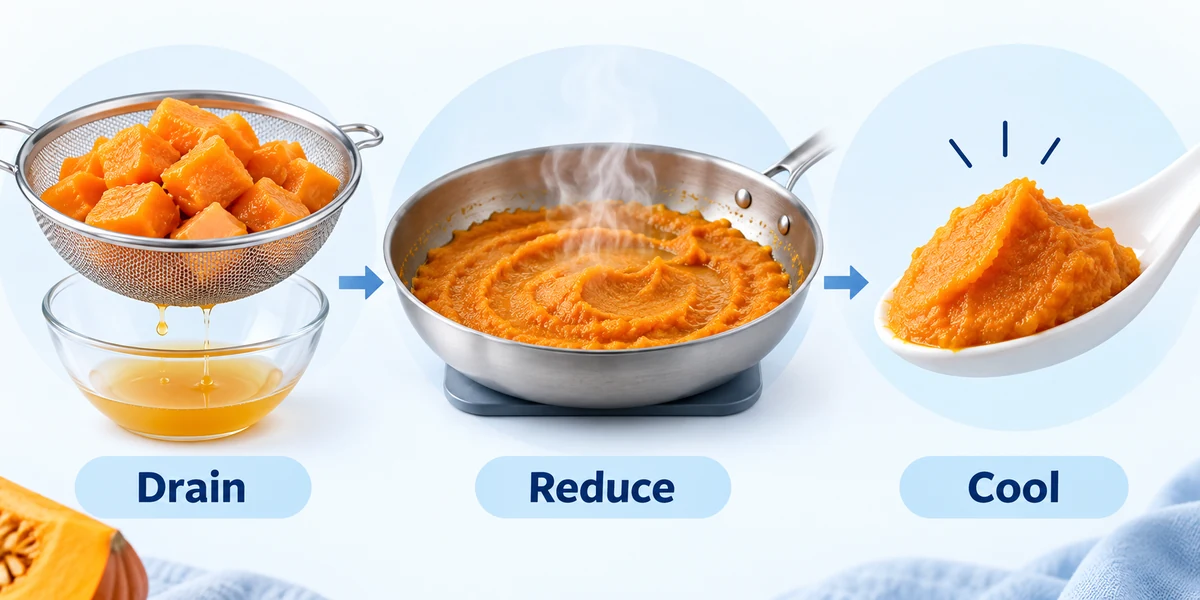
A useful qualitative cue is a mound that holds its shape briefly, with no separate pool forming underneath. That cue is a kitchen judgment, not a measured dry-matter specification. A puree can look thick because it is hot and then behave differently after cooling, or retain pockets of liquid because only its surface dried. Mix it evenly and let it cool to the condition required by your recipe before weighing and combining it.
Do not chase complete dryness. Pumpkin contributes the characteristic flavor and soft texture; reducing it to a leathery paste creates another problem. The aim is to remove unnecessary free liquid while preserving a smooth, usable puree. Once the puree is mixed with flour and egg, correcting the ingredient itself becomes harder. It is better to notice pooling water while it is still plain pumpkin.
Choose a dough style before you adjust it
Rolled gnocchi need enough cohesion to become short ropes and separate pieces. Spoon-dropped dumplings can tolerate a softer mixture because they do not need to survive the same shaping step. Neither is automatically better, but they have different handling targets. If a spoonable recipe works well, adding flour solely to make it rollable may change the dish you intended to cook.
Potato-based pumpkin gnocchi also differ from pumpkin-only dough. Potato adds a different cooked starch structure and changes the amount of pumpkin in each bite. Ricotta brings moisture as well as body. Egg adds liquid and contributes to the cooked structure. Breadcrumbs absorb liquid but create a different texture from simply increasing wheat flour. These are recipe choices, not interchangeable emergency fixes.
| Starting style | What must work | Useful check |
|---|---|---|
| Rolled pumpkin gnocchi | A soft rope separates cleanly into pieces | Cook one piece before shaping the whole batch |
| Spoon-dropped pumpkin dumplings | A portion releases from the spoon and remains coherent | Test the portion size and cooking behavior |
| Pumpkin and potato gnocchi | The combined prepared ingredients make a tender dough | Keep the pumpkin and potato preparation consistent |
Flour requirements vary with the pumpkin and its preparation. A recipe ratio is a starting point tied to its ingredients and preparation. If you switch from a dense roasted puree to a watery steamed puree, matching the listed pumpkin weight alone does not reproduce the original dough. Keep the recipe family stable while making small adjustments within it.
Mix for cohesion, then cook one piece
Add the recipe’s flour gradually and combine gently, keeping track of any extra flour. The target is the minimum useful cohesion, not a perfectly dry work surface. A little surface tackiness and a need for light dusting can be normal in a soft dumpling dough. Large amounts of dusting flour can also enter the dough, so count them when you compare batches.

Stop working the dough once the ingredients are evenly combined and the selected shape is manageable. Gnocchi do not need the prolonged development expected in a yeast loaf. Repeated kneading while adding more flour can make it difficult to tell whether the problem was puree water, flour quantity or handling. Use a scraper and a lightly floured surface to reduce unnecessary touching.
Before you roll all the dough, cook a small piece using the recipe’s method. Use the same approximate size you plan for the finished gnocchi. Lift it gently, let it cool enough to taste safely, then check the surface, center and bite. A piece that survives the pot but eats like a dense flour dumpling is not the same success as a tender piece with clear pumpkin flavor.
If the test falls apart, first check that it was handled gently and cooked under the intended conditions. Then make a small flour adjustment to a portion of dough and test again. Do not immediately add a large quantity to the entire bowl. If the dough is extremely wet, a different shaping style or a fresh batch with better puree preparation may be more sensible than repeatedly rescuing it with flour.
Read the cooked result before changing the batch
A ragged exterior, cloudy water and fragments in the pot suggest that the piece did not hold together well under that cooking method. Excessively vigorous boiling, oversized pieces or rough removal can contribute, so flour is not the only variable. Use the method specified by the recipe and avoid crowding the pot so much that pieces collide or the water temperature drops sharply.
A firm, bready center with muted pumpkin flavor can point toward too much flour for the texture you wanted. A sticky or paste-like center can reflect inadequate cooking, a very wet mixture or a piece that is too thick. The same appearance does not prove one cause. Compare the cooked sample with its preparation notes before changing the next batch.
Floating is a familiar recipe cue, but it is not a universal safety measurement or proof that every size has the same center. Follow the complete recipe cooking instructions and inspect a cooked piece rather than relying on surface position alone. If egg is included, the U.S. FDA gives 160°F (about 71°C) for egg dishes. Check with a food thermometer where practical and follow the complete recipe instructions.
Sauce can conceal texture. Taste the first sample plain or with a small amount of butter before covering it in a thick sauce. A crisp pan-fried exterior may be pleasant, but it should not be used to disguise an uncooked middle. Evaluate the boiled dumpling first, then decide whether a brief finishing step suits the dish.
A repeatable kitchen comparison
To learn whether drying the puree helps your recipe, compare two small batches from the same pumpkin lot. For your own comparison, keep the recipe, egg amount, flour type, mixing method, piece size and cooking method fixed. Change only the chosen puree preparation, and record exactly when each ingredient was weighed.

For example, one portion can use the recipe’s normal drained puree and the other can use a carefully reduced and cooled puree. Record the cooled puree weight, the initial flour weight and the extra flour used to achieve the chosen shape. Also record the amount left on the board or unused in the bowl. That distinguishes a handling improvement from a simple reduction in usable yield.
Judge both a cooking sample and the serving portion. Note intactness after removal, tenderness, pumpkin flavor and how much sauce each piece needs. Avoid assigning a universal score to one uncalibrated test. Your preferred dumpling may be softer than another kitchen’s, so write the desired outcome in ordinary language before deciding which preparation won.
Repeat the more promising preparation on another day before treating it as a settled method. A single successful sample demonstrates that one batch worked under those conditions. It does not establish a supplier guarantee, a fixed flour ratio or a measured dry-matter requirement. For a commercial menu, the useful record is the complete preparation and cooked result, linked to the actual ingredient supplied.
Handling, storage and serving
Keep the frozen product stored according to its label and thaw safely when the preparation requires it. Clean utensils and work surfaces before handling dough. Raw flour can carry harmful organisms, so do not taste the uncooked dough even if the pumpkin was already cooked; the FDA’s flour guidance [1] applies to dumpling dough as well as baking batter.
If you want to make gnocchi ahead, use a recipe that gives a tested chilling or freezing method and follow its timing. A raw dough that becomes wetter while waiting may stick together and need a different handling approach. Freezing pieces separately can help portioning in recipes designed for that method, but freezing is not a substitute for safe handling or complete cooking.
Refrigerate cooked leftovers promptly in shallow containers. For the temperature and time rules that apply to your setting, use current food-safety guidance and your local requirements. The U.S. FDA gives 165°F (about 74°C) for reheating leftovers. A glossy sauce or steaming surface does not establish the temperature at the center of a piled serving.
Choosing frozen pumpkin for a kitchen program
For repeated menu preparation, specify the ingredient form and the preparation that will be used to judge it. Cubes can be convenient to portion before cooking; a puree is convenient to mix but still needs a known moisture basis. The relevant comparison is usable cooled puree and the finished gnocchi, rather than bag appearance alone.
Our frozen pumpkin page describes product forms for supply discussions. When comparing ingredients, connect your sample to the same kitchen method through the specification and sample-approval process. This helps keep a successful recipe attached to the product and preparation that produced it. More cooking explanations are available in Food Knowledge.
Explore the product forms behind this application.
IQF Frozen Pumpkin →