


On this page
Add frozen pea pods to noodle soup at a point that satisfies the pack’s cooking instructions and leaves the bite you want when the bowl is eaten. Thin snow peas and fuller sugar snap peas should not be treated as interchangeable. If the soup is served immediately, heating the pods near service may give a clearer contrast with soft noodles. If the broth or filled bowl will wait, test the pods after that wait: continued heat can change their bite even though the stove is off. Cooking the pods separately and adding them to the bowl is another route, provided the frozen product’s directions allow it. There is no reliable universal number of seconds for every pod, broth and noodle.
Oregon State University Extension [1] distinguishes broad, flat snow pea pods from plumper sugar snap pods. Food & Health Communications [2] uses separately steamed snow or snap peas in a ramen bowl. That recipe shows an assembly choice for its ingredients; a frozen bag may call for a different preparation. Check its directions before relying on brief contact with hot broth.
Start with the pod form and its instructions
Check whether the bag contains snow peas, sugar snap peas, or a mixture. Snow peas are generally broad and thin with small developing peas inside. Sugar snap peas have a fuller pod and more substantial inner peas. That physical difference changes how the same mouthful feels against noodles. It also affects how quickly a pod may seem tender in a particular broth, although actual cooking still depends on size, processing and the package’s directions. Do not infer the preparation method from the name alone.
Inspect the frozen product before it enters the pot. Are pods whole or cut? Are they loose or frozen into a clump? Do they have strings or stem ends to remove? A cluster may chill one part of a small pot and heat unevenly if it is not dispersed. A mix of very small and large pods may make a single bite judgement harder. Record these facts when testing a recipe so another cook can repeat the result.
Identify whether the food is intended to be cooked from frozen, thawed first, or heated by another stated method. A food label may describe a minimum preparation that a brief broth contact cannot replace. A recipe using fresh pods cannot override the frozen product’s directions. If the instructions require cooking, build that cooking into the soup or prepare the pods separately as directed before adding them. A bright green surface is not evidence that the centre of a frozen pod or the whole dish is ready to eat.
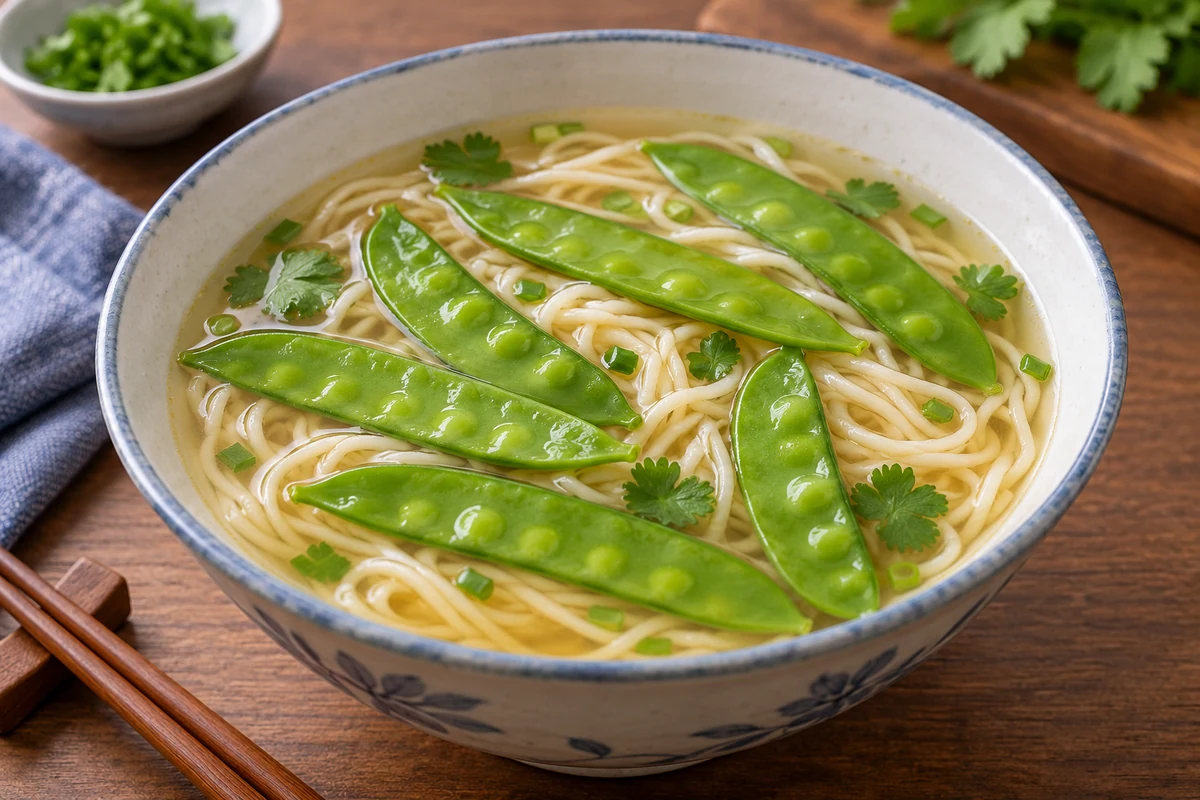
Illustrative soup context. Slender pod shape is visible, without a claim about the preparation or eating suitability of a particular product.
Finally define your target: a thin pod that bends but still offers some resistance; a fuller snap pod with a distinct bite; or a deliberately soft vegetable integrated with the noodles. A noodle soup can be pleasant at any of those endpoints. The error is to describe one as universal while ignoring the intended dish and the time between cooking and eating.
Cook in the broth or heat near service
One route cooks the pods in the broth. This can be convenient when the soup is already simmering and the product requires active heating. Add the pods while there is enough cooking left to meet the pack’s directions, then check the bowl at service. The risk for texture is that they remain in hot liquid while noodles finish or portions wait. A thin snow pod in a long simmer may no longer offer the same separate bite as a pod heated nearer to service.
The second route cooks or heats the pods separately and adds them as the bowl is assembled. It lets the cook follow the product instructions without forcing the noodles to share exactly the same schedule. It also makes the pod’s endpoint easier to see before it is submerged in broth. The hot soup still affects the pod after assembly, so this is not a promise that a topping will remain crisp indefinitely. The route is most useful when the desired service point is close to assembly.
A third route introduces the frozen pods late into broth. It can combine one-pot convenience with a shorter exposure to hot liquid, provided the broth and remaining cooking can complete the required preparation. A handful of loose pods in a small pot and a large frozen mass in a service kettle behave differently. If the addition sharply reduces the simmer, allow for recovery and verify the result. A fresh-pod recipe cannot determine the entry point for frozen pods.
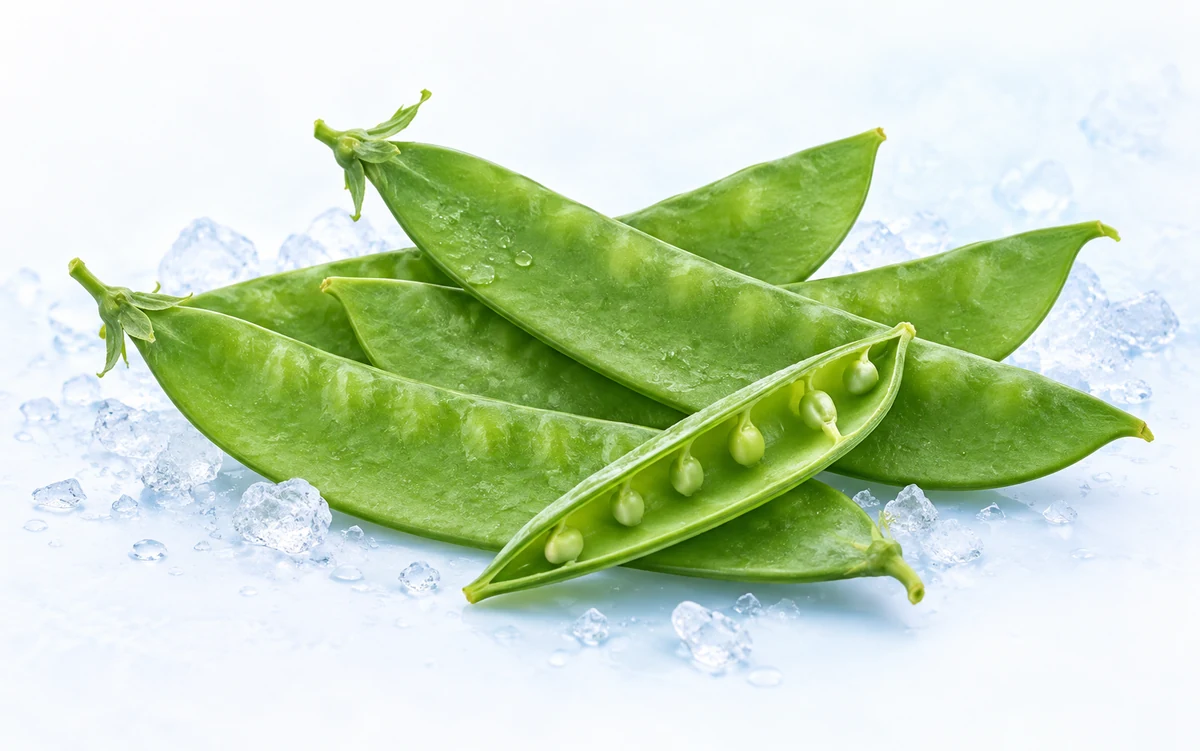
Conceptual pea-pod form; not a photograph of a batch or a cooked soup.
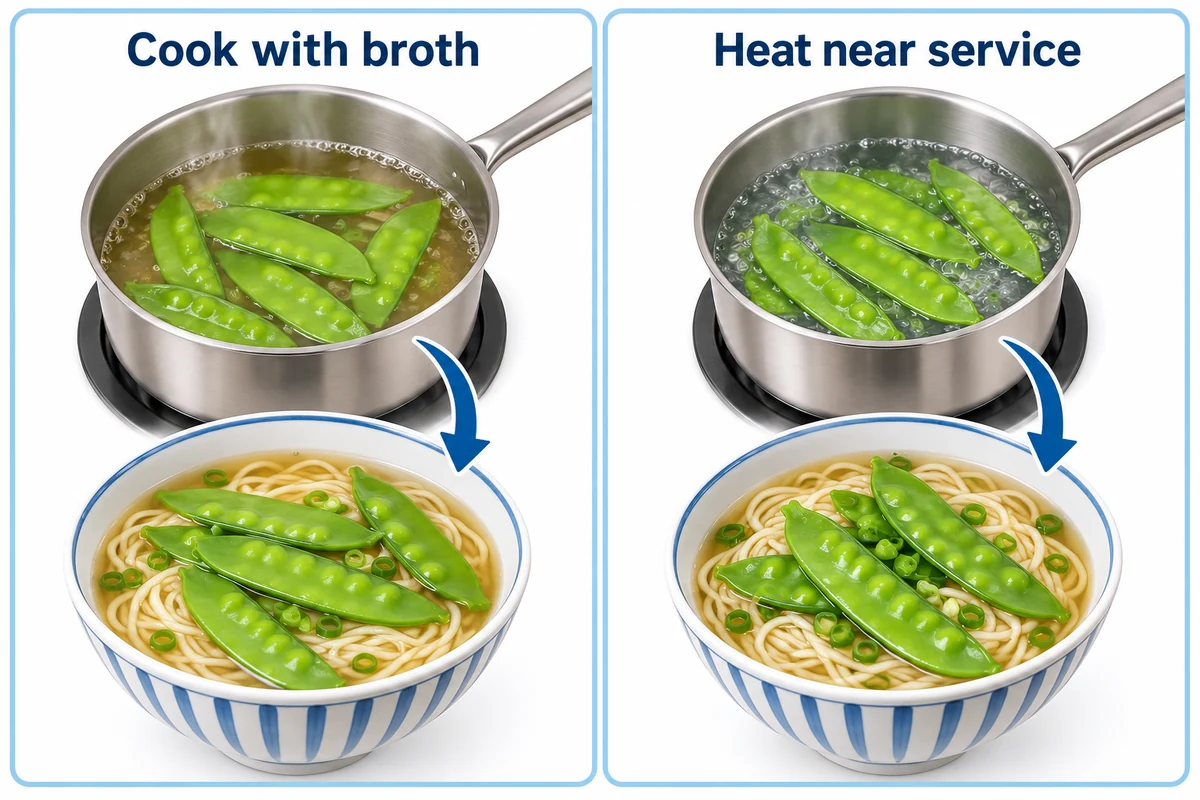
Illustrative addition routes. The pea pods must receive the preparation required for the exact product in either route.
On a narrow screen, swipe this table sideways to read the remaining columns.
| Route | Best reason to test it | What can change the result |
|---|---|---|
| Pods simmer in broth | Required active heating can happen in one pot | Long noodle cooking or hot holding may soften pods |
| Pods enter near service | Shorter contact may retain a distinct bite | Frozen load may cool broth; product directions still apply |
| Pods prepared separately | Different noodle and pod schedules can be coordinated | Extra handling and the wait after bowl assembly |
These routes are candidates for a matched kitchen trial. Exclude any route that cannot complete the required preparation; then compare service texture and workflow.
Account for pod thickness and frozen load
The thin wall of a snow pea and the fuller structure of a sugar snap pea create different bite possibilities. A snow pea may give a light, flexible texture that suits a delicate soup. A snap pea may provide more substance against thick noodles or a richer broth. That is a culinary expectation based on form, not a guaranteed outcome of freezing. Try the actual product: freezing, size grading, cut and previous processing can all change the result.
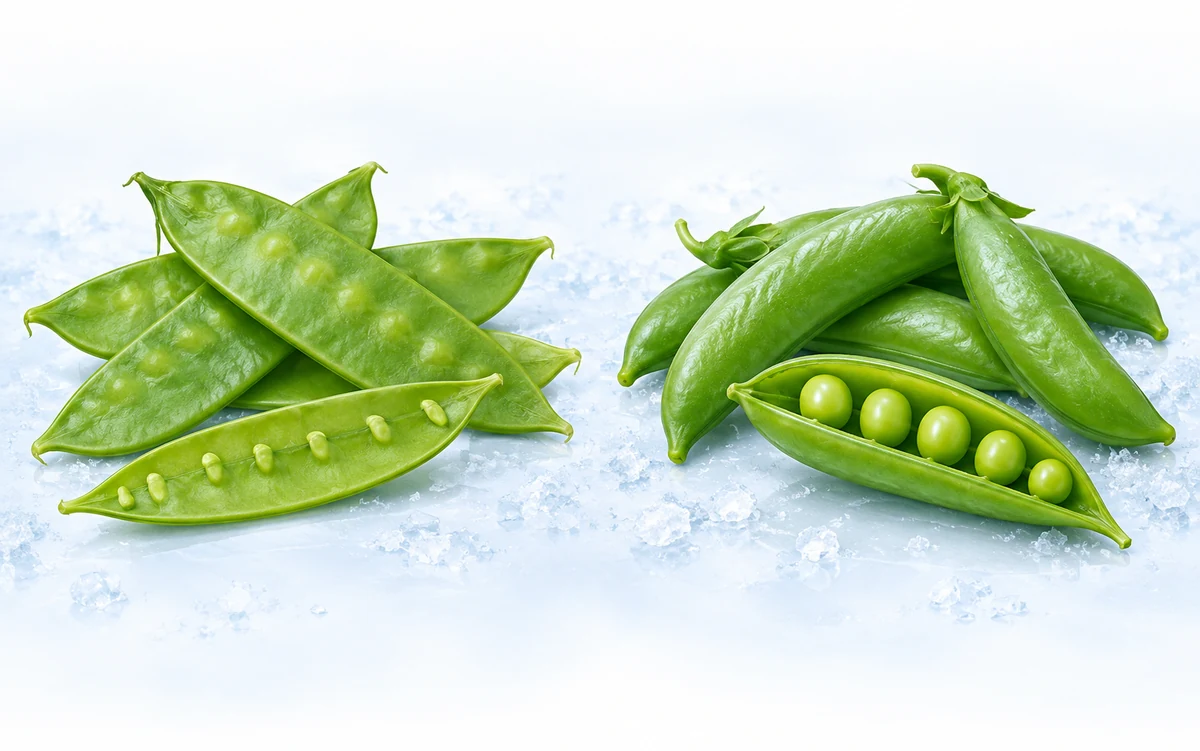
Conceptual pod comparison to guide a noodle-soup trial; no cooking result is shown.
Use the illustrated difference in pod thickness to decide what to compare in a real soup trial. Keep the noodle, broth volume, serving delay and required product preparation the same while testing the actual thin and plump pods separately. The drawing cannot establish which batch will retain a firmer bite.
Frozen pods take up heat as they warm. In a small bowl, a generous cold addition can lower the temperature of the broth and delay the return to an active simmer. In a large batch, frozen pieces may be distributed unevenly. Break up clusters by a method permitted on the pack, spread the pods through the liquid, and observe when the broth recovers. If the broth needs more heat, consider what that additional exposure does to noodles already in the pot. Sometimes a separate pod pan is a simpler solution than making noodles wait.
Keep noodles, broth and pods on compatible schedules
Noodles have their own endpoint. Thin rice noodles, fresh wheat noodles and dried noodles do not spend equal time in hot liquid. Some recipes cook noodles separately, then pour broth over them. Others simmer them in the soup. The pod addition should be fitted around that actual schedule. If noodles are already cooked separately, the broth can heat the pods without overcooking the noodles, and assembly can follow promptly. If noodles cook in the same pot, adding pods too early may make them wait through the remaining noodle cooking.
Start by writing three simple events: broth ready, noodles ready, pods prepared according to their pack. If any two cannot finish together, change the order of assembly rather than forcing the ingredients into one timer. For example, prepare noodles separately while pods heat in the broth, then portion noodles and pour over the finished broth and pods. Or heat pods separately while the noodles finish in broth. Each is a possible workflow, subject to the product directions and actual service equipment.
The Good Food noodle pot [3] blanches pods and cools them separately for a cold noodle preparation. That example supports the idea of separating schedules; it does not give a hot-soup timing prescription. In your own soup, keep the cooking objective and the product state explicit.
What happens while the filled bowl waits
A filled bowl is still a cooking environment for a short period: hot broth surrounds the pods and noodles continue taking up liquid. The pod may lose some resistance before the diner lifts it. The noodle may also soften, making the contrast harder to judge. The effect depends on bowl size, broth temperature, pod form, noodle type and the actual wait. No single waiting time should be advertised as a universal limit.
Taste one bowl immediately after assembly and another after the realistic delay in your setting. Put the same quantity of noodles, broth and pods in each. Lift pods from near the surface and from deeper in the broth, and compare whether they remain identifiable and pleasant to chew. Then check noodle bite and broth level. If both pods and noodles soften too much, the issue may be the finished bowl’s wait, not just the point when pods entered the pot.

Conceptual holding comparison. Judge pod bite through the real serving interval; these bowls are not measured timed samples.
For takeaway or room service, packaging makes this more important. A lidded bowl holds heat and steam; a separated broth and noodle pack follows a different route. Test the complete serving format rather than judging a spoonful directly from a saucepan. If the pod needs a clearly defined bite at delivery, consider separating components until service when food-safety and product instructions permit. This is a design choice to validate, not a claim that it always solves a delayed-service problem.
Compare timing in your actual noodle soup
Run a controlled kitchen comparison with one pod product and one noodle soup. Use equal pod weight, the same broth recipe, the same noodle quantity and the same bowls. Keep the serving delay identical. Judge only fully prepared samples; an underheated pod’s apparent “crunch” is not a valid result.
Compare two useful routes first: pods cooked in broth and pods prepared separately then added at assembly. Add a late-broth route only when the pack and the soup’s remaining heat make it viable. Record the pod state on entry, whether the broth stopped simmering, whether the noodles were already cooked, and the order of assembly. A written sequence is more reproducible than “add at the end,” which means different things with instant noodles and thick dried noodles.
Evaluate at the actual serving point. Is the pod thin and flexible or thick and springy as intended? Is there a tough string? Is it fully heated according to the instructions? Do the noodles still have their intended bite? Has the broth become diluted or scarce? A good route satisfies the product requirement and balances all three components. If the pods seem good but the noodles are soft, adjust the noodle schedule. If noodles are good but pods are limp, reduce avoidable pod holding or test a different pod form.
On a narrow screen, swipe this table sideways to read the remaining columns.
| Hold constant | Change | Record |
|---|---|---|
| Pod lot, broth, noodle type, bowl and serving delay | Pod cooking/assembly route | Pod bite, noodle bite, broth state, preparation compliance |
| Same route and portion | Immediate versus realistic waiting bowl | How the bite and broth level change |
Handle batches and leftovers separately
A service kettle of soup and a fresh bowl do not pose the same timing problem. If cooked pods remain in a hot pot through many portions, the last bowls may receive a softer vegetable than the first. If the kitchen prepares pods separately, it needs a safe holding and assembly plan. Test the route under the actual batch size, service window and equipment. A single-bowl trial can help choose candidates but cannot guarantee batch performance.
Leftovers are another distinct endpoint. Noodles continue absorbing broth during storage, so reheating a combined soup may change both noodle and pod texture. Cool and store prepared food safely, then reheat according to applicable guidance. If leftovers are expected, compare a combined portion with safely stored components assembled after reheating only when that route is practical. Keep the test separate from fresh-service judging so a route is not credited for an outcome it was not designed to provide.
Avoid using an attractive green pod as a safety signal. Follow package directions and any instructions for other ingredients in the soup. If meat, eggs or other ingredients are present, their handling requirements do not disappear because the vegetable portion looks ready. Texture evaluation belongs after the complete food is properly prepared.
Choose pods for the intended bowl
Select a pod form that suits the broth and noodle. Flat snow peas can contribute a light, broad vegetable shape; fuller snap peas can contribute a more substantial bite. Whole, cut and mixed pod products can behave differently in a spoonful. Inspect strings, broken pieces and size spread before deciding whether timing alone is the issue. A product that is too thick for the desired delicate bowl may remain dominant even when the cook changes the entry point.
For repeatable recipe development, state the pod form, product preparation, noodle type, broth route and service delay together. A sample comparison under one defined soup method can show whether a different cut or pod type offers a better finished bite. Compare candidates at the point where the customer eats, not while they are still frozen or just lifted from a separate pot.
The practical answer is conditional: use a route that fulfils the frozen product’s instructions, then adjust the timing around noodles and the real serving delay. A late entry or separate preparation may help preserve a distinct pod, but only a trial with the actual soup can show whether it does so without compromising the rest of the bowl.
View frozen pea pods
Review frozen pea pod forms. State whether the trial uses slender or plump pods, then compare preparation and bite through the noodle soup serving interval.
View product forms →