


On this page
Frozen mixed vegetables can work well in fried rice when their cooking and released liquid are managed before the rice becomes a wet, crowded mass. Use properly cooked and safely handled rice, follow the vegetable pack’s preparation directions, and choose a batch size your pan can heat effectively. Grain separation depends on the rice itself as well as what you add to it.
Cooking the vegetables before combining them with rice is a useful starting method, especially when the blend releases noticeable liquid. Separate preparation is another option when the recipe and pack allow it. Neither method is automatically best for every blend: peas, corn, carrot dice and larger vegetable pieces have different shapes and eating textures. Check that the actual components are appropriately cooked, not merely colourful.
Add egg and liquid seasoning deliberately, then taste a complete spoonful. A dish with separate rice grains but cold or tough vegetables is unfinished; a tender vegetable mixture swimming in sauce will not deliver the same result as a drier fried rice. Aim for comfortable grains and vegetables together, with enough seasoning to flavour the food without flooding the pan.
Separate grains start before the wok

Different component sizes in this vegetable mix illustrate why a buyer should check the actual mix before planning a wok batch.
Begin with the cooked rice you actually have. A sticky variety, rice cooked with excess liquid and a drier cooked grain can give different results before the vegetables enter the pan. Break up manageable clumps gently with a clean utensil. If you need to crush the rice forcefully to separate it, frying may not turn that starting material into intact individual grains.
Do not leave cooked rice on the counter to dry for fried rice. The UK Food Standards Agency’s current home guidance [1], published for England, Northern Ireland and Wales, advises chilling leftover rice quickly, ideally within one hour, using smaller portions, and not leaving it in the cooker or pan to cool. It advises refrigerated storage for no more than one day before reheating, reheating only once and making the dish steaming hot throughout.
Those are UK consumer handling instructions, separate from the texture goal. Safely chilled rice can be convenient for a recipe, but “day-old” is not a safety guarantee. Know when and how it was prepared. If using packaged cooked rice, follow that product’s storage and heating instructions. Keep the planned method compatible with the rice you have rather than treating any leftover container as equivalent.
Identify the vegetables in the blend
Look at the ingredient list and the cut forms. A blend of peas, corn and small carrot dice is different from one containing large broccoli florets or long beans. The components also have different roles in a spoonful: some scatter between rice grains, while a larger piece becomes a separate bite. Choose a blend that suits the serving rather than treating all mixed vegetables as one ingredient.
For a more detailed composition check, see how to verify component ratios in frozen mixed vegetables. For this meal, begin by identifying the actual components rather than assuming that every bag contains the same blend.
Read whether the pack is plain, seasoned or includes sauce. A prepared sauce contributes liquid and seasoning that a plain vegetable mix does not. A blanched frozen vegetable still needs the preparation required by its pack; blanching is not permission to skip cooking. A colourful appearance or a thawed exterior does not establish that the centre is ready to eat.
University of Minnesota Extension [2] explains that freezing can soften plant tissue and does not destroy all harmful bacteria. The practical consequence is to judge texture after suitable preparation and keep safety requirements in the process. Do not expect a quick toss chosen only to keep the rice dry to complete every vegetable’s required cooking.
Choose direct cooking or separate preparation
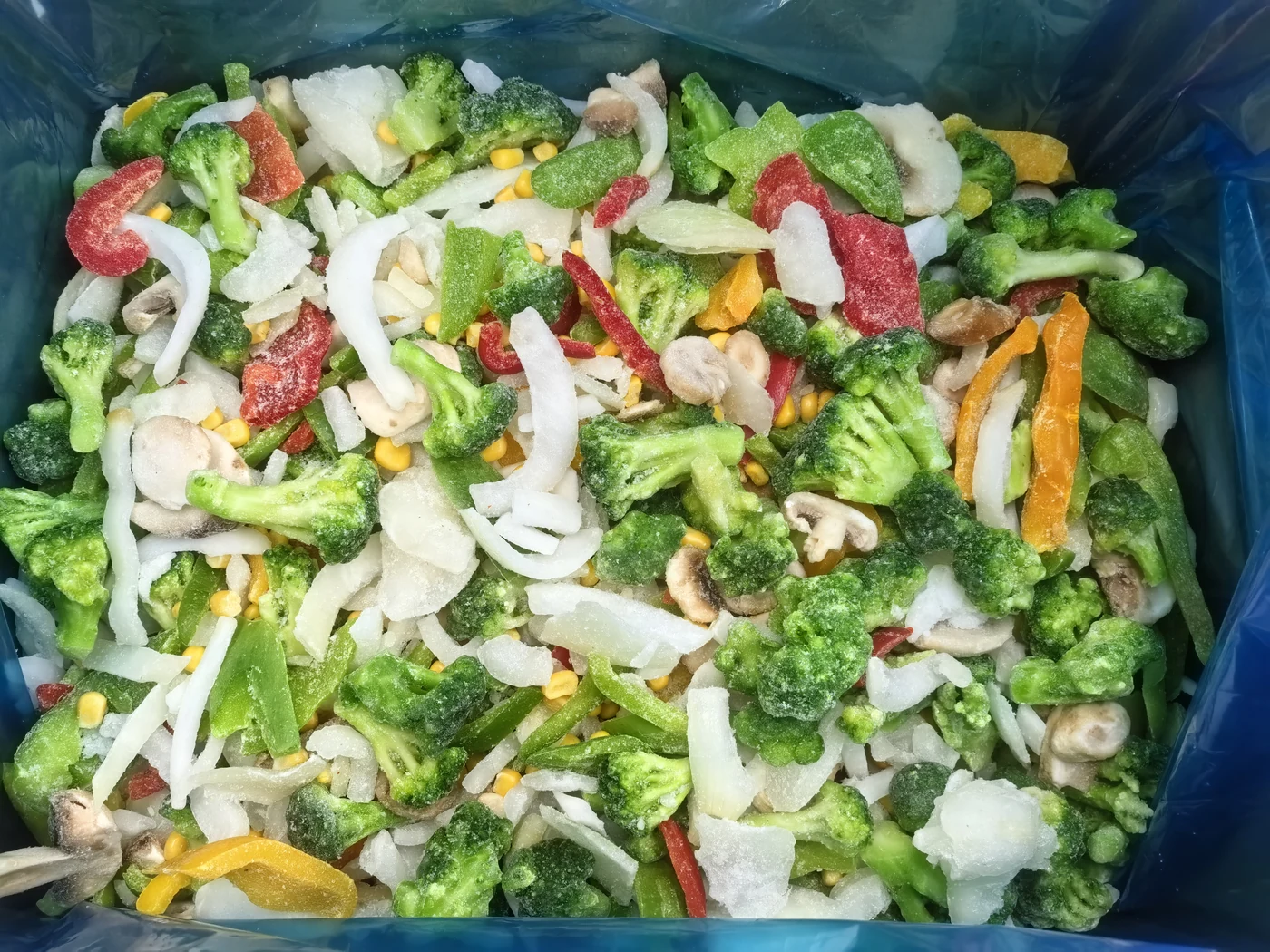
This mixed vegetable example supplies visual product context; it does not show a cooked fried-rice trial or a fixed recipe ratio.
Direct cooking can keep the process simple when the vegetable directions permit it and the pan has enough usable space. Put the vegetables through the appropriate recipe stage, then add the rice when excess liquid is under control. A frozen vegetable block is different from separated pieces, so follow the handling needed by the actual pack rather than stirring a block around the rice and hoping it will disperse evenly.
Separate preparation can give more control over vegetable cooking and liquid. Prepare the blend according to its instructions, then drain free liquid if the method permits before combining with the rice. Do not squeeze delicate components merely to make the bowl dry. The aim is to remove unwanted free water while retaining a comfortable cooked vegetable texture.
Choose between these approaches by observing the dish. If vegetables reach their endpoint well before the rice is ready, separate cooking may prevent unnecessary further softening. If the mix is small, evenly cut and manageable in the pan, direct cooking may be convenient. Record which starting state you used for a comparison. Drained prepared vegetables and an equal frozen weight are not necessarily the same quantity entering the fried rice.
| Approach | When it may help | What to check |
|---|---|---|
| Direct cooking | A permitted method and manageable pan load | Required cooking and free liquid before rice |
| Separate preparation | A blend needing its own cooking stage | Correct preparation, drainage and component texture |
| Smaller batches | Equipment cannot heat the full load evenly | Even heating without prolonged cooking |
Cook off vegetable liquid before adding rice

Illustrative method: peas, corn and carrot are cooked separately before combining with rice. The generic illustrated mix differs from the real product photographs.
Swipe to view the diagram on smaller screens.
Let the vegetable stage reveal the liquid it contributes. Watch the pan bottom and the space between pieces. If a visible puddle remains, adding rice means asking it to share that liquid while the pan heats the whole load. This can change the finish you want even when the rice began in good condition.
Manage the liquid through the recipe’s permitted evaporation or drainage step before combining. Stir to heat components appropriately, but do not assume that movement alone removes moisture. A deep pile can stay wet despite frequent stirring. More oil is not a substitute for controlling liquid; it can leave the final food greasy while the rice still clumps.
An extension-origin fried-rice recipe on Nutrition.gov [3] prepares the vegetables before adding cooked rice, providing a culinary example of that sequence. Its particular ingredient amounts and cooking periods are not universal instructions for every frozen blend. Use a suitable recipe and the pack requirements together, then observe whether the vegetable stage leaves the amount of free liquid your intended dish can accept.
Match the batch to the heat available

Illustrative comparison: equal input bowls feed different usable pan areas, producing a mound or a shallow layer. No measured heat-transfer result is implied.
Swipe to view the diagram on smaller screens.
A pan can hold more food than it can finish in the way you want. A deep mound of rice and vegetables may be awkward to move and may leave some areas wetter than others. Work with a batch that lets you spread and turn the food comfortably. For a larger meal, smaller cooking batches can give more control than trying to finish the entire quantity at once.
Match cookware to the hob as well as the ingredient amount. A large wok does not guarantee strong heat across every surface on a small domestic burner. A flatter pan may provide useful contact for a modest quantity, while a larger quantity may need another approach. The relevant observation is how the food heats and moves in your equipment, not the name of the vessel.
Look for reasonably even heating while following the required preparation. If the rice is frying in one area and sitting wet in another, redistribute or reduce the batch rather than adding another round of liquid seasoning. Avoid using maximum heat as an automatic correction: it can scorch the bottom before the rest is properly heated. A smaller workable load is often the clearer first adjustment.
Add egg and sauces without flooding the pan
Egg changes both the recipe sequence and the moisture at the moment it enters. Follow a recipe that makes its cooking stage clear, whether it is prepared separately or cooked in a suitable space before combination. Do not spread liquid egg across a large cold rice mound and judge completion only from the disappearance of visible yellow liquid.
The FDA’s egg-safety guidance [4] calls for thorough cooking of scrambled eggs and appropriate handling of egg dishes. Keep utensils used for raw egg separate from ready-to-eat serving food. The rice’s grain separation and the vegetables’ appearance do not replace the egg preparation requirements.
Add liquid seasonings in controlled amounts. Soy sauce, stock, marinades and other sauces all contribute something beyond salt or aroma. A recipe designed for a small addition can become a sauced rice dish if you pour generously to correct weak flavour. Taste a properly cooked spoonful before adding more. If seasoning is uneven, improve distribution first; another splash may make the strongest parts too salty while the whole batch becomes wetter.
Check the rice and vegetables together

Illustrative serving check: inspect grain separation, vegetable centres and a mixed spoonful; the image cannot demonstrate actual doneness or a safe temperature.
Swipe to view the diagram on smaller screens.
Take a representative spoonful that includes rice and several vegetable components. Notice whether grains separate comfortably, whether carrot or other centres have the expected cooked texture, and whether the seasoning reaches the whole bite. Testing only the softest pea or the driest rice at the edge of the pan can miss a problem elsewhere.
Look at the serving plate for free liquid and excessive oil. A dish can look separate while still tasting greasy, or seem dry while containing tough vegetables. Keep these judgements separate so that the correction matches the problem. More frying may reduce some wetness, but it can also overcook components that have already reached a pleasant endpoint.
Serve the properly prepared dish according to the handling guidance you are following. The UK rice advice described earlier requires steaming-hot reheating throughout and only one reheat. Appearance, smell and the absence of clumps do not establish that previously mishandled rice has become safe. Grain separation is a cooking-quality aim; it cannot repair a storage problem that occurred before the pan was heated.
Make a repeatable comparison with another blend
To compare vegetable blends, keep the rice, pan load, seasoning and serving portion as consistent as the pack requirements allow. Record any necessary preparation differences instead of forcing incompatible products through one sequence. A blend that needs a longer separate cooking stage should receive it, even if another can be handled directly.
Choose a few observations that matter: free liquid before rice addition, vegetable cooking uniformity, grain separation after seasoning, and eating texture in a complete serving. Write whether the vegetable amount refers to frozen input or prepared drained material. The same bag weight can be a poor comparison basis if one method discards more liquid than the other.
The mixed vegetable product forms offer context for blend composition, and the sampling guidance can help commercial readers document their application. Prefer a blend that works in the chosen recipe after correct preparation, without claiming it will behave identically in every wok or portion.
Fix clumping without overcooking the vegetables
If grains clump before vegetables are added, inspect the starting rice. The issue may be variety, cooking method or initial moisture, so changing the frozen blend will not necessarily solve it. Separate manageable clumps gently and select a suitable rice preparation for another batch. Do not leave cooked rice at room temperature to make it drier.
If clumping develops after combination, look for vegetable liquid, excess sauce and an unmanageable load. Correct those variables in the next small batch rather than frying the same mixture indefinitely. Vegetables can become too soft while you chase a rice texture that the starting recipe cannot deliver. Separate preparation or a smaller quantity can address the process more directly.
If rice is acceptably separate but the dish is unfinished, give attention to the vegetable centres, egg or other added components. Each still needs its appropriate cooking and handling. The successful plate is a balanced cooked dish with comfortable grains and vegetables together. A dry-looking pan, a browned patch or a familiar frozen blend is only one observation within that decision.
