


On this page
Frozen green asparagus can make a good frittata when you manage its released water before the egg mixture sets and choose pieces that fit the slice. Short cuts distribute easily through the egg; longer spears create a more deliberate presentation but can cross several portions. Follow the asparagus pack’s cooking instructions, then drain or evaporate unnecessary free liquid before combining it with eggs.
The preparation depends on the product and recipe. A recipe may cook frozen asparagus directly in the pan, or use a separate preparation before assembly. The important distinction is between water still associated with the vegetable and a puddle you can remove before it enters the egg mixture. Free liquid left in the pan can make a frittata harder to set evenly and leave water on the plate.
Cook the egg mixture completely. Green asparagus, a browned top and firm edges do not show the center temperature. The U.S. FDA lists 160°F (about 71°C) for egg-containing dishes such as frittata; use a food thermometer at the thickest central area. The aim is a fully cooked center with a pleasant texture, not a decorative top that hides wet egg beneath.
Choose pieces for the slice you want
Short asparagus pieces suit a frittata that will be cut into many small servings. Each slice can contain several visible pieces without requiring a knife to cut across a long spear. Whole or longer spears can look attractive on top, especially when the planned wedge crosses them neatly. Decide where the cutting lines will fall before arranging them.
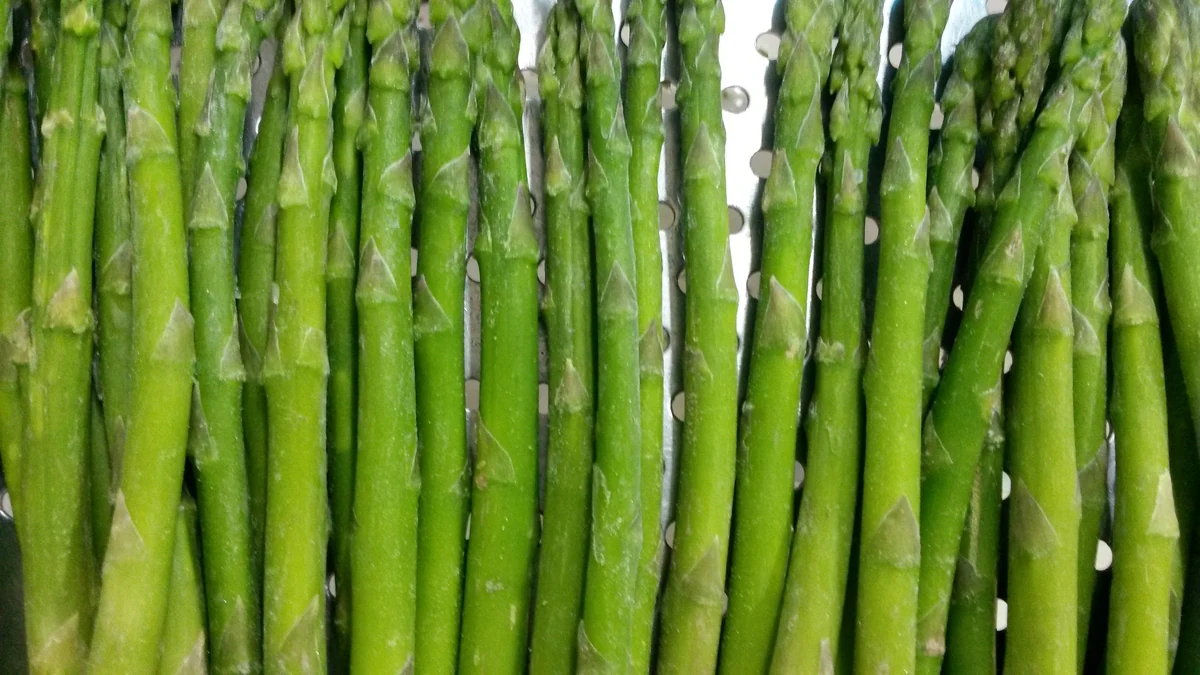
Tips and stem cuts also have different visual roles. Tips are easy to recognize and can be placed where they remain visible. Stem pieces can distribute the vegetable through the egg body. A frittata covered entirely with tips may look appealing, but if the ingredient underneath is piled unevenly, some portions will still have much more asparagus than others.
Do not treat green color or diameter as proof that every piece has the same tenderness. Woody tissue will not become pleasant simply because it spends longer inside the egg mixture. Evaluate the ingredient’s cooked bite before assembly if its texture is uncertain. Our separate guide to asparagus tips and cuts addresses form choice; here the focus is their placement in a setting egg dish.
Cut pieces consistently enough to cook and portion as intended. You do not need identical laboratory lengths, but a mixture of very long stalks and tiny fragments creates different eating and slicing behavior. Prepare manageable pieces using the safe stage specified by your recipe and product instructions. Avoid chopping a hard frozen block in a way that makes the knife unstable.
Prepare the asparagus before adding eggs
Start with plain asparagus if you are learning the method. A butter sauce or seasoned ready-to-serve preparation adds other liquids and ingredients. Read its label before treating it like plain spears. Commercial frozen asparagus may be blanched, but that does not by itself establish that it is ready to eat without the instructed cooking.
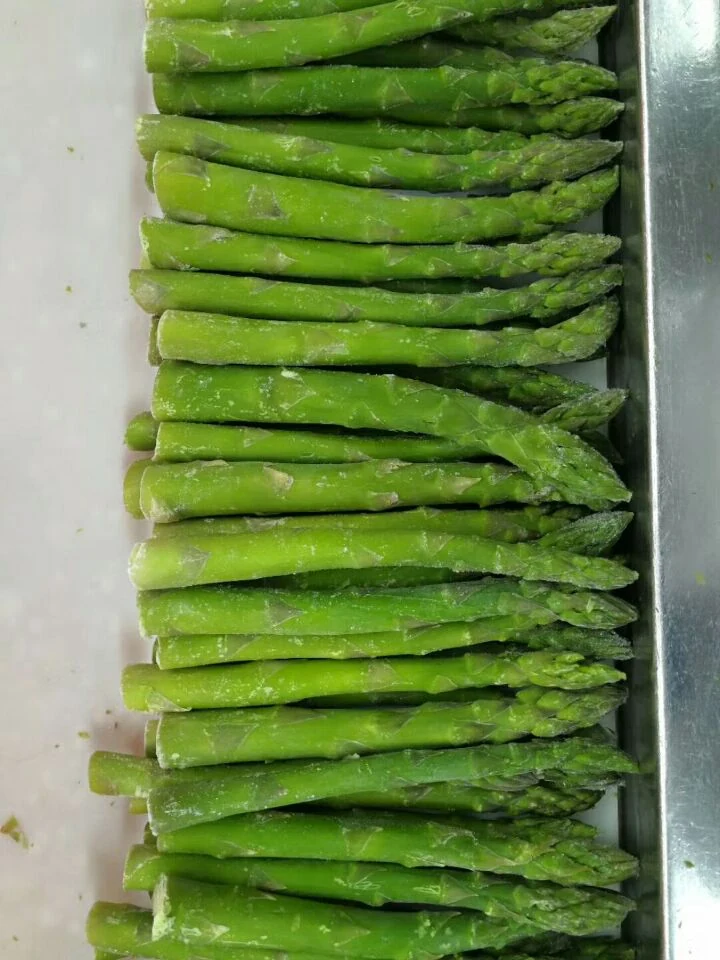
If the recipe cooks from frozen, allow space in the pan for the asparagus to heat and release liquid. A crowded heap can make it hard to see whether the bottom is wet while the top remains cold. Separate pieces as they soften using suitable utensils. Follow the pack’s preparation requirements rather than assuming a brief decorative warming step is enough.
If the recipe uses separately prepared asparagus, drain it well and inspect the collected liquid before assembly. Use a sieve or other clean equipment without crushing tender tips. Blotting surface water can help after a suitable preparation, but it cannot remove all moisture from the tissue. The goal is a usable vegetable that will not carry an avoidable puddle into the eggs.
Avoid excessive repeated cooking merely to make the vegetable completely dry. The asparagus will receive more heat when the frittata cooks. You want a preparation that satisfies the label, manages free liquid and leaves a texture suited to the finished dish. Tenderness and water removal should be recorded separately; a dry but stringy spear does not solve the eating-quality problem.
Keep vegetable water separate from the egg mixture
Eggs set as they cook, building the structure around the vegetable. Loose asparagus water changes the mixture that must set. Milk, cream, soft cheese and other moist ingredients already contribute to the chosen recipe, so unmeasured vegetable liquid should not be treated as irrelevant. Keep the original egg-to-dairy formula stable while learning how your asparagus behaves.
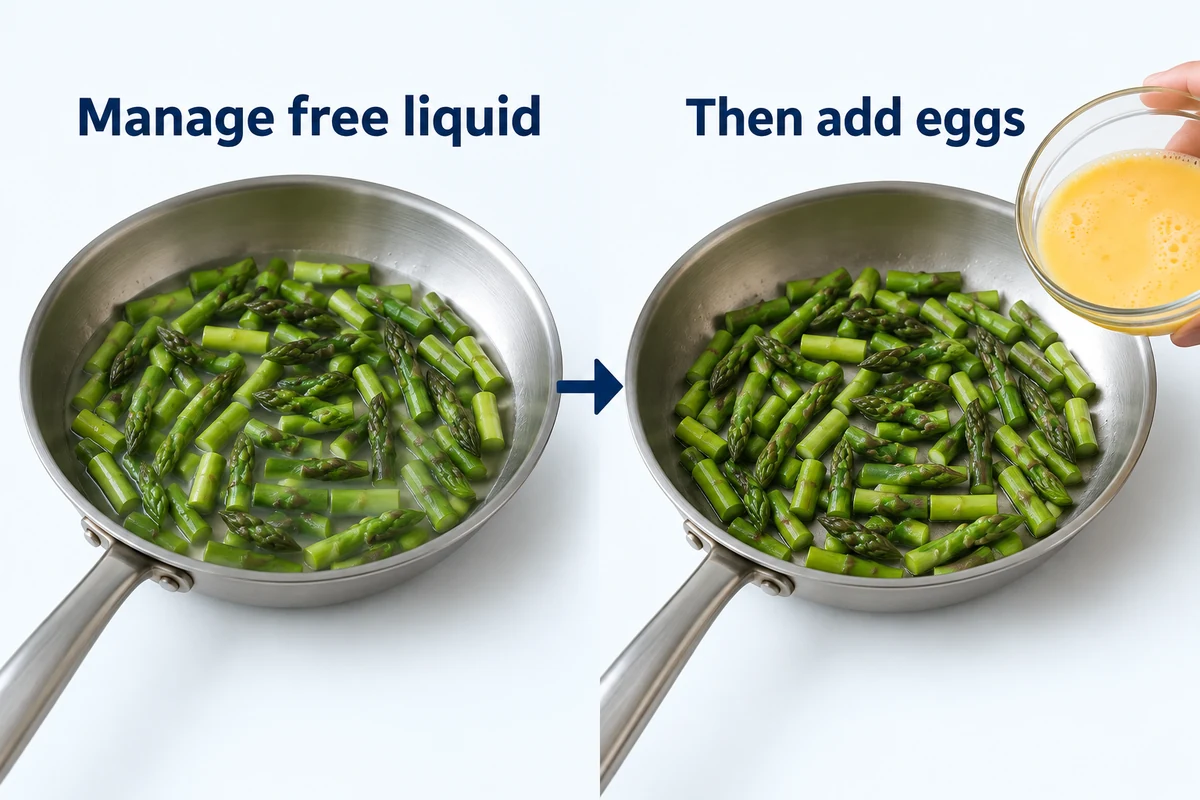
Before pouring eggs into a pan containing asparagus, look across the base. If free liquid collects when the pan is tilted, decide how to remove it under the recipe’s method. You might continue suitable heating to evaporate it or drain separately prepared pieces. Avoid discarding a large unknown quantity after eggs are added; that removes part of the recipe and makes control harder.
Other vegetables can contribute just as much uncertainty. Mushrooms, tomatoes or spinach may release water during preparation. Cook and manage each ingredient as the recipe requires before assembling the egg mixture. If you change several wet vegetables at once, a watery slice cannot fairly be attributed to asparagus alone.
There is no universal asparagus weight that guarantees a particular frittata texture. More vegetable means less continuous egg mixture between the pieces and can increase the amount of water to manage. Start with the recipe’s quantity, judge a fully cooked slice, and adjust for the result you want. A larger vegetable load may need a recipe developed for that style, not simply a longer bake.
Place asparagus without making a barrier
Distribute short cuts across the base rather than leaving a mound in the middle. When eggs are added, there should be enough space for the mixture to surround the vegetable. A tightly packed mat of long spears can separate the dish into a vegetable layer and an egg layer instead of producing an integrated slice.
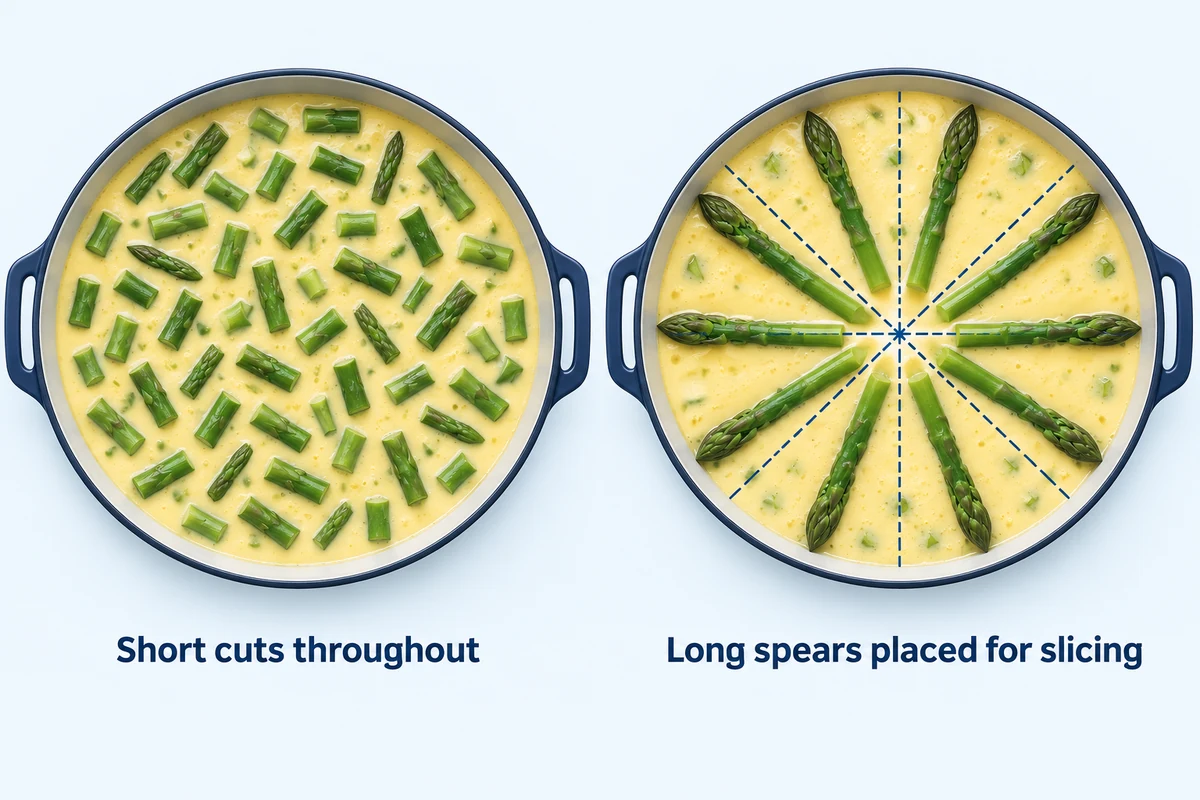
For visible long spears on top, arrange them with the eventual portion shape in mind. Radial placement may suit wedges; parallel placement may suit rectangular slices. These are presentation choices, not rules. The practical check is whether the knife can pass through cleanly and whether a serving lifts without dragging a spear out of its neighbor.
Reserve only the amount needed for the top and distribute the rest through the body. If every spear is on the surface, some bites may have little asparagus while the first cut feels overloaded. Conversely, burying all the tips can hide the visual identity of the dish. Choose a balance that matches the intended serving.
Keep the depth of the egg mixture reasonably even across the pan. A central heap of vegetable makes a thicker area where cooking takes longer. Moving the pan or stirring once at the recipe’s permitted stage can improve distribution, but do not keep disturbing eggs after they have begun to set into the desired structure. Placement is easiest to fix before the dish becomes firm.
Set the center while protecting the edges
Follow a complete frittata recipe for pan size, heat and oven or stovetop method. A wide shallow pan behaves differently from a smaller deep one holding the same ingredients. An oven-safe skillet and its handle need to be suitable for the chosen finish; a recipe’s oven step should not be improvised in an unsuitable pan.
Firm edges can develop before the center is ready. A browned top under a broiler can also conceal a loose center. Check the thickest area with a food thermometer, avoiding contact with the pan, and use the 160°F (71°C) egg-dish guidance [1]. If ingredients require a higher safe temperature under the applicable recipe or local rules, follow that requirement.
Stop treating more cooking as the answer to every watery slice. If the eggs are completely cooked but liquid appears around asparagus, the preparation or vegetable load may need attention. Excess cooking can also make an egg dish less pleasant. A useful diagnosis needs both the temperature check and the location of the liquid.
Let the frittata settle for the brief serving rest specified by the recipe before slicing, while maintaining safe handling. A clean cut helps you examine how egg and asparagus are distributed. Do not leave it at room temperature for an extended period just to improve slicing. Serving convenience does not replace food-safety time and temperature controls.
Diagnose water after slicing
First identify whether you are seeing steam condensing on a cover, loose liquid beside the vegetable, or an egg center that was not fully cooked. A wet surface under a lid is not the same observation as a watery central cut. Remove the slice and inspect the thickest region as well as the pan; that gives more information than looking only at the top.

| Observation | Question to resolve | Next preparation decision |
|---|---|---|
| Water pools before eggs are added | Was free vegetable liquid removed? | Drain or evaporate as the recipe permits |
| Wet central egg after cutting | Did the thickest center reach the required temperature? | Complete cooking and review depth and heat method |
| Cooked egg with liquid around pieces | Was the asparagus load or retained liquid excessive for this recipe? | Compare a better-drained preparation in the next batch |
| A slice pulls apart along a long spear | Did placement cross the portion awkwardly? | Use shorter cuts or rearrange long pieces |
Record the actual preparation before changing it. A thicker pan load, extra cream or more tomatoes can be responsible for a different result even when the asparagus is unchanged. Keep one cause hypothesis per next comparison. That makes it possible to explain the improvement to another cook instead of relying on an instinctive rescue.
Texture preferences vary. Some kitchens want a firm slice for packed meals; others prefer a softer hot serving. Both still need complete cooking and safe handling. Write the desired slice behavior separately from the safety requirement, so tenderness does not become an excuse for leaving an egg center uncooked.
Compare preparation and placement in a small trial
A useful kitchen trial changes either preparation or placement, not both. For a moisture comparison, use the same asparagus lot and cut, egg mixture, vegetable weight basis, pan size and cooking method. Compare the current preparation with one that removes visible free liquid more consistently.
For a placement question, use asparagus prepared by the same method in both versions. Compare short pieces distributed through the body with longer pieces arranged for the intended serving lines. Record where the knife meets the vegetable, whether pieces pull out, and whether the slice holds together when lifted. Appearance alone can miss an awkward eating experience.
Record frozen input weight, prepared drained weight and the weight used in each frittata. If drainage loses liquid, that yield difference is part of the kitchen result. Also note the central cooking temperature, cooling or serving stage and water seen after cutting. A favorable photograph should not substitute for those observations.
Repeat the chosen version under the service conditions that matter. A frittata sliced immediately for a hot meal differs from one cooled and reheated in portions. For a larger menu program, connect ingredient form and the trial method in a sample-approval record. One successful small pan does not establish a guaranteed result for every preparation.
Serving, storage and choosing an asparagus form
Keep frozen asparagus according to the label and use safe thawing if the recipe requires it. Freezing does not sterilize food. Prepare only the amount needed and keep utensils clean when moving from vegetable preparation to egg handling. A ready-to-eat garnish should not be handled with utensils contaminated by raw egg.
Refrigerate leftovers promptly in shallow containers. The U.S. FDA gives 165°F (about 74°C) for reheating leftovers; check the portion’s center, not only a hot edge. A frittata that becomes watery after reheating may still need a quality adjustment to preparation or portioning, even when it has reached the appropriate temperature.
Choose a form that fits the work: manageable cuts for even inclusion, recognizable tips for appearance, or longer spears for deliberate placement. Our frozen green asparagus page provides product context. More cooking and ingredient explanations are collected in Food Knowledge.
Explore the product forms behind this application.
IQF Frozen Green Asparagus →