


On this page
Choose cauliflower florets when the served vegetable must look like a recognisable floret and an individual piece can carry the plate. Consider a deliberately smaller, defined cut when the cauliflower needs to spread through a mixed dish or fit a smaller serving space. Neither name tells you whether repeated portions will have the intended weight, visible coverage or acceptable texture. In particular, “pieces” might mean a planned cut, broken crowns, loose stems or fine fragments. Set the meaning before comparing samples. Then cook both formats through the same kitchen route, portion them with the actual utensil, and inspect the plates after the intended service hold. The useful choice is the one that meets your portion and appearance requirements together, not the one that looks neatest in an unopened bag.
Quick answer: For a visible cauliflower side, start with intact florets in a stated size band. For a mixed meal or small portion cavity, compare an expressly defined smaller cut if it is available. Weigh repeated servings and note whole visible pieces, loose material, plate coverage and the result after holding. Do not treat broken fragments as a lower-cost cut or assume a fixed scoop gives the same mass across both forms.
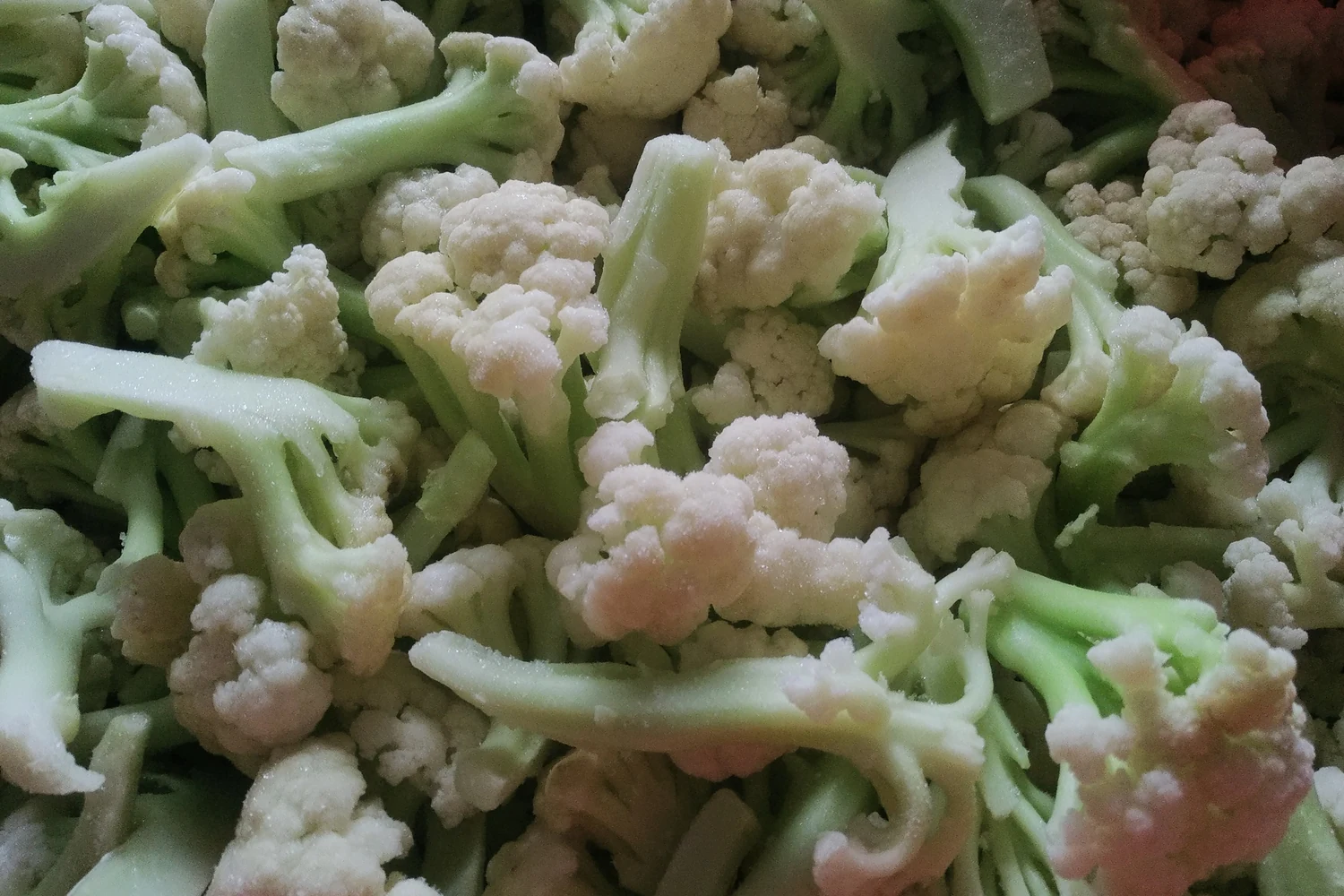
Product photograph: visible cauliflower curds and attached stems illustrate floret form; size and portion performance require an agreed specification and sample.
Define “florets” and “pieces” before comparing cost or portions
A floret is a recognisable segment of the cauliflower head with its curd and, depending on the style, some attached stem. The Codex standard for quick-frozen vegetables [1] distinguishes whole, split and floret presentations, allows sized or unsized florets, and describes small fragments and loose stems among visual-defect concepts. That is a useful vocabulary. It does not make every small cauliflower item a separate saleable format, nor does it dictate the serving size for your kitchen.
In foodservice purchasing, “pieces” is too loose on its own. It can describe intentionally cut florets that still show a curd and stem; it can also describe a mixture of broken curds, detached stems and fines left after handling. Those materials can behave differently in a serving spoon and look different on a plate. If the proposed material is an intentional cut, ask how it is made and classified, what shape the majority of the mass should have, and what counts as off-size or broken. If the supplier means only broken material, decide explicitly whether that is suitable for the dish instead of discovering the distinction at service.
Size labels need the same discipline. A commercial sheet might say “small florets,” “cut florets,” or a millimetre band, but the number is meaningful only with its measurement axis, expected distribution and handling of outliers. A crown width is not the length of a stem; the longest dimension of an irregular unit may describe neither its visual footprint nor its eating texture. Keep a photograph or retained physical reference with the written cut description. If two parties mean different things by “piece,” a neat number on a specification will not fix the disagreement.
| Material named in a brief | What to confirm | Possible service consequence |
|---|---|---|
| Intact floret | Curd integrity, attached stem, crown-size basis and permitted variation | A recognisable vegetable on a plated side, but count and coverage may vary between scoops |
| Intentional smaller cut | Cut method, retained curd, target range and whether detached stems are included | May distribute through a mixed entrée or small cavity; inspect the finished look |
| Broken or loose material | Separate limits for fragments, small curd and loose stem | Can settle in a pan or utensil and change later portions |
| Cauliflower rice | Particle definition and fines method | A different ingredient format with its own dosing and cooked-yield question |
For the rice format, use a separate particle and yield assessment. Our cauliflower-rice guide addresses that problem. Here, “pieces” refers only to identifiable pieces that a buyer has deliberately described for a floret-based service application.

Illustration: define intact florets, deliberate cuts and incidental fragments in the specification; the categories do not represent an XMG lot or separate pieces offer.
The right form depends on what the guest must see
A side dish served beside a protein asks cauliflower to remain legible as cauliflower. One or two large florets can give a clear product identity, but that visual strength does not prove consistent portions. A serving with two unusually heavy stems may reach the target mass while covering less of the plate than a serving with several smaller crowns. The reverse can also happen: a broad crown can dominate the plate while contributing less mass than expected. The kitchen has to look and weigh.
For a tray meal or mixed vegetable side, smaller identifiable pieces may distribute more evenly among other ingredients. They can also make it easier to fill a shallow compartment without cutting pieces at the line. Yet a fine cut can become hard to recognise once coated in sauce, and a high share of loose curd can collect at the bottom of a hotel pan. Judge the defined cut by vegetable presence in repeated finished portions under your actual handling method.
Buffet and batch service add another condition: the first plate and the last plate must both be acceptable. A scoop taken from the top of a pan may contain a different mixture of crowns, stems and small material from one taken later. Stirring, transfer and holding can change that distribution. Compare the material at the beginning and end of the real service window, using the same utensil and handling instructions the team will use. If a planned cut depends on careful hand-selection for every plate, the labour requirement belongs in the decision.
Even the word “portion” can conceal different targets. The menu may specify a mass of cooked vegetable, a visual side that occupies a certain area, a number of recognisable florets, or a combined vegetable mass in a prepared meal. These are related but not interchangeable. A serving can be on-weight and still look sparse; it can look generous and be outside the costed mass range. Agree which requirement is mandatory and which is a visual preference before judging the two formats.
A matched trial reveals more than a product photograph
Start by identifying each candidate sample: product name, declared cut, supplier, pack, lot or sample reference, and its condition when removed from frozen storage. Note whether pieces are separate or clumped and whether loose frost or small material is conspicuous. Take material from comparable positions in each pack rather than selecting the most attractive pieces from the top of one sample. These observations do not diagnose their cause; they describe what the kitchen received. If an intentionally cut option has not been confirmed for your order, treat it as a requested comparison format, not an item already on offer.
Choose a single dish and a defined service target. For example, the side could need recognisable cauliflower on every plate, while a mixed entrée could require cauliflower to be present throughout a fixed meal mass. Set the target cooked portion mass, the permitted spread, and a visual reference plate according to your menu and cost plan. Those values belong to the buyer’s operation; a supplier sheet’s nutrition-serving declaration is not automatically a kitchen serving specification.
- Examine the frozen form. From each identified sample, take a representative amount using the same opening and mixing approach. Separate intended pieces from clearly broken curd, detached stem and very small material according to a written rule. Record mass fractions or counts on a stated basis. Do not call every small floret defective.
- Prepare each format under a controlled route. Follow the applicable product directions and your kitchen’s food-safety procedure. Keep the pan, load, heating method, endpoint and draining action comparable. If the actual recipe requires a sauce, test within that recipe; do not compare a dry side against a sauced filling and attribute the difference to cut size.
- Portion with the service tool. Use the actual scoop, tongs or ladle. Portion a series of plates or trays without manually correcting each one. Weigh the vegetable placed in every portion and note visible whole pieces or defined cut pieces. Record when the pan was stirred and whether material accumulated at the bottom.
- Observe the intended hold. Check the plates at the point guests will receive them, not only at the first scoop. Where service includes hot holding or reheating, use the same approved procedure for both samples and examine appearance and integrity afterward.
- Account for the remainder. Weigh or describe material left in the pan, at the bottom of the pack, or removed because it fails the serving criterion. Keep cooked mass, plated mass and rejected material separate in the record.
The trial can be small during screening, but it needs enough repeated servings to reveal variation. A single carefully assembled plate demonstrates possibility, not line performance. Keep the sequence and the classification rule identical when you compare a second lot or supplier. Change one intended variable at a time: the cut, the cooking route, the serving tool or the hold method. Otherwise an apparent improvement cannot be assigned to the cauliflower form.
Make the worksheet usable at the pass. For each plate or tray, record the frozen input allocated to the cooking batch, the cooked mass available after the agreed draining step, the mass actually served, the count or presence of recognisable cauliflower pieces, and any material left in the pan. Take one photograph at the agreed service point with the sample identity beside it. The batch figures belong on a batch line; the served mass and visible-piece observations belong on each portion line. This prevents a batch yield from being mistaken for portion consistency.

Product photograph: crowns, stems and smaller material are visible. This view does not establish a separate cut-pieces SKU or a portioning result.

Illustration: in a buyer-specific check, record frozen input, cooking, draining and served presentation under matched conditions.
Read portion weight, usable yield and presentation separately
For each serving, record the vegetable mass at the same point in the process. A frozen input mass is useful for purchasing, but it is not a cooked plated mass. If liquid is drained, or if small pieces remain in the pan, the mass that reaches the guest differs from the amount opened. State the denominator whenever you discuss a percentage. “Cooked yield” can mean cooked, drained batch mass divided by frozen batch input; “accepted plated yield” can mean the total accepted plated mass divided by the same frozen input. The first tracks cooking and draining; the second also captures unserved material and rejects. Write the calculation beside the result instead of relying on the word “yield.”
Look at the spread of portion weights, not only the average. One heavy and one light plate may average exactly to a target but still disappoint two guests and make cost control difficult. A consistent scoop mass also needs a visual check. Count or describe intact identifiable units if that matters to the menu. In a mixed dish, note whether cauliflower is present across portions rather than collecting in only some trays. Photograph a representative plate and a difficult plate under the same presentation conditions, with sample identity recorded.
Then inspect residual small material. If the bottom of the pan holds a different mixture from the top, the last servings may receive more fragments or stems. That pattern could reflect incoming cut distribution, pan handling, transfer, utensil design or breakage during cooking. Locate the stage where the distribution changes before changing the purchase limit. A different stirring or serving method may solve a kitchen handling problem; material already present in the frozen pack may call for a tighter cut and small-material definition.
Keep texture distinct from size. A well-sized floret may still be too soft after the kitchen’s hold, while a smaller intentional cut may stay identifiable if the process suits it. An attractive frozen sample can also lose crown structure during cooking. For method choice and moisture control, see our guide to cooking frozen cauliflower without soggy pieces; test the selected method against your service hold and portion target.
Keep the trial criteria side by side on the decision sheet: target mass range, plate coverage, recognisable units, remaining small material, ease of utensil pickup, texture at service and rework needed. Mark any requirement that the dish cannot compromise. For a vegetable side described as florets, that might be an intact, visible curd on every plate. A good average portion weight does not cancel out plates that fail that requirement.
Two dishes can make opposite choices
Imagine a plated cauliflower side where the menu description and photograph show recognisable curds. A large-floret sample might fit that visual brief if its stem is acceptable and repeated plates contain enough well-presented units. A smaller cut might make weights easier to approach but leave the plate looking like scraps. That is a possible outcome to test, not a claim about any current XMG lot. If the larger form proves hard to distribute without hand selection, a narrower floret band or a changed serving tool may be more useful than a switch to unspecified “pieces.”
Now consider a prepared meal with cauliflower dispersed among rice and sauce in a shallow tray. Very large florets might protrude, displace other ingredients or land unevenly between trays. An intentionally smaller cut could fit the geometry better if it stays visible after assembly and reheating. Here the meaningful controls include the number of acceptable cauliflower units per tray, tray fill consistency and appearance at eating temperature. Small fragments that disappear into the sauce are not automatically acceptable simply because they make the tray weight correct.
A distributor supplying several kitchens may need one approved reference for a plated side and another for a buffet mix or prepared meal. Record selective picking, extra cutting, uneven plates and unused residual material for each application. Otherwise a low quoted price may hide the labour and waste created at the service line.
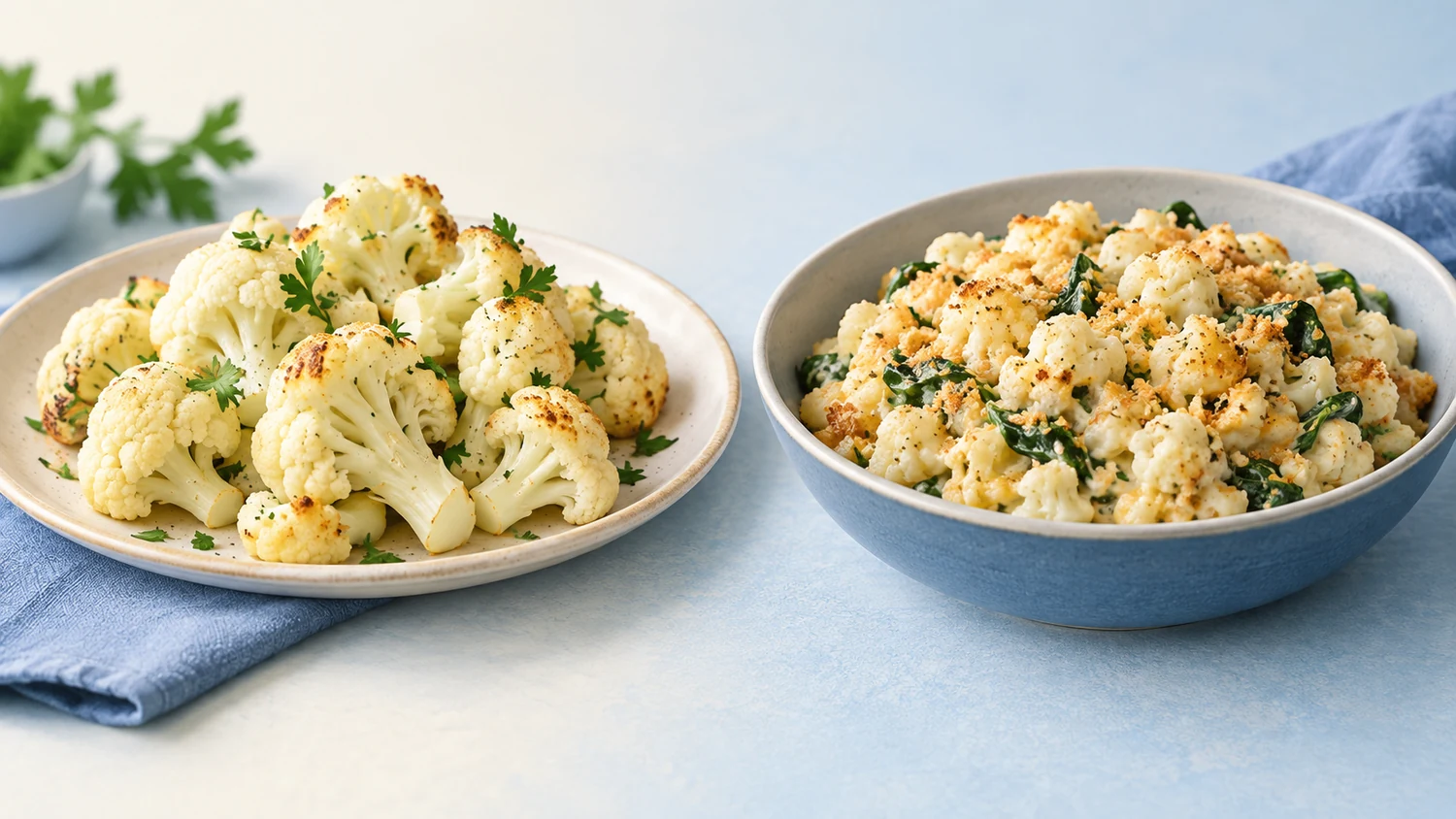
Illustration: recognizable florets may suit a visible vegetable side, while a defined smaller cut may suit a mixed dish. Confirm with matched samples.
Turn the service result into an order-ready cauliflower brief
Once the trial identifies a workable form, write what made it work. Name the application and service format first. Then specify whether the required presentation is an intact floret, a smaller intact floret or a deliberately cut piece retaining a defined amount of curd. Add the relevant measurement axis and size range, how much attached stem is acceptable, and how off-size units, broken curds, detached stems and fine fragments are classified. State the sample and measurement method. A photograph can support the definition, but a picture alone cannot set a mass limit.
The buying brief should also say how the accepted sample was prepared and served. If the decision depends on a particular draining step, sauce, holding period or serving tool, capture that condition. Supplier inspection can verify agreed product attributes; your kitchen test verifies the served result. They are connected, but they are not the same evidence. A specification may contain a good crown-size distribution while the dish still portions poorly with the chosen scoop. Conversely, a kitchen may tolerate more small material in a blended filling than in a plated side.
The current XMG frozen cauliflower range names large florets, small florets and cauliflower rice, with the written order specification defining the selected form and tolerances. We can discuss whether an additional defined cut fits a particular inquiry, but it needs current product and production-route confirmation. If your operation serves multiple outlets, note the pack size, partial-pack handling and expected volume as well as the cut. The foodservice supply route can help frame the pack and kitchen-use discussion.
Do not carry over a competitor’s labelled serving weight or grade tolerance as a purchase limit without testing it against your dish. Foodservice sheets use different cut bands and pack configurations; a specification from one origin is evidence about that named product only. The USDA frozen cauliflower grade page [2] also describes quality categories, but a grade name does not predict how many acceptable pieces your ladle will deliver. Your signed order requirements and approved sample must state what you are buying.
Frozen Cauliflower
Review our frozen cauliflower range, product forms and specification options.
View Frozen Cauliflower →References
- [1] FAO/WHO Codex, CXS 320-2015, Annex on Cauliflower↑. Used for presentation and defect terminology, not as a kitchen portion standard or an XMG lot result.
- [2] USDA Agricultural Marketing Service, Frozen Cauliflower Grades and Standards↑. Used to distinguish commodity grading from application performance.
