


On this page
Cooked frozen carrots can taste sweeter because cooking changes the way their existing juice, texture and flavour reach your mouth. That impression does not establish that the carrots gained sugar. Softening may make juice easier to release, some cooking methods change the balance of water and solids, and seasoning changes the surrounding flavour. The useful question is which of those changes happened in your particular portion.
A soft boiled carrot, a moist steamed slice and a dark-edged roasted strip are different eating experiences even when they started from the same bag. Treat sweetness as a sensory observation, sugar content as a composition measurement, and liking as a personal preference. Keeping those three ideas separate makes it much easier to explain why one bowl tastes sweeter than another.
Perceived sweetness is not a sugar measurement
“This tastes sweeter” is a useful description of a mouthful. It is not an analysis of the grams of sugar in that carrot. Your judgement depends on how much juice reaches the tongue, the texture you chew, accompanying tastes and aromas, and the sample you compare it with. A sweeter impression can therefore occur without a demonstrated increase in total sugar.
There is relevant carrot research behind that distinction. Horie and Hiramoto’s study, Enhanced Sweetness of Carrot by Steaming, examined fresh carrot slices under its own preparation conditions. Longer steaming increased sensory ratings of softness, juiciness and sweetness, while the measured sugar content did not change. More juice could be expressed from the steamed carrots. The authors proposed easier juice release as an explanation for the greater perceived sweetness.
That finding is useful because it separates a sensory change from a composition change. It does not guarantee that every frozen carrot cut, brand or cooking method produces the same response. Frozen carrots have their own processing and storage history; strips and thick slices also behave differently in the mouth. The study offers a plausible mechanism to consider, rather than a universal outcome for a bag in your freezer.
If you want to describe your own result accurately, say the cooked sample tasted sweeter under the conditions you used. Saying cooking “created more sugar” needs evidence that a taste comparison cannot provide. Nor does a sweet taste establish a nutritional advantage, lower carbohydrate content or better suitability for a particular diet.

Thin strips and thick slices need different preparation comparisons.
Softening can make existing juice more accessible
A carrot is plant tissue, not a bottle of freely flowing juice. Its structure holds liquid within and between cells. Cooking changes that structure and the resistance of the tissue when you bite or press it. A firm piece and a softened piece can deliver their juice differently, even if a chemical measurement has not found more sugar in the softened one.
The steaming study gives a concrete example of this idea: the prepared carrots released more expressible juice as the treatment progressed. That does not mean a cooked carrot will always drip more juice on the plate. Juice expressed under an experimental method, water left in a saucepan, and liquid released during chewing are related observations but are not interchangeable measurements.
For a household comparison, notice whether a piece is still firm in the centre, easily compressed by a fork, or breaking into soft fragments. Then taste a similar-size portion rather than allowing the softer sample to become a much larger mouthful. Record juiciness and sweetness separately. A piece can feel wet without tasting especially sweet, or seem pleasantly sweet while the overall texture is softer than you prefer.
Frozen status adds another reason to avoid certainty. Freezing and prior processing can alter the tissue before the final cooking step, but those changes do not tell you the sweetness of the finished dish by themselves. Follow the package instructions and compare the cooked samples. Do not infer a finished flavour solely from frost, the colour of the raw pieces or an assumed processing sequence.

Conceptual mechanism based on carrot steaming research; more accessible juice does not mean new sugar was manufactured.
Water changes need a consistent portion basis
When water leaves a food, the remaining solids can become more concentrated relative to its final weight. That familiar principle is different from manufacturing additional sugar. It also needs careful application to carrots: a cooking process may allow water to enter the tissue, leave the tissue, or accompany dissolved solids into the surrounding liquid. “Cooked” does not automatically mean “dehydrated.”
Research on carrot tissue and solid loss under laboratory conditions illustrates the complexity. In the study Solid Loss of Carrots During Simulated Gastric Digestion, cooking altered carrot structure and the behaviour of water and soluble material. Its experiments are not a recipe prediction for every pan. They are a reason to be cautious about attributing every increase in sweet taste to water loss.
Consider a simple accounting question. Are you comparing the sugar in the original portion, the sugar per gram of the finished carrots, or the flavour of one mouthful? Those are different bases. If a tray finishes with less water, a given weight of finished carrots may represent more of the original material. If a saucepan contains cooking liquid that you discard, some soluble material may have moved into that liquid. Neither situation can be quantified by looking at the plate.
A kitchen scale can help you document starting and finished portion weights, but it does not measure sugar. Record any added water, drained liquid and oil separately. Weighing a portion with a layer of butter or sauce and comparing it with plain carrots makes the numbers harder to interpret. A careful weight record is useful context for a taste comparison; it is not a substitute for composition analysis.

Conceptual preparation comparison, not a numerical prediction of sugar concentration.
Steaming, boiling and roasting change different conditions
Steaming is relevant to the published sweetness study, but your steamer still needs its own practical checks. Piece thickness, starting temperature, load and arrangement affect how evenly the carrots soften. A thin strip may become tender while the centre of a thick slice remains resistant. Compare tenderness in the larger pieces instead of assuming one elapsed time describes every cut.
Boiling surrounds the carrots with water. It can soften the tissue while also allowing soluble components to exchange with the cooking liquid. If you drain the carrots, the water you discard is part of the preparation history. If you serve them in soup, that liquid remains part of the dish. A drained side dish and a carrot soup should not be compared as though both contained the same retained liquid.
Roasting exposes the surface to a different environment. Moisture can escape, edges can darken and aromas can change. The resulting flavour may seem richer or sweeter to a diner, but dark colour does not measure sugar and is not proof that all of that flavour comes from caramelization. A brown edge can accompany several heat-driven changes; its appearance alone cannot identify their relative contribution.
For the same reason, there is no single “sweetest method” that this evidence establishes for all frozen carrots. A lightly cooked, moist slice and a strongly browned, drier strip differ in texture, aroma and water balance at once. Choose the method that gives the dish the texture you want, then assess sweetness in that context. Do not change the method solely to chase an unsupported claim about added sugar.

Visible colour differences alone cannot reveal sugar content or prove a cooking method.
Seasoning can change the comparison more than you expect
Honey, sugar, sweet sauces and glazes are straightforward confounders: they add another source of sweetness. If your question is why plain cooked carrots seem sweeter, leave those additions out of the first comparison. Once you add a glaze, describe the sweetness of the whole dish rather than attributing it entirely to the carrot.
Salt, acidity, herbs and fat can also change how a dish is experienced. That does not justify a precise claim that a certain pinch will increase carrot sweetness by a predictable amount. It means the surrounding recipe matters. Comparing unseasoned steamed carrots with salted, buttery roasted carrots asks several questions at once, including which seasoning and texture you prefer.
Start with the same seasoning in each portion if you want cooking method to be the main changing variable. Add it in a measured and repeatable way. Taste the plain samples first when practical, then make a second comparison after seasoning. This lets you notice whether the difference was already present in the carrots or appeared mainly after the finishing ingredients.
Aroma and expectation deserve attention too. A strongly roasted smell or an attractive browned surface may influence how you describe a sample. A coded tasting can reduce some expectation from knowing which method you used, although a diner may still identify the texture. It improves the comparison; it does not turn a household exercise into a controlled sensory laboratory.
Use a matched comparison to answer your own question
Take portions from the same bag, using similar pieces and equal starting amounts. If the bag contains a mixture of large and small cuts, distribute those forms reasonably across the portions. Cook each according to an appropriate safe preparation method, following the package directions. Keep the seasonings simple and document the changes you intentionally make.
Choose one comparison first. You might compare two tenderness endpoints using the same method, or compare steaming with roasting at a reasonably similar eating tenderness. The second comparison still changes the surface and moisture environment, so record those differences. Do not pretend tenderness, final weight and browning can always be made identical across methods.
Present similar-size bites at a comparable serving temperature. Use neutral codes such as A and B if another person can arrange them. Ask for separate judgements: how sweet is it, how soft is it, how juicy is it, and which sample is preferred? Keep those answers separate instead of combining them into a single “best carrot” score.
| Observation | Useful note | What it cannot establish |
|---|---|---|
| Sweetness | Relative sweet impression under the tasting conditions | Grams of sugar or new sugar formation |
| Softness | Resistance to a fork or bite, including the centre | A safe cooking endpoint for every product |
| Juiciness | Liquid sensation in a matched bite | Total water content of the entire portion |
| Preference | The texture and flavour the diner likes | A universally superior cooking method |
| Finished weight | Mass after the recorded cooking and draining steps | Sugar concentration without further measurement |
Repeat the comparison on another occasion before treating a subtle impression as reliable. An individual carrot portion, a different bag or a slightly different cooking endpoint may change the result. You can still use the first tasting to decide tonight’s meal; broader explanations deserve more restraint.
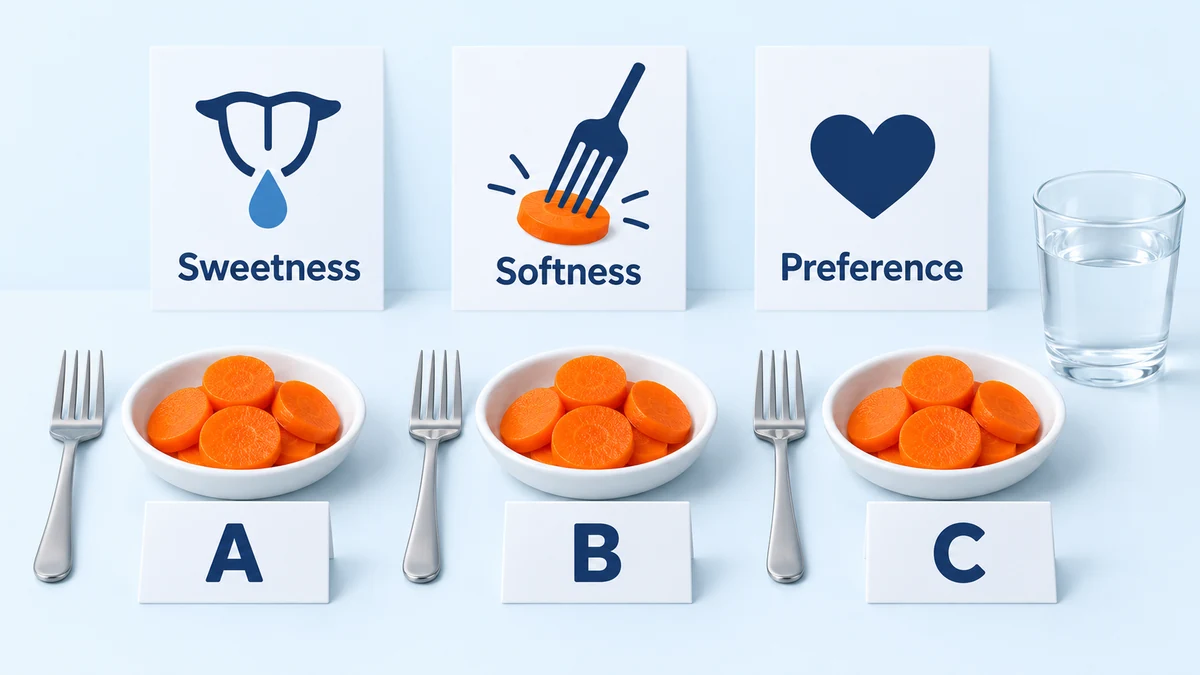
Conceptual tasting setup keeps sweetness, softness and preference as separate observations.
Keep sweetness, nutrition and safety separate
If nutrition is the concern, use a reliable composition source and compare foods on a consistent basis. USDA FoodData Central is a useful place to find entries, but a raw-carrot entry and a cooked-carrot entry are not necessarily measurements of the same carrots before and after your cooking method. Different sample histories, water contents and serving bases can make a casual subtraction misleading.
For a prepared product, read its label and account for the portion you actually eat. Sauces and glazes may change the dish’s composition. A perception that carrots became sweeter does not prove the portion has a higher or lower sugar content, nor does it establish a particular health effect. A composition claim needs composition evidence.
Sweetness is also not a safety indicator. A carrot can taste pleasant while still having an unsuitable handling history. Follow the package’s cooking directions and current official guidance for leftovers, storage and reheating. Do not use sweetness, softness or a clean-looking surface to certify that a food is safe.
Cooked frozen carrots may taste sweeter because cooking changes tissue softness, accessible juice and the whole eating experience. Moisture changes and recipe ingredients may contribute, depending on the method. Describe what you observed, keep the portion basis clear, and reserve claims about increased sugar for measurements that actually support them.
IQF Frozen Carrots
See product forms and specification information for this ingredient.
View IQF Frozen Carrots →References
- [1] Horie and Hiramoto: Enhanced Sweetness of Carrot by Steaming — fresh-carrot sensory and expressible-juice study; not a guarantee for every frozen cut.
- [2] Solid Loss of Carrots During Simulated Gastric Digestion — laboratory evidence on carrot tissue, cooking and soluble-material behaviour.
- [3] USDA FoodData Central — composition resources requiring a consistent food and portion basis.
