


On this page
Yes, frozen sea buckthorn berries can make a tart, orange fruit infusion. The practical choice is whether to steep the berries whole, crush them lightly or puree and strain them. Whole fruit generally leaves a clearer, gentler cup; breaking the berries releases more juice and pulp. Use a frozen product whose directions allow your chosen preparation. If its label requires cooking, a brief steep in warm water should not be treated as a substitute for that instruction.
“Tea” here is a kitchen name for a fruit drink, not a claim that sea buckthorn is a tea leaf or a health treatment. The berry’s natural acidity can dominate a small cup, and seeds and skins can make an unstrained drink coarse. Begin with a modest fruit portion, taste the finished drink and adjust the fruit-to-water balance for your own recipe. There is no universal brew time or berry count that works for every variety, fruit form and serving temperature.
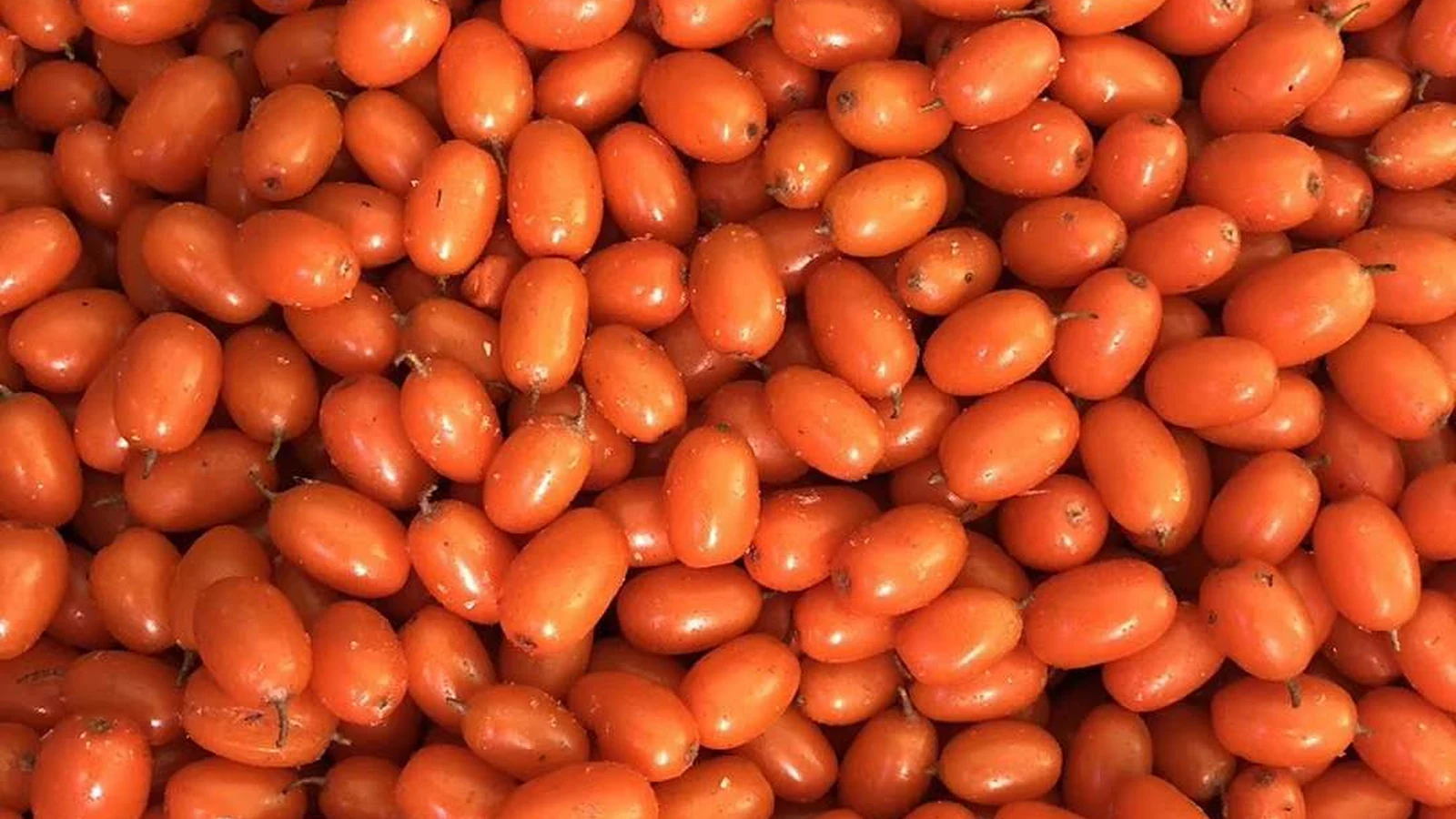
Authentic fruit form before infusion.
Choose the right frozen berries before brewing
Read the pack first. Some frozen fruit is marketed for use without a cooking step; some carries preparation or cooking directions. Follow those directions even when the recipe calls the drink a “tea.” Freezing keeps fruit cold but does not reliably eliminate foodborne pathogens. If you are serving an uncooked or lightly steeped drink, verify that this use is appropriate for the particular product. The FDA’s food storage guidance [1] explains the importance of handling and temperature control for frozen foods.
Keep the unused fruit frozen. Take out only what you need with a clean utensil, and avoid putting a wet spoon back into the bag. If you plan to thaw the berries before crushing, follow the pack’s thawing directions and use a clean covered container. A split skin and released orange juice are expected culinary observations for some fruit, but appearance alone cannot demonstrate ready-to-eat safety.
For a group or commercial drink, record the exact fruit ingredient, supplier instructions and heat process if used. A cup that tastes good during an informal trial is not by itself a validated ready-to-drink process. The final process should fit the product specification and the applicable food-safety plan.
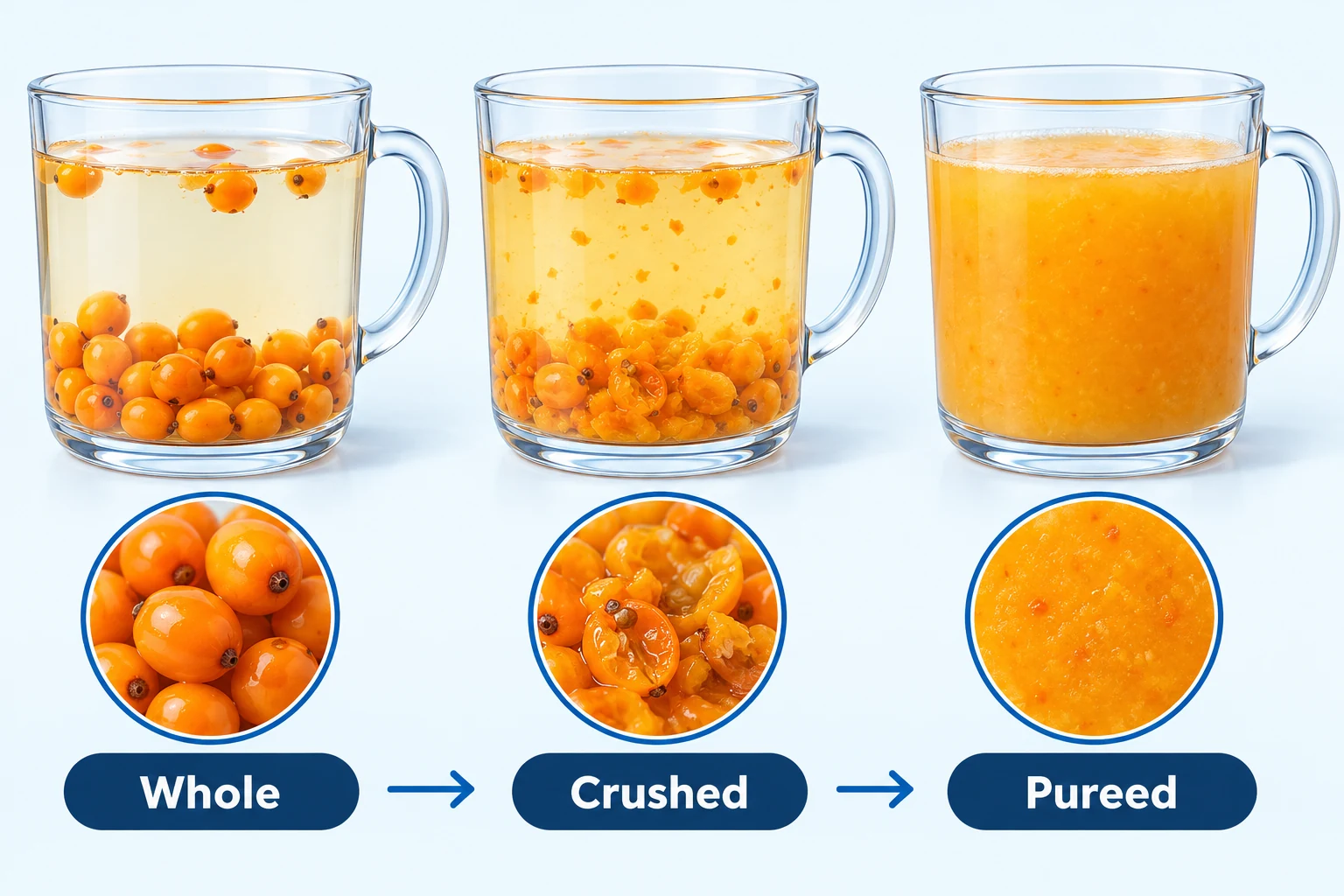
Whole, crushed or pureed berries: what changes in the cup?
Steeping whole berries
Place whole berries in hot water and allow them to warm and steep according to your recipe and the product’s handling directions. If the skins remain largely intact, less juice and pulp may enter the water during a short steep. That can be desirable when you want a clear, lightly flavored drink with berries visible in the glass. Stir and taste before deciding the infusion is too weak; some juice may release later as the fruit softens.
Whole berries left in a cup continue to change the drink as they break down. If you need a consistent flavor from first sip to last, remove them or strain the cup at a chosen point. Beware of hard seeds when drinking the remaining fruit from the bottom. The visual appeal of whole orange berries does not remove the need to consider the eater or drinker’s comfort with seeds.
Crushing the berries
Lightly press softened fruit before or during steeping to open the skins. This exposes more juice to the water and usually gives a more vivid color and stronger tartness than leaving the same fruit completely whole. Work in a vessel that can be cleaned easily, because the orange juice may mark porous surfaces. A muddler, spoon or potato masher can work for a small kitchen test; choose equipment that does not crush hard seeds unnecessarily if you intend to strain a clean infusion.
Crushing also releases small fragments of skin. A coarse sieve will remove the largest pieces, while a finer one produces a smoother drink. Different strainers retain different amounts of pulp, so compare the result after straining rather than promising a specific juice yield. If the cup tastes too intense, dilution is often more predictable than adding sweetener first.
Pureeing then straining
A puree disperses much of the fruit into the water and can make a cloudy, fuller-bodied beverage. It is useful when color and fruit flavor are the main goal, but it may no longer feel like a clear infusion. Blend only under safe equipment conditions; hot liquids can expand and splash in a closed blender. One practical route is to process fruit while it is cool, then combine the processed fruit with water under the preparation method required by the product. Strain to the desired mouthfeel.
The three methods should be compared using the same fruit amount, water amount and tasting temperature. Otherwise a darker cup may simply contain more berries. The illustration shows a concept, not measured extraction or guaranteed color. Berry variety, maturity, broken-fruit fraction and storage history all affect what you see.
The diagram scrolls horizontally on smaller screens.
Conceptual comparison of three fruit preparation states.
Run a small side-by-side cup trial
If the product instructions permit the intended preparation, a three-cup test will tell you far more than copying someone else’s single recipe. Use three equal clean cups. Put the same weighed or measured amount of fruit in each. Leave one portion whole, lightly crush the second and puree the third. Add the same amount of water at the temperature your recipe permits, then let each stand for the same chosen time. Strain or leave the fruit in according to the comparison you want to make.
Observe color, cloudiness, sourness, seed and skin residue, and how the cup tastes as it cools. Write down what you did. If you use different sweeteners in each cup, you cannot tell whether the fruit preparation caused the preference. Add sweetener only after the initial comparison, and judge the drink at the temperature at which it will be served.
Use the result to define the finished drink. A cafe might choose a strained, bright orange cup for repeatable service. Someone at home might prefer whole berries as an edible garnish. A bottled beverage producer would need additional formulation, process, stability and safety work; a kitchen cup test does not substitute for those controls.
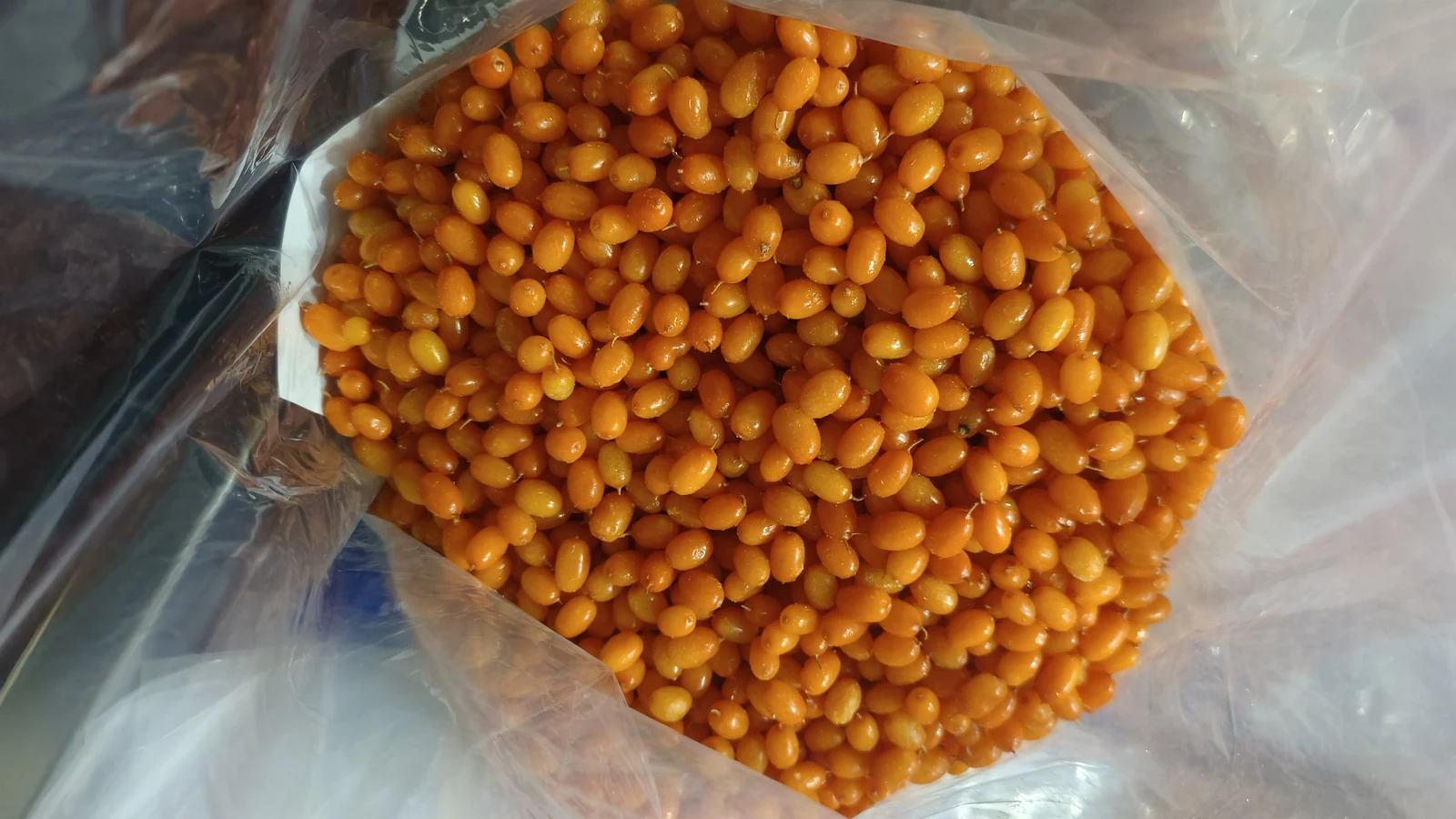
A real unbranded fruit portion anchors the method.
Strain seeds and skins without losing the point of the drink
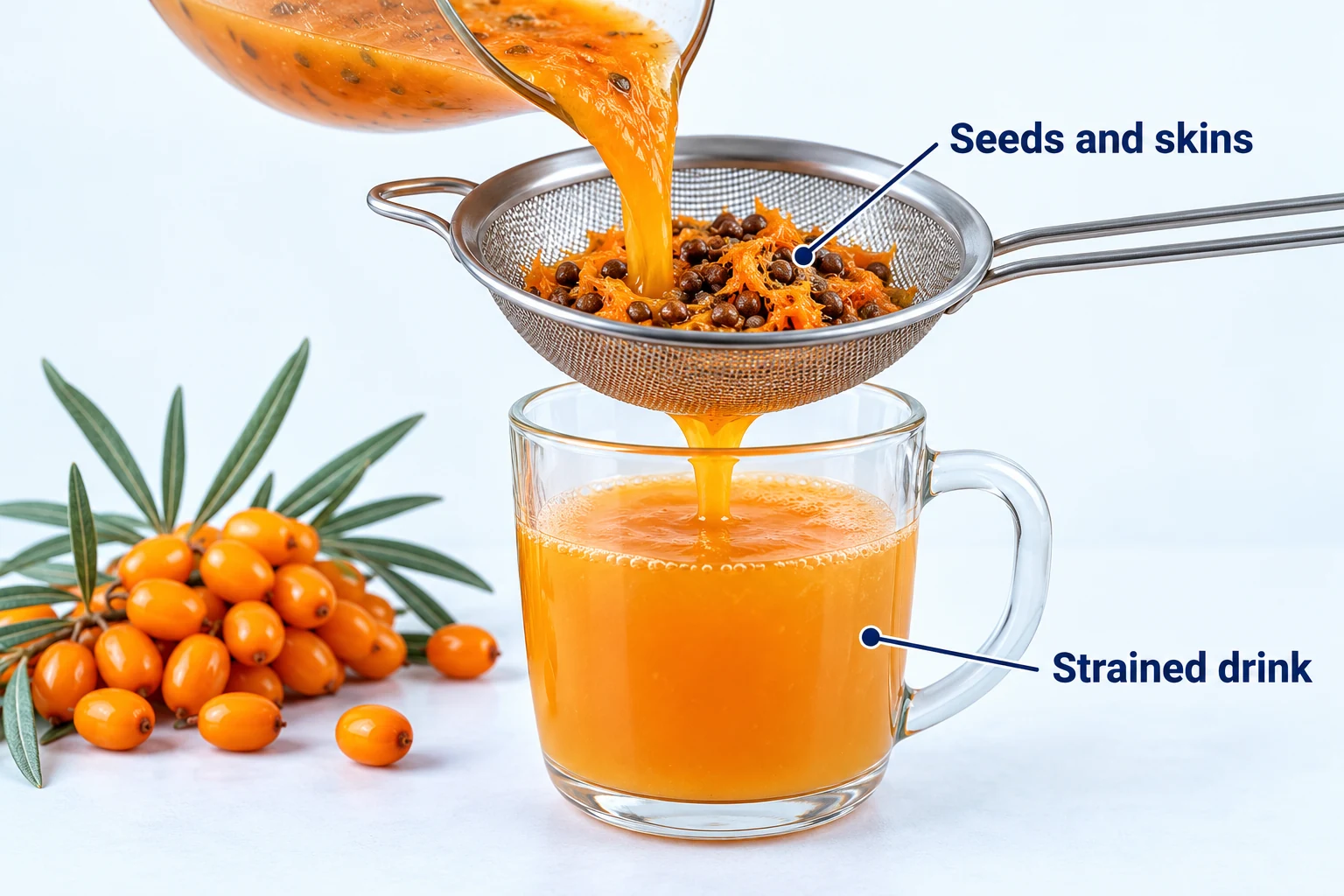
A fine sieve is often the simplest finishing tool. Pour the steeped or prepared fruit drink through it into a clean mug, then decide whether to press the fruit solids. Gentle pressing releases more liquid. Vigorous pressing may drive more pulp through and make the cup cloudy. Neither is inherently wrong; the choice depends on the target mouthfeel. Inspect the drink and strain again if coarse particles remain.
The residue may include skins and seeds. Do not assume it is all waste of the same value: different preparation methods leave different amounts of juice attached. In a product development trial, weigh the fruit in and the strained liquid out, and record the sensory result. That gives a useful yield measure for your own fruit and equipment. It is more reliable than applying an online recipe’s yield to another supplier’s berries.
The diagram scrolls horizontally on smaller screens.
A sieve catches coarse skins and seeds while liquid passes through.
To balance the cup, taste it first without sweetener. If it is too sharp, try more water or pair the infusion with a mild food. Honey or sugar can soften the perception of tartness, but sweetness does not establish a safe acidity or pH for a stored drink. Avoid turning a culinary preference into an unsupported medical or nutrient claim. Sea buckthorn fruit chemistry varies with cultivar and growing conditions; published research on its organic acids helps explain why a fixed “ideal” sweetness ratio is unreliable. See the sea buckthorn fruit chemistry study [2].
Serve it hot or chilled with the same handling discipline
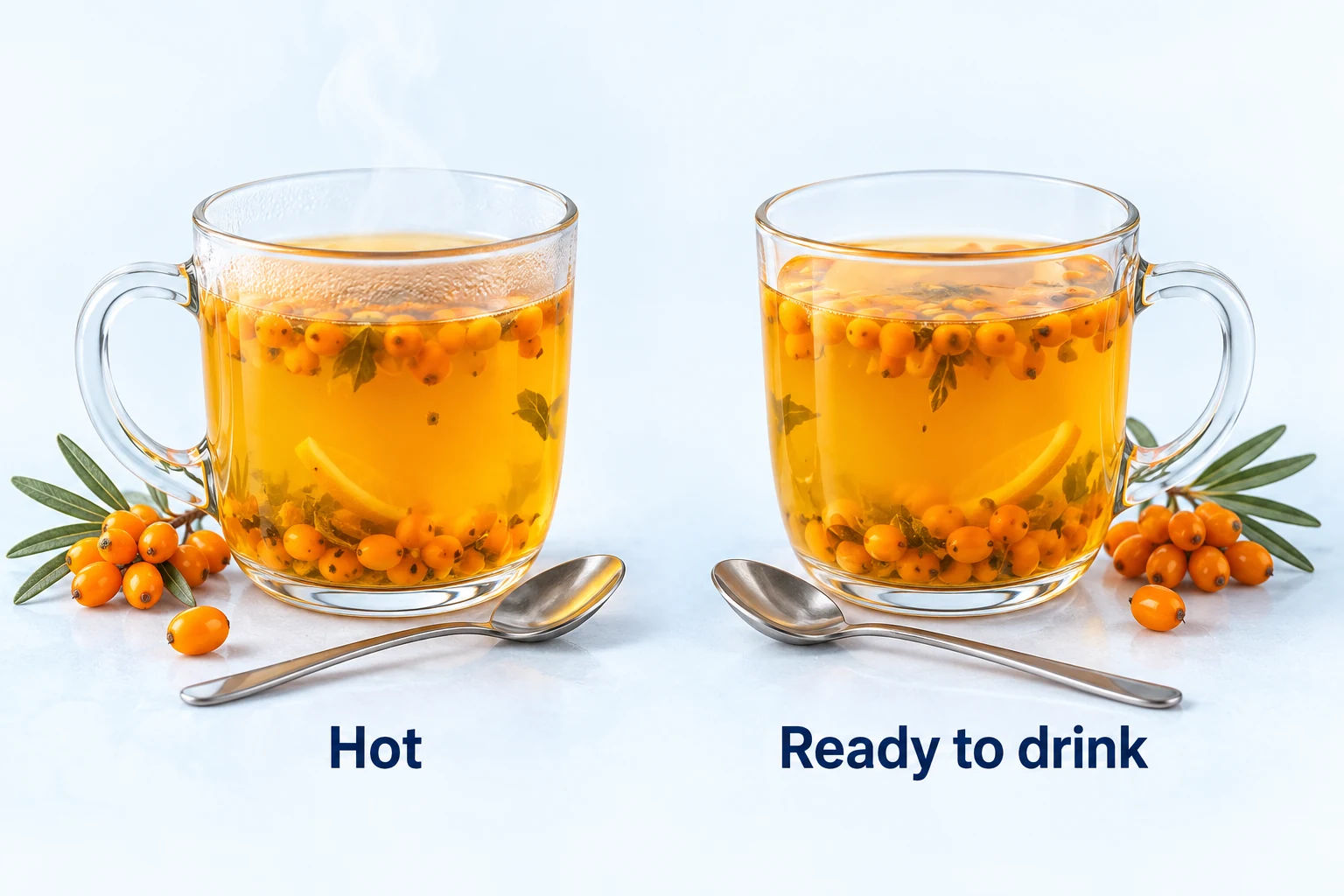
Hot and cold service emphasize different sensory qualities. Steam can carry a fruit aroma, while a cooled drink may feel sharper or smoother depending on its dilution and sweetening. Taste at the final serving temperature. If serving hot, use a mug suited to the temperature and avoid scalding. If serving chilled, cool the prepared drink promptly and refrigerate it under your usual food-safety procedures. Do not let a large prepared batch stand warm for an extended service period without a suitable holding plan.
Some online recipes assert that a particular water temperature “preserves all vitamins” or that a cup gives a defined health benefit. A domestic kitchen method does not establish either claim. Heat, oxygen, fruit variety and processing can change composition, and a specific nutrient result requires analysis of that product and process. We focus on flavor, texture and suitable handling because those are the outcomes a cook can actually check in the cup.
The diagram scrolls horizontally on smaller screens.
An explanatory serving comparison after brewing.
Why a tea made from frozen berries can disappoint
The cup is pale and weak
Whole skins may be limiting juice release during the time you chose. Crush a small sample, extend the steep within the permitted preparation, or use a fruit puree route. Change one variable at a time and record it. Adding a much larger fruit quantity can make the drink abruptly too tart once the berries finally release their juice.
The cup is cloudy or gritty
A puree or vigorous mashing puts fine particles into suspension. Use a finer sieve, allow a short settling period, or start next time with a gentler crush. A little cloudiness can be a deliberate feature of a fruit drink. Grit from seed fragments is different: it is a reason to inspect the processing step and straining method.
The flavor is too sharp
Dilute a small sample with water and compare it before sweetening the entire batch. The fruit is naturally assertive, and perceived acidity changes with temperature and the food served alongside. If adding a sweetener, note how much and taste again after the cup cools; sweetness and tartness can seem different at the final temperature.
The drink varies from batch to batch
Check fruit weight, the share of broken berries, water volume, preparation state and steep duration. “One spoonful” is a poor production unit when berry sizes and thaw state change. A simple written method can make an otherwise variable drink much easier to repeat. For commercial use, include the required microbiological and storage controls as well as flavor specifications.
Choosing a frozen ingredient for a repeatable fruit beverage
Ask whether the supplier offers whole berries, crushed fruit, juice or puree, and choose the form that matches the drink. Whole IQF berries show well in a clear cup but require more control over extraction and seeds. A puree produces more immediate body but may need fine straining. A juice may simplify service while changing the visual story. Confirm pack size, frozen storage requirements, broken-fruit tolerance and preparation directions before building the recipe around an attractive sample.
We supply frozen sea buckthorn for buyers comparing fruit formats. Share whether the drink will be steeped, cooked, strained or used in a ready-to-drink process; that tells us which product details and documents matter. The beverage maker still needs to validate the finished recipe and safety process.
Common questions about sea buckthorn tea
Can I put the berries directly into boiling water?
Use the product’s directions and a recipe suitable for your equipment. Hot water will soften the fruit, but an informal steep should not be assumed to satisfy a pack instruction to cook the berries. For a particular product, follow the stated preparation method or ask the supplier what it requires.
Do I have to remove the seeds?
No if the berries remain whole and the drinker is comfortable leaving them in the cup. For a smoother drink, strain the mixture after the fruit releases juice. The choice changes mouthfeel more than the underlying tart flavor.
Can I brew once and drink it tomorrow?
A prepared drink needs prompt cooling and appropriate refrigeration if it will be saved. Follow any pack directions and your food-safety rules. Flavor, color and suspended pulp may change on standing, so taste and inspect the stored drink before service. A short cup trial does not prove a commercial shelf life.
View frozen sea buckthorn
Review the listed product forms and preparation information alongside the cooking and handling questions discussed above.
View product forms →