


On this page
Yes. Frozen mango can go into curry when the recipe wants the sweetness and soft texture of ripe mango. The first decision is whether you want visible fruit pieces or mango blended into the sauce. Add ripe frozen pieces near the end if you want them recognizable; give them more time in the simmering base if you want the fruit to soften into it. Taste the curry after the mango has warmed, because its sweetness and released liquid can shift the balance.
Do not use that advice as a straight replacement for a curry built around firm, sour green mango. An unripe mango can be both an acid source and a piece that survives a longer cook. Ripe frozen mango usually plays a sweeter, softer role. It may make a good curry, but the acid, sugar and cooking sequence may need to change. Recipe writers demonstrate both ripe-mango and green-mango curries; the fruit’s maturity is part of the recipe, not an incidental detail.
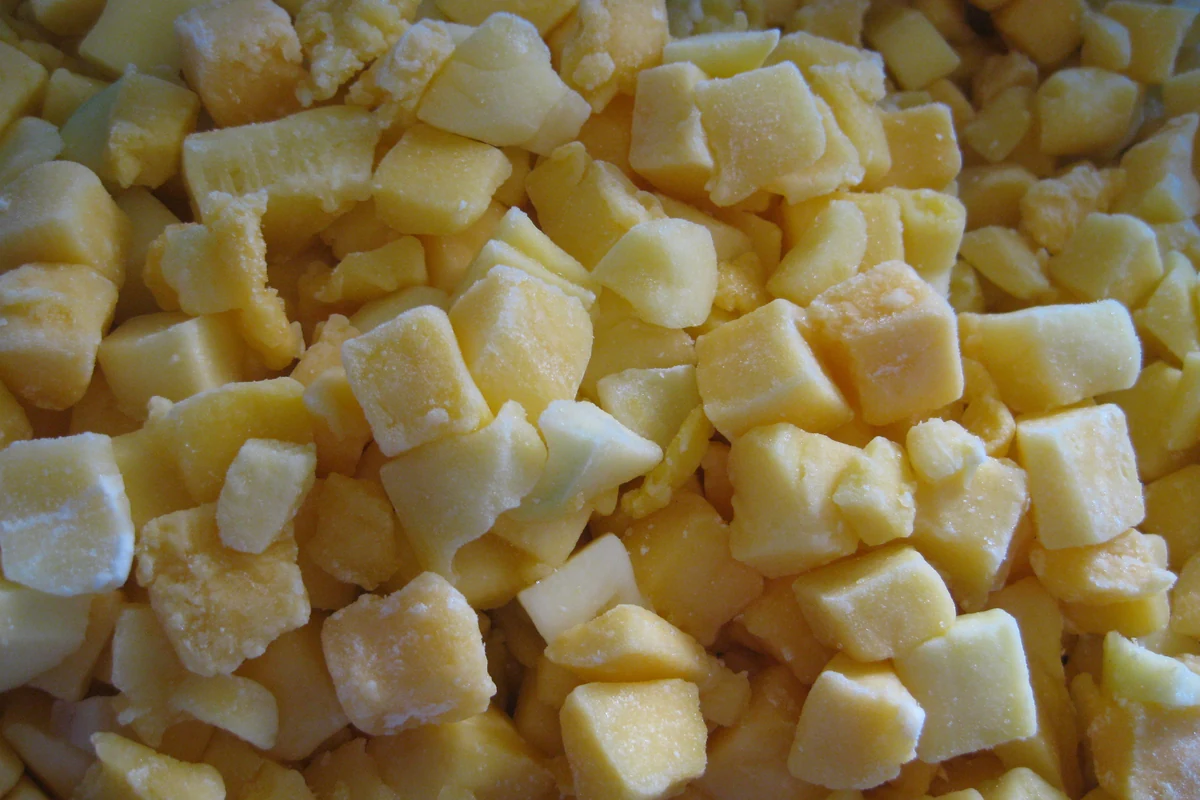
Real mango dice establish the starting cut before any cooked texture is judged.
Yes, if the curry is designed for ripe mango
A ripe mango curry might pair fruit with coconut, chickpeas, vegetables, chicken or a spiced sauce. Published recipes include frozen mango as an acceptable ingredient in some ripe-mango formulations. That is stronger evidence than assuming every curry with the word “mango” accepts a frozen bag. The fruit can provide sweetness, body and a tropical aroma, but it is not a complete curry base on its own. Onion, spices, salt, fat, acid and the main protein or vegetable still determine much of the finished dish.
Check the pack before cooking. Is it ripe sweet mango dice, chunks, slices or puree? Is it plain fruit, or has sugar or another ingredient been added? The cut and sweetness will determine when and how much to add. A puree disappears into sauce by design; a large chunk may stay visible longer than small dice if handled gently. Frozen appearance is a poor prediction of cooked shape. Run the fruit through the actual dish once before writing a fixed procedure for a kitchen team.
For a home cook, the easiest starting point is a curry base that already tastes good but could use fruit sweetness. Cook the aromatics and main ingredients first, then add a modest amount of mango and heat it through. Taste again before adding any more sugar or acid. This avoids loading the sauce with fruit before you know what the pack tastes like.
Decide whether you want pieces or fruit in the sauce
Visible pieces and integrated sauce are distinct endpoints. A plated curry with recognizable mango asks for fruit that survives stirring and a short warm-up. A smooth sauce welcomes mango that breaks down. If the finished dish will be held hot or reheated, test its texture at that point rather than only when it leaves the pan. A piece that looks intact after one minute may dissolve during a long service hold.
If pieces are the goal, use a reasonably firm cut, add it after the sauce and other ingredients are mostly cooked, and stir with care. Put the fruit into a gently simmering sauce rather than repeatedly boiling a pan hard. If some dice are fragile, they may still taste good, but describe the result as a fruit-enriched sauce instead of promising a chunky presentation. A frozen dice label does not guarantee a defined percentage of pieces after curry cooking.
If sauce body is the goal, add the mango earlier or mash a portion into the curry. This can soften sharp spice and give the base a fuller mouthfeel. It can also make the dish too sweet or thick if the amount is chosen from a dessert recipe. Add fruit in stages, taste after it has heated and adjust the savory base. A blender can make the sauce uniform, but blending changes the appearance and may intensify perceived sweetness, so decide whether that is actually the intended style.
Cut size matters in both routes. Small dice have more exposed edge and may disperse rapidly. Larger chunks can show fruit identity but may heat unevenly from frozen in a thick sauce. Our guide to IQF mango dice size and ripeness explains how to specify the starting ingredient. This curry decision goes one step further: it tests the dice after heating and serving, not just in a frozen sample tray.
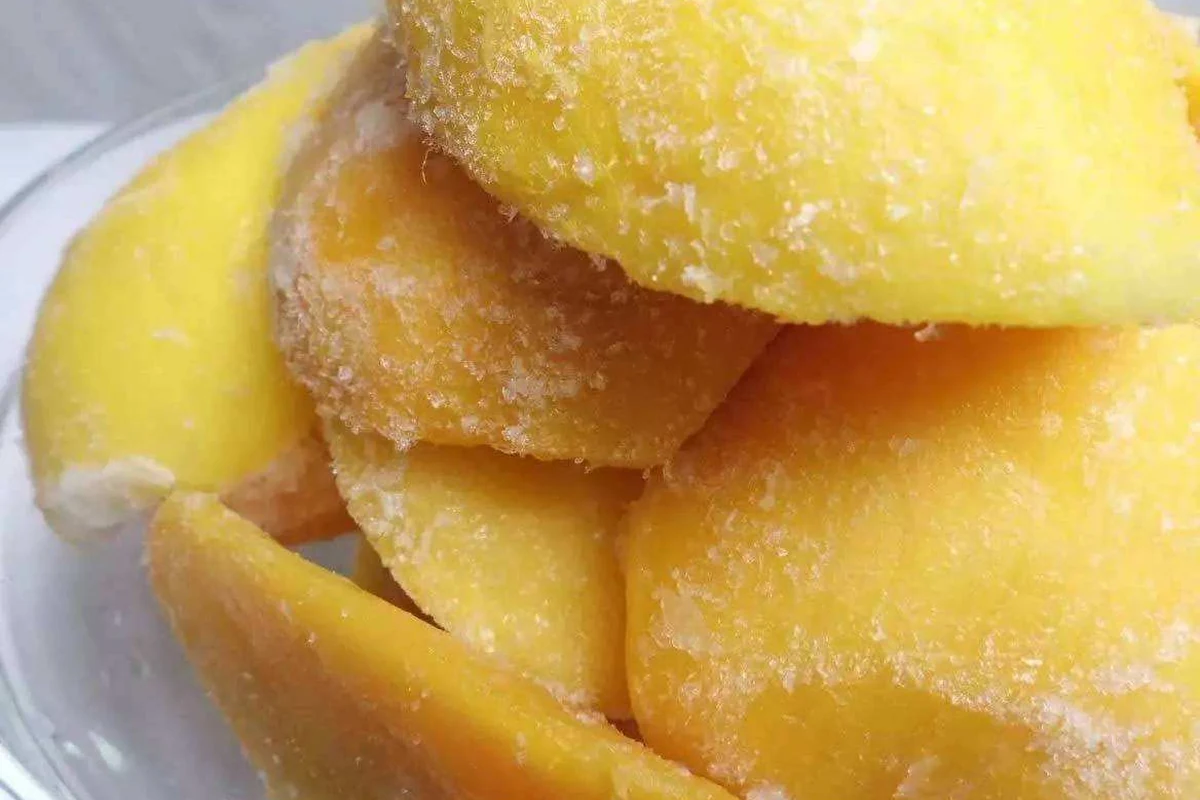
The larger fruit form offers a contrast with dice; its curry performance needs testing.
Choose when to add the frozen mango
Build the base first. Cook onions, spices and any protein or vegetables as the recipe requires, and bring the sauce near its intended consistency. Then choose the fruit path. For discrete mango pieces, add frozen or partially thawed fruit late enough that it warms through without a long simmer. For a sauce that should absorb mango, add it earlier and let it soften, then assess thickness. These are practical choices, not universal minute counts. Pan size, sauce volume, cut size and the temperature of the frozen pieces alter the warm-up.
Some recipes prefer to microwave or otherwise temper frozen mango before it enters the pan. Others add small frozen pieces directly. Either can work if the cooking process heats the fruit and the rest of the dish adequately. Thawing in advance lets you see the fruit’s released liquid and texture before deciding how much of that liquid should join the sauce. Direct addition is convenient but can temporarily cool the pan and thin the sauce as the fruit releases moisture. Adjust the method to the actual batch rather than treating thawing as always required or always harmful.
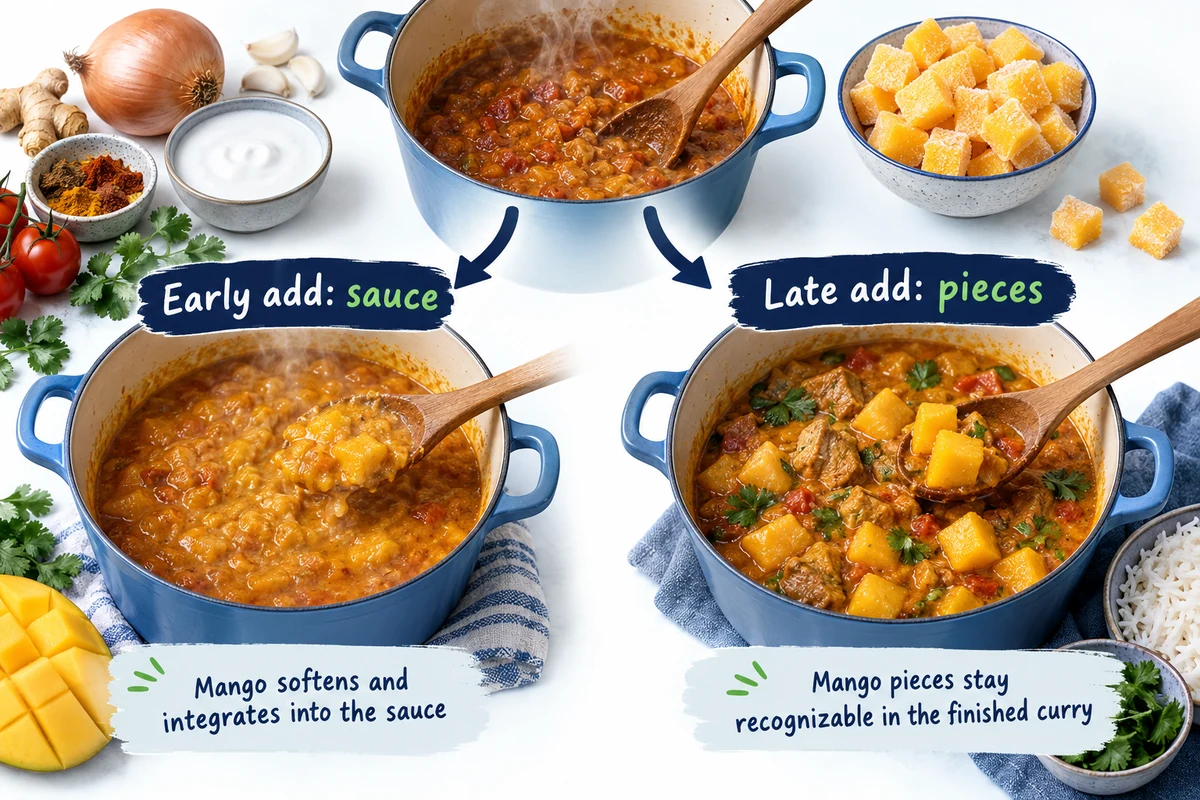
The illustration shows two branches from the same curry base. Its purpose is to make the intended endpoint explicit. It is not a measured claim that early addition always creates a smooth sauce or late addition always preserves every dice. If the fruit is very ripe and soft, even a late addition may lose shape; if the pieces are larger and the hold is short, some may remain visible after longer heating. Observe your own fruit in your own sauce.
The diagram scrolls horizontally on smaller screens.
The conceptual branches express intended endpoints, not guaranteed results.
Balance sweetness, acidity and spice after the fruit warms
A frozen mango cube can seem less aromatic or less sweet while still cold. Once heated in sauce, it contributes dissolved sugars, fruit acids, aroma and water. Taste the curry after that contribution has entered the base. If you season the sauce to perfection first and then add a large sweet fruit portion, the final dish may need salt, heat or acid adjustment. Make small corrections rather than chasing balance with large additions.
Acidity is especially important when adapting a green-mango curry. A ripe frozen mango may reduce the tart edge that the original recipe expects. A suitable sour ingredient can be chosen for the dish—lime, tamarind or another ingredient already in its flavor system—but it should be tasted into the actual sauce, not treated as a universal replacement ratio. The fruit’s own variety and maturity change the starting point. For some creamy curries, a gentler sweet profile is the goal and extra acid would make the dish less coherent.
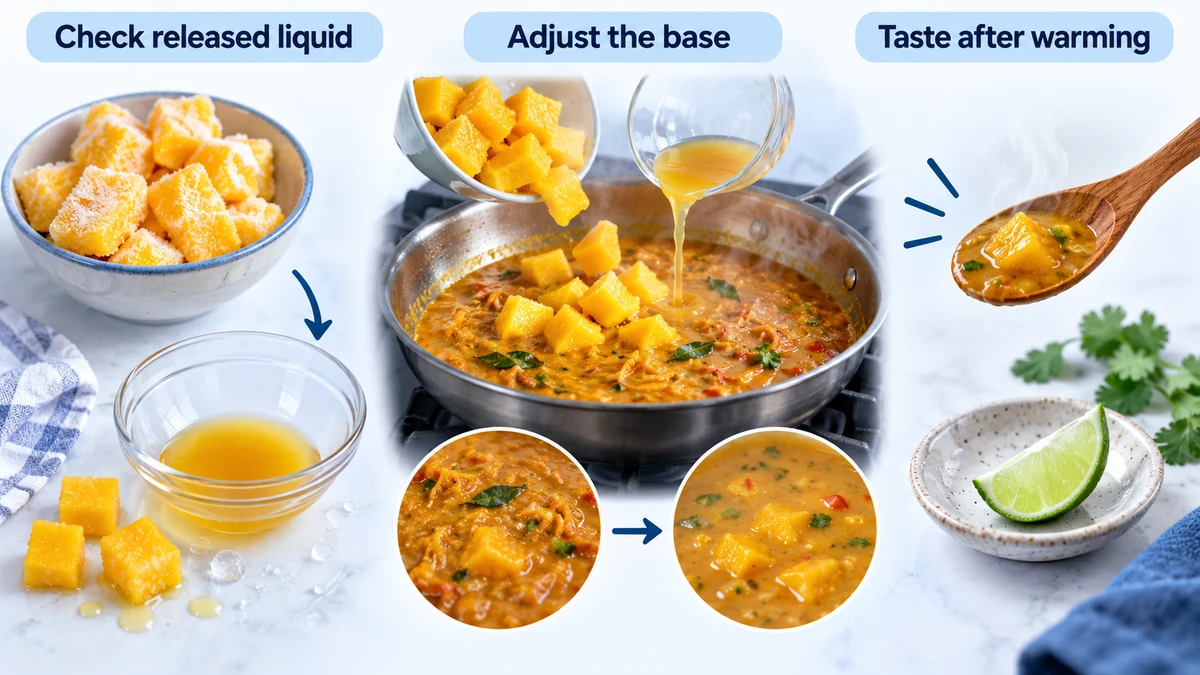
Liquid release has a separate effect from flavor. Frozen fruit can shed juice as it warms. In a thin curry, that may be welcome; in a sauce intended to cling to rice or a plated protein, it may dilute body. If you thaw beforehand, collect the liquid in a clean vessel and decide whether to include all, some or none according to the dish. If adding directly from frozen, leave room in the method to simmer or reduce the sauce after the fruit warms, while watching whether the mango pieces still hold.
Spice balance is not just heat intensity. Mango can soften the perception of chile, while strong spice can obscure fruit aroma. Taste a spoonful with both sauce and mango, not sauce alone. A curry in which mango is visible but tastes like little more than sugar may need a sharper savory base or less fruit. A curry in which fruit disappears under spices may work better with larger pieces added later.
The diagram scrolls horizontally on smaller screens.
Conceptual sequence prompts a taste after fruit warms; no measured thickening result.
A small side-by-side timing trial
If the curry will be repeated for foodservice, prepare one base and divide it into two small pans. Weigh equal portions of the same mango lot. Add fruit to one pan earlier so it simmers into the base. Add fruit to the other pan near the end, allowing it to heat through. Keep the other ingredients, pan load and final tasting temperature as similar as practical. Record what happens to piece count, sauce thickness, sweetness and acid impression.
This is a trial method for your kitchen, not a measured result for the XMG product in the photographs. The useful result is not simply “late is better.” Early addition might create a more integrated coconut sauce, while late addition might leave a better visible garnish. If the curry is served after holding, taste and photograph both at the actual service point. The holding period can erase an advantage observed immediately after cooking.
A third sample can help when the curry tastes too sweet. Use a smaller mango portion with the same late timing, then adjust acid and salt separately. Changing amount and timing at once makes it hard to understand the result. A simple record of fruit cut, portion mass, moment of addition and served texture can save a kitchen from repeating a poor batch.
Do not substitute ripe mango for green mango blindly
Green mango is unripe and generally firmer and more sour. Recipes built around it may cook pieces for longer and use their acidity as a structural part of the dish. Sri Lankan green-mango curry recipes, for example, deliberately call for young or slightly ripened fruit and describe a longer cook to a tart, jammy result. Ripe-mango coconut curries use a different balance and may welcome frozen ripe fruit. Neither tradition is “the correct mango curry” for all cooks; they solve different flavor problems.
Read the original recipe for the fruit’s job. If mango is the main souring ingredient, a sweet frozen dice is a substantial reformulation. If mango is there to round a creamy curry, frozen ripe fruit is much closer to the intended role. If the recipe keeps pieces intact, test the product after cooking. A dish can be delicious after the substitution while still being materially different from the recipe named in the source.
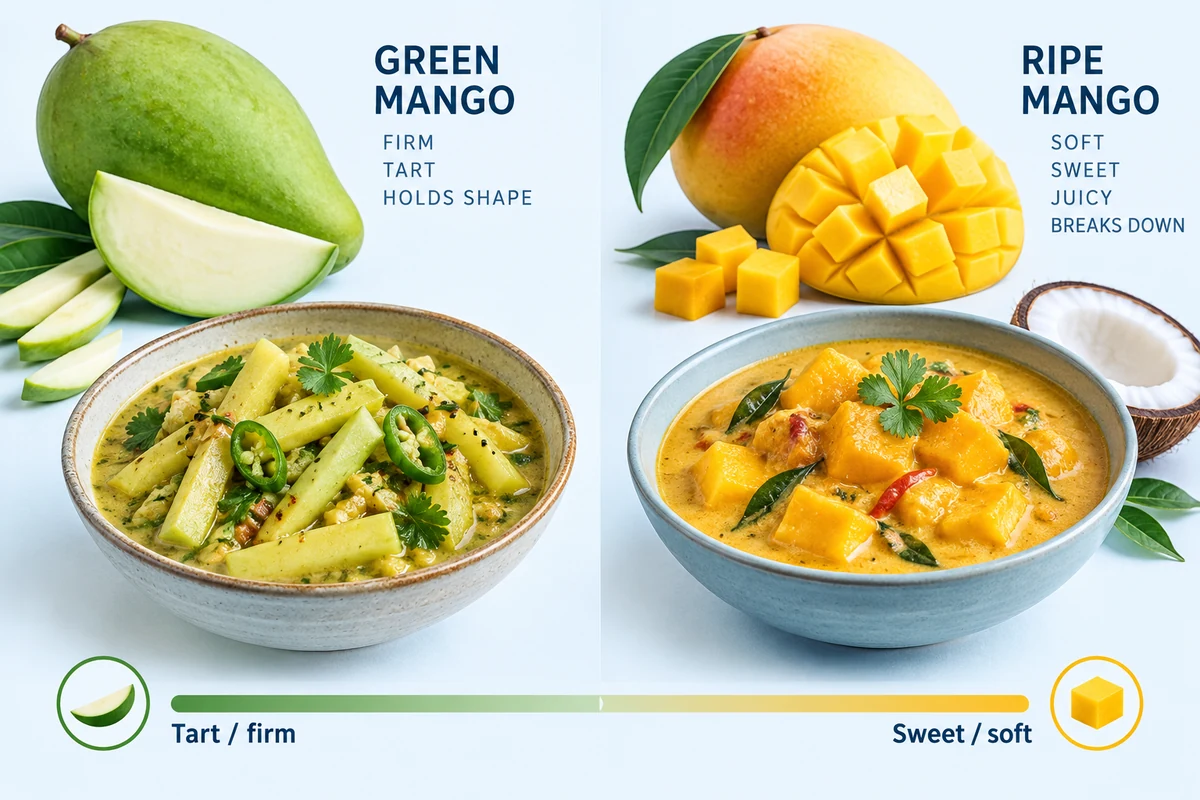
The diagram scrolls horizontally on smaller screens.
Illustration contrasts tart firm green fruit with sweeter softer ripe fruit, without recipe equivalence.
Product form and practical serving checks
For a predictable kitchen result, define the fruit form and the endpoint together: plain ripe frozen dice or chunks, target piece visibility, sauce sweetness, free liquid and time from pan to plate. XMG’s frozen mango product page helps identify relevant forms. It does not certify how any one pack behaves in your spice blend. A small cooked sample is the honest bridge between ingredient specification and menu claim.
Use safe handling for the complete curry. Frozen fruit does not make an undercooked meat or poultry curry safe; cook the main ingredients appropriately, and keep reheated or held food under the controls used for your recipe and service. That safety decision is independent of whether the mango pieces retain shape. With the right fruit and timing, frozen ripe mango is a practical curry ingredient—especially when its sweet, soft role has been planned from the start.
View frozen mango
Review the listed ingredient forms and preparation information for this application. Choose the cut and processing route that suit your intended result.
View product forms →