


On this page
For scrambled eggs with frozen spinach, prepare the spinach first, let its free water leave the pan or drain it, and then add the eggs. The order matters because eggs begin setting quickly. If frozen spinach and raw eggs enter together, water released from the spinach can collect around forming curds, extending cooking and leaving the plate wet. Spinach-first does not mean cooking it until bone dry; it means removing obvious free liquid while keeping the greens pleasant to eat. Follow the spinach pack’s preparation directions and cook the eggs fully to the endpoint appropriate to your kitchen.
The amount of spinach is a practical control. A small portion spreads easily through a two-egg pan; a large frozen block needs time to separate and may release much more water than the eggs can accommodate. Test your actual spinach form, note how much liquid drains, and add eggs only once the pan is ready for them. If you prefer delicate curds, keep heat moderate and stop stirring when the eggs reach the doneness you want without leaving free liquid.
- Prepare and drain or evaporate free water from frozen spinach before adding eggs.
- Use a modest spinach portion and compare results with the same egg quantity.
- Leaf, chopped and block forms need different separation and draining time.
- Judge the plate for tender eggs and no standing liquid, not just green color.
The simplest reliable order
Read the spinach package first. Some products can be heated directly from frozen; others may give a thawing or draining route for certain recipes. Use the route appropriate to the product. Warm the spinach in a skillet or prepare it separately as directed until the pieces are no longer hard clumps and visible free water can be removed. Drain it in a clean sieve or let the liquid evaporate in the pan without scorching the leaves. Then return the spinach to the pan, add a little fat if needed, and pour in beaten eggs.
That order is easy to remember: spinach, free-water check, eggs. It also gives you a decision point. If liquid is still pooling when you tilt the pan, the eggs are likely to encounter that liquid. If the pan is hot and the spinach is beginning to stick, you have gone too far in the other direction. Adjust heat and add the eggs soon. The aim is a workable pan surface, not perfectly desiccated greens.
Begin with a small portion while learning a product. A whole frozen block thrown into two eggs asks the egg mixture to wait while the center of the block thaws. By that point, the first egg to contact the pan may be overcooked. Break up or prepare a block according to its label before the eggs go in. A loose chopped product may heat more evenly, but it still needs a water check.
The Ocado spinach scrambled-egg recipe [1] also treats spinach as a separate part of the sequence before finishing the eggs. A recipe can inspire timing, but your bag’s form and cooking directions take priority. For a prepared-food kitchen, record the portion and pre-egg spinach condition so a second cook can reproduce the result.
Why spinach water changes the egg pan
Frozen spinach carries water both in the leaf tissue and around the pieces. When heated, some of that water becomes visible in the pan. It can dilute the egg mixture where it collects. Rather than forming tender curds against the pan, the eggs may stay loose in a watery region while other parts set. Longer cooking then risks a tough, dry edge and a wet center on the same plate.
Free water is the key observation. Tilt the pan slightly and look for liquid running away from the greens. If it does, drain or evaporate it before adding eggs. A fine sieve can make the step clearer for thawed or prepared spinach, particularly a chopped form that holds liquid between small pieces. Press gently if the recipe calls for it. Crushing the greens hard is unnecessary and can leave them unpleasantly dense.
The explanatory image below shows spinach in a sieve, the collected liquid, and the greens in a pan. It is not a measured yield claim. The amount of liquid in your bowl will vary with product and preparation. Keep the equipment clean and follow the package handling directions; draining is a texture step and does not replace required cooking.
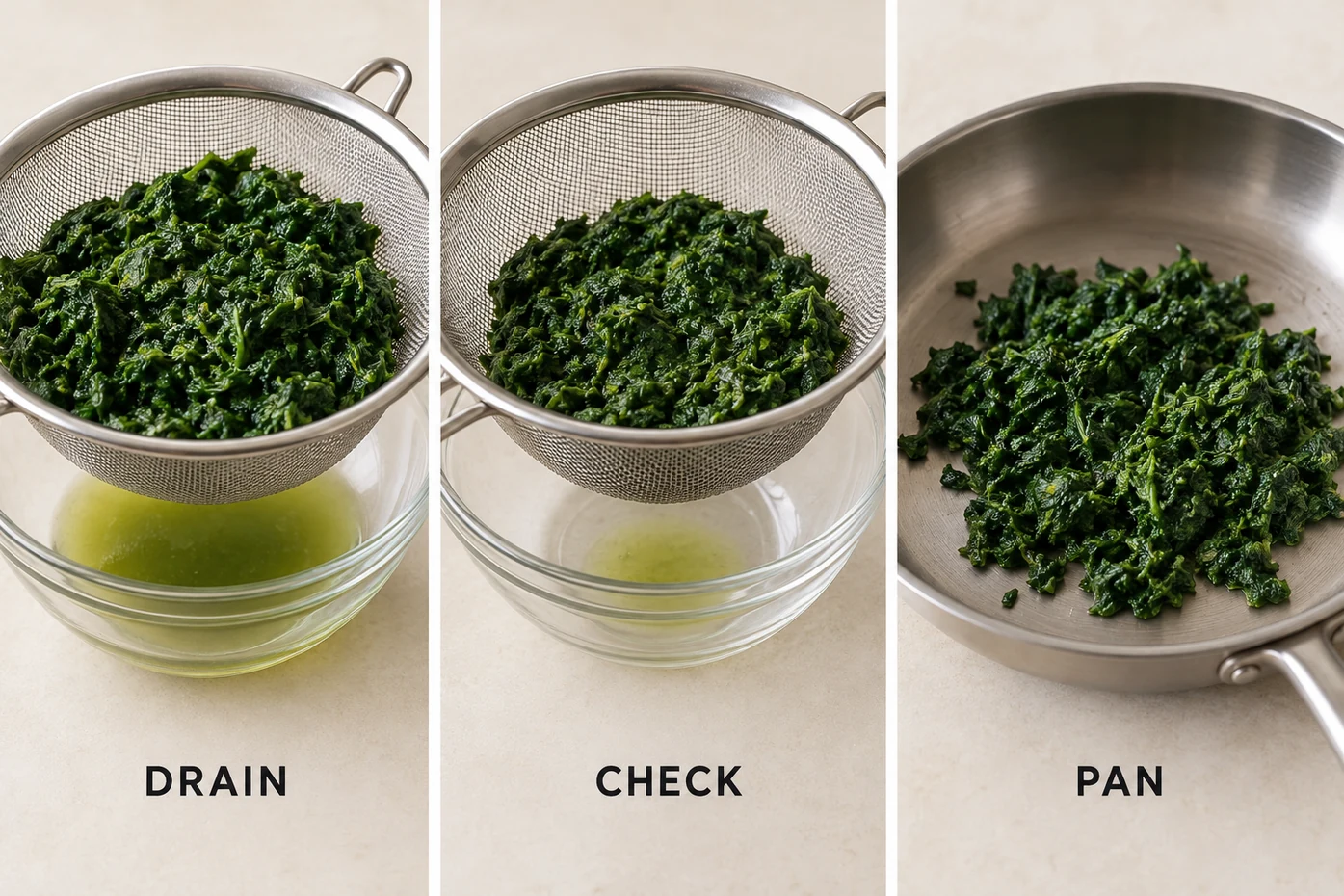
Conceptual explanation: The liquid is removed before eggs set.
If you add milk, cream or cheese to the eggs, the moisture balance changes again. First learn the plain egg-and-spinach version. Then add dairy or cheese deliberately and judge whether the finished plate still has distinct soft curds. A watery result does not always mean the spinach was the only source; ingredients and heat management both matter. Keep one variable fixed in each comparison.
Compare spinach-first with both-at-once
For a useful kitchen trial, make two small pans with the same spinach product, same portion, same number of eggs, and similar heat. In the first, prepare the spinach and remove visible free water before pouring eggs. In the second, add the frozen spinach and eggs together. Follow product cooking requirements in both trials; do not use a tasting comparison as a reason to leave either food undercooked. Record how much liquid appears, how long the egg mixture remains fluid, and what the plate looks like after serving.
The purpose is to isolate timing. If you also change pan size, egg quantity and spinach form, the trial cannot tell you which difference produced the result. The two-pan illustration below holds those conditions constant conceptually. It shows why simultaneous addition can put free water next to setting eggs. It is an explanatory comparison, not evidence that one exact volume of water appears in every kitchen.
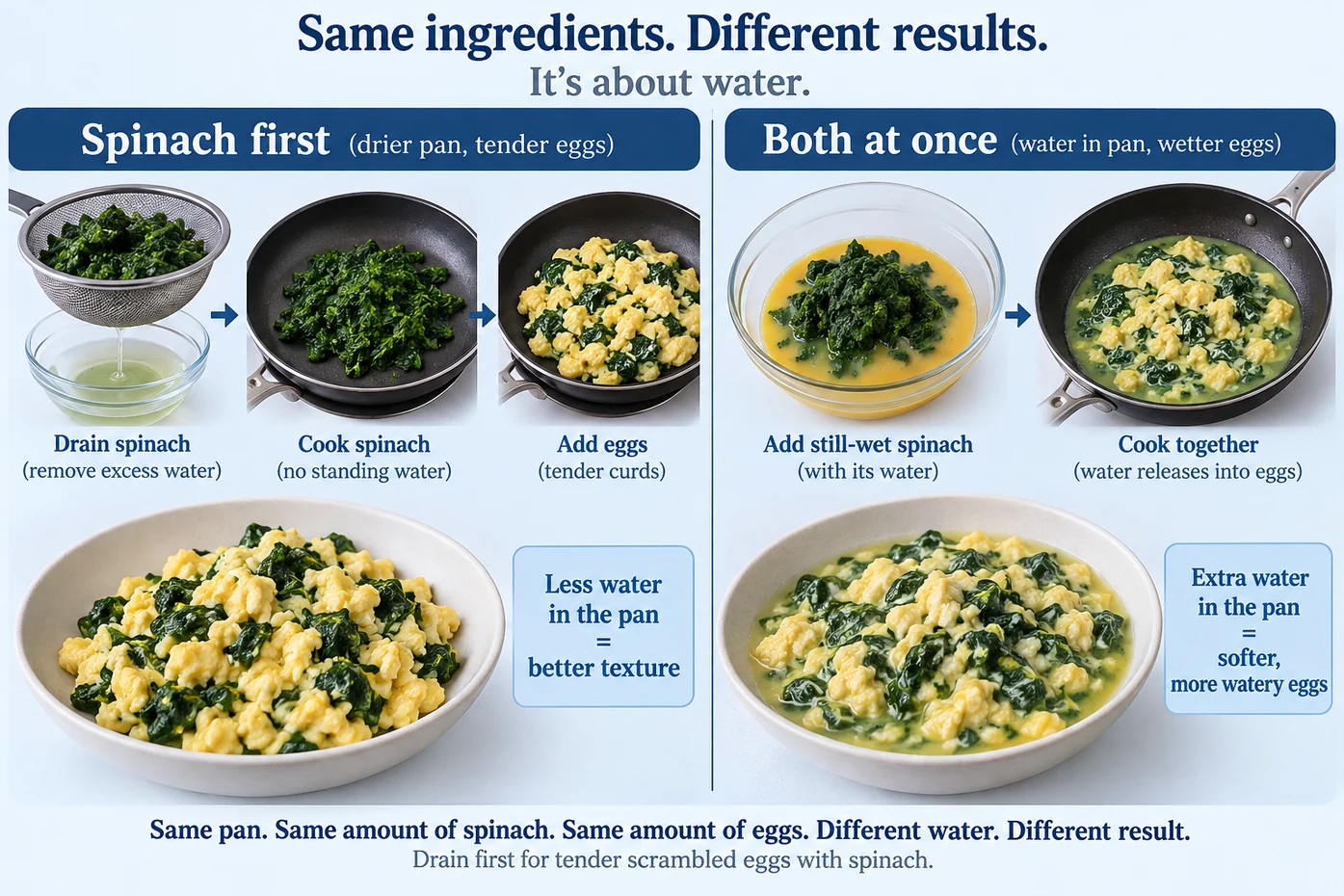
Conceptual explanation: Standing water meets setting egg only in the simultaneous route.
You may find both methods edible with a very small quantity of finely chopped spinach. That does not negate the timing principle; it shows that portion size can make the water load manageable. With a larger quantity, a dense block, or a softer spinach product, separating the steps often gives you more control. The practical recommendation is to start spinach-first, then simplify only after you know what your product does.
When evaluating eggs, look beyond the moment they leave the skillet. Some free liquid can gather on the plate during the first minute. If the curds are tender but a green-tinted pool forms underneath, the spinach may still have held too much free water. If the plate is dry but curds are rubbery, you may have kept the eggs on heat too long. Both observations guide the next trial.
Choose chopped, leaf or block spinach
Frozen spinach appears in several forms. Loose leaves or cut leaf pieces can make the green component visible in larger strands. Finely chopped spinach distributes green flecks more evenly. Compressed blocks are convenient to portion in some settings but require enough preparation time to separate and drain. No form is automatically best for scrambled eggs. The right one gives the distribution and bite you want after the required preparation.
The first real photograph shows loose frozen spinach in a product context. Its visible leaves and stems help you understand what will go into the pan, but it does not show how much water will release after heating. The second real photograph shows a compact block. It is a form reference, not proof that every block has the same thawed yield. Use the actual product’s directions and a small cooked trial.

Real loose frozen spinach; no drained yield is shown.
A loose-looking portion can be much lighter than a compact block of the same apparent size. If you compare forms, measure the frozen amount before preparation and note how much prepared spinach you add to a fixed egg portion. That record helps separate a cut-form difference from an accidental change in spinach load.
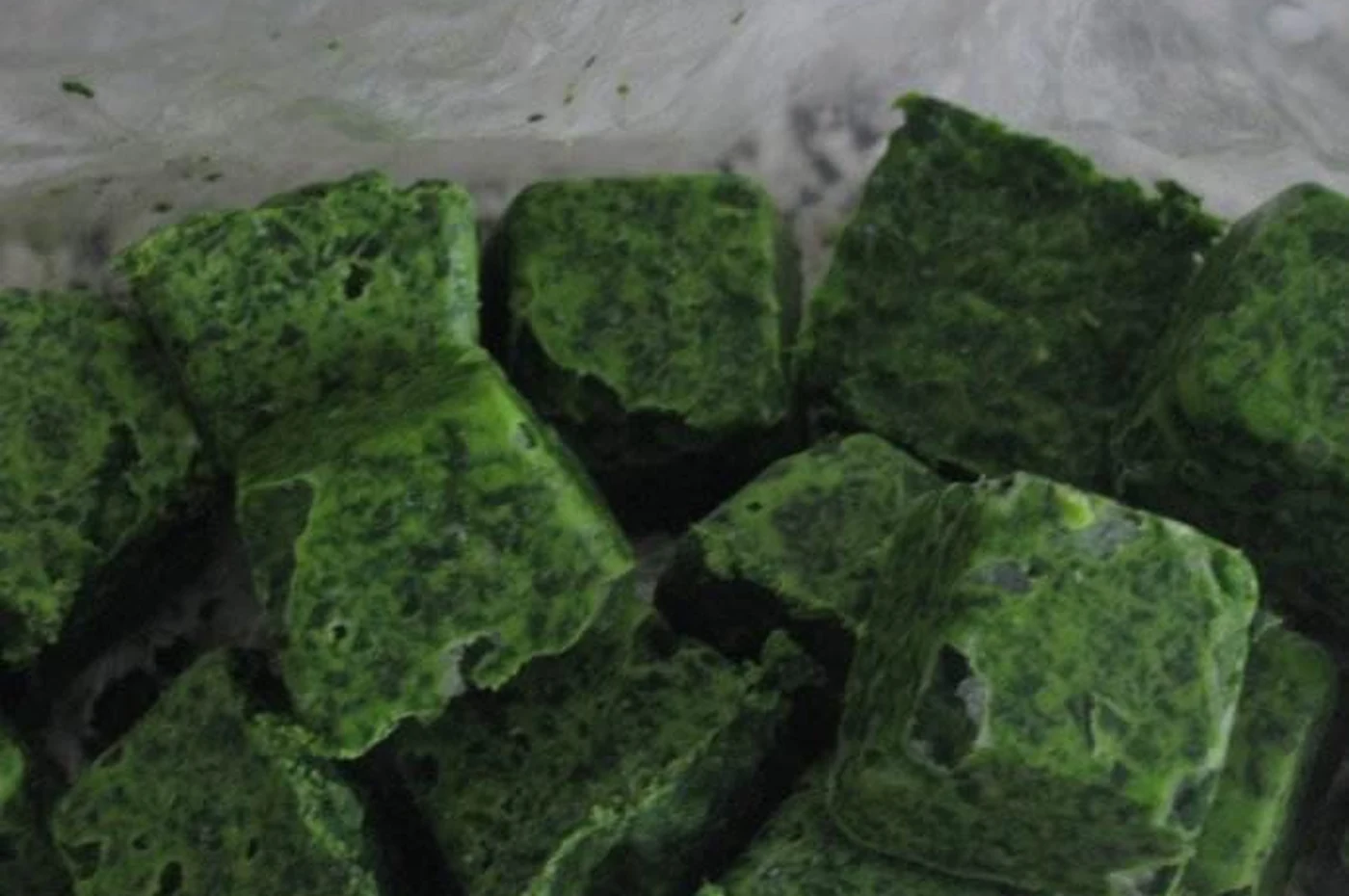
Real compact spinach form; preparation depends on the pack.
Do not compare these forms using equal-looking handfuls. A loose handful and a dense block may represent very different spinach weights. Weigh or otherwise standardize a portion if consistency matters. In foodservice, specify whether the recipe amount refers to frozen weight, prepared drained weight or a volume measure. Those are different quantities. A clear recipe prevents one cook from doubling the spinach merely because it looks small after draining.
The extra process visual below shows a conceptual before-and-after drain on a single spinach portion. It is designed to make free liquid visible; it should not be read as an exact mass-loss chart. The amount removed depends on cut, processing and handling. Use the illustration to ask a better question at the stove: is liquid still standing where the eggs will set?
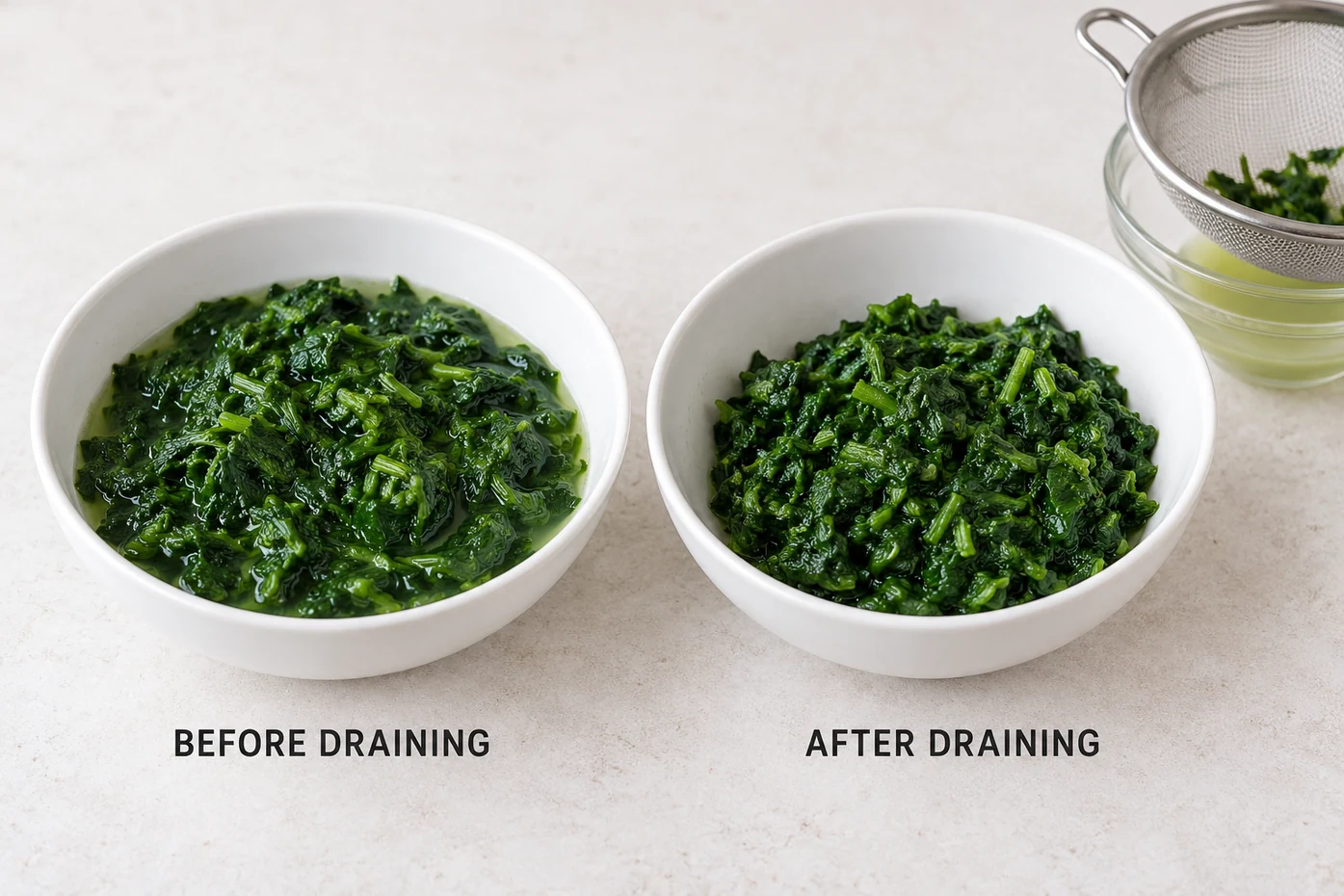
Conceptual explanation: A clear spoon-and-sieve schematic shows the same spinach portion before and after pressing; retained free water is collected below.
A small-pan method you can repeat
Set out eggs, spinach, a clean sieve or draining bowl if needed, a nonstick or well-seasoned skillet and a spatula. Prepare the spinach according to its label. If the product is heated in the skillet, stir just enough to separate the pieces and expose any liquid. Pour off or evaporate that liquid while keeping the leaves green and tender. Reduce heat if the pan is very hot before eggs enter. Beaten eggs should meet a controlled pan, not a puddle.
Add eggs and move them gently as they begin to set. Scrape the pan in broad strokes so curds form, then pause briefly between strokes. Tiny frantic stirring can make very small curds and may obscure whether liquid remains. Add salt and other seasonings to taste, bearing in mind that some spinach products or added cheese may already contribute seasoning. Cook scrambled eggs until firm, not runny, as the USDA egg-safety advice [2] states. A tender curd can still be fully set; visible liquid on the plate should prompt a closer check of both egg doneness and spinach drainage.
For a quick breakfast, it is tempting to skip draining. If your small product portion produces no visible free water after heating, there may be little to remove. That observation is better than a rigid instruction to squeeze every spinach leaf. If it produces a pool, take the extra step. Repeat once with the same portion so you know whether the result is dependable.
A batch made for several diners needs its own test. The water from a large spinach load and the time needed to set many eggs can behave differently from a two-egg skillet. Consider preparing spinach separately and combining portions as eggs cook. Record the pan capacity, spinach weight and serving interval. Scaling up by simply adding everything to one deeper pan often changes the texture more than expected.
How to judge the finished eggs
Serve a small portion and look at the plate after a short pause. There should be identifiable egg curds and spinach distributed according to your intention, with no obvious watery pool. Taste for tender greens and eggs. If the spinach tastes stringy, the cut may be too large for this application or the greens may need a different preparation. If the eggs taste tough, shorten their time on heat after the spinach step is complete.
Do not infer food safety from dryness. A dry-looking egg mixture is not a measured temperature, and a wet-looking plate can be caused by fully cooked spinach liquid. Use the required cooking instructions and your kitchen’s food-safety standards separately from the texture assessment. The texture goal is a pleasant curd with no nuisance liquid.
For a repeatable recipe, note the specific frozen spinach form used, the portion before and after preparation, whether you drained it, and when you added eggs. These observations are more useful than “cook until done,” especially when several people make the same dish.
Questions about spinach and eggs
Should I thaw frozen spinach first?
Follow the particular pack’s directions. You can often prepare spinach from frozen, then remove free liquid before adding eggs. A block may need more time to separate. Do not assume that room-temperature thawing is required.
Why are my scrambled eggs watery?
Spinach may have released free liquid while the eggs set. Other ingredients and heat can also contribute. Prepare spinach first, check for pooling liquid, and then compare with the same egg quantity.
Can I squeeze all the water out?
You can gently drain prepared spinach when appropriate, but “all” is neither realistic nor necessary. Remove standing free liquid without crushing the greens into a dry mat.
Does chopped spinach work better than whole leaf?
Chopped form distributes more evenly, while leaf form remains more visible. Neither guarantees a drier egg. Standardize the portion and prepare each form according to its label to compare fairly.
View frozen spinach
Review the listed product forms and preparation information alongside the cooking and handling questions discussed above.
View product forms →