


On this page
To thicken a sauce made from frozen fruit, first heat the fruit until its released juice is visible, then choose the kind of body you need. Simmer uncovered to concentrate a bright, pourable sauce; retain or blend some fruit for a fuller texture; or add a small, well-dispersed starch slurry when the sauce needs to coat a spoon quickly. Make the final judgment at the temperature at which you will serve it. A warm sauce that looks loose in the pan can feel quite different after cooling.
The useful question is not simply “How much thickener?” It is “Where is this sauce going?” A glossy drizzle for pancakes, a fruit layer on chilled yogurt and a filling that must survive freezing ask for different textures. The method below addresses an ordinary dessert or breakfast sauce made for immediate service or short refrigerated use. A bakery filling, canned preserve or shelf-stable topping needs a tested formulation of its own.

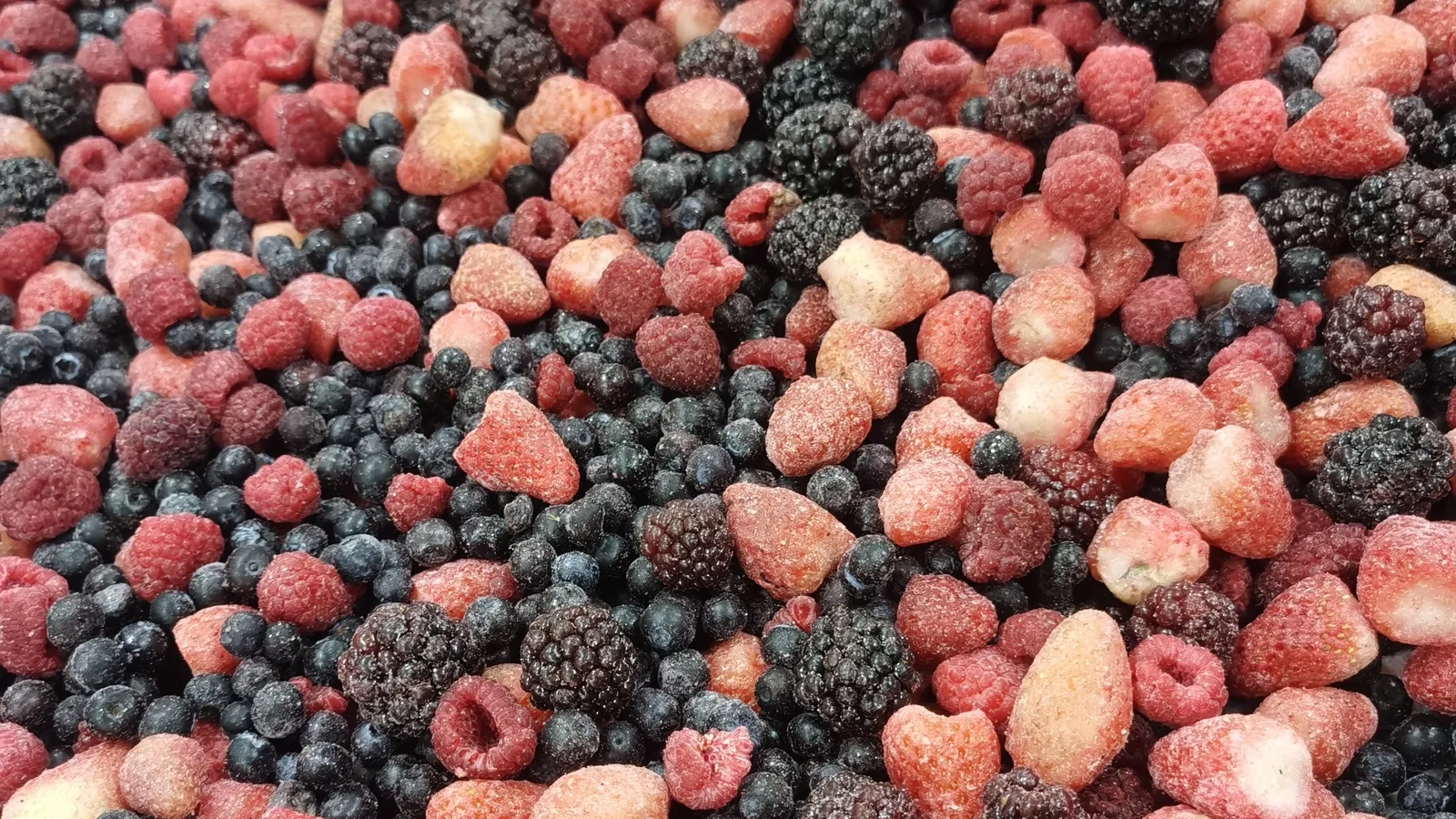
A real frozen berry mix before heating.
Why frozen fruit can make a sauce look unexpectedly thin
Frozen fruit brings water into the pan as ice inside and around the pieces. During warming, the fruit softens, cells lose some of their former structure and juice collects before much evaporation has occurred. At that moment the pot can contain both recognizable pieces and a surprisingly mobile liquid. Adding starch while the fruit is still icy makes it hard to see the actual amount of free juice, so a first correction may overshoot.
Fruit type and cut size matter. A bag of small berries heats differently from large strawberry halves or diced stone fruit. Some batches contain many intact pieces; others contain crushed fruit and fine particles that give the liquid body even before thickening. A sweetened frozen fruit blend also behaves differently from an unsweetened one. Read the ingredient statement, then look at the contents as they thaw. There is no single ratio that suits every mix.
Use a wide pan when reduction is the chosen route. A greater exposed surface lets steam leave more readily, while stirring prevents fruit solids from catching on the bottom. Keep the heat controlled enough that the mixture bubbles steadily rather than spattering or scorching. If you need pieces to remain recognizable, fold them gently and stop cooking once the liquid has reached the desired flow. If a smooth finish matters more, you can break up or puree some fruit after it softens.

The diagram scrolls horizontally on smaller screens.
An explanatory before-and-after of juice released during warming.
A practical sequence is to warm the fruit, observe the free liquid, decide how much fruit texture to keep, and only then make a thickening adjustment. This prevents the familiar cycle of adding a thickener, discovering the sauce is too stiff when cool, and diluting away the flavor you were trying to preserve.
Three ways to create body, and what each changes
Reduce the released juice
Reduction removes water and concentrates the fruit already in the pan. It is the cleanest choice when you want a sauce whose ingredient list is just fruit and any chosen sweetener or seasoning. Begin with an uncovered simmer after the frozen mass has melted, and stir more frequently as the liquid level falls. Pull a spoon through the sauce and watch how quickly the gap closes. Stop a little before your final cold target if the sauce will be chilled, because cooling can make the finished flow feel slower.
Reduction has a cost: it takes time, decreases yield and continues cooking the fruit. A very long boil can flatten a fresh fruit note, darken the color or disintegrate pieces. If the fruit is already pleasantly flavored but the batch must be ready quickly, a different route may suit it better. You can also lift out some pieces, reduce the liquid, then return them near the end. That keeps more whole-fruit character without leaving a watery base.
Retain or puree fruit solids
Fruit pulp gives a sauce apparent thickness without adding an external gelling ingredient. Mash a portion against the side of the pan or briefly blend a portion once it is safely cool enough for your equipment. Stir it back into the liquid and assess the result. A coarse mash reads as a rustic compote; a fine puree gives a more even pour. Straining seeds or skins may make the sauce smoother, but it also removes solids that were contributing body, so check the flow again after straining.
This choice works well when a little texture is welcome. It is less useful if you need a clear, translucent glaze or a perfectly smooth squeeze-bottle finish. It can also obscure the distinction between a sauce and a fruit puree; that is fine if it matches the dish. What matters is naming the target before you process the fruit.
Real mixed fruit pieces can be retained, pureed or strained.
Use a dispersed starch for a faster, more controlled coat
Cornstarch is a common kitchen option for a cooked sauce. Mix a small amount with cool water or cool fruit juice until no dry lumps remain, then stir the slurry into hot, bubbling fruit liquid. Continue heating and stirring long enough for the mixture to become visibly cohesive. A slurry poured into a lukewarm pan, or powder sprinkled straight into hot fruit, can leave raw-tasting or lumpy patches. Add modestly, reassess and repeat only if needed.
The final result depends on the amount of liquid, its acidity, the starch, cooking time and storage conditions. A sauce thickened for tonight’s pancakes is not automatically suitable for freezing, baking into a pie or repeated reheating. Some starch-thickened sauces thin or weep under those conditions. If the application needs freeze-thaw stability, specify that requirement and run a product-specific trial rather than extending a quick household method.
University extension guidance offers a helpful example of cooked berry sauce using starch, but the recipe’s quantities belong to its own fruit and yield. Treat the technique as a reference, then assess your actual batch. See the Oregon State University Extension berry sauce guide [1] for a tested recipe context.
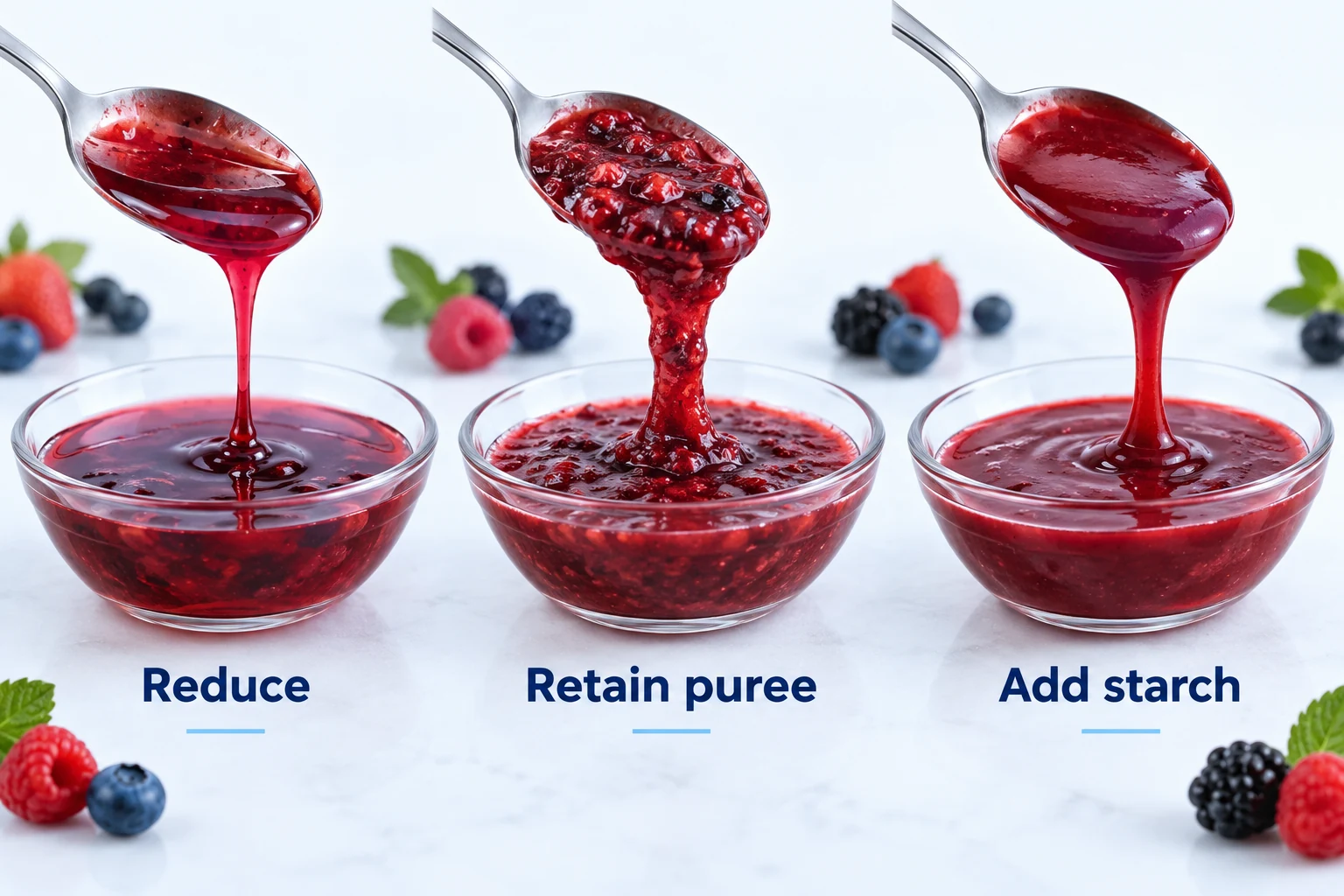
The diagram scrolls horizontally on smaller screens.
A conceptual side-by-side comparison of three sauce bodies.
Run a small sauce trial before correcting the entire pan
Put a little of the warmed fruit and its juice into a small pan or cup. Decide whether the end use calls for a flowing drizzle, a spoonable topping or a layer that sits where placed. Trialing one route on a small portion is more informative than changing the whole batch repeatedly. If you are preparing sauce for foodservice, write down fruit blend, starting weight, final yield, heating time, sweetener and the temperature at which you judged the finished texture. Those observations turn an attractive one-off into a repeatable specification.
- Start with the fruit as sold. Check whether the package is plain fruit, sweetened fruit or a blend with added ingredients. Follow any handling or cooking directions on the pack.
- Heat until the ice is gone. Stir gently and let the free juice become apparent. Do not estimate final thickness from the frozen block.
- Set the texture target. Decide how many pieces should remain, whether seeds are acceptable and whether the sauce will be served hot, warm or cold.
- Choose one first adjustment. Simmer to reduce, mash or blend fruit, or disperse a small slurry and cook it in. Avoid making all three changes at once, because then you cannot tell which caused the result.
- Test at service temperature. Put a spoonful on a plate or dish and allow it to reach the intended serving state. Observe whether it runs, coats, piles or separates.
- Record the result. Note the fruit, method, final yield and sensory result before changing the rest of the pan.
For chilled service, place a small sample in a shallow dish so it cools faster. Do not leave a large pot at room temperature just to perform a texture check; cool and refrigerate food using normal safe handling. The FDA’s food storage guidance [2] is a useful reference for refrigeration practices. A spoon test is a culinary texture check, not a microbial safety test.

The diagram scrolls horizontally on smaller screens.
Compare a warm sample with one cooled to the intended serving state.
Match the finish to the dish
For pancakes or waffles: a sauce should pour from a spoon and spread slightly across a warm surface. Fruit pieces can be appealing. Reduce first if the mix is watery; use a little retained puree if you want body without a glossy starch finish. Recheck after the sauce sits, because breakfast service often spans more than a few minutes.
For yogurt, cheesecake or chilled desserts: judge the sauce cold. A topping that barely flows when chilled can look heavy and mask the base dessert. If it becomes too firm, fold in a little reserved fruit juice or water and retest. If it separates into liquid and fruit, more of the fruit solids may need to be incorporated or the free juice reduced.
For a smooth plating sauce: puree and strain after cooking as the recipe requires, then check thickness again. A fine sieve removes coarse seeds and fibers; it does not guarantee a thicker sauce. If a glossy line is essential, a cooked starch route may be easier to reproduce, but use a small trial to avoid a pasty finish.
For a bakery filling or frozen prepared dessert: the questions expand beyond immediate spoon flow. The filling may be heated again, enclosed in dough, frozen, thawed and cut. Water migration, syneresis and color can matter as much as first-day thickness. This article’s kitchen sauce method is a starting observation, not a finished industrial filling specification. Buyers should define the processing cycle and acceptance test before choosing a thickener system.
What to do when the first attempt misses
The sauce is thin but tastes right
Reduce a portion of the free liquid separately or add a small, fully dispersed thickener to a test portion. If you simply boil the entire batch harder, you may overcook the fruit. If the sauce is for cold service, cool a sample before deciding it is truly too thin. An early warm reading can be misleading.
The sauce is thick but tastes flat
A long reduction can concentrate sweetness and mute delicate fruit notes. Correct flavor in the dish context: taste it on the pancake, yogurt or dessert it will accompany. A little reserved unsweetened fruit liquid may loosen an over-reduced batch, but it also changes concentration. Work in small increments and retest, rather than assuming sweetness alone will restore fresh fruit character.
The sauce is lumpy or pasty
Lumps usually call for a mechanical fix first: whisk well, blend cautiously if suitable and strain if a smooth finish is required. A pasty sensation often means too much cooked starch for the amount of free liquid or an unsuitable thickener for the dish. Dilution can rescue a small batch, but a fresh trial with less starch may be the better answer for a repeatable menu item.
It separates after standing
Observe whether clear juice rises from fruit pulp or whether liquid weeps from a gelled layer. Those are different failures. Stirring may restore a simple fruit sauce for immediate service; an item sold chilled or held for days needs a defined stability test. Record how long and at what temperature separation appeared. A photograph of a fresh pan cannot prove shelf-life performance.
Buying frozen fruit for repeatable sauce production
At small scale, the cook can adapt to each bag. At larger scale, variation becomes a yield and appearance issue. Ask for the fruit mix, cut form, fruit-size tolerance, amount of fines or broken pieces, sweetener status and packing format. Check whether the chosen frozen fruit is intended for cooking or can be used in a ready-to-eat application under its directions. If your sauce must show whole berries, a high proportion of crushed fruit will force a different recipe even when the label says the same fruit mix.
We supply frozen fruit formats for buyers who need to define those inputs. Share the final sauce use, required whole-fruit appearance, pack size and processing route so we can discuss which product form is relevant. The sauce formula and final safety validation remain with the manufacturer or kitchen using it.
Questions cooks often ask
Should I drain the liquid from thawed fruit?
Usually keep it until you know the desired yield and flavor. That liquid is part of the fruit contribution. If there is more than the sauce can hold, reduce it separately or reserve some and add back as needed. Discarding it at the start can remove flavor and make the outcome hard to reproduce.
Can I thicken the sauce without cornstarch?
Yes. Uncovered reduction and retaining fruit pulp are two straightforward options. They change yield and texture differently, so choose according to the finished dish. Other thickeners exist, but each has its own cooking and storage behavior; do not substitute blindly in a formula with a defined shelf life.
Why did it seem thick in the pot but run on the plate?
A hot pan can contain suspended fruit pieces that temporarily make the sauce look substantial while free juice still moves readily. Conversely, a very cold dessert can make a sauce feel thicker than it did warm. Test a small amount on the actual serving surface at the relevant temperature before making the last correction.
View frozen fruits
Review the listed product forms and preparation information alongside the cooking and handling questions discussed above.
View product forms →