


On this page
Frozen sweet peppers can make a useful fajita filling, but aim for cooked strips with manageable moisture and some browned edges rather than promising fresh-pepper crispness. Follow the pack’s cooking directions, give released water room to leave the pan, and build colour only when the surface is ready for it. A crowded wet pile is a poor place to judge how well the peppers can brown.
The pan load and the cut change the result. Long strips give a recognisable pepper bite, while small pieces distribute differently inside the tortilla. Cook onions and any protein on a schedule that suits them rather than assuming everything must enter and leave the pan together. This makes it easier to finish the peppers without waiting for another ingredient to cook.
Judge the filling in the wrap. Peppers that seem pleasantly juicy on a plate may release more liquid than a tortilla can comfortably hold. The best preparation is the one that meets the product’s cooking requirements, tastes right with the filling, and gives a comfortable bite without soaking the carrier.
What frozen peppers can deliver in a fajita

Pepper strips show a useful cut form for a wrap; pan loading and moisture control remain cooking decisions.
Frozen peppers are convenient when you want prepared pieces available without cutting a fresh pepper for every meal. They still need to be chosen and cooked for the dish. A pepper suitable for blending into sauce has a different job from a strip that remains visible in a tortilla. For fajitas, inspect piece length, thickness and the way the cooked pieces sit with the other ingredients.
Freezing can change vegetable structure, and thawed produce may be softer than the raw fresh version. University of Minnesota Extension [1] explains this texture change through ice formation and its effects on plant tissue. It does not mean every frozen pepper will become an unusable paste, nor does it guarantee that a particular pack can copy the bite of a fresh strip.
Choose a realistic endpoint: tender pepper with a recognisable shape, pleasant seasoning and no unwanted puddle in the serving. Some surface colour can be appealing, but deeply blackened edges are not necessary for a good filling. The entire cooked bite matters more than reproducing the darkest photograph in a recipe. Start with a small portion if the product is unfamiliar, then adjust the load or cut for the next batch.
Read the pack before choosing a pan method
Check whether the pack instructs you to cook from frozen, thaw first or use a particular cooking method. A plain frozen pepper strip is different from a seasoned pepper-onion blend or a prepared cooked product. Added sauce brings its own liquid and seasoning, so it cannot be compared with plain peppers as though the only difference were the brand.
Follow the required preparation even if a shortcut seems likely to protect texture. Browning and tenderness are cooking-quality observations, not substitutes for the directions. Freezing does not make every ingredient ready to eat. If you intend to change the recipe’s cooking sequence, make sure each ingredient still receives its appropriate preparation rather than using a hot-looking surface as the only check.
When thawing is permitted and useful, use suitable handling and observe the released liquid before loading the pan. Do not assume that draining makes the peppers equivalent to a never-frozen ingredient. You may gain control over free liquid while the tissue remains softer. Write down that starting state when comparing methods so that a later difference is not attributed solely to pan heat.
Strips and pieces behave differently in the wrap
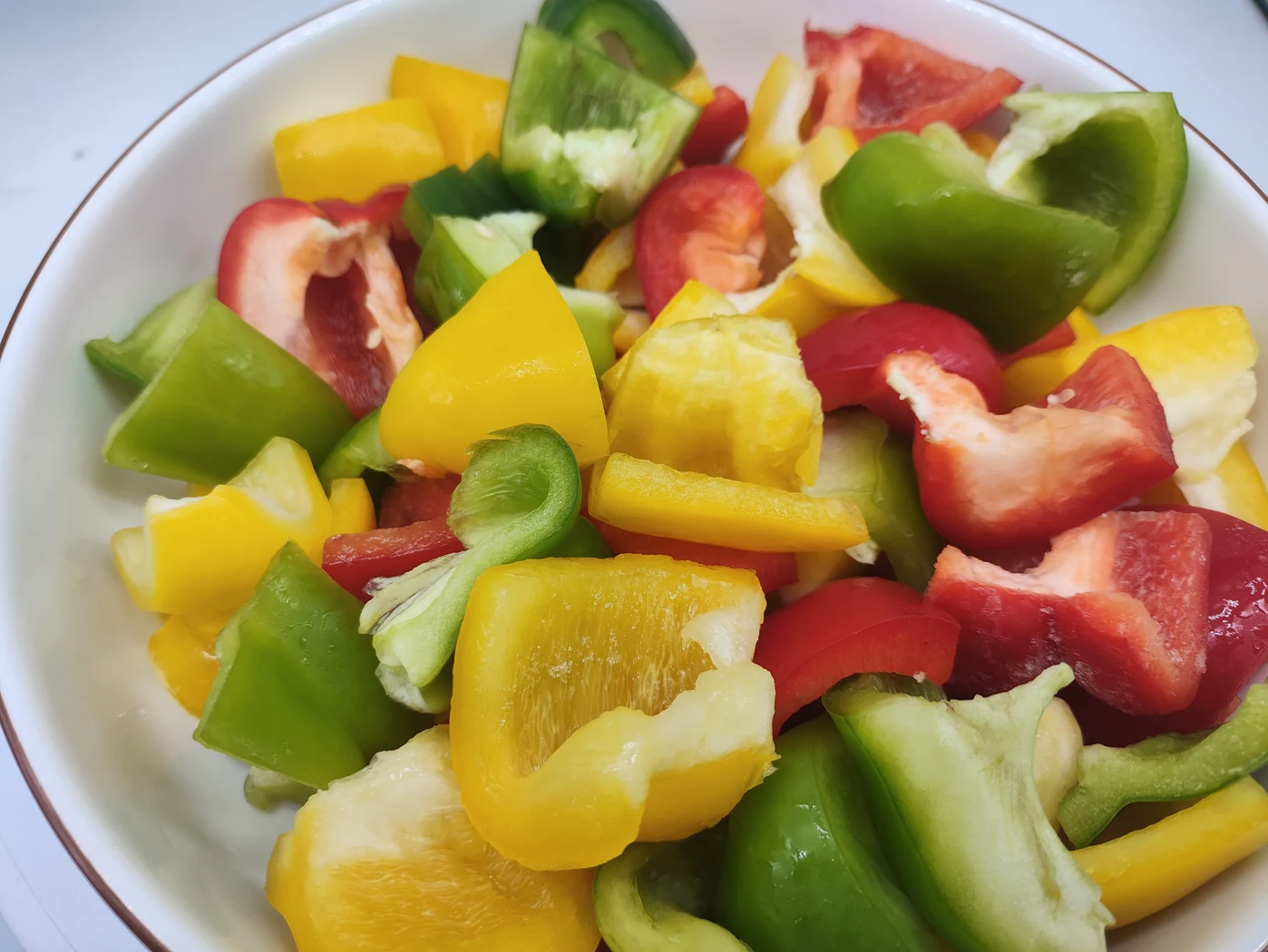
These fresh-looking pepper pieces illustrate irregular cut shapes. The image does not document frozen pepper cooking results.
Long strips can give clear pepper identity, but very long pieces may pull a larger portion of filling out of the tortilla when you bite. Shorter strips can remain recognisable while fitting a smaller wrap. Dice distribute through the filling and seasoning more evenly, although they give a different eating experience. Choose the cut for the carrier and portion, not simply because it cooks quickly.
Thickness matters alongside length. A thin piece can soften and colour differently from a thicker one in the same pan. A pack containing a broad size range may need more attention than an apparently uniform portion. Look at the cooked pieces you intend to serve rather than taking one browned strip as representative of the whole load.
The pepper forms include different cut options. For a home meal, compare the same choices on a smaller scale: strips for a visible bite, pieces for distribution, or a combination when the recipe calls for it. Keep the cut steady when you test pan load, otherwise two changed variables make it harder to see which adjustment helped. The separate guide to raw and roasted frozen peppers for sauces covers a different preparation task; a sauce result should not be taken as evidence for bite in a wrap.
| Cut | Useful role | Check in the tortilla |
|---|---|---|
| Long strips | Recognisable pepper bite | Whether a strip pulls filling out |
| Shorter strips | Visible pepper in a smaller wrap | Comfortable bite and distribution |
| Dice | Pieces distributed through filling | Softness and balance with other components |
Give released water somewhere to evaporate
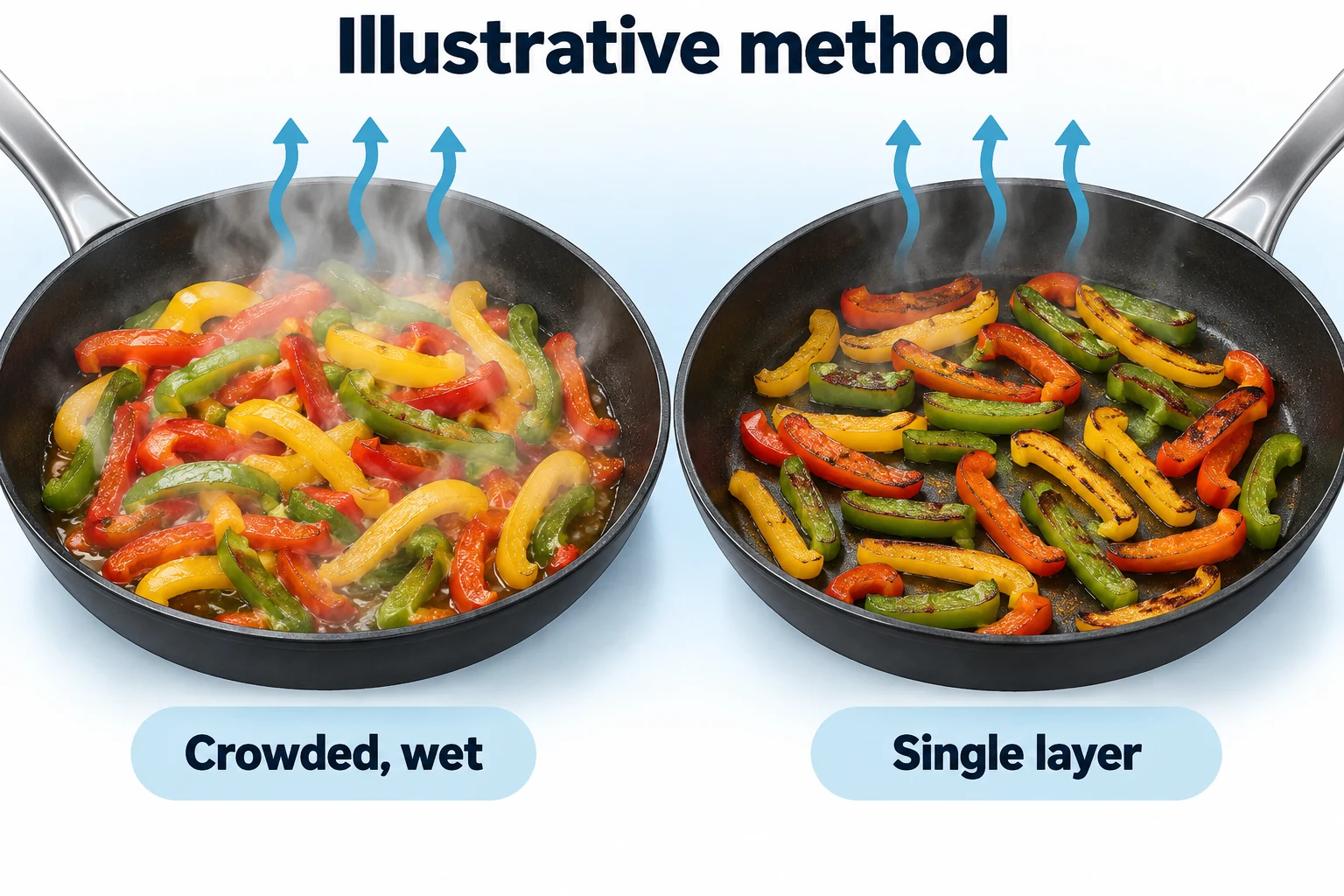
Illustrative method: the same pan and pepper type are shown with different batch loads, contrasting a crowded wet pile with a single layer. This is not an equal-load test.
Swipe to view the diagram on smaller screens.
Once frozen peppers warm, liquid may collect around the pieces. Watch the actual pan rather than assuming that a loud initial sizzle means the whole load will remain in good contact with a dry surface. If the peppers form a deep pile in liquid, stirring may redistribute them without creating enough open contact area for the finish you want.
Reduce the load or work in batches when the pan cannot accommodate the peppers comfortably. A larger pan can help if its usable heated area fits your hob; an oversized pan with weak heating around the edges is not automatically better. Match the amount to the equipment and keep enough room to move the pieces without repeatedly turning everything into a compressed mound.
For a permitted preparation method, a separate vegetable-cooking stage can let you manage liquid before assembling the full filling. Drain only where the recipe and product directions allow, and remember that discarding liquid changes what remains in the dish. Do not pour away liquid from a raw-animal-food mixture and then treat the peppers as though they have completed their cooking. Plain vegetable preparation and mixed raw-meat cooking are different situations.
Build colour after the pan has recovered
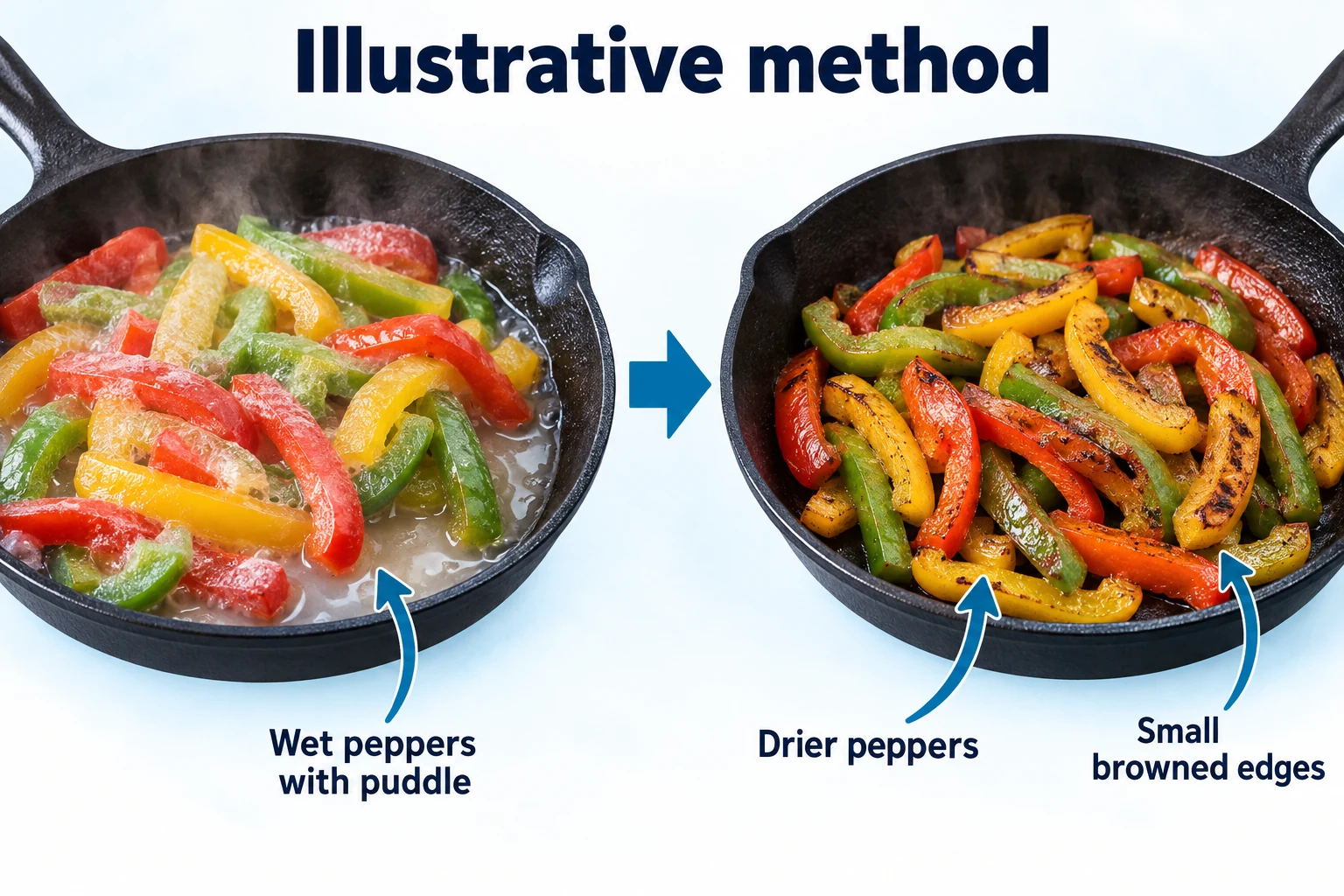
Illustrative method: observe liquid receding before looking for browned edges; the stages do not establish a universal cooking time.
Swipe to view the diagram on smaller screens.
When excess surface liquid has receded, assess whether the peppers can sit against the pan for a little contact rather than being stirred constantly. Observe small browned areas and the aroma of the filling. A controlled pause in movement can produce a different surface from continual tossing, but the right interval depends on the pan, load and actual product.
Use the heat and fat specified by a suitable recipe, then adjust your handling to the surface you see. Turning the hob to its highest setting is not a universal solution. The oil, seasoning and pepper can scorch before the remaining pieces reach a pleasant texture. If the pan smells burnt or isolated pieces blacken while others sit wet, review load and contact instead of simply adding more heat.
Do not expect oil to remove liquid. A wet layer can remain wet after another splash, while the dish becomes greasy. If the peppers have reached their required cooking endpoint and are already pleasant to eat, modest colour may be enough. Chasing a pronounced char can sacrifice their shape without improving the tortilla filling. Decide how much browned flavour the rest of the meal actually needs.
Keep onions and protein on their own schedule
Onions, peppers and protein need not share one starting moment. Thin onion slices and thick pepper strips can change at different rates; raw meat introduces separate cooking requirements. Choose a recipe that makes those stages clear. Prepare components separately when that helps each reach its intended endpoint, then combine them without overlooking any ingredient’s safety requirements.
If you add a previously cooked protein, follow its appropriate reheating instructions. It is not equivalent to raw chicken or steak, and neither should inherit a cooking time meant for the other. Keep raw-food utensils and surfaces separate from cooked filling. A colourful pepper mixture does not establish that the animal-food component is safely cooked. See FDA safe food handling guidance [2] for clean separation and appropriate cooking precautions.
For a meat-free filling, tofu, beans or mushrooms also change the liquid and texture in the pan. A wet tofu preparation can undo the drier pepper finish; a sauced bean mixture can make the wrap much wetter. Add each component deliberately and assess the combined bite. Even when every ingredient tastes good alone, the mixture can need a smaller portion or less added sauce to work inside a tortilla.
Judge the filling inside a tortilla
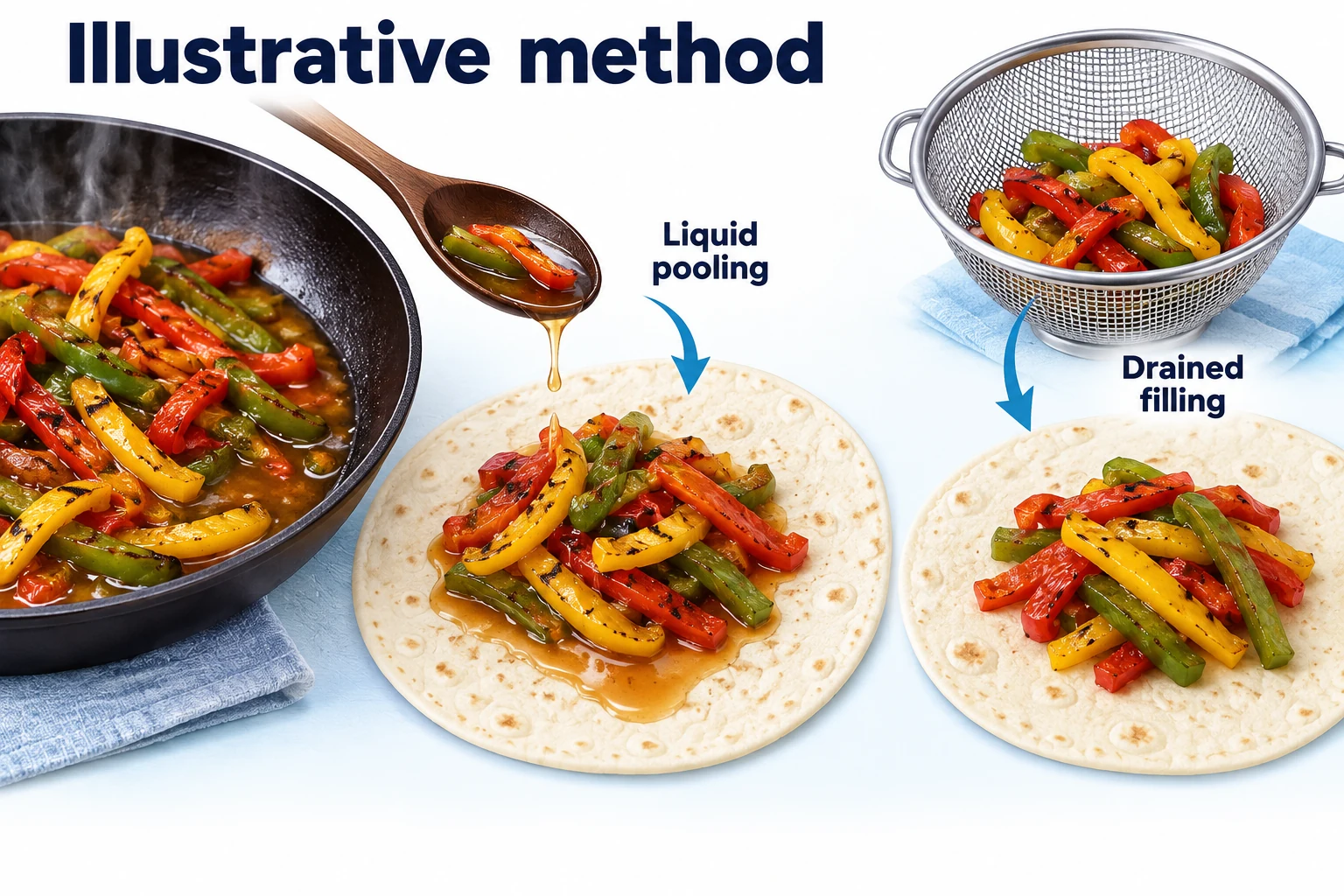
Illustrative serving check: compare visible liquid carried into the tortilla with a drained filling portion; it is not a measured sensory test.
Swipe to view the diagram on smaller screens.
Spoon a normal portion onto the tortilla and look below it. Free liquid that was unobtrusive in the pan may pool on the carrier. Fold it and take a bite once the food is ready to serve. Notice whether strips pull out, whether the tortilla stays comfortable to hold, and whether you get pepper and the other components together.
Add toppings in the amounts you intend to use. Salsa, sour cream and other sauces can make an acceptable pepper filling too wet if piled on generously. A little acidity can brighten flavour without needing a deep liquid layer. Taste the assembled fajita before seasoning the pepper pan again, especially when the protein or toppings already contribute salt and spice.
Consider the real interval between assembly and eating. A fajita served immediately and a filled wrap carried to another location are different texture tasks. Check the food at the relevant point while maintaining appropriate handling. If the carrier becomes wet, assess the filling liquid, topping quantity and serving portion separately. A drier pepper alone cannot compensate for every sauce added afterwards.
Compare a second batch without changing everything
Choose one adjustment for the next small batch. To assess crowding, use the same peppers and starting state while changing the pan load. To assess cut, keep the recipe and cooking method steady while comparing comfortably sized strips and pieces. Changing thawing, cut, oil, seasoning and heat together may produce a better dinner, but it will not reveal which change helped.
Record a few useful observations: visible liquid during cooking, degree and distribution of browning, softness of representative pieces, and moisture in the assembled tortilla. Photographing the pan can help remember the load, but colour in a picture does not capture chewing comfort or safety. Taste the properly prepared food and describe the bite in concrete terms.
For repeat menu work, carry the chosen form and preparation into a short ingredient brief. The specifications and sampling guidance can help commercial readers connect that brief to a sample. A conclusion such as “shorter strips suit this wrap” is more useful than promising that all frozen peppers stay crisp or that one cooking time covers every pack.
Troubleshoot soft, wet or scorched peppers
Softness alone is not necessarily a failure. Ask whether the pieces still provide a pleasant filling and can be eaten without becoming stringy or collapsing into an unwanted paste. If softness is excessive, review the starting product, cut and total cooking sequence. Keeping peppers in the pan while another component finishes can extend their cooking beyond the result you wanted.
For wet filling, identify where liquid enters. Surface frost, pepper juice, onions, marinade and toppings can all contribute. Cook the components appropriately and assess the pan load before changing the ingredient proportions. A slotted serving spoon may reduce free liquid on the tortilla, but it cannot restore a strip that has already broken down. The correction should match the observed problem.
For scorching, inspect the pan surface and seasoning. A dark powder stuck to the pan may not be pepper char, and a bitter patch can overwhelm the rest of a mild filling. Clean away a burnt residue before another batch rather than treating it as flavour. Reduce crowding, improve contact and use the recipe’s heat sensibly. The aim is a cooked, balanced filling with comfortable pieces, not the maximum possible blackening.
