


On this page
Yes, frozen sweet corn kernels can be folded into cornbread. They add recognizable corn pieces and little bursts of sweetness, while cornmeal remains the ingredient that gives the loaf its characteristic crumb. In many ordinary batters, the easiest starting point is to thaw the kernels in the refrigerator, drain off free liquid, and fold them in near the end of mixing. Some tested formulas call for kernels straight from the freezer, so a recipe’s specific instruction takes priority. Whichever route you choose, keep the base batter constant when judging the effect of the kernels.
The water arriving with the kernels and their position in the baked slice determine whether the addition suits your batter. Too much free liquid can leave a wet pocket or a locally dense crumb; too many kernels can weigh down a batter that was designed as a plain cornbread. Start with the amount in a tested recipe, make one small trial, and evaluate the center after the bread has cooled enough to slice. There is no universal handful that fits every skillet, muffin tin and cornmeal-to-flour ratio.
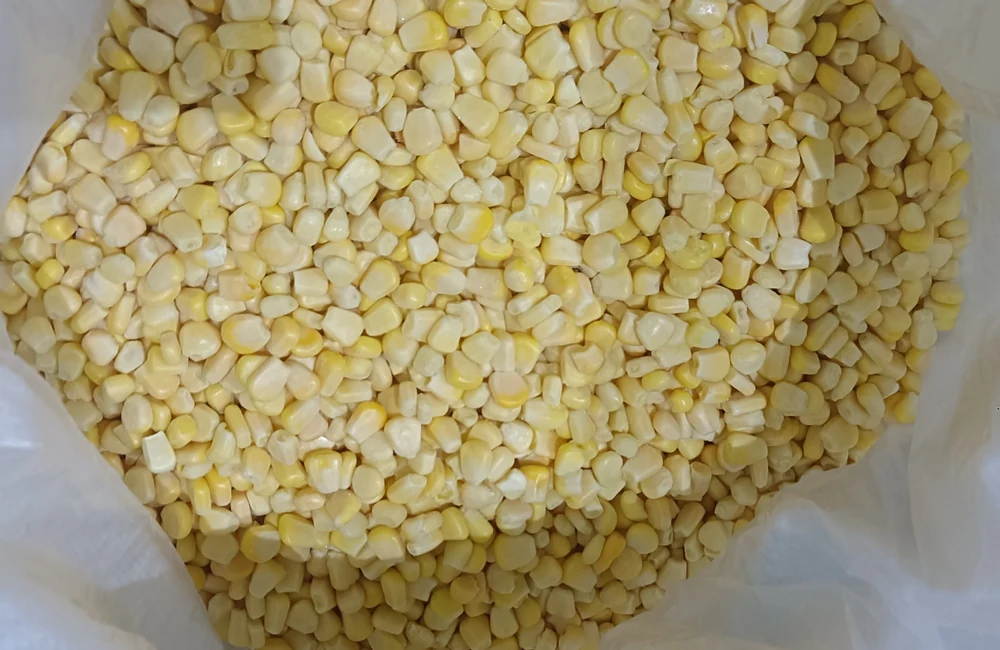
Whole sweet-corn kernels form a discrete inclusion in cornbread batter.
Yes: frozen kernels can go into cornbread
Use plain frozen sweet corn kernels rather than assuming canned, creamed, cob sections and frozen kernels are interchangeable. Canned kernels may carry packing liquid; creamed corn changes the batter’s liquid and starch balance; a cob cannot simply be stirred in. Frozen kernels can be measured, thawed if the formula asks for it, and folded in as discrete pieces. King Arthur Baking [1] describes a cornbread variation with frozen, thawed kernels, demonstrating the simple inclusion route. Other formulas use kernels still frozen, but their remaining ingredients and bake conditions may be built around that state.
Do not mistake a kernel inclusion for a substitute for the dry cornmeal. The meal hydrates and helps structure the loaf; individual sweet-corn pieces mostly supply texture, moisture and flavor. A batter that is already very moist may require a smaller inclusion than a firmer one. If you are changing an established recipe, record the kernel weight as an addition and note whether the kernels were thawed, drained or still icy. That single detail can explain a surprising change in the baked center.
Read the bag for preparation instructions and intended use. Frozen produce is not automatically ready to eat just because it has been blanched or frozen. Cornbread is baked, but the center must reach a fully baked condition under the selected recipe; do not use surface color alone as proof. A clean skewer inserted in a kernel-free portion of the crumb can help distinguish raw batter from a moist whole kernel, while a slice after brief cooling shows the actual crumb more clearly than a hot cut straight from the pan.
Choose thawed and drained or directly frozen kernels
Thawed and drained kernels are the easiest route when you are adapting a plain cornbread formula. Let them thaw under refrigeration, then set them in a strainer. Liquid that runs off the kernels is not part of the formula unless the recipe explicitly includes it. Pat very wet kernels lightly if necessary; avoid crushing them. They can then be distributed into the batter without cold clusters that delay local baking. The same approach is useful for muffins, where a small portion has little room to absorb extra free water.
Directly frozen kernels can also work when a recipe was designed for them. They enter the batter cold and may create a local cold spot, especially when clumped or used heavily. Break apart large frozen clusters before folding. The batter should not sit for a long time while the kernels thaw and leak water into a single part of the bowl. Mix and bake according to that formula’s directions, and check the center rather than applying the bake time from a different recipe. This is a formula-dependent choice, not a claim that frozen is always better or worse.
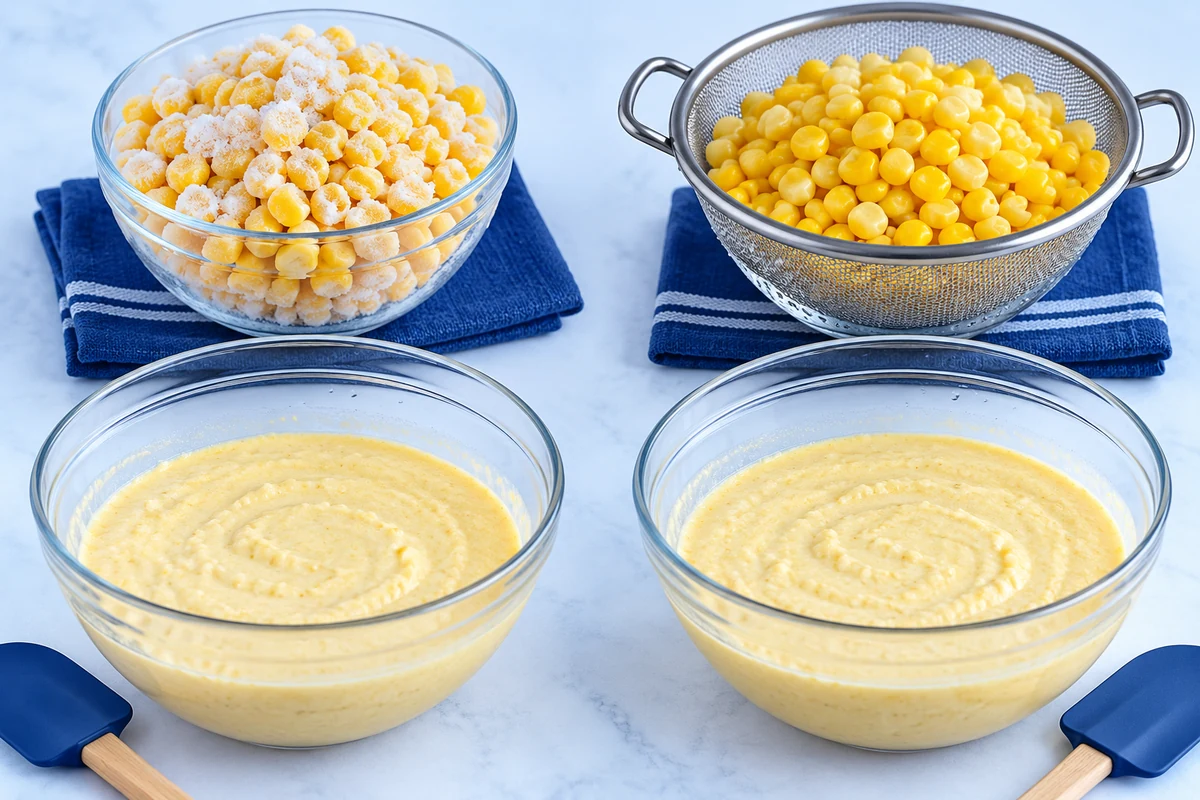
Conceptual preparation comparison; use one batter formula when testing.
If a bag contains considerable ice or loose snow, that is a different condition from clean separated kernels. Do not pour loose ice into a batter just to preserve the nominal frozen weight. Weigh or measure the edible kernel portion consistently, note what was discarded, and trial that exact handling next time. If you use a commercial frozen product, identify whether the quoted net weight includes a surface glaze or frost condition that matters to your recipe. Ask for the product specification rather than assuming every bag behaves identically.
What extra liquid does to the crumb
Cornbread batter is a balance of dry meal, flour or other dry ingredients, fat, eggs and liquid. Whole kernels are not evenly distributed water. During baking, moisture leaves the kernel surface and moves into the nearby crumb. A moderate number of drained kernels can produce pleasant juicy spots; a pooled addition or dense kernel cluster can leave a glossy, under-set pocket that looks very different from the surrounding slice. That is why judging only the batter’s surface thickness is insufficient.
If the center is wet, do not immediately blame the frozen ingredient. A deep pan, a too-short bake, an inaccurate oven setting, excessive base liquid or a heavy addition can produce similar symptoms. Compare a plain control loaf with an otherwise identical kernel loaf. If both are wet, the base recipe or bake is likely the first issue. If only the kernel loaf has wet spots around clusters, reduce free liquid, lower the inclusion amount or improve distribution before altering the entire formula.
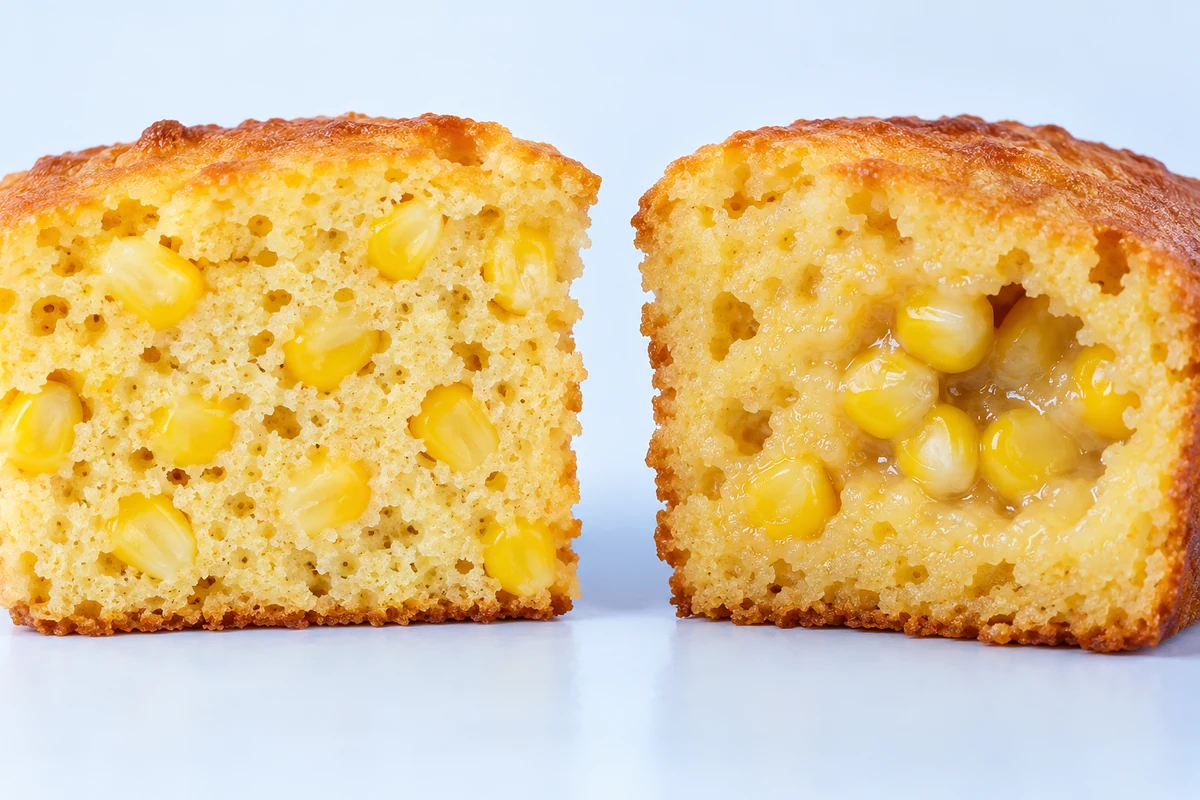
Conceptual cutaway of an uneven wet spot near a kernel cluster.
Cooling changes the evaluation too. A hot slice releases steam and may seem softer than the same loaf after it rests. Follow the recipe’s recommended cooling interval, then cut through the center. Look for a set crumb around the kernels, not a dry kernel. A few moist spots are part of the appeal of whole corn. A streak of raw batter or a heavy gum line is a signal to adjust the formula or bake.
A controlled batter and slice comparison
To find a good level for your own recipe, make a small control batch without kernels and a second batch with a measured addition of thawed, drained kernels. Keep cornmeal, flour, liquid, egg, fat, mixing time, pan size and oven setting the same. If you want to compare frozen versus thawed, make a third batch with the same edible kernel weight but add it still frozen. Do not compare a frozen-heavy muffin against a plain skillet loaf; the difference in geometry would hide the ingredient effect.
Before baking, note whether the kernels are scattered through the batter or sinking as you portion it. After baking and comparable cooling, cut the same position in each loaf or muffin. Compare center set, kernel distribution, wet halos, slice strength and the bite after the bread reaches serving temperature. A photograph of the cross section is more useful than a general “good” or “bad” note because it shows where the difference occurred. Repeat the promising route once before writing it into a menu specification.
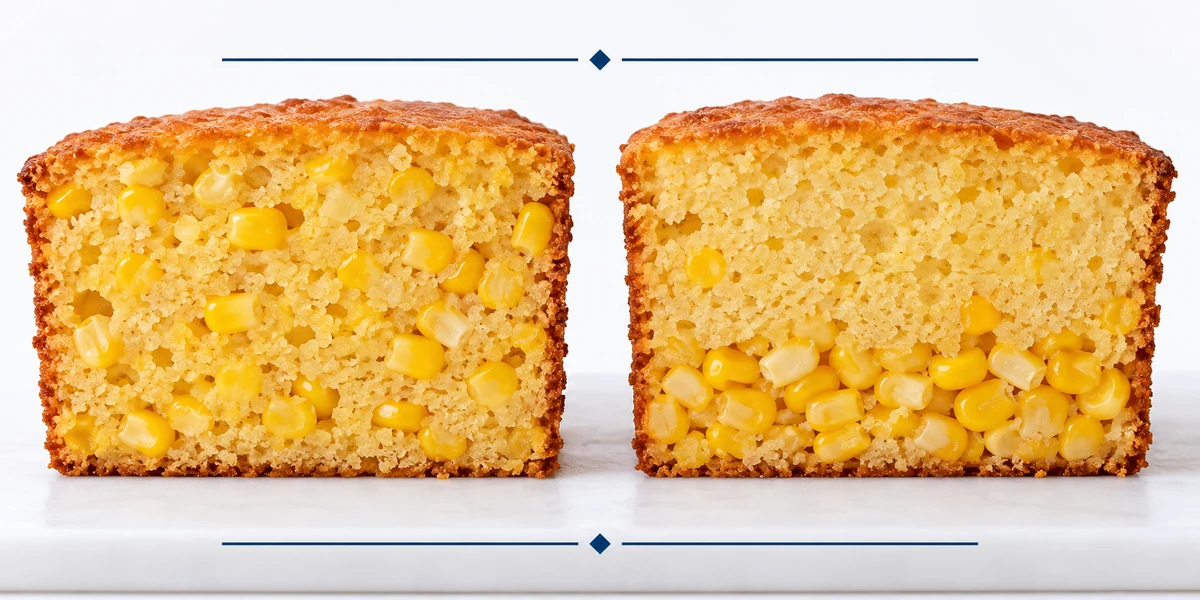
Conceptual slice comparison for a controlled batter trial.
For a foodservice pan or packaged baked item, the criterion may differ from a home skillet. A slice must hold together during service, and its kernel pattern should be consistent across the tray rather than attractive only in the center. Check edge, center and corner pieces. If the corn sinks mostly to the bottom, a somewhat thicker batter, a lower inclusion or a different kernel size may help. Test those separately, because changing all three at once gives no clear answer.
How to fold kernels into different formulas
Mix the dry and wet ingredients as the selected cornbread formula directs, then fold the kernels in with minimal extra stirring. Many quick breads lose their tender texture when the batter is worked repeatedly. If you want an even distribution in muffins, portion by stirring lightly between scoops rather than letting all the kernels settle in the bowl while the last cups are filled. In a skillet loaf, spread the batter gently to the corners and check that kernels are not piled in one spot.
Thick buttermilk batters and looser spoon-bread styles give different outcomes. A thick batter may suspend kernels well but need enough baking time in the center. A loose batter may let them settle or make a softer, custardy result by design. Do not judge spoon bread against the crumb expectations of a firm cornbread. If you use cheese, chopped pepper or other inclusions, their mass and water also matter. First establish a workable corn-only version, then add the extra ingredients one at a time.
Whole-kernel size changes the eating experience. Small uniform kernels may scatter more evenly and produce a subtle bite. Large or broken kernels can form obvious pockets, especially in a small muffin. Sweetness is partly intrinsic to the corn and partly the recipe’s sugar level; a sweet corn sample that tastes good by itself does not determine the final bread’s sweetness. The adjacent XMG guide to sweetness and texture in frozen sweet corn is useful for ingredient assessment; this article focuses on baked inclusion behavior.
Common failures and fixes
There is a wet patch around the kernels
Check whether liquid from thawing went into the batter, whether a large clump of kernels landed in that patch, and whether the center baked fully. Drain more consistently, distribute the addition, and repeat at the same recipe weight. If the plain control also has a wet center, adjust the bake or base formula first. Adding dry meal at random to rescue one batch may make the entire bread gritty while the actual issue remains.
The kernels all sank to the bottom
Review the batter’s thickness and how long it waited before baking. Use a smaller inclusion or a recipe formulated for whole corn if needed. Break frozen clusters and fold evenly. A flour dusting is sometimes suggested, but its effect depends on the recipe and it may not compensate for a very loose batter. A small measured trial is faster than assuming a general tip will solve every formula.
The bread is sweet enough but the corn is barely noticeable
Check the proportion and size of actual whole kernels rather than adding extra sugar. Frozen sweet corn does not guarantee a particular flavor intensity in every crop or recipe. More kernels bring more moisture and weight, so increase inclusion gradually and check the crumb at each step. If you want a smooth corn flavor throughout instead of discrete pieces, that is a different formula using puree or creamed corn and needs its own liquid balance.
What to specify for repeatable corn inclusions
For regular production, a request for “frozen corn” leaves too much undefined. Confirm the sweet-corn kernel form, expected whole-to-broken appearance, pack, and the preparation direction on the supplied product. The ideal sample is then baked in the intended recipe at the intended inclusion level. A sample cannot certify that every possible cornbread formula will bake the same way. It can show whether this ingredient lot and the actual batter are a workable match.
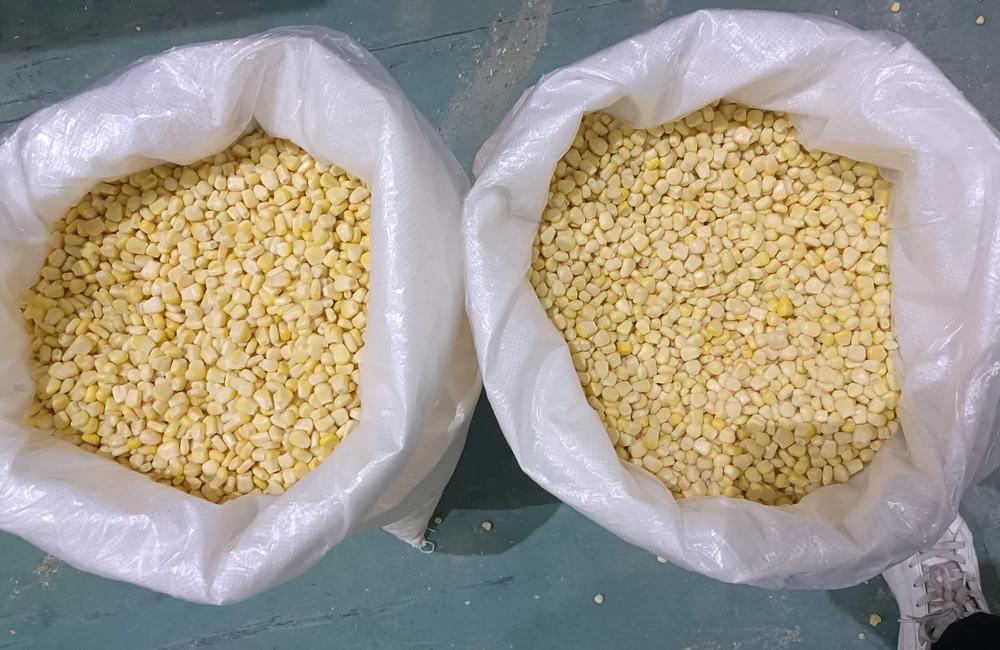
Check whole and broken kernels in a representative ingredient sample before the baking trial.
We would ask how the kernels will be used before recommending a sample: a high-inclusion muffin, a thin skillet cornbread and a firm slice for service will not have identical texture targets. Record the kernel weight, drained state, pan depth and acceptable wet spots in the trial. That gives a more useful purchase brief than a vague request for a sweeter grade. Where the product form is the primary uncertainty, our specification and sampling process provides a way to confirm the requested ingredient before a larger order.
We supply frozen sweet-corn kernels through our partner network and can match the whole-kernel requirement, packing and representative sample to your baking application. We coordinate specification comments and the sample approval reference so your purchasing team can order against the ingredient you assessed. Send the cornbread or muffin format, kernel requirement, pack, quantity and destination; we will review a suitable supply and sample option for your bake trial.
References
Recipe examples: King Arthur Baking’s cornbread variation [1] and Valerie’s Kitchen: Mexican cornbread with frozen kernels [2]. The two recipes use different batters, so their kernel handling is not a direct head-to-head result.
