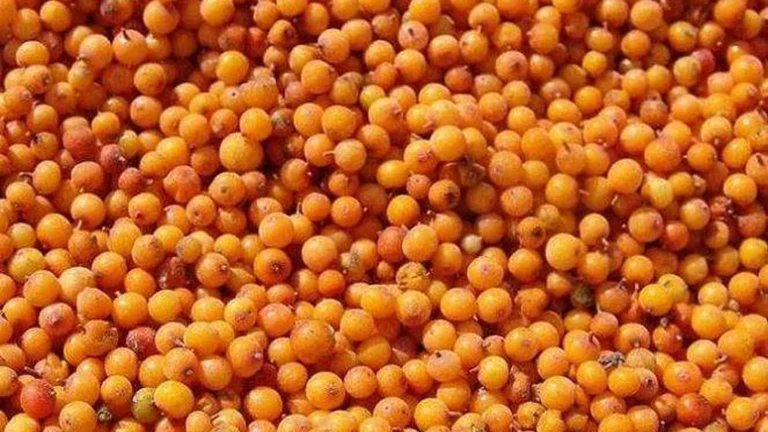
Product identity
Confirm common/botanical identity and any wild or cultivated direction relevant to the buyer's label.
CHINA-BASED B2B SUPPLY
We supply whole IQF sea buckthorn berries, puree, juice and concentrate for beverage, sauce, ingredient and foodservice programs. We confirm product identity, orange-color direction, acidity, stems and leaves, berry condition, concentration basis, pack and testing needs.
For a useful quotation: send the form or grade, application, quantity, pack, destination, document needs and timing.
STANDARDS & PROGRAMS
Tell us the standard, destination and customer requirement. We provide certification and production details with the product and quotation.


Certificates, registrations and organic documents are included with the quoted product and destination-market file.
Choose the form and declared size for your application. Each option below explains its use, specification focus, inspection points and purchasing context. We agree the final requirements against your sample and intended preparation.


| Declared form | Size | Within size | Off-size |
|---|---|---|---|
| Whole Berries | 6–10 mm diameter | At least 90.0% by mass within the declared size | Maximum 10.0% by mass |
| Puree | maximum 2 mm screen | At least 90.0% by mass within the declared size | Maximum 10.0% by mass |
| Juice | maximum 1 mm filtration screen | At least 90.0% by mass within the declared size | Maximum 10.0% by mass |
| Concentrate | 45–65 °Brix | At least 90.0% by mass within the declared size | Maximum 10.0% by mass |
no unit more than 20.0% below the lower limit or above the upper limit.
We coordinate sea buckthorn as whole frozen berries or separately specified frozen puree, juice and concentrate.

An inclined conveyor stands beside enclosed equipment inside the processing area.
We confirm berry skin integrity, seed treatment and the solids or reconstitution basis required by the sea buckthorn format.Explore the processing-flow library →
A roller conveyor leads towards an opening in a panelled processing enclosure.

Connected conveyor sections run beside stainless-steel covers, controls and pipework.

A white transfer belt rises between the surrounding processing equipment.

A long covered line extends across the processing hall beneath overhead pipework.
We assess sea buckthorn maturity, skin condition and incoming lot identity against the receiving process. Damaged fruit, residual leaves and foreign material are reviewed before whole-berry grading or the liquid ingredient specification is finalised.
We confirm washing and stalk and leaf removal, then agree whole-berry grading or the required pulp preparation. Puree screening, juice filtration and concentrate solids are specified separately, including seed treatment and the intended dilution basis.
We distinguish IQF sea buckthorn berries from puree, juice and concentrate frozen in sealed packaging. Frozen berry separation is reviewed separately from thawed phase separation, sediment and flow, with concentrate flavour assessed on the agreed reconstitution basis.
We review sea buckthorn release samples and solids results against the agreed thawing or reconstitution trial, linking approval to metal-detection controls, coded packs, required lot reports and the frozen shipment.
Whole Berries: Whole sea buckthorn berries suit further processing where the buyer manages extraction or crushing. Puree: Sea buckthorn puree suits blended sauces and beverages where dispersed fruit pulp is desired. Juice: Sea buckthorn juice suits liquid beverage blends where filtration and dosing behaviour are key. Concentrate: Sea buckthorn concentrate suits beverage formulations where the buyer plans dilution from concentrated fruit solids. Select the packing family, case weight and label for the chosen product form and purchasing channel.

Application — updates the recommendation below
Packing family — updates the image and case options above
Pack construction: Food-grade PE liner and export carton; plain bag, adhesive label or printed bag; barcode and customized carton marks.
Loading plan: Pallet loading, floor loading or food-grade tote format as stated in the confirmed purchase order.
Whole Berries: Review damaged berries, residual leaves and foreign material before a representative processing trial. Puree: Assess coarse residues, phase separation and texture after controlled thawing and mixing. Juice: Review sediment, liquid separation and flavour balance after the buyer's thawing procedure. Concentrate: Review soluble solids results, thawed flow and reconstituted flavour against the application reference. Common food-safety checks remain part of the agreed inspection plan; form-specific physical and cooking checks follow the selected sample.

Photograph supplied by XMG for buyer review. We confirm which facility, test scope and release record apply to the quoted product.


We confirm product, origin, process, certification scope, capacity and delivery timing before quotation.
We connect the confirmed form, size, tolerances, packing and release criteria to the purchase order.
Where required, we organize a representative sample and keep the approval reference with the order.
We coordinate the agreed COA, inspection and laboratory records for the identified production lot.
We confirm pack construction, label or artwork, carton marks, coding and loading basis.
Our commercial team keeps product, document, cold-chain and shipment milestones connected.
Our commercial team keeps the approved specification, release records, packing details and shipment file aligned from order confirmation through dispatch.
We use clear specifications, sample references and document checks to prepare an order. Use these blank worksheets to organize your requirements and the questions to discuss with us.
Check whether the company, facility, specification, report and proposed lot belong together before approval.
Track the specification, pack, artwork and document approvals needed for a proposed private-label SKU.
Use our published product and supply information to prepare your sourcing review.
Copy this prompt into an AI tool of your choice. Check its citations and confirm order details with us.
Send the form, application, acidity or concentration requirement, quantity, pack, destination, claims and tests. We will confirm the relevant route and evidence.
Build the document request your team actually needs. Select one or several items. Your choices will travel with the product inquiry.
The order file includes certificate, production, product, lot and destination-market documents.
Your qualification request is ready to carry into the inquiry.
Tell us the application, form or size, pack, quantity, destination and timing.
We provide the specification, sample plan, certification scope, packing and quotation basis for review.
Your written approvals and purchase order lock the production, document and shipment plan.