


On this page
Frozen mandarin segments can be tried in cake batter, but they are not an automatic one-for-one substitute for canned mandarins, orange juice or juice concentrate. The useful controls are the amount of free thaw liquid, the fruit mass entering the batter, the piece size and the texture of the segment membrane. Start with a small comparison in a recipe that already accommodates fruit inclusions.
For an unfamiliar product, a controlled thaw-and-drain trial makes the free liquid visible before mixing. A recipe specifically developed for fruit added frozen may use a different approach. Follow the ingredient’s preparation instructions and the recipe’s handling method, then inspect the cake after cooling as well as straight from the oven. There is no universal mandarin quantity or extra baking time that makes every batter succeed.
Quick answer: Yes, with a recipe trial. Define the prepared fruit weight, manage free juice and compare whole segments with smaller pieces if distribution matters. Canned-mandarin recipes do not establish the behaviour of frozen segments; judge the cooled crumb and membrane texture in your own cake.
Check which mandarin ingredient the recipe means
Read the ingredient description before making a substitution. Canned mandarins may be packed in juice or syrup, and recipes differ in whether they use that liquid. Frozen segments may be plain fruit, with different processing and membrane characteristics. Orange juice concentrate is another ingredient entirely: it supplies a measured liquid and concentrated flavour without whole segments.
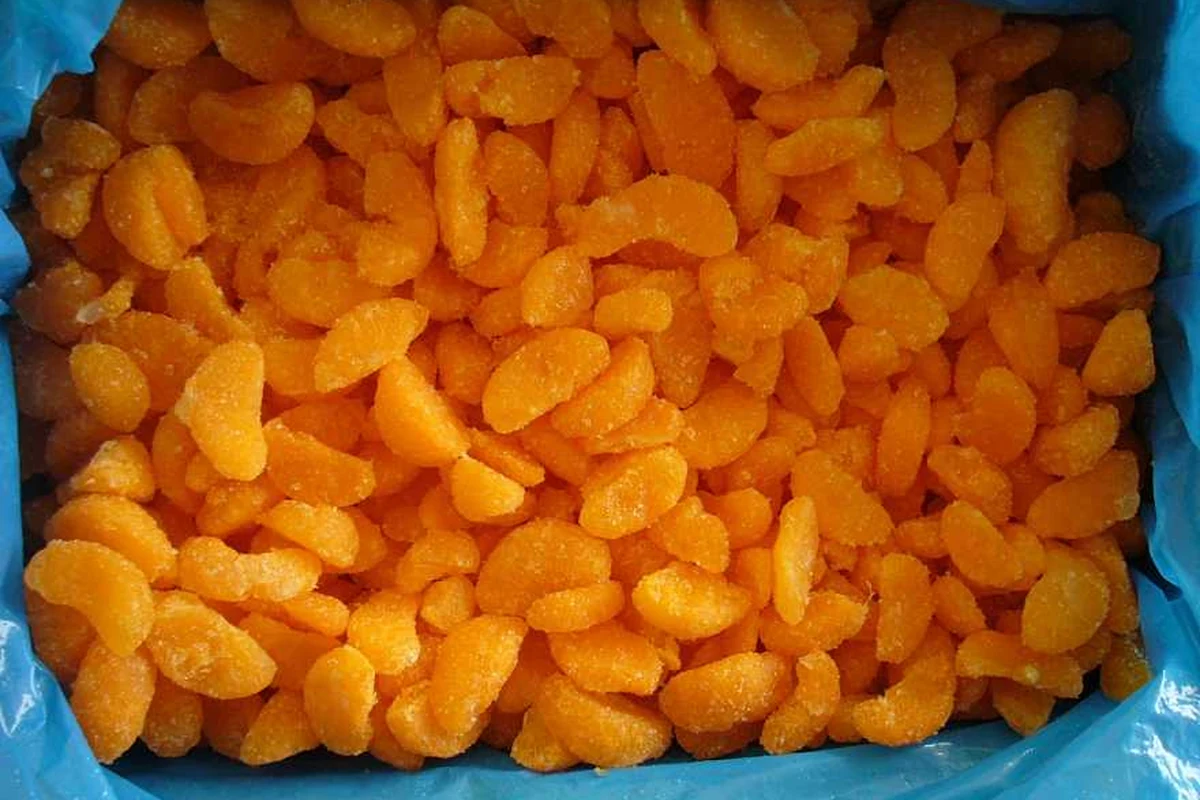
Many mandarin cake recipes use canned fruit. For example, Dole’s canned mandarin product page [1] suggests drained fruit as a cake application. That confirms a use for its specified canned ingredient, not a tested substitution using frozen segments. The difference matters before you decide whether to retain juice or how much fruit to add.
A King Arthur orange pound cake recipe [2] uses orange juice concentrate rather than mandarin pieces. Its measured liquid belongs to that formula. Adding frozen segments on top of such a recipe changes both the fruit form and the distribution of moisture; it is not simply another way to measure the same orange ingredient.
Choose a base recipe for the kind of cake you want. A substantial fruit loaf, a tender layer cake and an airy sponge make different demands on an inclusion. If the recipe has no fruit pieces at all, introducing mandarins is a reformulation trial. Make the change in a manageable test rather than assuming that a successful canned-fruit cake proves every plain cake can accept the same addition.
Control free juice before changing the batter
Free juice is the liquid separate from the fruit after preparation. It is not all the water in the mandarin; the segments still contain water that can affect the batter during baking. Draining controls one visible contribution, but it does not turn the fruit into a dry ingredient. This distinction prevents a common overcorrection: assuming that a drained fruit addition cannot create a wetter area in the crumb.
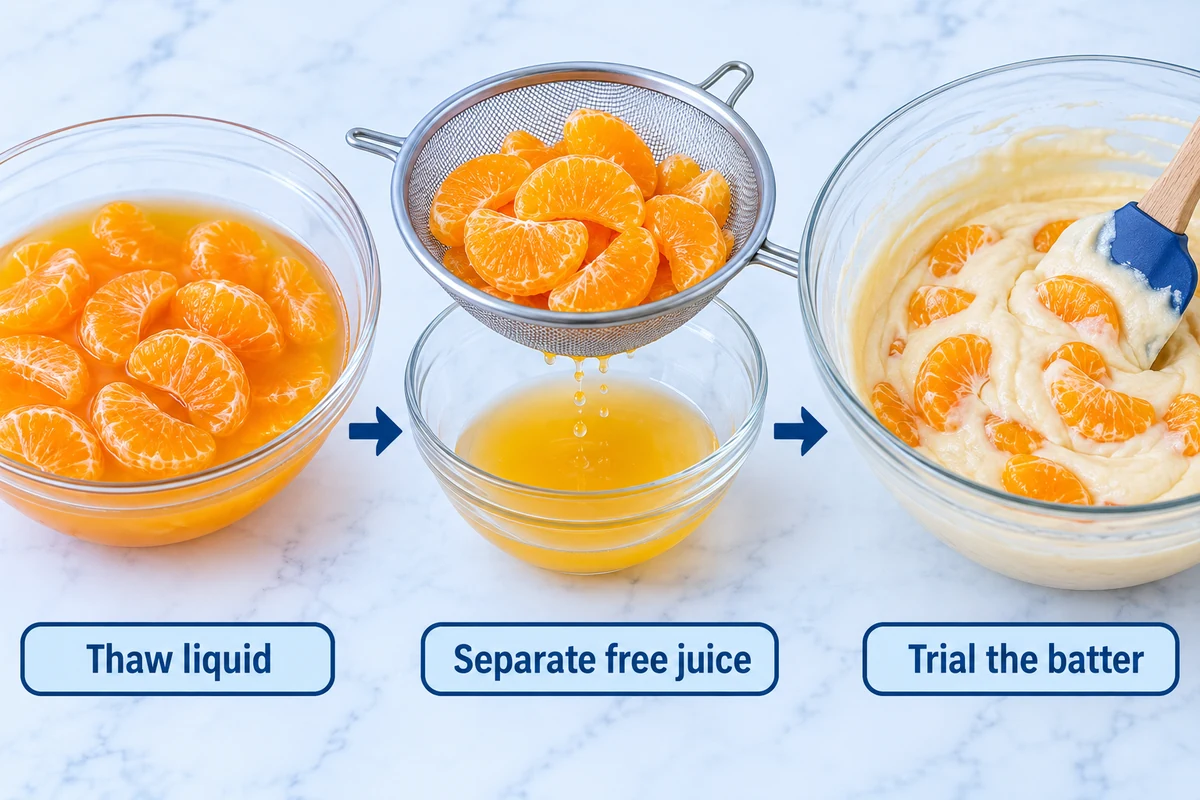
For a controlled thawed-fruit comparison, use the pack’s handling instructions, then collect the liquid that drains away without squeezing the segments. Keep the draining arrangement and observation point consistent. Weigh the prepared fruit you actually fold into the batter. If one trial uses a frozen portion weight and another uses a drained weight, their fruit loading may differ even when the written numbers look identical.
Do not return all the collected juice automatically. A recipe designed for undrained canned fruit can include its packing liquid within the formula. That does not mean free juice from your frozen fruit should be added to a different batter. If you want to use the liquid, test it as a deliberate recipe ingredient and identify what other liquid or proportion changes are being made.
General freezing guidance helps explain why this issue arises. The University of Minnesota describes the softer structure of thawed produce [3] after ice formation alters plant tissue. It does not provide a fixed juice-release allowance for frozen mandarins. Measure the relevant prepared ingredient rather than assigning it a universal correction.
Gently removing surface liquid differs from aggressively pressing the fruit. Pressing can break juice vesicles and change the segment form. If intact pieces matter, retain a method that preserves them. Write down the method so the next comparison uses the same preparation instead of unintentionally testing both water management and fruit damage.
Whole segments and chopped pieces behave differently
Whole segments create recognisable orange pockets, but their size can make the fruit less evenly distributed among slices. Smaller pieces can spread through more of the crumb while losing the clean whole-segment appearance. Chopping also exposes more of the interior and can release additional liquid. Choose the form by the intended eating experience rather than treating smaller pieces as automatically better.
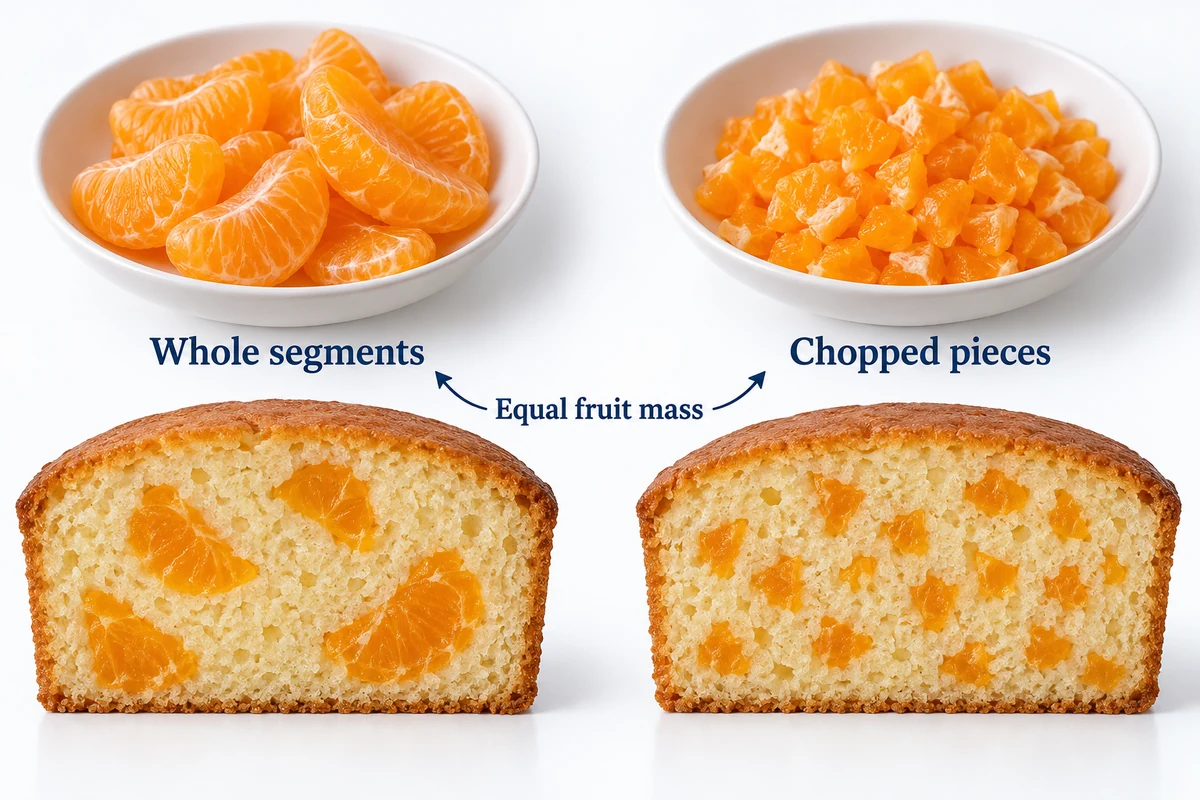
Compare the forms at equal prepared fruit mass in the same batter. Equal segment counts are not a fair basis if the segments vary in size. Keep the pan, batter amount and mixing method consistent. A denser distribution in one cake may otherwise come from a larger fruit addition, not from chopping itself.
Fold the prepared fruit gently at the point specified by your recipe. Excessive mixing can damage segments and alter batter structure. If the fruit breaks up during mixing, note that the intended whole-segment treatment became a mixed whole-and-broken treatment. The final slice reflects the form that actually entered the oven.
Flour dusting sometimes appears in fruit-cake advice, but it is not a guarantee against sinking or wet pockets. It does not remove an arbitrary pool of thaw juice and does not compensate for every weak batter. If a recipe uses it, follow that recipe and inspect the result. Do not keep adding flour around the fruit as a substitute for understanding the ingredient and batter balance.
A smaller inclusion can also become hard to recognise after baking. If the cake is meant to display orange pieces when sliced, inspect several slices, not only the best-looking one. If the aim is a more even fruit note throughout, a less dramatic visual inclusion may be acceptable. The desired product decides the useful compromise.
Membrane texture deserves its own check
A mandarin segment includes juice vesicles and a surrounding membrane. The membrane can remain noticeable after the pulp softens. Its texture depends on the actual ingredient and processing, so avoid assuming that frozen segments have the same eating character as a canned product you already know.
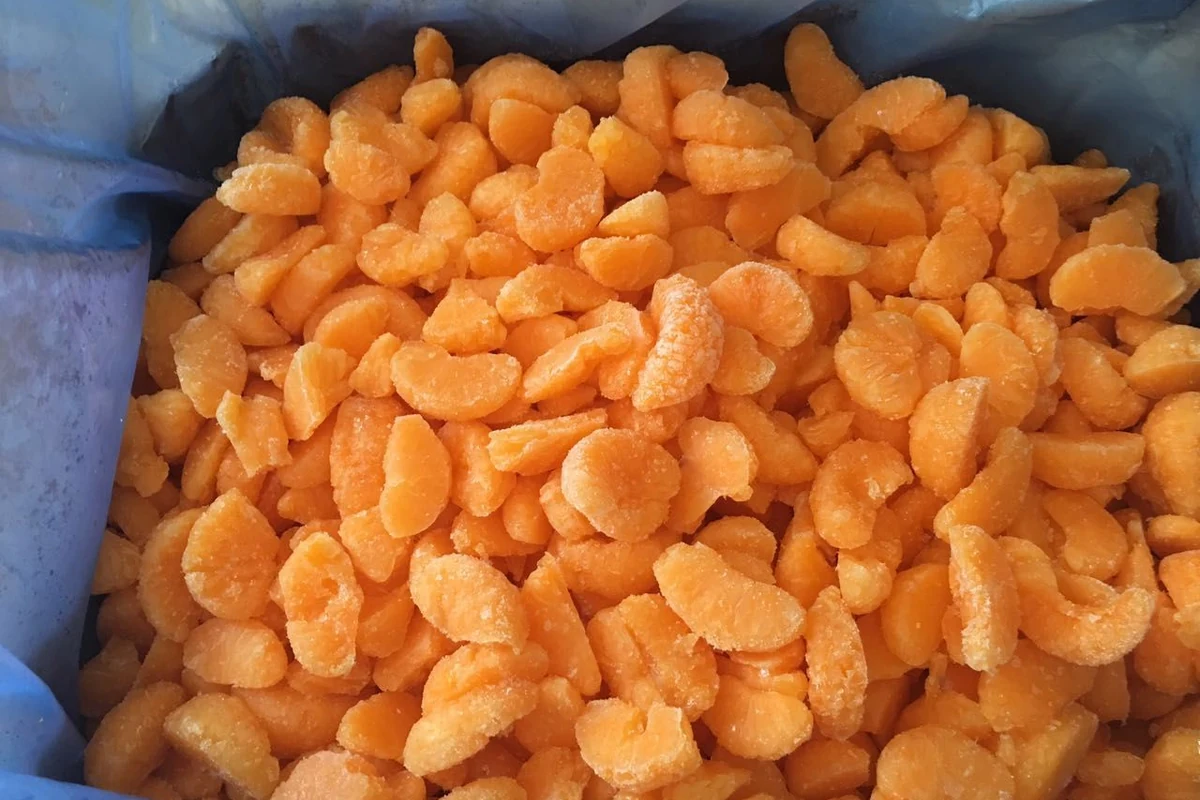
Look at the fruit before mixing. Is the segment largely intact? Are there obvious membranes or loose pieces? Record the form rather than trying to infer the complete processing method from its appearance. A pack or supplier description is the appropriate source for stated processing, while the trial tells you how that particular material feels in the cake.
Assess a cooled slice by taking a bite through both fruit and surrounding crumb. A soft cake can make a chewy membrane more conspicuous than it would be in a fruit cup. Chopping may reduce the length of the membrane encountered in one bite, but it does not necessarily remove it. If membrane feel is unacceptable, consider another confirmed ingredient form instead of assuming a longer bake will eliminate it.
This is a different application from a chilled dairy product. Our guide to mandarin segments in yogurt discusses membrane feel and juice in that matrix. A cake adds heat, setting batter and cooling, so its acceptance trial must remain separate.
Run a small cake comparison with one variable
Begin with a known base cake and a defined question. If the first question is whether whole or chopped fruit gives a better slice, keep juice handling the same in both. If the first question is whether retained liquid causes a problem, keep the fruit form fixed. Combining several changes can produce an appealing cake without explaining how to reproduce it.
A practical sequence is to prepare the fruit consistently, record its actual mass, divide the same batter into comparable portions, introduce the planned fruit treatment, and bake according to the base recipe while checking doneness. Keep the test small enough that an unsuitable result does not commit an entire event or production run.
| Comparison | Hold constant | Inspect after cooling |
|---|---|---|
| Whole versus chopped | Prepared fruit mass, free-juice handling, batter and pan | Distribution, membrane feel and recognisable pieces |
| Different juice handling | Fruit form, fruit mass and batter formula | Local wet areas and overall crumb |
| Different fruit loading | Preparation, cut and other ingredients | Fruit-to-crumb balance and slice integrity |
The table describes proposed comparisons, not completed XMG Food tests. Record the batter and fruit inputs, bake conditions and actual observations together. Do not assign an acceptance result to a treatment that has not been tried. A photograph of an attractive cake is not evidence that an unfamiliar frozen mandarin product will reproduce it.
Adding frozen fruit can change the thermal starting condition. The King Arthur discussion of frozen fruit in baking [4] identifies recipe and cooking-time considerations. It does not supply one extra time for every cake. Follow reliable doneness guidance for the base recipe and observe the actual cake rather than adopting a fixed extension from another fruit or pan.
Use the same observation point for both trials. A cake inspected warm and another inspected after cooling do not provide equivalent texture evidence. Where a recipe includes a cooling sequence, preserve it. Keep a plain control when you need to distinguish a fruit-related defect from a problem already present in the base cake.
Inspect the cooled slice as well as the warm cake
The warm cake offers information about the bake, but the cooled slice is closer to the way many cakes are served. A warm fruit pocket can feel exceptionally soft, and cutting too early can damage the surrounding crumb. Wait for the recipe’s intended cooling stage before deciding whether the finished structure meets your aim.
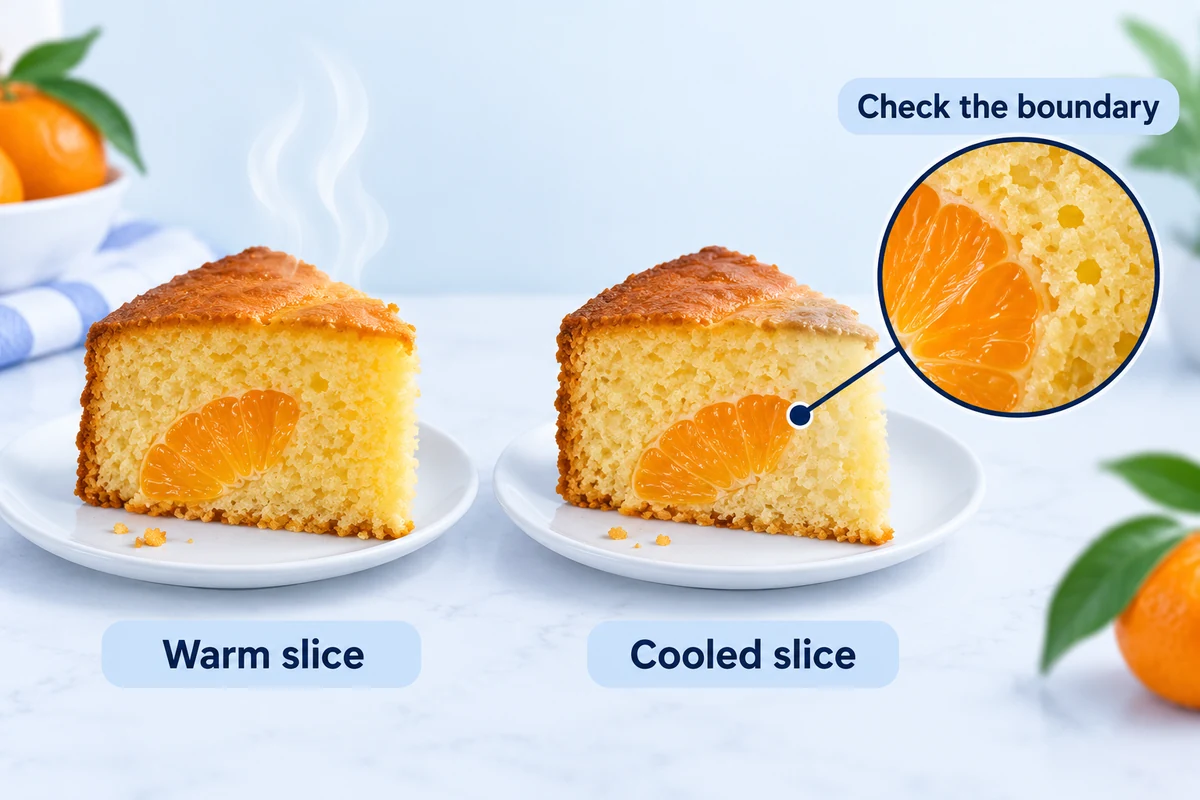
Inspect more than the outside colour. Cut through a fruit-rich area and a relatively plain area, then compare them. Note whether the wetness is local around a segment or widespread through the crumb. Widespread softness can involve the base formula or bake; a local pocket focuses attention on the fruit loading, size and free-liquid handling. These are starting points for investigation, not certain diagnoses.
Check several slices for fruit distribution and membrane feel. A large segment near one edge may create a striking photograph while leaving other portions almost fruit-free. Record where pieces sit and whether the slices hold together during normal serving. If the cake will be held before service, assess it under the intended handling conditions as well.
Do not taste raw cake batter to make these decisions. The FDA’s flour-safety guidance [5] explains why flour and raw eggs require proper cooking. Follow the recipe’s baking and safe-handling instructions. The appearance of a cooked cake also does not establish a universal storage life. Frosting, filling, packaging and handling change the relevant storage decision.
Adjust the next bake from the pattern you see
If whole segments distribute poorly but the crumb is sound, a smaller cut or lower inclusion size may be the next useful variable. If there are wet pockets, review free juice and fruit loading before changing several dry ingredients. If the entire cake is under-set, first confirm that the base formula, pan and baking method were followed.
Where membrane texture is the main problem, changing the bake time alone may damage the cake without solving the fruit texture. Compare a confirmed alternative fruit form or another recipe style. A fruit sauce served with a plain cake may achieve the flavour aim when an inclusion does not produce the desired slice.
At XMG Food, we connect product form with the intended application when reviewing a requirement. A cake trial needs to identify prepared fruit mass, segment or cut form and the actual eating result. Our specification and sampling page explains why those details belong with the ingredient sample rather than a broad product name.
Keep the outcome modest and useful: this frozen mandarin ingredient worked, or did not work, in this recipe under the recorded preparation. That gives you a reproducible next step. It avoids turning canned-fruit inspiration, a single attractive slice or a guessed moisture correction into a promise for every cake batter.
Explore the product forms behind this application.
IQF Frozen Mandarin Oranges →