


On this page
A mandarin and a sweet orange are different citrus fruit groups, although their names and family relationship often blur the distinction. In practical terms, many mandarins peel and divide into eating segments more easily, while sweet oranges include familiar navel and Valencia types used for eating or juicing. Those are tendencies, not a test that identifies an unknown fruit from one photograph. Cultivar, ripeness, growing conditions and preparation change size, seeds, flavor, peel attachment and juice yield.
The useful question is what the fruit must do. For a fruit cup, compare the integrity and membrane feel of prepared segments. For a beverage, compare actual juice recovered from equal usable fruit mass and taste the juice at the same dilution and temperature. A peeled frozen mandarin segment and a whole fresh sweet orange are not equivalent starting materials, so their output cannot be judged by a simple one-to-one fruit count. XMG’s current product range includes frozen mandarin orange segments; this article does not imply that we offer a sweet-orange product.

Actual peeled mandarin segments show the supplied flesh form, not a sweet orange.
Mandarin and sweet orange name different fruit groups
“Orange” is sometimes used as a broad everyday color or market word, which causes the confusion. Botanically and commercially, a sweet orange is usually named Citrus × sinensis. Mandarin is associated with Citrus reticulata and a wider mandarin-type group. Citrus ancestry is complex: sweet orange itself has mandarin and pomelo ancestry, and many named market fruits are hybrids. That family relationship does not make a Valencia sweet orange the same fruit as a satsuma or clementine in a recipe.
Names on a carton can also be uneven. “Mandarin orange,” “tangerine,” “clementine,” and “satsuma” are not always used with equal precision in retail speech. If identity matters for an ingredient specification, request the named cultivar or variety, fruit form and process rather than relying on the generic word “orange.” For a kitchen purchase, look at the actual fruit and sample it. An easy-peel fruit may be a mandarin type, but easy peeling alone is not a definitive botanical certificate.
A sweet orange label can hide meaningful variety differences too. A navel orange intended for fresh eating and a Valencia selected for juice are both sweet oranges, yet a cook may experience different seed, pulp, peel and juice behavior. The same diversity exists within mandarin-type fruit. That is why a comparison between one convenient supermarket mandarin and one navel orange is a useful personal tasting, but not a species-wide rule. If a formulation is being changed, record the exact fruits used and repeat the tasting when the cultivar or supplier changes.
University extension descriptions distinguish sweet orange from mandarins, while citrus research shows how broad the variability can be. The comparison here is therefore between representative groups and typical uses. It is not a promise that every mandarin is smaller, seedless, sweeter or more intensely orange than every sweet orange. Some mandarins are large, some sweet oranges are easy to peel, and hybrids bridge familiar categories.
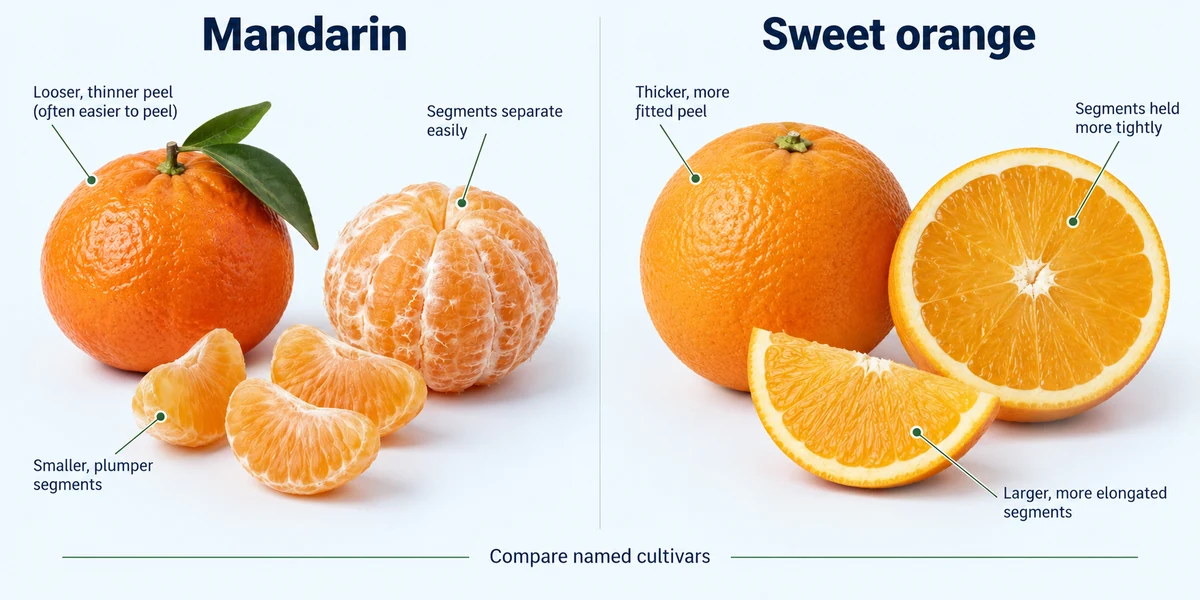
The diagram scrolls horizontally on smaller screens.
Illustration shows typical forms; cultivar identity must still be confirmed.
Peel and segments: compare the fruit in front of you
Both fruits are segmented citrus. The outer colored peel, white inner pith and thin membranes around the juicy segment vesicles form different practical barriers. Many mandarins have a looser peel and segments that separate by hand with relatively little damage. Many sweet oranges have a peel that clings more firmly, and a cook may cut or supreme them to remove membrane. The specific cultivar and maturity can change both patterns.
If your finished dish needs recognizable fruit pieces, compare the prepared fruit rather than judging whole-fruit appearance. Peel equal-weight samples, remove seeds as the recipe requires, and note the proportion of intact segments, torn pieces, loose juice and visible membrane. A bowl of segments can look full while its usable intact fraction is low. For a salad or fruit cup, a few membranes may be acceptable; in a smooth dessert or delicate topping, they may change the mouthfeel enough to matter.
Frozen prepared segments need a separate observation. Freezing can soften fruit tissue and create released liquid as the pieces thaw. Their relevant comparison may be with another prepared segment ingredient at the same thawed state, not with a whole fresh sweet orange. Our frozen-versus-canned segment guide addresses the preservation-form choice for fruit cups; here the main question is fruit type and culinary role.

A second original segment image shows piece variation and surface appearance for inspection.
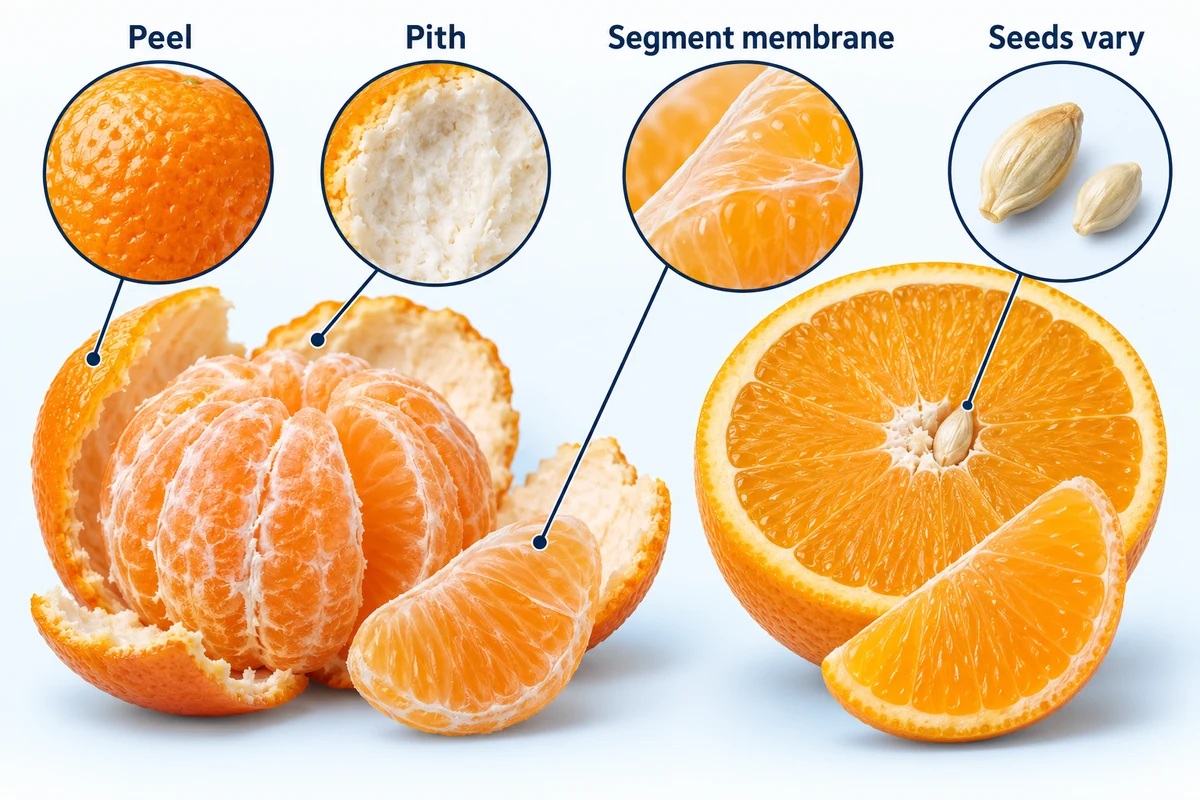
The diagram scrolls horizontally on smaller screens.
Conceptual citrus anatomy distinguishes outer rind from the membrane on edible segments.
Seeds, membranes, juice and aroma vary by cultivar
Neither fruit type has one universal seed count. Seedlessness can depend on cultivar and growing conditions; a recipe developer should inspect the supplied sample. The same applies to membrane thickness and bitterness. If the recipe is meant for children or a visually clean topping, record the seed and membrane tolerance rather than assuming a fruit name settles it.
Flavor is not a single “mandarins are sweeter” scale. People perceive sweetness alongside acidity, aroma and texture. A specific research comparison of Valencia orange and a mandarin selection found different aroma-active compounds contributing to their recognizable flavor profiles. That work compares defined samples; it cannot rank every mandarin against every sweet orange. Taste two named lots at the same serving temperature and in the intended dish before making a substitution.
Peel aroma deserves its own decision. A recipe that uses zest draws on the outer rind, while a recipe using peeled frozen segments receives fruit flesh and possibly fine segment membrane. The segment pack does not provide whole-fruit peel aroma. If a dressing or dessert depends on zest, specify and source zest separately rather than asking peeled segments to reproduce it. That is also why a peel-containing marmalade has a different identity from a cooked peeled-segment spread.
External color is a weak shortcut. The University of Florida notes that peel and flesh pigmentation vary with genetics, environment and fruit position. A deep orange surface does not establish the fruit’s type or internal sweetness. A paler rind does not automatically mean the fruit is unripe. When purchasing for a formulated product, use the actual variety, measured sample, flavor target and prepared form.
A fair same-form tasting and yield comparison
A useful comparison begins by defining the task. If the question is “Which makes a better segment inclusion?”, obtain both fruits as prepared edible pieces. If the question is “Which produces more juice?”, weigh usable whole fruit or cleaned flesh consistently and use the same juicer and straining method. Do not compare a package of already peeled mandarin segments against whole oranges without accounting for peel and preparation loss. The denominators are different.
For a segment test, record cultivar or product name, raw input mass, prepared edible mass, intact-piece proportion, membrane feel, seed removal, free liquid and final taste. For a juice test, record the same fruit basis before juicing, recovered liquid, pulp retained or strained, acidity impression and aroma after a short standing period. Report the actual trial conditions. Avoid a universal “mandarin yield” number copied from a different variety or machine.
Keep serving temperature and added sugar fixed. Cold fruit may seem less aromatic than fruit served warmer, and a sweetened canned segment starts from a different formulation than an unsweetened frozen piece. If one sample is thawed, drain or include its liquid by an explicit rule and apply that rule consistently. The result can then tell you whether the fruit meets the dish’s target, rather than merely reflecting different preparation histories.
A particularly useful trial has two tasting rounds. First, taste the prepared fruits alone so you can describe their own sweetness, acidity, bitterness, aroma and membrane feel. Second, put each into the real dish at the intended serving amount. Yogurt, tea, cake cream or a strongly flavored dressing can change which difference remains noticeable. An ingredient that tastes more vivid alone might lose that advantage in a sweetened base, while one with firmer segments may become the better inclusion. Photograph the serving at the same time after mixing, then note how much free juice has collected. This makes the comparison relevant to the actual use rather than a generic fruit ranking.
A recipe can legitimately prefer either fruit. A sweet orange may provide the juice profile a beverage brand wants; a mandarin selection may offer convenient small segments for a fruit cup. The point is to compare named candidates on the finished-product criterion. A name alone cannot decide their measured extraction yield, consumer preference, or processing recovery.
Choose segments or juice by the dish
Segments preserve the fruit’s individual bite and visual identity. Use them when a salad, fruit cup, bakery topping or plated dessert should show citrus pieces. Remove or retain membrane according to texture needs, and test how the pieces survive folding and holding. A fragile segment that breaks into juice may still suit a blended sauce but disappoint in a clear fruit cup.
Juice is a different ingredient. It contributes liquid, soluble solids, acid and aroma without intact pieces. Both mandarin and sweet orange can be pressed, but a prepared frozen segment pack is already missing peel and may release juice before pressing. If the drink relies on a particular fresh-squeezed orange flavor, taste the substituted juice directly. A mandarin drink can be good without being a sensory duplicate of a Valencia-orange drink.
For sauces and glazes, the decision can be split. Juice supplies liquid and acidity; zest supplies peel aroma; segments supply visible fruit. A recipe calling for “one orange” may use all three at different steps. Replacing that whole fruit with peeled mandarin segments changes more than the fruit type—it removes the rind input and may change the liquid balance. Rewrite the ingredient list by function instead of swapping one fruit count for another.
There is a cost and labor aspect to the form choice, but it should be calculated from usable output. A whole sweet orange requires washing, cutting or peeling and perhaps membrane removal. A prepared frozen mandarin segment starts later in that sequence but may yield loose liquid or damaged pieces after thawing. Compare the edible portion that actually reaches the cup, plate or beverage. The cheaper price per kilogram of one input may not be the lower cost per acceptable serving after preparation and discard.
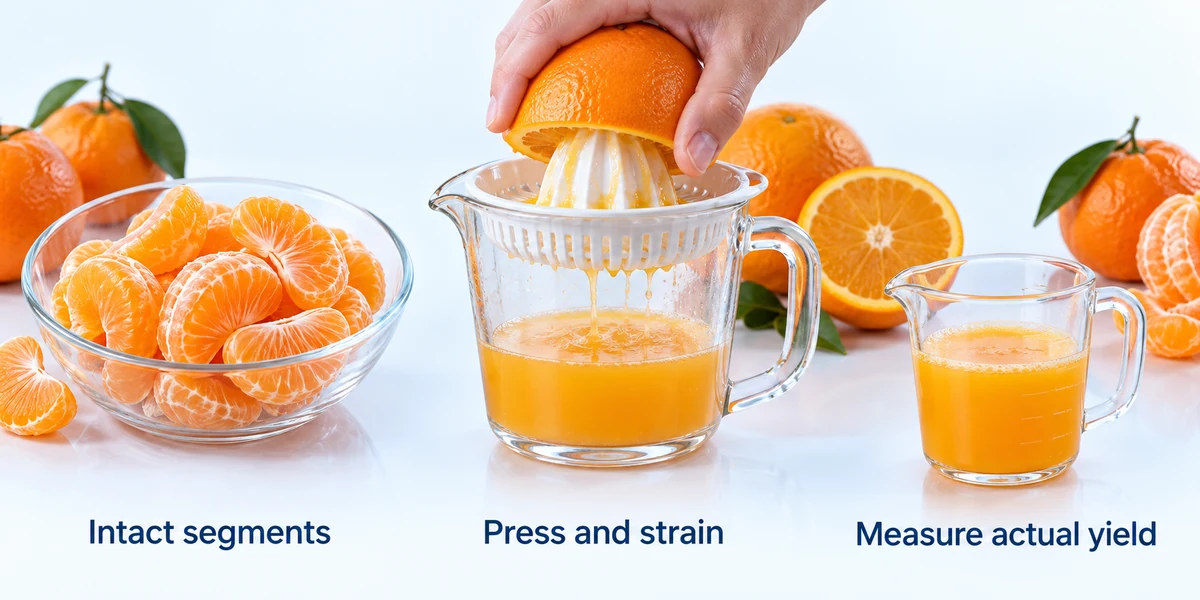
The diagram scrolls horizontally on smaller screens.
Use path illustration avoids any fixed extraction yield.
What frozen mandarin segments can and cannot stand in for
Frozen peeled mandarin segments are useful when the desired output is prepared citrus flesh. They can remove peeling labor and offer a portionable fruit form, subject to the exact specification and a thaw test. Check segment integrity, loose juice, seed and membrane requirements in the intended application. A supplier photograph identifies the product form; it does not prove how that fruit will behave after your mixing or serving cycle.
They cannot supply a whole sweet orange’s zest, peel, or the same fresh-pressed juice yield by assumption. Nor does a mandarin name establish a precise Brix, acid level or aroma. If the ingredient is for a beverage or dessert specification, ask for the exact mandarin form and compare an actual sample against the current orange-based formula. Our segment and membrane guide goes deeper into how to record those defects when intact presentation matters.
The practical rule is simple: identify the named fruit, identify what parts are present, and judge the finished application on a like-for-like basis. That preserves the real differences between mandarin and sweet orange without turning their overlapping citrus features into false absolutes.
View frozen fruits
Review the listed ingredient forms and preparation information for this application. Choose the cut and processing route that suit your intended result.
View product forms →