


On this page
Yes, sea buckthorn berries are a culinary fruit that can be eaten whole, but a frozen pack is suitable for uncooked eating only when its own directions permit that use. Whole berries have thin skins, noticeable seeds and a forcefully tart juice. Some people enjoy a few straight from the freezer or after a short thaw; others find the cold texture and acidity more pleasant when the berries are crushed, strained or mixed into food. The answer has two parts: whether the fruit itself is edible, and whether the particular frozen product was handled and labeled for the way you plan to serve it.
Read the bag before tasting. If it tells you to cook the fruit, cook it. Freezing preserves a product but is not a reliable kill step for pathogens. A clean-looking berry or a photograph of intact fruit cannot show its microbiological status. This distinction matters most when the berries will be served without subsequent heating, whether to one person at home or to a group.
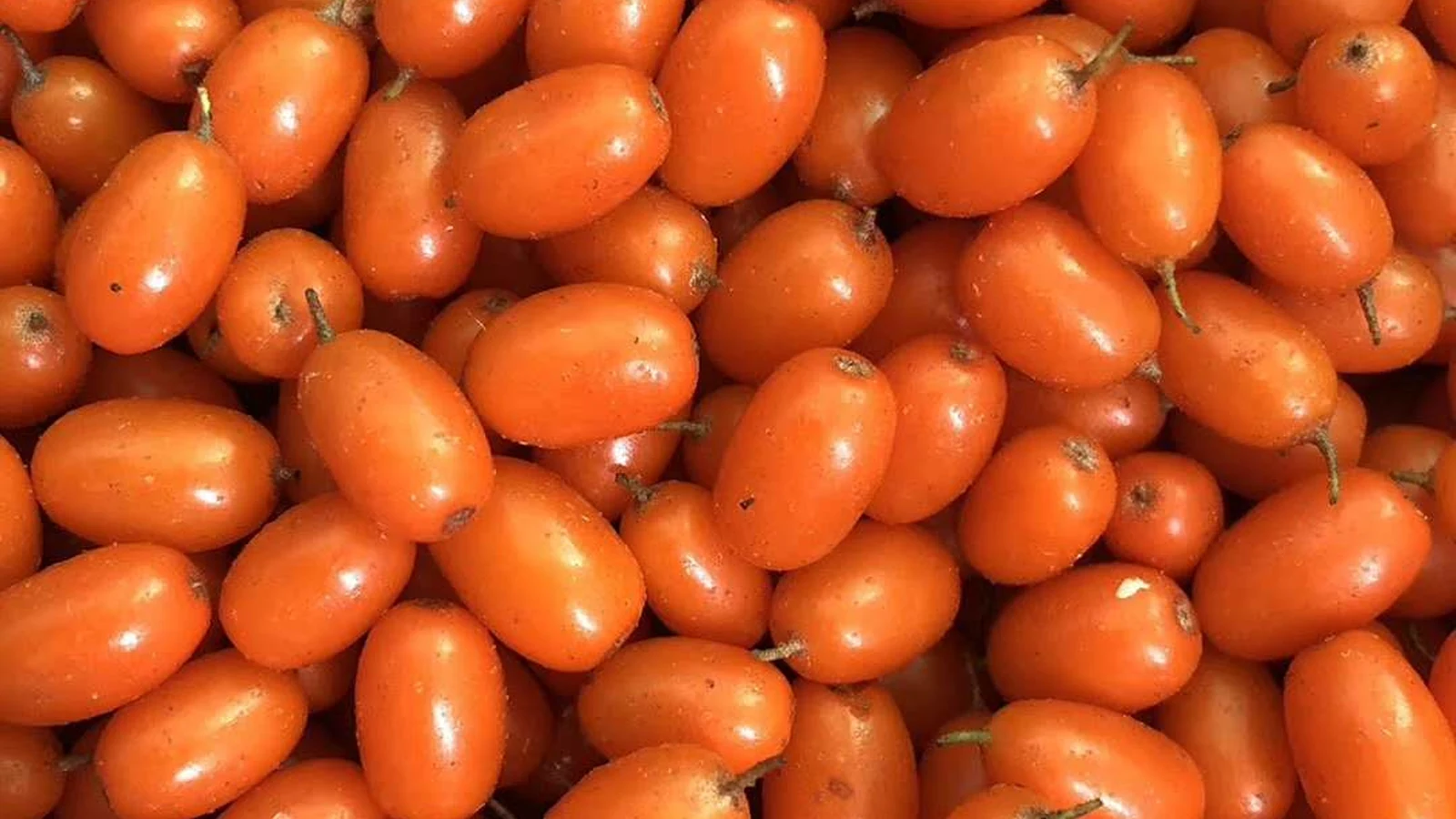
Actual whole fruit; the photo does not establish ready-to-eat status.
What eating the whole berry actually means
A whole sea buckthorn berry delivers the skin, juice-bearing pulp and seed together. Bite one and the first impression is usually sharp tartness, followed by a distinct seed texture. The fruit is small, so even a modest spoonful can feel very different from a spoonful of soft blueberries. Ontario’s agricultural introduction describes sea buckthorn as a strongly acidic berry used in foods and beverages; that supports the culinary context, but it does not determine the ready-to-eat status of every frozen shipment. See the Ontario sea buckthorn introduction [1] for the crop background.
Some berries have a slightly tougher skin or more pronounced seed sensation than others. Variety, ripeness, freezing, thawing and handling can alter how a batch feels. A split berry is not automatically spoiled, and an intact one is not automatically safe to eat raw. Judge product condition against the supplier’s specifications, packaging integrity, storage history and use instructions. For a home serving, use clean utensils and a clean dish; do not return a handled, thawed portion to the original bag.

The diagram scrolls horizontally on smaller screens.
Conceptual fruit cutaway to locate the skin, pulp and seed.
The anatomy image explains where the coarse parts sit. It is a conceptual illustration, not a scale drawing or proof of a particular berry’s seed size. A small, deliberate taste is a good way to learn whether you personally want the whole-fruit texture. It is not a medical dose or a safety test.
Check the frozen product before choosing an uncooked serving
Start with the label and any supplier specification available to you. Look for preparation directions, a cooking statement, storage temperature and whether the product is marketed for ready-to-eat use. If directions are absent or unclear, ask the seller rather than inferring safety from the word “frozen.” The FDA’s food storage guidance [2] explains why proper storage and handling remain important even for frozen food. FDA material on frozen berries also discusses the need to manage contamination risks across the supply chain; freezing alone should not be presented as a decontamination process.
For a foodservice or manufacturing buyer, the question is broader than “Can the berry be eaten?” Specify the intended use as ready-to-eat whole fruit, cooked ingredient, beverage input or processed puree. Confirm with the supplier what controls and documentation apply to that use, and review your own food-safety plan. A pack intended for a cooked application should not silently be moved into an uncooked garnish specification just because the fruit looks attractive.
Keep a frozen portion frozen until it is needed. Thaw under suitable refrigerated conditions when the directions call for thawing, and use the fruit within the applicable product guidance. Avoid leaving a large quantity on a warm counter while deciding how to serve it. If a pack was damaged, mishandled or held outside its required conditions, visual inspection cannot repair that history.

Actual handling variation exposes the fruit interior.
Frozen, partly thawed and processed: choose by texture
Whole and frozen
Very cold whole berries can feel firm at first bite. Their juice becomes more apparent as they warm in the mouth, so the tartness may arrive after the cold impression. A few berries over a cold dish can work when the product’s instructions allow uncooked use and the diner is comfortable with the hard cold texture. Avoid offering whole frozen fruit to anyone for whom hard small pieces pose a choking or dental concern; choose a safer form for the eater and setting.
Whole and partly thawed
A short, controlled thaw softens the berry and makes its acidity easier to assess. Place only the portion you intend to use in a clean container and follow the pack’s thawing directions. Some berries may split and release orange juice. That juice is useful in a sauce or drink, but it can stain pale foods and make a plated garnish slide. Use the fruit and its liquid intentionally rather than draining it without checking flavor.
Crushed or sieved
Crushing breaks the skin and distributes the juice, while sieving removes much of the coarse seed and skin material. This route is often easier when the berry is an acidic accent in yogurt, a dressing or a drink. It also changes yield: some pulp and juice remain with the sieve residue. If you need a repeatable manufacturing input, define whether the specification is whole fruit, crushed fruit, strained juice or puree. The same fruit weight does not produce the same mouthfeel in all four forms.

The diagram scrolls horizontally on smaller screens.
Visual comparison of whole frozen fruit, softened fruit and sieved puree.
These are texture choices, not different food-safety categories. Pureeing an ingredient does not make an unsuitable uncooked product safe. Where the pack requires cooking, heat it as directed before adding it to a dish, and manage the cooked product as a prepared food.
A simple way to decide whether you like the whole fruit
If the pack permits uncooked consumption, begin with a very small tasting portion rather than scattering a large spoonful over a finished meal. Look at the berries for unusual damage or foreign matter, then taste one. Notice the skin, the sharpness of the juice and the seed. Try a second berry after it has softened slightly, and compare the sensation. The purpose is sensory judgment: it tells you whether the whole form suits your dish. It does not tell you whether the product was safely produced.
Next put a few berries on the food you actually plan to serve, such as plain yogurt or a grain bowl. A berry that tastes too sharp alone can make sense against a mild or fatty base. Conversely, a pleasant solo taste may become overwhelming when many berries are dispersed through a small salad. The serving context, not an abstract “best way,” should decide the amount and form.

The diagram scrolls horizontally on smaller screens.
A small illustrative tasting setup makes the tart fruit easy to assess.
When serving others, be clear that whole berries contain seeds and are quite tart. Do not frame the fruit as a supplement or promise a health effect. The culinary advantage is its vivid acidic flavor and color; whether those qualities improve a particular food is something the eater can judge directly.
When straining or cooking is the better choice
Strain when seed and skin sensation would distract from the dish. A smooth dressing, fine beverage or plated dessert sauce can benefit from a juice or puree base. Press softened fruit through a fine sieve in a clean container, then taste the resulting liquid. Strained juice can be much more assertive than whole berries distributed through food, so add it a little at a time. The bright orange pigment may change the appearance of dairy, cream-colored sauces or a pale dressing.
Cooking is appropriate when the pack requires it or the dish itself is cooked. Follow the product’s preparation instructions rather than assuming a quick splash of hot water is equivalent. A warm fruit sauce can be built from the berries and their released juice. If the result is too sharp, balance it with the other ingredients of the finished dish; do not assume sugar or honey is required in every application. For a beverage, a cooked fruit preparation can be cooled and strained as the recipe and handling plan require.
If a pack is damaged or its cold-chain history is uncertain, set the affected product aside and follow your food-safety procedure for evaluation or disposal; do not simply discard the outer bag and serve the fruit. If the fruit has an off odor, unexpected mold or an abnormal appearance, do not taste it to investigate. The reverse is equally important: fruit that smells and looks normal still needs proper sourcing and handling. Sensory checks catch some quality problems but cannot certify that a frozen product is ready to eat.
Buying whole frozen sea buckthorn for a menu or product
“Sea buckthorn berries” can describe noticeably different commercial inputs. Ask whether the fruit is whole IQF, block frozen, crushed or supplied as pulp. Define tolerance for broken berries and stems, the expected size range, seed and skin expectations, pack format and required storage conditions. A smoothie may tolerate more broken fruit than a visible garnish; a smooth drink may call for a strained ingredient instead of whole fruit. These are practical purchasing differences, not claims that one form is universally superior.
For a visible whole-berry garnish, request a sample from the same commercial specification you intend to order. Let a representative portion reach the intended serving state under its directions, then count visibly split fruit and examine the seed sensation in the actual dish. A photo of the frozen pack cannot show how the fruit looks after it sits on yogurt for service. If consistency matters across lots, agree on an acceptance method and document it with the supplier before relying on the berry as a signature visual element.
We show our frozen sea buckthorn product for buyers comparing whole fruit and further-processing uses. Tell us whether the intended application is cooked or uncooked, and what evidence and specifications your own food-safety review requires. We can discuss the product form and documentation available for the shipment. The buyer remains responsible for validating the final handling and serving process.
Common questions about whole frozen berries
Do I need to remove the seed?
Not necessarily for a person who wants to eat the berry whole and is comfortable with the seed texture. If the finished food should be smooth, strain the fruit instead. A seed can be a sensory issue even when it is a normal part of the fruit. In a beverage or fine dressing, removing it is often the cleaner choice.
How can I avoid orange streaks on a pale dessert?
Dry the surface of an appropriately prepared berry portion gently and add it close to service rather than mixing it through the entire dish early. A split berry will still release colored juice. Test the plating on the actual dairy or cream-colored base, because a white plate and a white yogurt surface can show different amounts of color transfer.
Can whole berries work in a cooked dish?
Yes, if their tartness and seeds suit the recipe. Add them at a point that gives the fruit the heat required by the product directions and the appearance you want. A long cook may break most berries and turn them into a sauce; adding them later can preserve more visible pieces. Confirm the finished food’s safe process separately from its appearance.
View frozen sea buckthorn
Review the listed product forms and preparation information alongside the cooking and handling questions discussed above.
View product forms →