


On this page
Frozen shelled edamame can make a satisfying vegetable patty when some cooked beans are crushed into a cohesive base and some stay whole for bite. Drain the cooked beans before mixing. Whole kernels alone have little reason to stick to one another; a crushed portion, plus a binder suited to the rest of the recipe, gives the patty structure. Shape a small test patty and cook it before fixing a batch-wide ingredient ratio. If it breaks, check free water, the crushed-to-whole balance and the binder. If it holds but eats like paste, leave more beans coarse or whole next time.
The target is neither a dip that happens to be fried nor a pile of loose green beans. A useful patty lifts in one piece, browns on its cooking surface, and has a cut face where individual beans remain visible inside a connected matrix. Its exact firmness depends on the dish: a small fritter eaten with a fork can be more delicate than a burger that must survive a bun and toppings. Decide that target before adding ingredients.
Read the package to confirm you have shelled beans and to follow the stated cooking instructions. In-pod edamame is a different starting form: the pod is not part of a standard shelled-bean patty. XMG’s frozen edamame page distinguishes in-pod and shelled forms. This article addresses the kitchen step after you have the edible kernels, rather than the separate issue of how firm kernels stay in a hot or cold grain bowl.
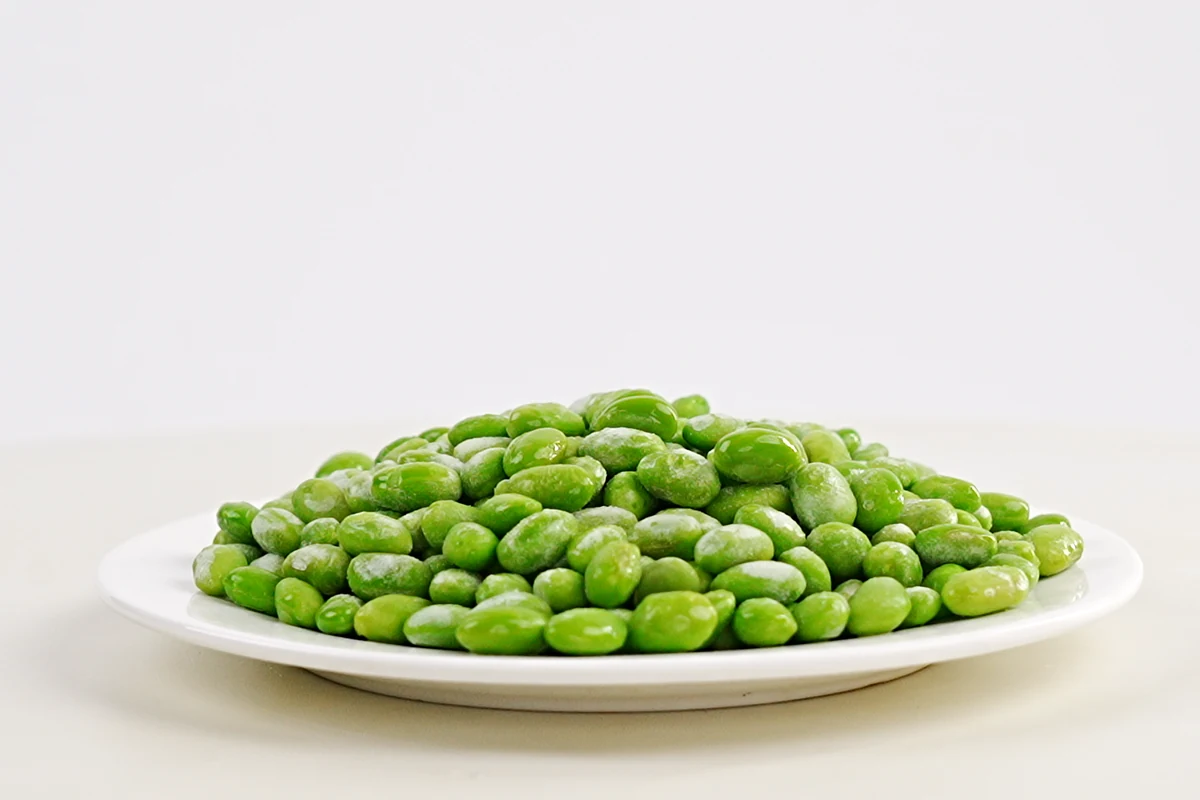
Shelled kernels are the edible starting form for the patty.
Cook and drain the shelled beans first
Frozen shelled edamame may be blanched before freezing, but that does not automatically make a particular pack ready to eat. Follow its label and cook it for the intended use. If you are building a patty, the beans need to be tender enough to crush without turning into a watery slurry. Drain them well after cooking, and spread them briefly so surface steam can leave. A bowl of cooked beans standing in its own liquid will carry that water straight into the patty mixture.
Look at added vegetables too. Onion, mushrooms, grated carrot or other ingredients may contribute more moisture than the edamame. Cook or drain them according to the recipe before they join the mix. A patty that seems “too wet from frozen beans” may actually be wet from raw grated vegetables, a sauce addition or cooking liquid trapped in the bowl. Make a small mixture without the binder first; if you see liquid gathering at the bottom, address that liquid before adding more dry ingredients.
Jessica Levinson’s edamame burger [1] combines whole soybeans with a coarsely processed portion, panko and egg whites. That is one coherent method, not a required formula for frozen shelled beans. Epicurious uses a different mixture and adjusts chickpea flour according to moisture. Their contrast is useful: both approaches build binding around the actual wetness of the mix rather than assuming frozen edamame alone can hold a patty together.
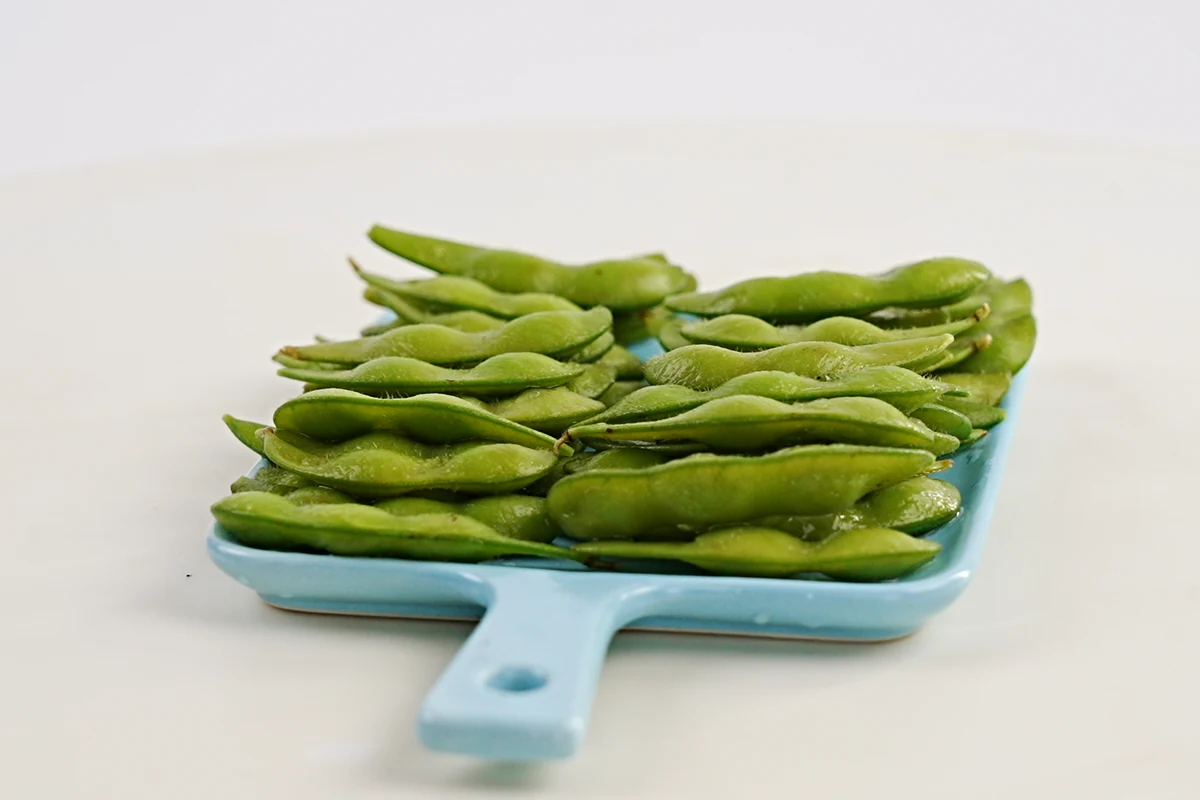
Pods must be removed when the recipe calls for shelled kernels.
Give whole and crushed beans different jobs
Whole kernels provide shape and a distinct bite. They also create smooth, separate surfaces. If nearly every kernel stays intact, the mixture can fall apart where beans meet because there is little continuous material between them. Crushing or pulsing some beans exposes soft interiors and makes a base that can connect the whole kernels and other ingredients. A coarse crush keeps recognizable bean pieces; a very fine purée can hold more evenly but may make the cooked patty dense or pasty.
Process in short pulses and inspect the bowl. Stop when you can see a rough green base with some larger pieces, then fold in whole beans. Avoid chasing a fixed percentage of crushed beans, because bean tenderness, binder and patty size change what works. If the mix collapses when gently pressed, crush some more of the whole beans or add an appropriate binder. If it smears like hummus and has no distinct bite, add some whole or coarsely chopped cooked beans in a fresh small trial.
The contrast with an edamame dip helps make the endpoint clear. Our guide to blending frozen edamame into a dip intentionally pursues a smooth spread. A patty needs enough smooth material to bind but enough larger structure to survive cooking and feel like a formed food. One blender setting will not serve both applications equally well.
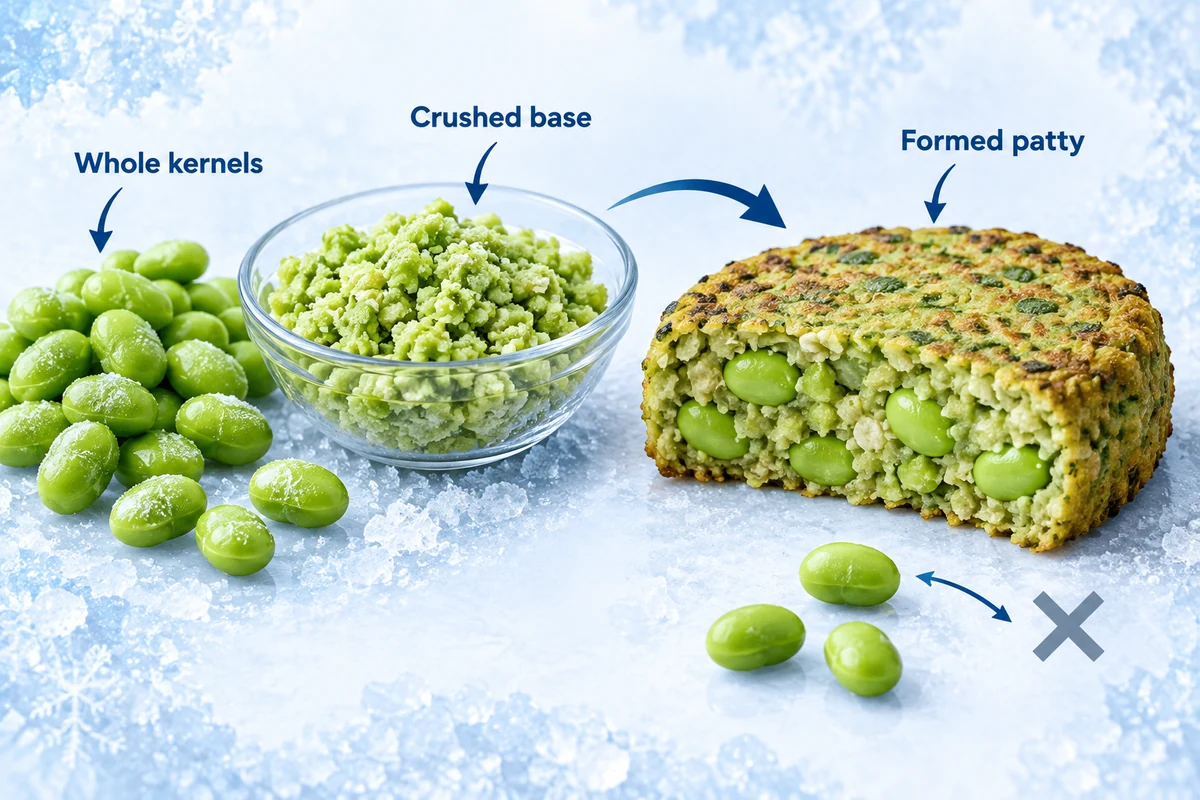
The diagram scrolls horizontally on smaller screens.
Conceptual comparison of bean structure in a patty.
Choose a binder for the mixture you actually have
Egg and breadcrumbs are a familiar route, and they work differently. Egg helps ingredients set as they cook; breadcrumbs absorb some moisture and add structure. Another recipe may use chickpea flour, cooked grain, potato or another binder. Each changes flavour, texture and dietary suitability. Do not replace one with an equal spoonful of another and assume the same patty. The binder must be evaluated in the full mixture, especially after the added vegetables and seasonings are present.
Start by squeezing a small handful of mix. It should hold a rough shape without shedding free liquid or crumbling immediately. If it is wet and sticky, first ask whether it needs more drainage or a brief rest for the binder to hydrate. Adding dry binder repeatedly may eventually make it shapeable but also heavy. If it is dry and crumbly, a little suitable wet binder or more crushed bean base may help. Make the change in a small portion so that the whole batch is not committed to a guess.
For a vegan patty, choose a tested plant-based binding route that fits the rest of the recipe; the absence of egg does not mean edamame automatically binds itself. For a gluten-free dish, check every breadcrumb, flour, seasoning and prepared ingredient, and make any label claim only after the entire formula and handling path have been reviewed. This cooking article cannot establish an allergen or regulatory claim. Edamame is soy; the FDA lists soybeans as a major food allergen [2], which matters when serving people with soy allergy.
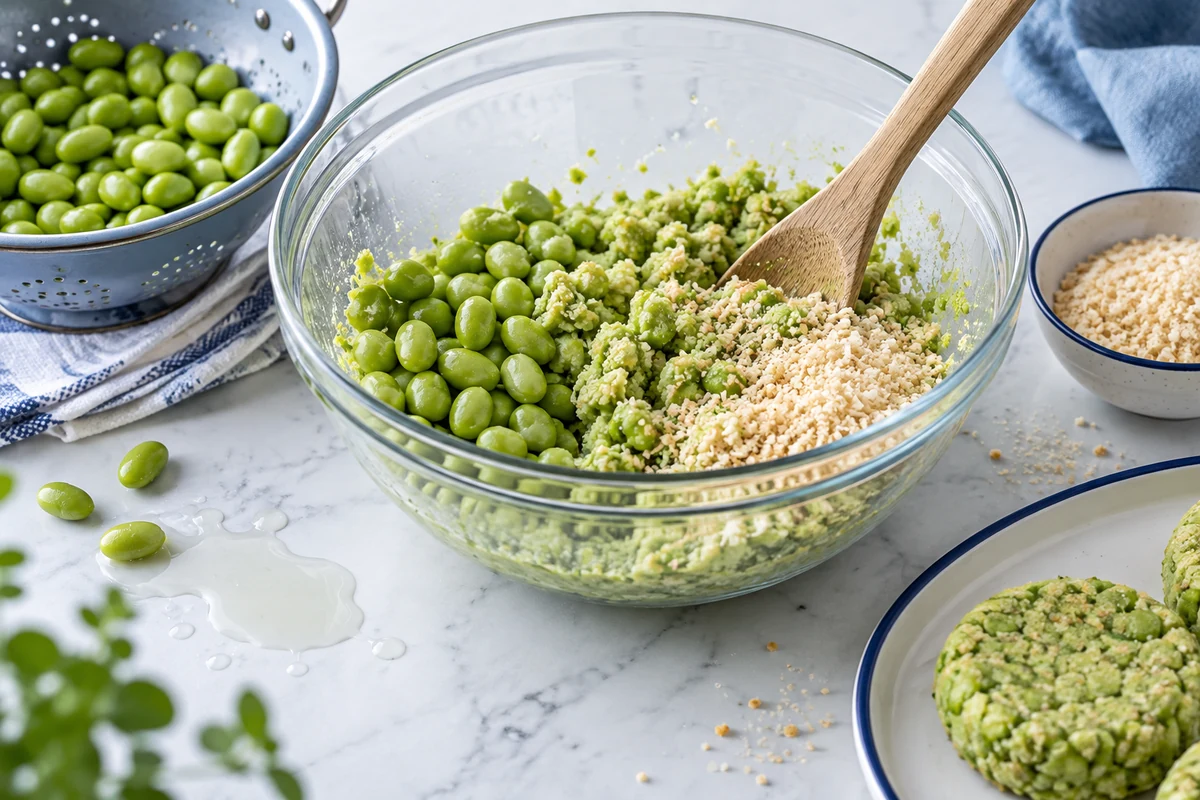
The diagram scrolls horizontally on smaller screens.
Conceptual mixing stage shows the importance of drainage.
Shape, chill and cook without breaking the patty
Form a small test patty with even thickness and compact edges. If the edges split before cooking, the mix needs more cohesion or moisture adjustment. Chilling a shaped mix may make it easier to handle, and several opened recipes use that approach. Chilling is not a replacement for the binder: a patty that holds only while cold but breaks on the pan still needs formulation work. Cook the test piece first, then decide what the larger batch needs.
Use a pan or tray that suits the recipe and turn carefully only after the first side has developed enough structure to lift. A flexible spatula supports the whole patty better than pinching one edge. If the exterior browns rapidly while the middle remains wet or loose, reduce the heat and allow more time for the interior to set. A very thick patty can be hard to heat evenly without over-browning the outside. Smaller, thinner pieces are easier for an initial test.
Do not diagnose a broken patty from the final crumbs alone. Notice when it failed. If it cannot be shaped, the issue lies in mixture structure or liquid. If it shapes but splits on flipping, it may need more cooking on the first side, a firmer base or gentler handling. If it cuts cleanly while hot but crumbles after a long hold, the binder and service conditions need review. These distinctions tell you what to change next instead of adding more of everything.
Judge the bite after cooking, not just the raw mix
Cut the cooked test patty through its center. Whole beans should remain visible if a distinct edamame bite is your goal. The surrounding matrix should connect them without feeling gummy or floury. Taste while warm and after the short hold expected at the table. Some mixtures firm as they cool; others lose their crisp surface under a lid. A burger intended for a bun needs enough strength to tolerate sauce and pressure. A plated fritter may reasonably be softer.
If the bite is too dense, consider whether the beans were puréed too finely or too much dry binder was added. If the bite is coarse and the patty fractures around large whole kernels, increase the crushed base or reduce the amount of unconnected whole beans. If the center is wet despite a brown exterior, test a thinner shape and verify the other vegetables were drained. Treat each of these as a hypothesis to test on the next small batch, not as a universal diagnosis from appearance alone.
Jessica Levinson’s, Epicurious’s and Dennis Prescott’s edamame burgers each use a different combination of supporting ingredients. That variety is evidence that recipe context matters. The useful common method is to cook and drain the beans, create cohesion, shape a test piece and judge the cooked structure. Copying a fixed binder ratio from one recipe into a mix with different wet vegetables or patty size can easily change the bite.
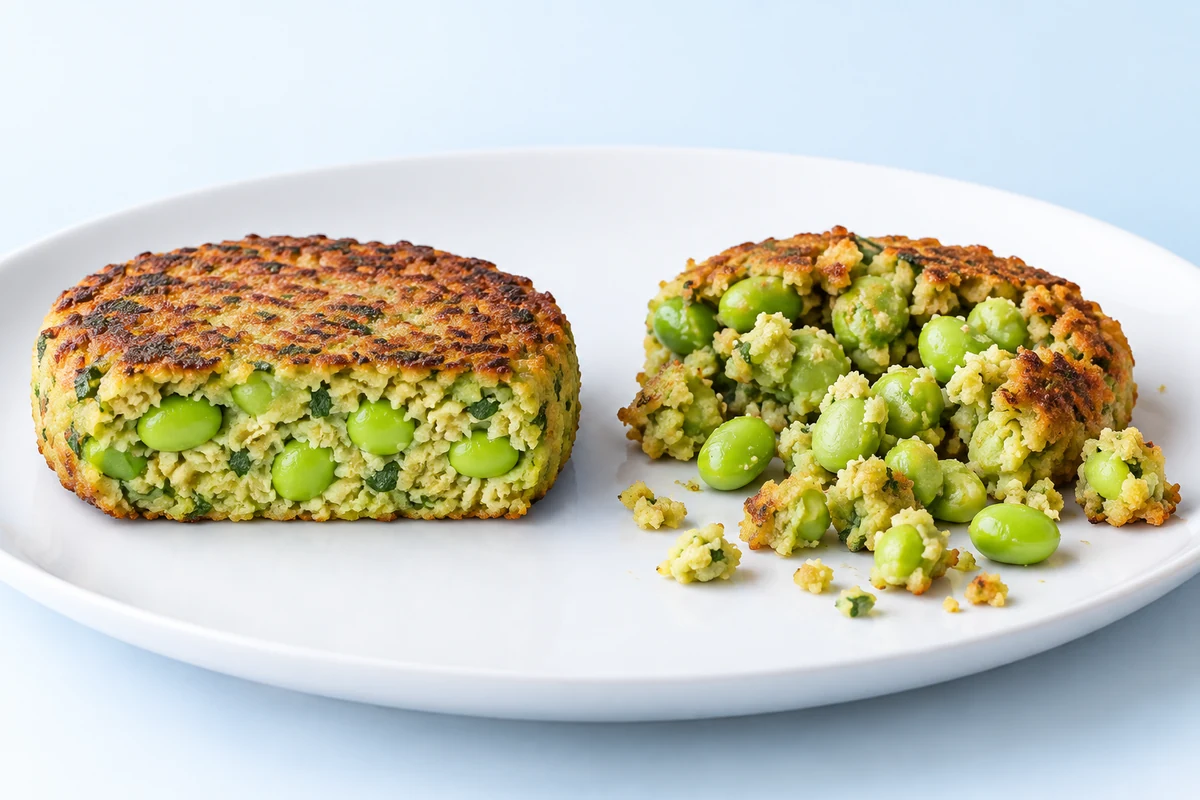
The diagram scrolls horizontally on smaller screens.
Conceptual cooked structure comparison.
Use a small comparison to settle your preferred balance
Cook one batch of shelled edamame and drain it consistently. Divide the beans into two equal portions. For the first trial, leave more kernels whole; for the second, crush more of them. Keep the binder, seasoning, patty mass, thickness and cooking method the same. Assess shaping, flip survival, cut face and bite at the same serving temperature. The result will tell you whether whole-bean proportion is the main issue in your own recipe.
Next, if needed, keep the preferred bean texture fixed and compare binders in small portions. Record exactly which ingredients were used and whether free liquid was present before binding. That prevents a false conclusion that one binder is always superior when the two mixes began at different moisture levels. We have not performed or measured this patty trial for any XMG edamame lot; it is a structured kitchen method, not a reported company test.
For foodservice or recipe development, repeat the test after the planned holding time. A patty that lifts perfectly from a skillet may soften under a covered tray or break when packed with a wet condiment. Define the serving condition at the start. For home use, one well-observed test patty is often enough to adjust dinner without sacrificing the remaining mix.
Keep product form and next use aligned
Frozen shelled edamame is the direct starting point for this recipe. In-pod edamame requires shelling after appropriate preparation, and pod material should not be treated as an edible bean substitute. The XMG edamame page gives the product-form context for buyers. If you are specifying an ingredient for a repeat patty program, also define bean maturity, cooking instructions and the finished bite you expect; the binder decision still belongs to the complete recipe.
For tonight’s pan, remember the order: cook and drain the kernels, crush enough to create a base, fold in some whole beans for bite, and test a small patty after adding the actual binder. A batch that holds together at service is more persuasive than a neat raw patty on a tray.
View frozen edamame
Review shelled and in-pod edamame forms. Patties need cooked, drained kernels; compare whole and crushed beans in your actual binder mix.
View product forms →References
University of Minnesota Extension, Preserving food at home: Freezing [3] covers frozen-produce texture and handling. Jessica Levinson’s edamame burgers [1], Epicurious’s edamame burger [4] and Dennis Prescott’s black bean–edamame burgers [5] illustrate different binding methods. Their formula amounts apply to those recipes, not to all edamame patties.
