


On this page
Edamame is soybean, but it is not the same cooking ingredient as a mature dried soybean. Both belong to Glycine max. Edamame is harvested while the beans are developed, green and tender, usually from vegetable soybean varieties selected for eating quality. Mature soybeans remain on the plant until the seeds reach the grain stage and dry down.
That difference affects the food in your bowl. Cooked edamame supplies a green, recognizable bean with a tender bite. A mature dried soybean needs a preparation suited to a dry seed and produces a different colour, flavour and texture. Sharing a botanical species does not make the two interchangeable in a recipe, or justify comparing dry-seed nutrition with prepared edamame on an unmatched weight basis.
The useful question is therefore more precise than “Are they both soybeans?” Ask which harvest stage, variety and supplied form the recipe expects. An unopened green pod, a bag of frozen shelled edamame and a packet of dry soybeans are three different things to handle, even when the ingredient family is the same.
One species, two harvest endpoints
A soybean seed develops inside a pod. For edamame, harvest is timed to obtain filled pods with green beans that still have vegetable eating qualities. For a grain soybean crop, the seed continues toward maturity and a much drier harvested state. University of Florida IFAS describes the distinction through the soybean growth stages: edamame is collected at the green full-seed stage, while grain soybean proceeds beyond that stage toward mature seed. Its edamame growth-stage guide [1] gives the agricultural basis for the difference.
“Immature” can sound as though the bean is tiny or unfinished. Here it describes the stage relative to a mature dry seed, not necessarily an empty pod or a small edible bean. Good edamame can contain substantial, plump beans. Their size does not turn them into grain soybeans, just as a green colour alone does not prove a particular variety or preparation.
The distinction is also separate from preservation. Freezing holds a harvested ingredient in a frozen state; it does not restart its development on the plant. A frozen edamame bean remains an edamame ingredient after thawing or cooking. It does not become a mature dry soybean because it has been stored for several months.
For readers comparing unfamiliar bags, the clearest description combines stage and form: “frozen shelled green vegetable soybeans” tells you more than “soybeans.” The latter may refer to dry grain, a prepared food or another soybean ingredient. That extra description prevents a botanical answer from becoming an incorrect cooking instruction.
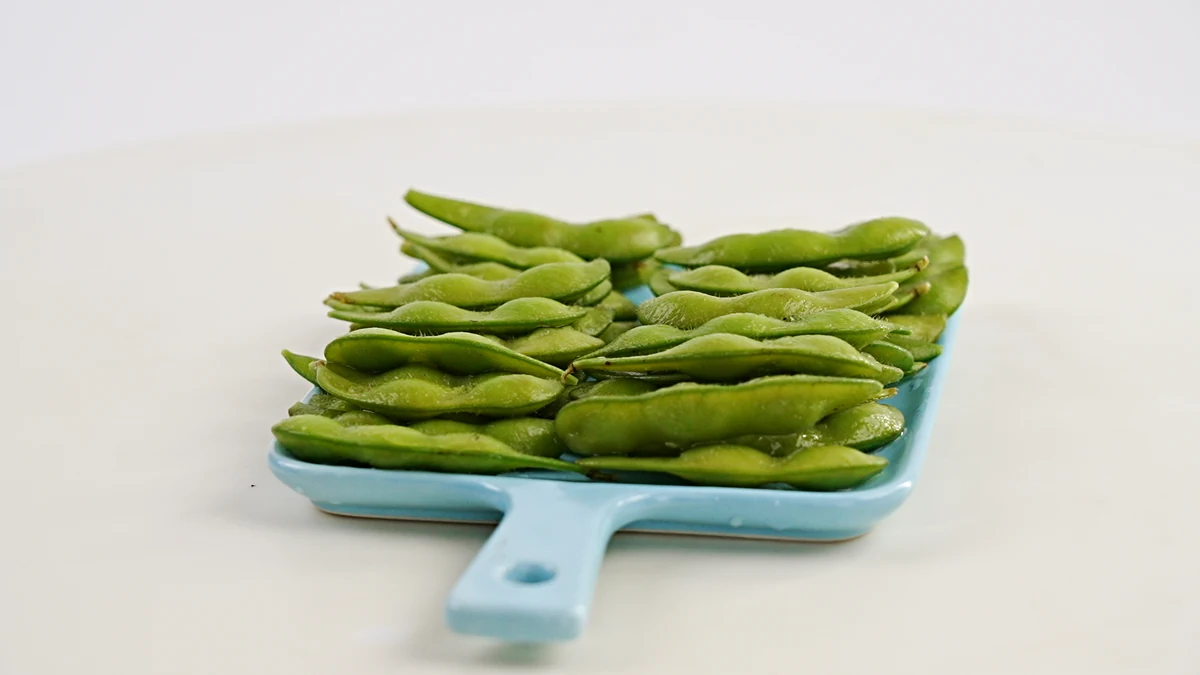
Green pods show the supplied in-pod form; the photograph does not establish cooking status.
Variety matters as well as harvest stage
Edamame is not merely any grain soybean picked early. Vegetable soybean cultivars are selected for characteristics such as seed size, sweetness and eating texture. Ask Extension’s comparison of edamame and field soybeans [2] makes this breeding distinction. The University of Maryland’s edamame production guide [3] also identifies edamame as the same species as grain soybean while describing its vegetable-crop characteristics.
Harvest stage and cultivar are two separate explanations that work together. Picking a grain-type soybean while it is green changes its development stage, but does not automatically reproduce the flavour or tenderness of a cultivar bred for edamame. Conversely, a vegetable soybean plant can eventually produce mature seeds if it is left to develop; the fact that its cultivar suits vegetable eating does not keep the seed permanently green.
There is natural variation within each group. Beans can differ in shape, seed-coat appearance and flavour. Avoid identifying an unknown product solely by one photograph, especially when the beans are already shelled. A product name, ingredient information and intended preparation give a stronger basis than a guess based on shade or size.
This also explains why “same species” is a useful starting answer rather than the entire answer. It establishes the relationship between the foods. Variety selection and harvest timing explain why they are sold for different purposes. Neither statement needs a claim that all edamame tastes identical or that every mature soybean has one fixed colour.
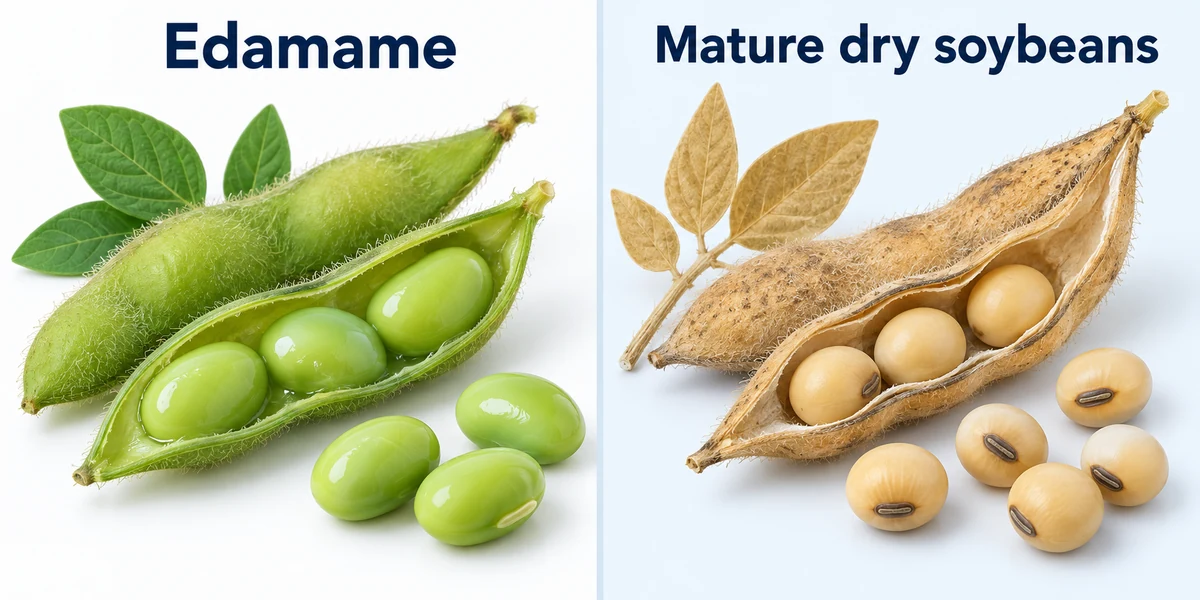
Illustrative harvest states within the soybean species; displays are not equal weights.
Pods, shelled beans and dry seeds
In-pod edamame includes the outer pod and the beans inside it. Shelled edamame has that pod removed. Shelling does not mean drying, and it does not mean that the remaining bean has reached grain maturity. A bag of shelled edamame can therefore look quite different from a restaurant plate of pods while still containing the same vegetable soybean ingredient.
The outer edamame pod is normally discarded after the beans are removed. Serving the food in its pod is a presentation and eating method, not an instruction to consume the pod itself. That differs from vegetables such as snow peas or sugar snap peas, where the edible pod is an intended part of the food. These names should not be treated as interchangeable because they all involve green pods.
Further processing needs its own description. Removing the pod is different from removing a bean’s seed coat, breaking it into pieces or seasoning it. “Shelled,” “peeled,” “split” and “salted” answer different questions. The ingredient statement and pack directions should establish the supplied treatment; an attractive green bean does not prove that it is ready to eat.
| Ingredient form | What is present | What to establish before use |
|---|---|---|
| Edamame in pods | Green beans inside an outer pod | Preparation directions and removal of the pod |
| Shelled edamame | Green vegetable soybean beans | Required preparation and any further treatment |
| Mature dry soybeans | Dry mature soybean seeds | Preparation appropriate to the dry ingredient |
Virginia Cooperative Extension identifies both fresh and frozen pod and shelled forms in its guide to edamame products [4]. The physical form is worth confirming before shopping or planning a recipe. Pod removal, preparation and seasoning all affect what will actually be added to the dish.
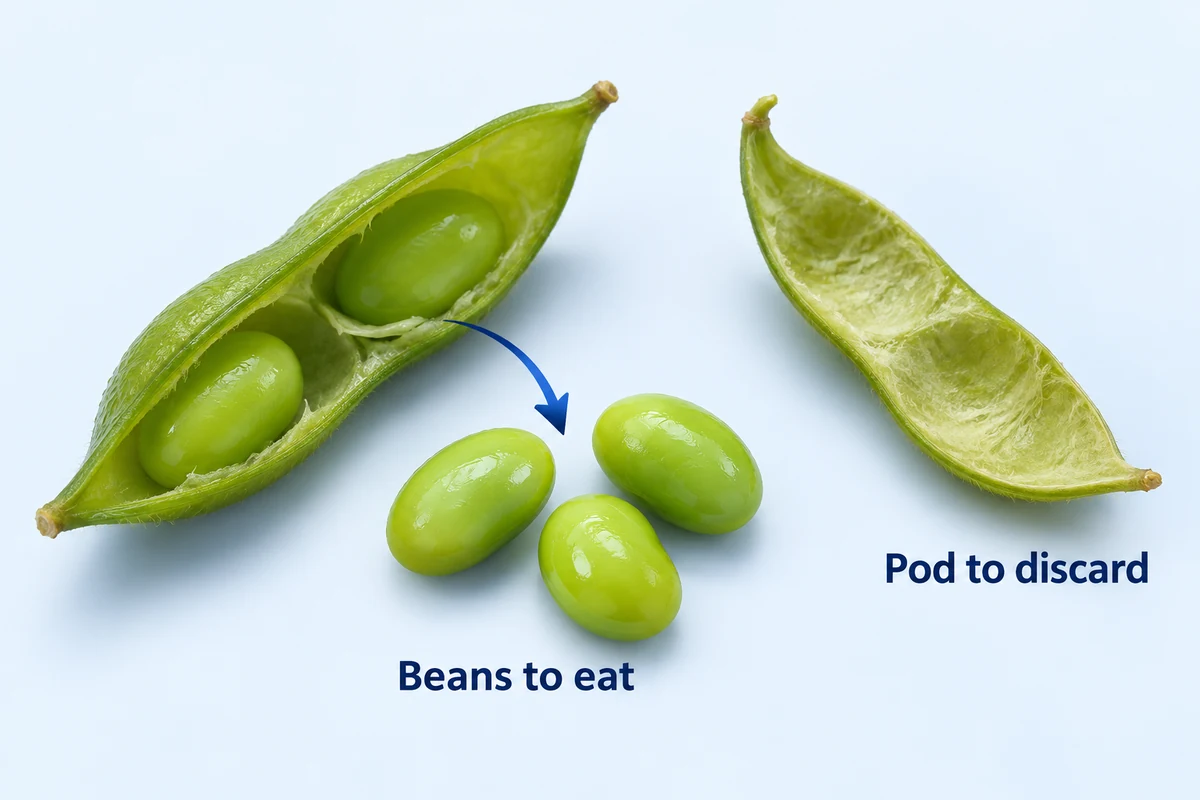
The beans are eaten; the fibrous outer pod is normally discarded.
What changes when you cook them
Cooking edamame normally aims to make the green vegetable beans suitable for eating while retaining their recognizable shape and desired bite. Preparing mature dry soybeans starts with a much drier seed. Water uptake and cooking change that seed before it reaches the texture needed for a finished dish. Use directions written for the actual ingredient; an edamame cooking method is not a shortcut for dry soybeans.
The final purpose matters too. A whole bean in a salad needs a different texture from a bean that will be blended into a dip. A mature soybean destined for a fermented or further processed food enters a different preparation route again. Those routes cannot be reduced to one universal pot time just because the starting plant species matches.
For a simple kitchen comparison, prepare each product according to its own instructions, then compare the foods at the same serving temperature. Observe colour, whole-bean integrity, skin sensation, aroma and the way the bean breaks when chewed. That is a proposed comparison method, not a report of a trial performed here. The result will depend on the products and preparation you actually use.
Separating observations is helpful. A bean can be softer without being sweeter, or more strongly flavoured without being better for a particular dish. If the recipe needs a bright green inclusion, a perfectly cooked beige mature bean still changes its appearance. If the recipe needs a substantial mature pulse texture, green edamame changes that endpoint even when it is pleasant on its own.
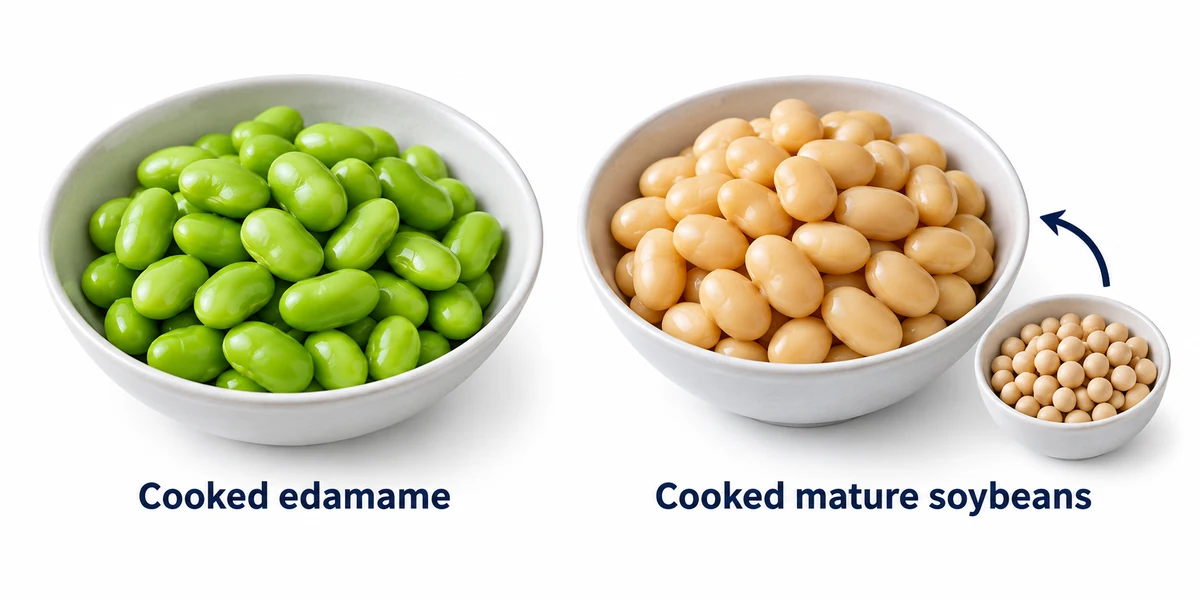
Conceptual cooked forms, not an equal-weight comparison or a timed cooking trial.
Compare food data on the same basis
A dry soybean and a prepared edamame bean contain different amounts of water. Nutrition values per unit weight therefore describe different food states unless the comparison is carefully matched. A value for a dry seed cannot simply be assigned to a serving of cooked green beans. Cooking, draining, added ingredients and the definition of an edible portion can all affect the basis.
Start with the exact food description in the database or on the pack. Check whether it says raw, dry, frozen, prepared, cooked or drained. Then check whether the stated weight refers to edible beans or a product that includes pods. Comparing “100 grams” is useful only when the reader knows what those grams contain. Equal numbers in the weight column do not automatically describe equal servings.
Read a nutrient entry as a description of a particular food state. If one entry names dry soybeans and another names cooked edamame, keep those states visible beside the values. Check the edible portion, drained condition and any salt or other added ingredients before using the figures to plan a serving.
For allergy purposes, the name difference should never be treated as a different ingredient family. Edamame is soybean; FDA identifies soybeans as a major food allergen [5]. Someone avoiding soy needs to recognize that identity in both pod and shelled forms. Shelling, freezing or changing the menu name does not turn it into a pea. Follow the relevant product allergen information and personal medical advice rather than relying on a casual comparison of names.
Choose the ingredient your recipe expects
Look first at the ingredient description and the expected appearance. A recipe requesting shelled edamame usually expects green beans without their pods. Replacing them with dry soybeans changes both the preparation and the finished dish. Buying in-pod edamame instead adds a shelling step and a non-edible portion that the recipe may not have allowed for.
A recipe written for mature soybeans should specify the relevant dry or prepared form. Substituting edamame is a recipe redesign, not simply a change in brand. Consider whether the bean must remain whole, be mashed or support a later processing stage. Then decide whether the new ingredient still provides that function. A successful vegetable-bean salad substitution does not prove equivalence in a different preparation.
Quantities need similar care. A purchased amount of pods is not the same as that amount of shelled beans. A dry amount of mature soybeans is not the same as the amount after preparation. Work from the edible form required by the recipe instead of assuming one packet weight replaces another. No universal recovery or cooked-weight conversion is provided here because the actual form and preparation determine it.
If you want to compare the foods rather than substitute them, put them into separate small preparations. That preserves the characteristics of each and avoids attributing a liquid, seasoning or texture change to the wrong ingredient. Keep a short note of the supplied form and the preparation used; it makes a later comparison much easier to understand.
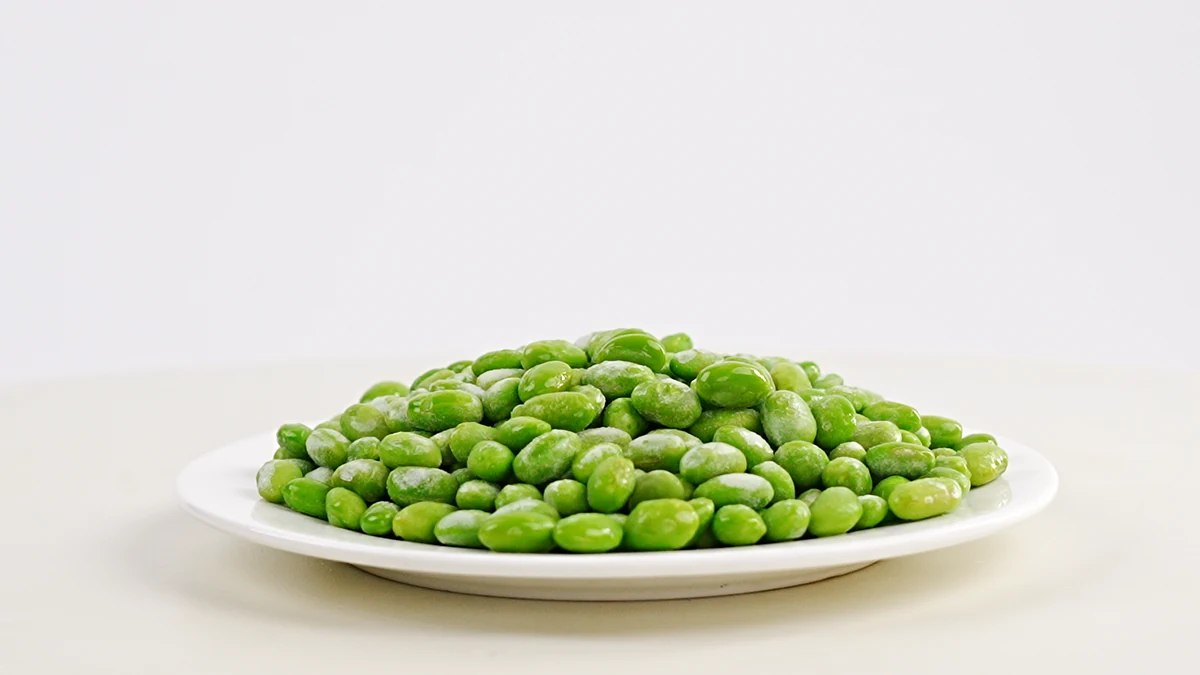
Shelled green beans are a different supplied form from pods and from mature dry soybeans.
Frozen edamame and product identity
Freezing is a preservation method applied to the harvested vegetable product. It is useful to separate this from maturity, shelling and cooking status. A frozen bean can be green and shelled while still requiring preparation. Follow the pack’s directions rather than inferring the required treatment from the frozen appearance.
For ingredient readers, our frozen edamame page shows the supplied physical forms. The distinction between pods and shelled edamame addresses serving format and preparation work; it is a separate decision from green vegetable soybeans versus mature grain.
When the product will enter a larger recipe, a clear product description and sample reference help keep those distinctions visible. State the bean form and intended preparation before discussing other details. For more ingredient explanations, browse Food Knowledge or the frozen vegetable range.
For the frozen product forms discussed here, see our IQF Frozen Edamame page.
View product forms →