


On this page
Yes, frozen lychee flesh can be warmed gently in syrup. Treat the fruit as a delicate ingredient: begin with a lightly sweetened liquid, add peeled and pitted lychees, heat only until they are evenly warm and pleasantly infused, then stop before the pieces lose their shape. Taste the fruit first. Plain frozen lychees and canned lychees packed in sweet syrup start from different sweetness and liquid conditions, so a canned-fruit recipe cannot be transferred spoon for spoon.
This is a dessert preparation, not a method for making shelf-stable canned fruit. Cool and refrigerate leftovers under normal food-safety guidance, and follow the frozen product’s intended-use and handling instructions. Freezing does not establish that a product is ready to eat without cooking. The exact sweetness and heat time depend on the fruit’s size, thaw state, maturity and the desired serving temperature; a small pan test is more useful than one universal number.
Frozen fruit is not canned fruit in syrup
Many lychee syrup recipes begin with a can. That fruit has already been packed in liquid, often sweetened, and the cook may use the packing syrup as part of the formula. A bag of plain frozen lychee flesh usually offers fruit and whatever moisture it releases on thawing. Its ingredient list may differ, so read it rather than assuming there is no added sugar. If you pour a canned-fruit recipe’s full sugar amount over already sweet lychee, the result can be cloying; if you use too much water with plain frozen fruit, the gentle aroma can seem absent.
The first practical choice is fruit form. Peeled and pitted whole lychees give a recognizable dessert piece and can be filled or served in a small bowl. Halves or dice will warm quickly, but they have more exposed surface and are less likely to look like whole fruit after stirring. Puree can flavor a syrup or sauce, but it cannot be poached as intact fruit. XMG’s current lychee page distinguishes peeled, pitted whole, halves, dice and puree routes; the correct form for this question is usually whole flesh or a robust half.
Inspect the fruit while still cold. Separate pieces gently and note any visible ice glaze, broken flesh or retained seed fragments. A product labeled pitted should still be checked during home preparation, especially if the dessert will be eaten by a child. Do not claim that a product photo proves absence of every seed fragment. After a controlled thaw, note how much liquid collects and whether the natural cavity remains recognizable. The fruit may be perfectly usable even when soft, but the planned dish should reflect its actual texture.
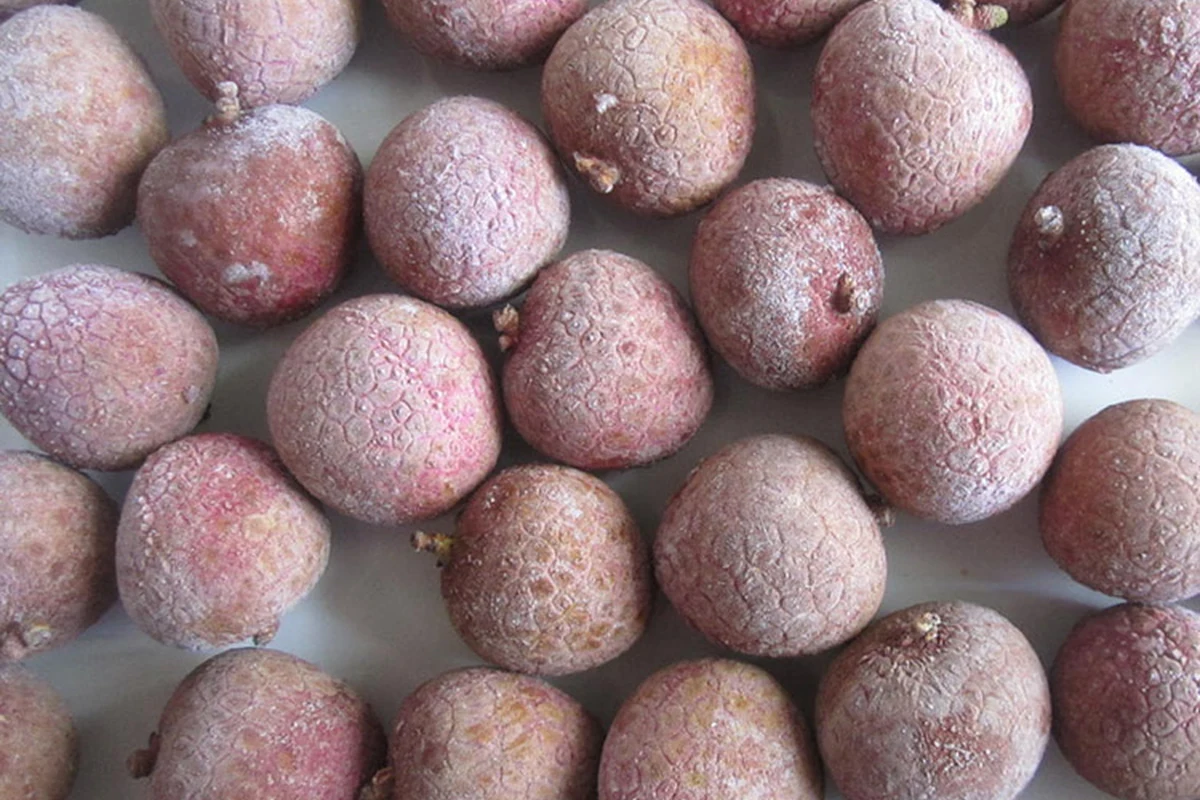
Whole fruit provides identity context; peel and pit are not used in the proposed syrup dessert.
The Flavor Bender’s lychee syrup recipe uses canned fruit and syrup for a drink-oriented preparation. Hardtank describes a syrup made with frozen lychee puree. Both show ways to flavor sweet liquids, yet neither tests how whole frozen lychees retain their shape while warming.
Build a syrup around the fruit’s sweetness
Begin with enough liquid to surround the fruit in a shallow pan without forcing a long boil to reduce a large volume later. Water and sugar form a simple base; citrus, ginger, tea or floral notes are optional accents. Make the base taste slightly restrained before adding fruit, because thawed lychee and any retained liquid will contribute sweetness and aroma. If a recipe uses syrup from a can, replace that ingredient only after tasting and measuring; it is not equivalent to plain water.
Do not make every variable strong at once. Lychee’s floral aroma can be overwhelmed by a large dose of rosewater, ginger or lemon. Add one accent sparingly, taste after the fruit has warmed, and decide if more is warranted. Acid can make a sweet syrup livelier, but too much turns the dessert into citrus with lychee pieces. Sugar can give a pleasant coating and body, but too much erases the fruit’s own sweetness. These are sensory adjustments, not claims about a single optimum concentration for all frozen lychee.
If the fruit releases a visible amount of liquid during thawing, decide how to use it deliberately. A clean-tasting thaw liquid can be added to the syrup and counted as part of the total liquid. A watery, weak liquid may dilute the base; simply discarding it is an option when the fruit itself has enough flavor. In either case, treat it according to the product’s food-handling instructions. Do not assume a brief warm-up turns a liquid from an ingredient meant for cooking into a validated ready-to-eat product.
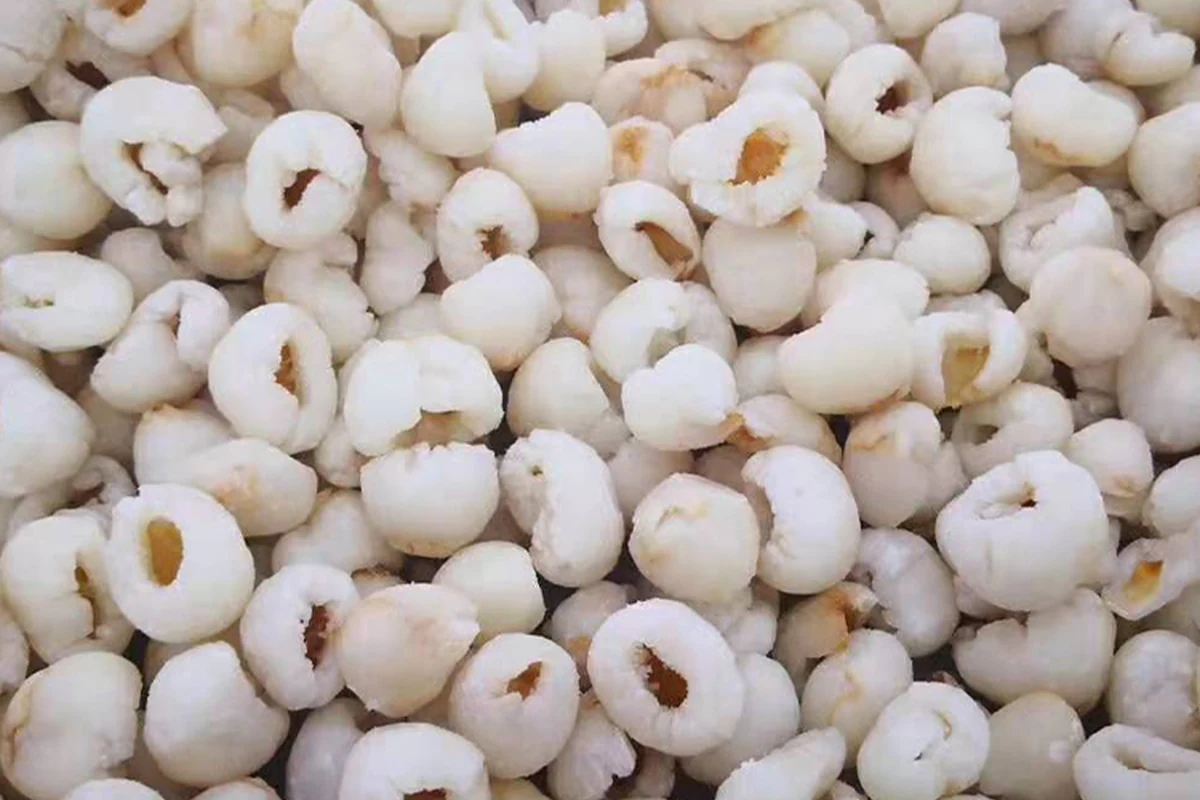
Peeled lychee flesh shows the shape to preserve during gentle syrup cooking.
For a comparison, prepare two very small samples with the same fruit count and syrup amount. Add reserved thaw liquid to one and leave it out of the other. Keep heat and serving temperature similar. Ask whether the retained liquid improves fruit aroma or makes the syrup taste thin. That trial can guide the next batch; it is a suggested kitchen method, not a test already conducted by XMG. Note the starting fruit sweetness as well, because changing fruit lots during the comparison would obscure the cause.
Poach gently and stop before collapse
Poaching here means cooking in liquid below a vigorous rolling boil, with enough heat to warm the fruit and permit flavor exchange. The aim is not to reduce the fruit to jam. Heat the syrup first, then add the lychees so you can observe what happens when they enter. Stir with a spoon only as much as needed to expose pieces evenly. Whole peeled fruit has a natural cavity and delicate walls; forceful stirring or extended bubbling can tear it.
Watch three signs instead of relying entirely on a clock. First, the fruit should no longer have a frozen core if it began partly frozen. Second, the syrup should pick up some lychee aroma without becoming opaque with pulp. Third, a piece lifted on a spoon should still look and feel like fruit. If the fruit is already fully thawed and soft, these signs may appear quickly. If it enters frozen, the syrup cools and the heating phase takes longer. Adjust your observation accordingly; the same elapsed time has different meaning in those two cases.
Some cloudiness is normal if a little fruit tissue enters the syrup. A clear liquid can look elegant, but clarity is not proof of good flavor or safe preparation. If clarity matters for a plated dessert, use intact fruit, minimize stirring and strain the liquid separately after cooking. Do not squeeze the lychees through a sieve and expect them to remain whole. If the liquid is very thin, remove the fruit before reducing the syrup further; boiling the fruit to concentrate the sauce is likely to compromise its shape.

The diagram scrolls horizontally on smaller screens.
Conceptual sequence shows gentle heating and a shape check, without preservation claims.
The syrup should lightly coat a spoon for many dessert uses, but the desired thickness depends on how it will be served. A small bowl with fruit can tolerate a lighter syrup; a plated garnish may need a more concentrated drizzle. The syrup will also feel different when cold than when hot. Taste both after a trial before adding more sugar. The syrup should still taste of lychee and suit the way you will serve it.
Serve warm or chilled based on texture
Warm poached lychees can be served beside a simple cake, rice dessert or mild dairy component. Their aroma may be easy to notice when the syrup is warm, but a soft fruit can also seem more fragile. A chilled serving offers a cleaner, firmer impression for some batches, yet the floral aroma may be less obvious. Choose by tasting the same preparation at the temperatures you intend to serve. Avoid claiming that heat or cold always improves every lychee lot.
For a chilled dessert, remove the pan from heat promptly and cool the food using safe methods before refrigerating. A large hot pot should not sit for hours on a counter. Use a shallow suitable container when appropriate, cover and refrigerate according to food-safety guidance. This is a short-term prepared dessert. The recipe is not tested for room-temperature storage, and a sealed jar is not automatically a preserved product. Do not reuse home-canning instructions from a different fruit or acid system.
Judge the fruit after cooling, not only during poaching. Does it remain intact when spooned into a bowl? Is the syrup balanced with the fruit, or does it taste like plain sugar water? Has the color changed in a way that is acceptable for the dish? Does the fruit release more liquid after standing, thinning the syrup? Note these results with the actual batch and serving interval. A menu dessert needs the hold condition tested under its own operational controls; a home cook can simply make a small portion and enjoy it promptly.
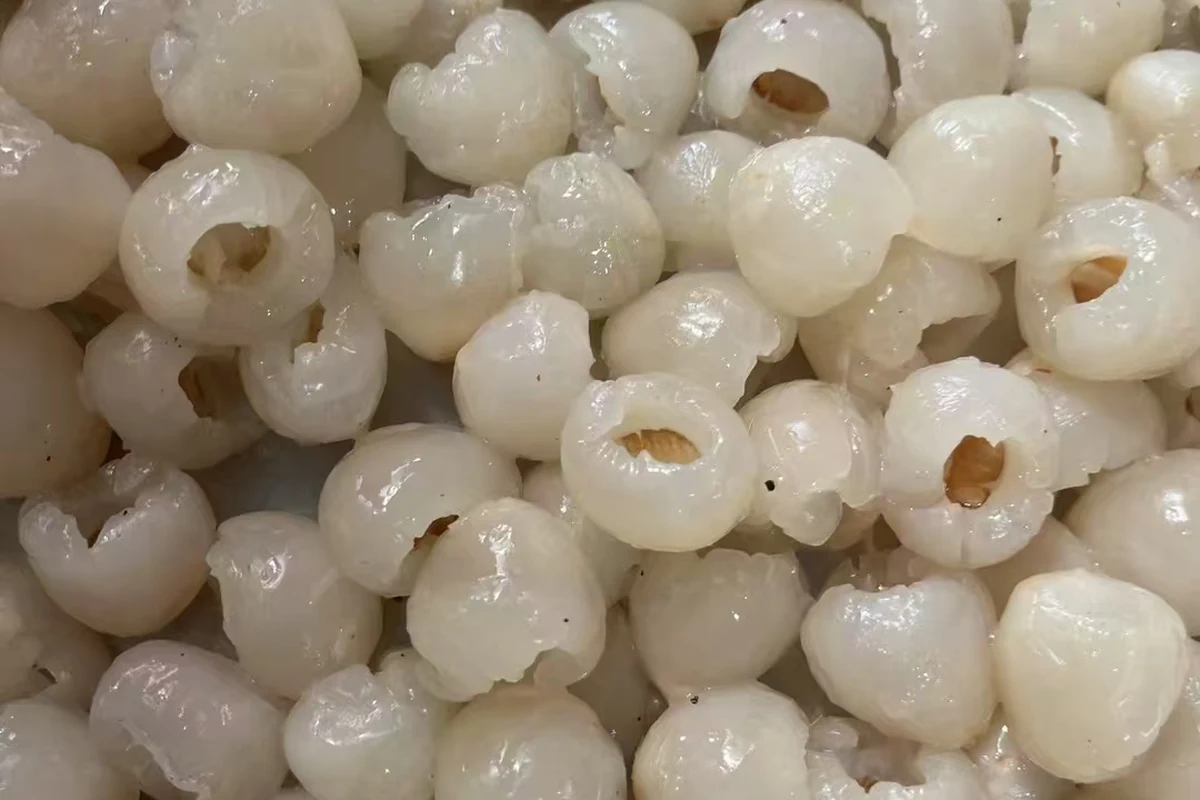
A wet surface on lychee flesh is a condition to inspect before syrup cooking.
Troubleshoot cloudy syrup and weak flavor
Cloudy syrup often comes from broken fruit, vigorous boiling or extensive stirring. Straining can improve appearance after removing the fruit, but it does not restore the lychees’ original shape. If clear presentation matters, use a firmer fruit form, handle it gently and shorten its time in the liquid. If the fruit is already falling apart after thawing, accept a compote-like result or use it for a blended sauce instead of asking whole-fruit poaching to solve a structural problem.
Weak flavor can come from a diluted syrup, fruit with little aroma, too much competing spice or serving it very cold. Taste the fruit alone and taste the syrup separately. If the fruit is flavorful but the liquid is bland, use less water or a measured portion of good thaw liquid in the next trial. If the fruit itself is weak, more sugar makes a sweeter dessert but not necessarily a more lychee-like one. A mild tea or citrus accent can support the result, but call it a flavored syrup rather than a correction to the fruit’s original quality.
If the fruit is overly soft, reduce the heating exposure. Add fully thawed pieces late, warm them gently, and remove the pan from heat once they are pleasant to eat. If they remain hard or icy at the center, give them more controlled time in the warm liquid. When pieces vary widely in size, consider sorting them or using a different cut so they reach an even state. Do not boil aggressively just to bring the largest piece up to temperature while destroying the smallest.

The diagram scrolls horizontally on smaller screens.
Illustration compares handling outcomes to watch for; no actual batch test is represented.
Serve a small portion of the actual frozen lychee, syrup and intended garnish at the intended temperature. Compare fruit shape, liquid sweetness and aroma immediately and after the expected wait. At home, the small serving protects the rest of the bag. In dessert development, the same check helps set a useful specification for whole peeled fruit, halves or puree. The result remains specific to that fruit lot and preparation. It does not establish a universal poaching time, canning process or shelf life.
If you plan to use the syrup with another dessert, taste it beside that component before changing the whole batch. A sweet syrup that seems balanced alone may overwhelm plain yogurt, while the same syrup may need more brightness beside a rich cake. Spoon a little onto the actual plate and see whether the lychee remains recognizable. Keep the fruit separate while making any further syrup adjustment so it does not continue cooking by accident. This small step protects both the aroma and the shape that make poached lychees appealing.
Related XMG pages
XMG shows lychee forms on its IQF Frozen Lychees page. Other cooking questions are collected in Food Knowledge.
View frozen lychees
Review the listed frozen lychee forms. Choose peeled flesh for gentle syrup cooking and check the ingredients and preparation instructions for the product you use.
View product forms →References
- University of Minnesota Extension, [1] How to freeze fruit safely.
- FDA, [2] Selecting and Serving Produce Safely.
- The Flavor Bender, [3] Homemade Lychee Syrup.
- Hardtank, [4] Lychee Syrup with Frozen Puree.
