


On this page
Frozen fruit can make excellent sorbet, but berries, mango and lychee do not behave like interchangeable bags of fruit. Choose berries when you want vivid tartness and are willing to manage seeds; choose mango for a fuller, smoother puree; choose lychee for a delicate floral flavor that needs careful sweetness and acid adjustment. The decisive test is the finished scoop at the temperature at which you will serve it. A base that tastes balanced before freezing can seem muted or hard straight from a cold freezer, while a soft spoonful may melt too quickly on a warm plate.
This is a selection and trial method rather than a universal formula. Fruit maturity, added sugar, water, acid, puree yield, seed removal and freezer conditions all change the result. Start with a small batch, record what you add by weight, and change one variable at a time. If a product is intended to be served without a cooking step, check the product’s use instructions and handling requirements first; freezing alone should never be treated as a validated safety treatment.
Which fruit makes the sorbet you want?
The most useful first question is not which fruit is sweetest. Ask what the spoonful should do. A bright berry sorbet can refresh the palate after a rich meal, but its seeds and skins may interrupt a fine texture. Mango can give a dense, rounded mouthfeel, yet a thick puree may become heavy or resist churning unless its liquid and sugar balance is adjusted. Lychee has a gentle perfume that can disappear beneath too much syrup or citrus. Its relatively unobtrusive color also makes texture defects easier to see.
For a quick home dessert, frozen fruit blended to a soft-serve texture can be served immediately. That approach differs from a churned base stored for later service. The former depends on the fruit already being frozen and the machine being able to process it; the latter must stay scoopable after its entire base is frozen. Decide which result you want before judging a recipe. A method that works beautifully from a processor bowl may freeze firm overnight, and a formula designed for a scoop cabinet may taste overly sweet when eaten semi-frozen.
Pick a trial by the flavor and texture you want, then test the actual fruit at serving temperature. None of these three directions is a quality ranking.
| Fruit direction | What it contributes | Main texture risk | First adjustment to test |
|---|---|---|---|
| Strawberries or other berries | Clear fruit color and lively acidity | Seeds, skins or an icy low-solids puree | Compare strained and unstrained puree; record the yield and taste both at serving temperature |
| Mango | Smooth, pulpy body and round flavor | Heavy puree or a hard frozen scoop if the base is poorly balanced | Compare the same fruit weight with small changes to liquid and sweetener |
| Lychee | Light floral aroma and delicate color | Flavor obscured by sweet syrup or a weak, icy base | Taste a plain-fruit control before adding syrup or acid in small increments |

Whole frozen strawberries show the berry form before pureeing; this is not a sorbet result.
What freezing changes in the base
Fruit is made of water held within tissue. Ice formation can disrupt that structure, so thawed fruit may be softer and release liquid. This is useful when the ingredient will become puree, but it still changes the amount of free water going into the sorbet. If you drain a bag of thawed fruit for one trial and include the liquid in another, those are different bases even when you weighed the same amount of fruit at the start. Label which basis you used. Keep the liquid if the recipe needs its flavor and you can balance the water; drain and measure it if you need a controlled comparison.
Do not interpret a wet thawed bowl as automatically poor fruit. The important question is whether the whole fruit, puree and released liquid suit the target dessert. Likewise, individually frozen pieces are convenient for portioning, but a piece that looks separate in the bag has not proved the final sorbet texture. Freezing method, previous temperature changes, fruit variety and ripeness all affect what you see after thawing. The product’s ingredient statement matters too: plain fruit, sweetened fruit and prepared fruit bases start with different sugar contents.
Sugar does more than sweeten a sorbet. Dissolved sugars affect the amount of water that freezes at a given temperature; that influences hardness and scoopability. Fruit itself also brings soluble solids, acidity, fiber and sometimes substantial pulp. These are reasons to record the whole formulation instead of copying one spoon measure of sugar from a different fruit recipe. Taste is still essential, but sweetness judged at room temperature is not the same sensory experience as a frozen serving. Use the same serving temperature and rest time when comparing trials.
Acid is a separate adjustment. Berries often arrive with enough tartness to give a distinct finish, although the exact batch can vary. Mango may need a little citrus for brightness in some preparations, while lychee’s gentle aroma can be sharpened or overwhelmed by added acid. Add an acid in measured increments after first tasting the unadjusted puree. If you change sugar and acid together, you will not know which change improved the scoop. A soluble-solids reading, when available, can help document differences, but it does not by itself predict how a person will perceive sweetness or texture.
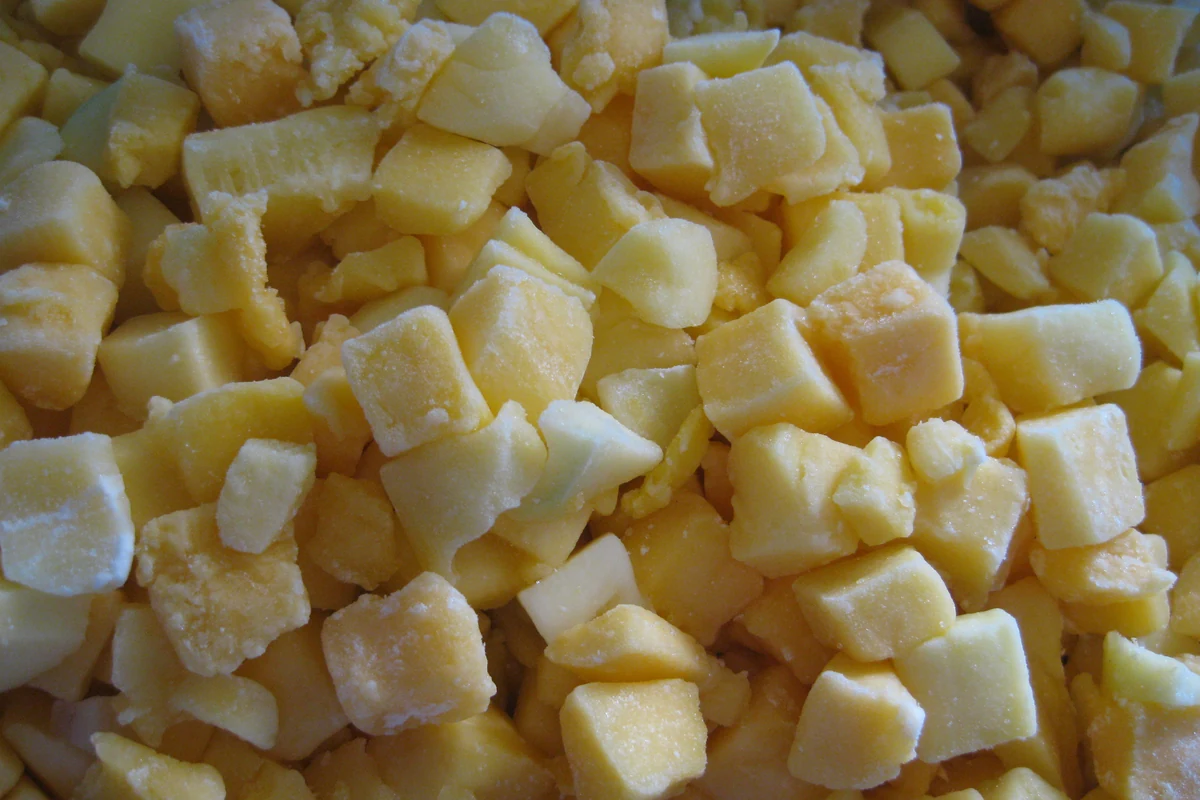
Frozen mango dice show the product form before blending.
Berries, mango and lychee side by side
The fair comparison begins with an identical question for each fruit: what fraction becomes smooth usable puree, how much liquid separates, and what texture results after the same freezing and serving routine? Process equal initial fruit weights but do not assume the same finished puree weight. Strawberry seeds, raspberry seeds and berry skins may be strained out; mango fiber may or may not need a sieve; peeled lychee flesh can contain pieces or membrane that a fine dessert may need removed. Weigh what remains after the chosen treatment. That number matters more to the final formulation than the unopened bag weight.
For berries, first decide whether a seed-flecked style is acceptable. A coarse, fast sorbet can celebrate fruit texture, while a formal plated scoop may call for a finer puree. Blend a small portion and strain half. Compare the two after freezing. Straining improves smoothness for some berries but also removes solids and volume, so the same added syrup can make the strained portion behave differently. Do not hide that difference by changing several ingredients at once.
For mango, check how smoothly the thawed pieces blend and whether visible fibers remain. Ripe mango pieces often form an appealing puree without extensive straining, but varieties and cuts differ. A dense base may need a little more liquid to move through a churn, yet too much water can make the frozen result coarse. Record a modest adjustment and judge both body and melting on the spoon. For lychee, blend peeled, pitted fruit and taste the base before adding a strongly flavored syrup. A light touch preserves the fruit’s character; a poor-quality or heavily diluted base cannot be rescued simply by calling it floral.
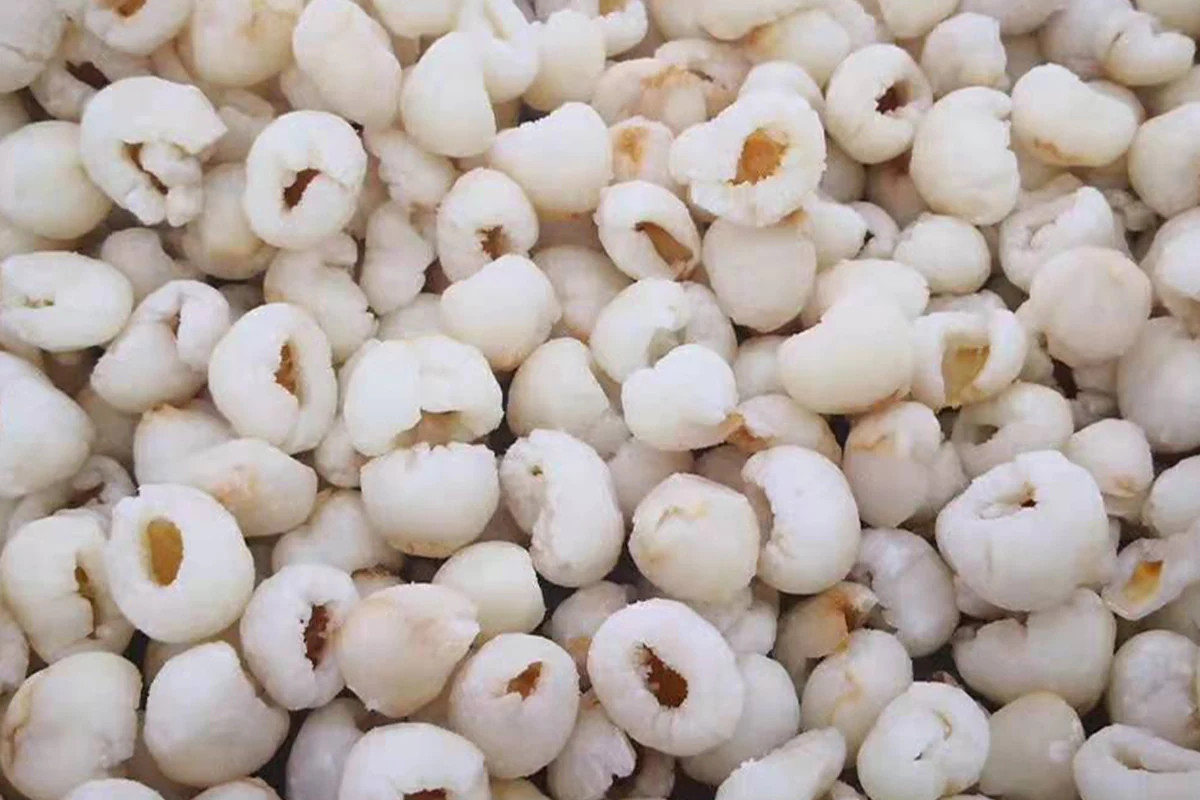
Peeled lychee flesh is the fruit form used for puréeing.
How to run a useful small-batch comparison
Keep the equipment and service conditions as consistent as possible. Use the same blender or processor, container shape, batch size and freezing method. If you make a churned sorbet, chill each base adequately and follow the machine’s loading guidance. If you use the no-churn approach, freeze in similar shallow containers and stir or process each at equivalent stages. King Arthur Baking describes both freezer-pan and churned sorbets; the methods produce different textures, which is why comparing one churned sample with one unstirred pan is not a fair fruit test.
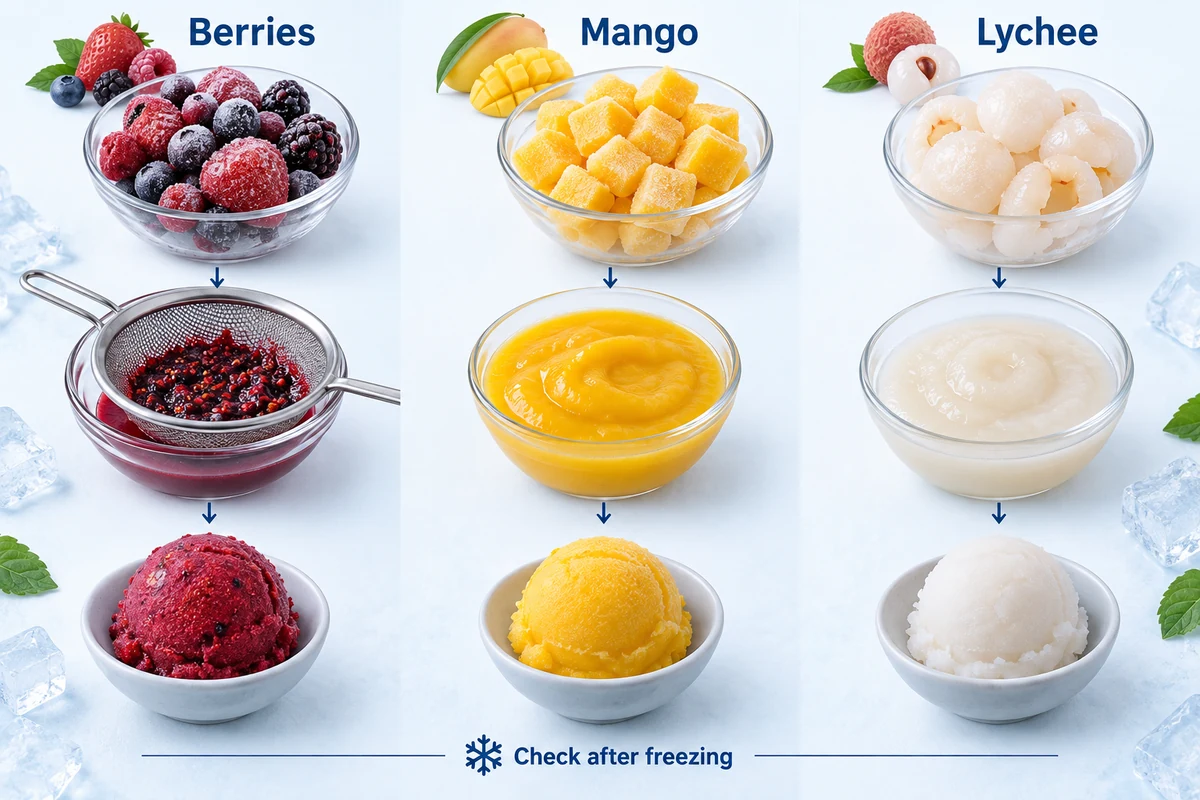
The diagram scrolls horizontally on smaller screens.
Illustration compares fruit preparation paths; scoop performance must be tested at the same serving temperature.
- Check the fruit label, intended use and storage instructions. Weigh the fruit and note whether the measurement is before or after thawing and draining.
- Process one plain-fruit control for each type. Record seed or fiber removal, liquid retained, finished puree weight and any visible discoloration.
- Add sweetener and acid by weight in small, recorded steps. Keep one base adjustment at a time and taste the mixture after each change.
- Freeze the samples by the same route. Label the batch, container and time. Avoid interpreting one unusually thin layer against a much deeper container.
- Serve equal portions after the same rest at the same temperature. Note scoop resistance, visible ice crystals, mouthfeel, flavor, aroma and melt rate.
You do not need a laboratory to make the trial informative. A kitchen scale, notebook and consistent serving routine are enough to prevent most misleading comparisons. A refractometer can add a soluble-solids record if available and used consistently, but the number should sit beside your observations rather than replace them. If the formula is being developed for foodservice or manufacturing, the later trial should use the actual processing, storage and service conditions; a household freezer trial is a screening step, not a product approval.
Correcting an icy, heavy or flat result
An icy sorbet often points to too much free water for the dissolved solids and process, although inadequate mixing or temperature cycling can contribute. Check whether thaw liquid was included and whether the base was diluted to make blending easy. A modest syrup adjustment may help, but adding syrup blindly can leave the finished dessert cloying. Make a measured second trial. If the base was processed in a shallow pan, more frequent stirring or a final blend can change crystal perception; if churned, review how cold the base was at loading and how quickly it froze.
A heavy or gummy scoop is a different problem. Mango puree can supply significant body, and reducing fruit solids or adjusting liquid may improve its palate. Before diluting, check whether the scoop was simply served too cold. Letting a portion temper briefly may show that the formulation is acceptable at its intended service condition. If it rapidly collapses after a short rest, note that as well. A recipe cannot be evaluated from the first bite of a rock-hard scoop alone.
Flat flavor needs its own diagnosis. First taste the fruit unfrozen: sweetness and aroma vary by lot. Then ask whether the frozen serving is under-acidified, over-sweetened, too cold, or simply too diluted. A small acid adjustment may enliven mango or lychee; berries may need less. If the fruit itself is weak, more syrup will produce a sweeter, not necessarily fruitier, sorbet. A second fruit or an aromatic addition is a creative option, but label it as a different product rather than a successful correction of the original comparison.
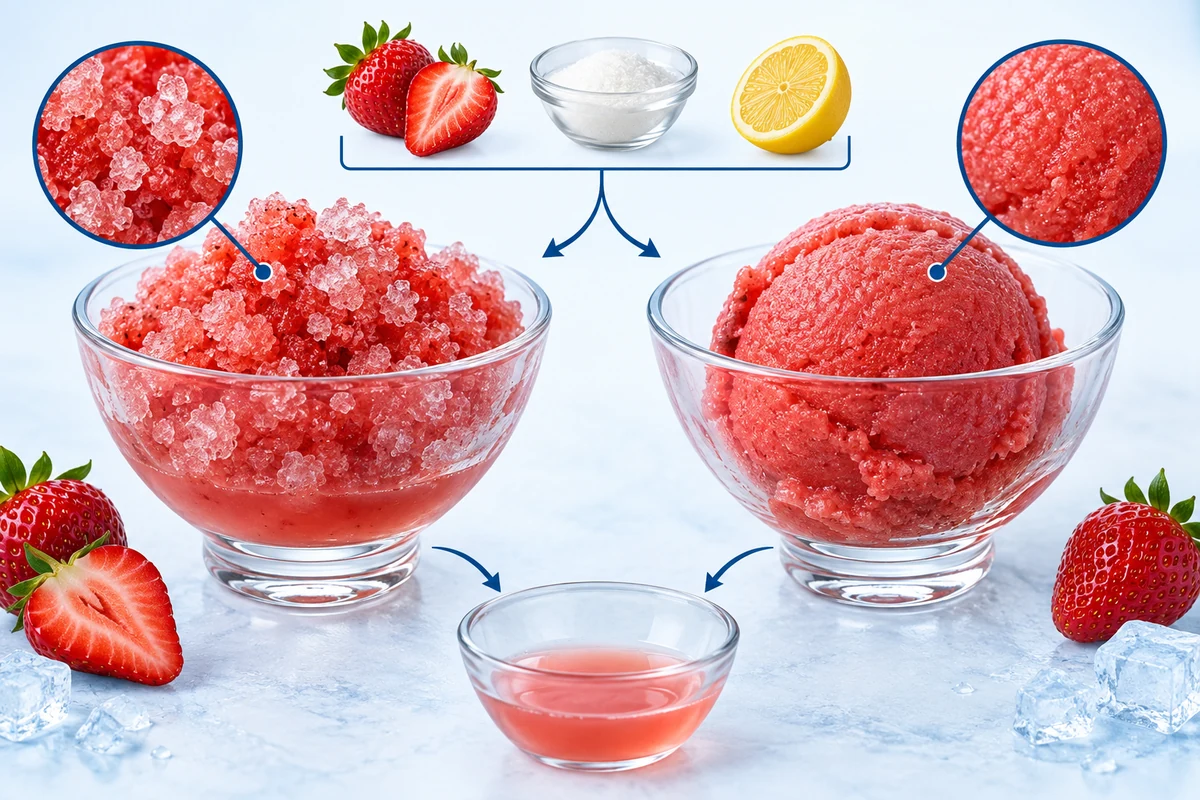
The diagram scrolls horizontally on smaller screens.
Illustration shows texture signals to inspect, not results from a measured trial.
Serving and storage decisions
The best fruit choice depends partly on when the dessert is eaten. A processor-made frozen-fruit sorbet can be spooned immediately as a soft dessert. For make-ahead service, transfer the base to a suitable covered container, freeze it and test it again after storage. Work from the product’s handling guidance and keep food cold during preparation. Do not leave a large batch standing at room temperature simply because a small scoop needed a brief tempering period.
For a plated dessert, put equal small scoops into the intended bowl or beside the intended accompaniment. Watch them for a realistic service interval. A berry scoop that looks vibrant but leaks quickly into a crisp garnish may need a different formulation or plating order. A mango scoop with excellent body may feel too rich after a heavy main course. Lychee can be beautiful beside a restrained citrus or tea element, but its gentle aroma may be lost next to strongly flavored chocolate or spice. These are sensory decisions to test, not universal properties of every frozen batch.
If you are selecting bulk frozen fruit for dessert development, the useful specification questions are fruit form, ingredient statement, variety or maturity basis where available, puree yield, seed or fiber load, packing and the intended processing route. The current XMG frozen-fruit range includes berries, mango and lychee forms, with exact order specifications confirmed individually. At home, choose the flavor first and test a small puree and a finished scoop before using the whole bag.
Related XMG pages
XMG lists its fruit forms under IQF Frozen Fruits. Related kitchen questions are in Food Knowledge.
View frozen fruits
Compare berry, mango and lychee forms on the XMG frozen-fruit page. Choose the fruit and finish that fit the sorbet you want to make.
View product forms →References
- FDA, [1] Are You Storing Food Safely?.
- University of Minnesota Extension, [2] How to freeze fruit safely.
- King Arthur Baking, [3] Mango Sorbet and [4] Strawberry Sorbet.
