


On this page
Choose strawberries when recognizable fruit pieces are part of the filling you want. Choose raspberries when you want a more even berry spread and are comfortable with their seeds, or have a recipe designed for a seedless preparation. With frozen fruit, neither choice should be based on the expectation that thawed berries will behave like fresh decoration.
For a chilled layer cake, preparation and assembly often matter more than the fruit name. A cooled, properly thickened strawberry filling can be more suitable than loose thawed raspberries; a recipe-specific raspberry filling can be more suitable than large strawberries with free juice. Compare the prepared fillings on the same cake, with the same layer depth and serving conditions.
The goal is a filling that tastes right, cuts pleasantly and stays where you put it. Visible pieces, seed sensation, moisture entering the sponge and layer movement are separate decisions. There is no universal “better berry” that resolves all four.
Choose the filling format before choosing the berry
A cake filling can be a thin fruit spread, a chunky preparation, fruit combined with cream, or a more elaborate mousse. Those structures are different products. Before comparing strawberries and raspberries, decide what the slice should contain and how the cake will be stored and served.
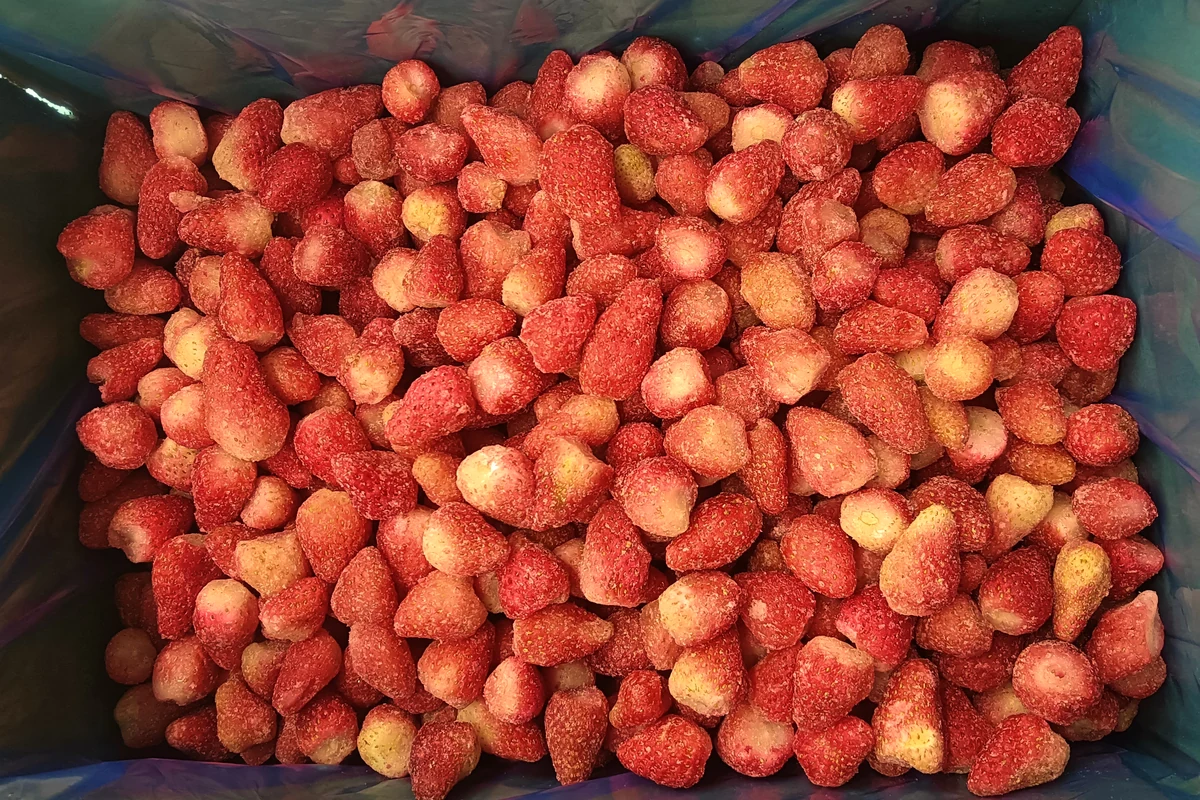
If the desired slice shows distinct strawberry pieces, a fully smooth raspberry puree is not a like-for-like alternative. If the goal is a thin even red line, large fruit chunks may be unnecessary. A cream-based cake with freshly arranged berries also raises a different question from a buttercream layer cake with a cooked fruit spread.
Use a verified recipe for the intended filling format. The cake, filling and frosting should form a compatible assembly. Do not put a pouring sauce into a cake simply because both contain berries. A sauce can be pleasant over a plated slice while remaining too mobile to sit beneath another cake layer.
This comparison focuses on fillings between chilled cake layers. It is not a guide to strawberry shortcake toppings or to adding raspberries into a batter that will later bake. Those methods use different structures and different points of fruit addition, so their successful handling rules cannot be transferred without checking the complete recipe.
Strawberries offer pieces; raspberries offer a seeded spread
Strawberries give you a clear piece-size choice: whole fruit, slices, halves or smaller cuts. Once cooked or thawed, their texture changes, but a recipe can still preserve recognizable pieces. Size affects distribution within the layer and how a knife moves through a slice.
Raspberries have a hollow clustered structure and many small seeds. When broken down into a filling, they can give an even spread with a noticeable seeded texture. That can suit a thin fruit line, but the seed sensation remains part of the eating experience unless the preparation removes it.
Fruit form alone does not establish sweetness or acidity. Fruit lot, recipe sugar, cooking and the surrounding cake all affect the finished taste. Taste the cooled filling with the actual sponge and frosting instead of choosing from the fruit’s reputation alone. A tart fruit component can be welcome in a sweet cake, but the useful balance is specific to the dessert.
Check the filling color in the actual cake slice. A darker filling may create stronger contrast with vanilla sponge, while a lighter preparation may look subtle in the slice. Neither color proves a stronger berry flavor or better structure. Judge the bite and the appearance separately at the intended serving condition.
Frozen fruit needs preparation for a chilled cake
Thawing frozen fruit can release juice and soften it. In a cake assembled after baking, there is no later sponge-baking stage to absorb or manage that liquid in the same way as a fruit batter. Loose thawed fruit therefore needs attention before it becomes an internal layer.

King Arthur’s discussion of frozen fruit in baking [1] specifically distinguishes fruit used after baking from fruit baked into a product. It notes the risk of thawed raspberry juices making a cake filling watery. Use that as a reason to choose a prepared filling, rather than as a prediction that every frozen raspberry cake will fail.
For a cooked fruit filling, follow the recipe’s directions about retaining juice, reduction and thickening. Cool it fully as required before assembly. A preparation that looks suitably thick while hot can behave differently when cooled, and warm filling can disturb the frosting beside it.
For ready-to-eat handling, follow the pack instructions and local guidance. In Ireland, FSAI advises boiling imported frozen berries for one minute before eating [2]. Where that applies, build the fruit preparation around the required treatment. Refrigerating or draining a filling does not replace a required cooking step.
Compare the fillings on the same cake structure
Keep the sponge and frosting fixed when choosing between fruit preparations. A strawberry filling in a light cream cake and a raspberry spread in a dense buttercream cake do not isolate the fruit choice. The surrounding structure can dominate moisture transfer, sweetness and layer stability.
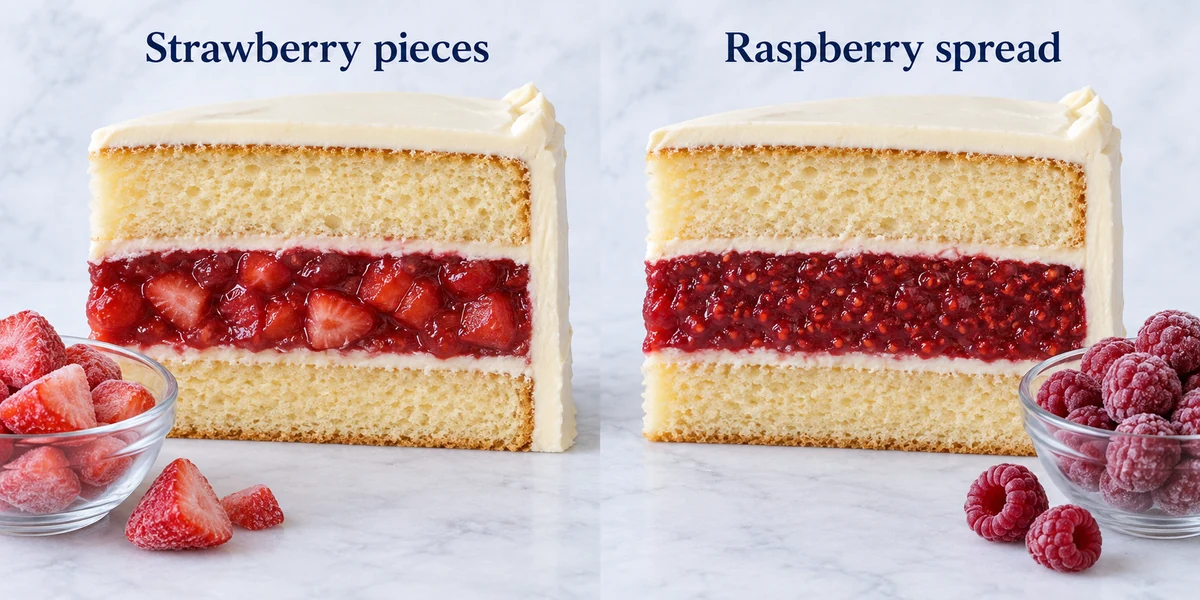
| Decision | Strawberry preparation | Raspberry preparation |
|---|---|---|
| Visible fruit | Choose and record the cut if recognizable pieces matter | Decide whether whole pieces or a broken-down spread is intended |
| Mouthfeel | Check piece softness and size in the slice | Check seeds, or assess the separately prepared seedless version |
| Moisture | Inspect sauce around pieces after cooling | Inspect liquid separation from the finished spread |
| Layer stability | Assess the complete cake with the selected frosting and filling depth | Assess the same structure, rather than crediting the berry name alone |
Use comparable filling depths and serving conditions, but do not force both fruits through a formula validated for only one of them. Use a suitable strawberry recipe and a suitable raspberry recipe, then acknowledge differences in sugar, thickener or yield. That compares usable finished options honestly without claiming a laboratory fruit-only experiment.
Photograph the cut edge and taste a portion that includes sponge, filling and frosting together. A filling judged alone can feel too tart or too sweet yet work well in the completed bite. A visually tidy layer can still have an unpleasant seed or piece texture. Make the choice on the complete eating experience.
Build the layer to control moisture and sliding
A fruit filling is held by the cake’s complete assembly. A thin base of compatible frosting and a piped frosting rim can help keep a recipe-specific filling in place. Sally’s raspberry cake filling [3] describes that assembly method for its cooked filling. Its result should not be treated as a guarantee for every fruit sauce.
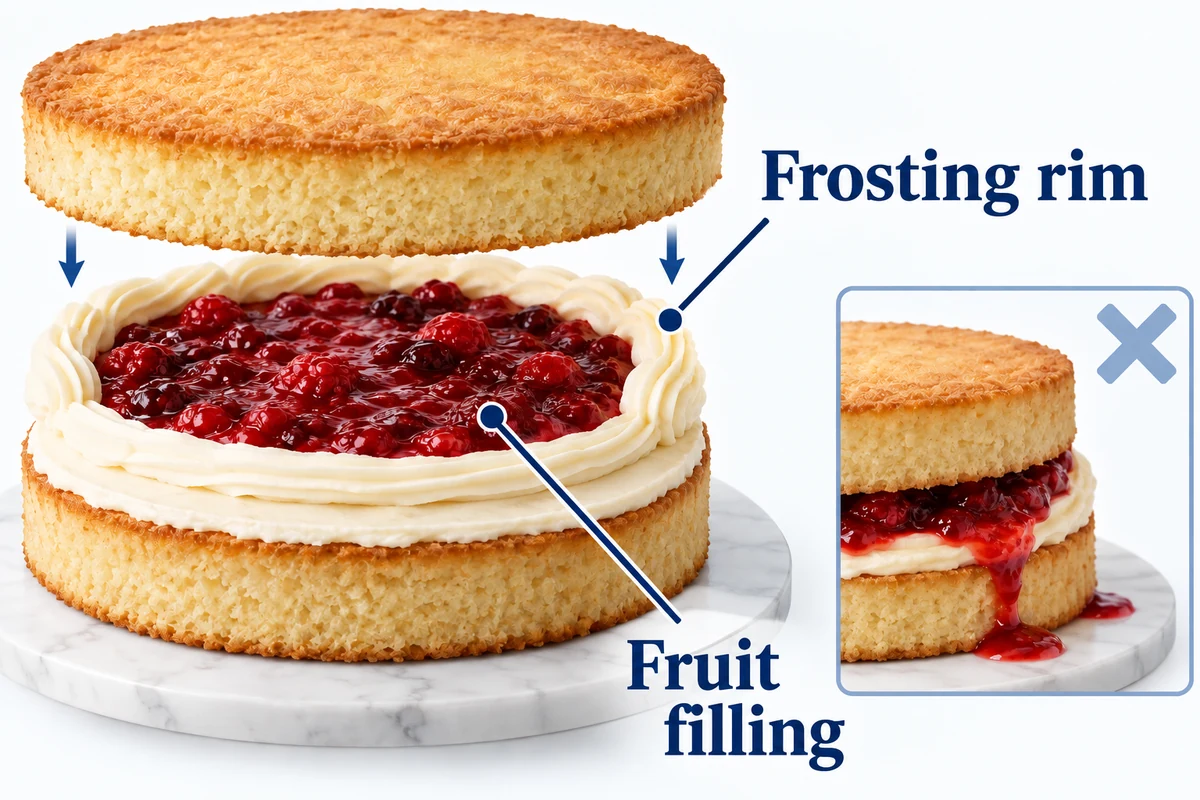
Keep the fruit inside the rim and follow the recipe’s filling quantity. An oversized pool can load the layer and move toward the edge when the next sponge is placed. A taller rim is not a substitute for a suitable filling or sensible depth. More fruit may increase flavor, but it also changes the structural task.
Place the upper cake layer carefully and avoid pressing it hard merely to make the cake look level. If the filling starts to escape, stop and review quantity and consistency. Pushing it back under the sponge hides the symptom without addressing why it moved.
Do not assume a frosting barrier completely prevents moisture reaching sponge. It is an assembly component, not a sealed package. Inspect the cake after the intended chilled hold. If the adjacent crumb becomes unacceptably wet, assess filling liquid, layer depth and the full assembly instead of simply choosing the other fruit.
Seedless raspberry filling changes yield and texture
Removing raspberry seeds is a deliberate preparation choice. It can make the filling smoother, but it changes how much usable fruit preparation remains and may affect how the selected recipe thickens. Keep the strained material and final yield in your notes rather than calling the operation a texture change with no other consequence.
If the recipe is designed to retain seeds, follow its specific seedless variation or choose a recipe designed for seedless filling. Do not strain a finished preparation, spread the smaller remaining quantity over the same cake and then conclude the fruit is less flavorful. You have changed the yield and distribution as well as the seed content.
Strawberries also contain seeds, but the visible and tactile experience differs from a concentrated raspberry spread. Ask whether the people eating the cake want smoothness, recognizable fruit, or a jam-like texture. “No pieces” and “no seeds” are different requests and require different preparation decisions.
For repeated kitchen production, record final usable filling mass after any straining or reduction. Starting fruit mass alone does not tell another cook how much filling will be available for the layers. A seedless option that tastes excellent may also need a different purchasing quantity from a seeded option.
Check the refrigerated slice at the intended serving time
Inspect the cake after the actual chilled hold, then again at the recipe’s intended serving condition. A cake cut immediately after assembly may look tidy simply because liquid has not had much time to move. A cake cut while very cold can feel firmer than the slice served later.
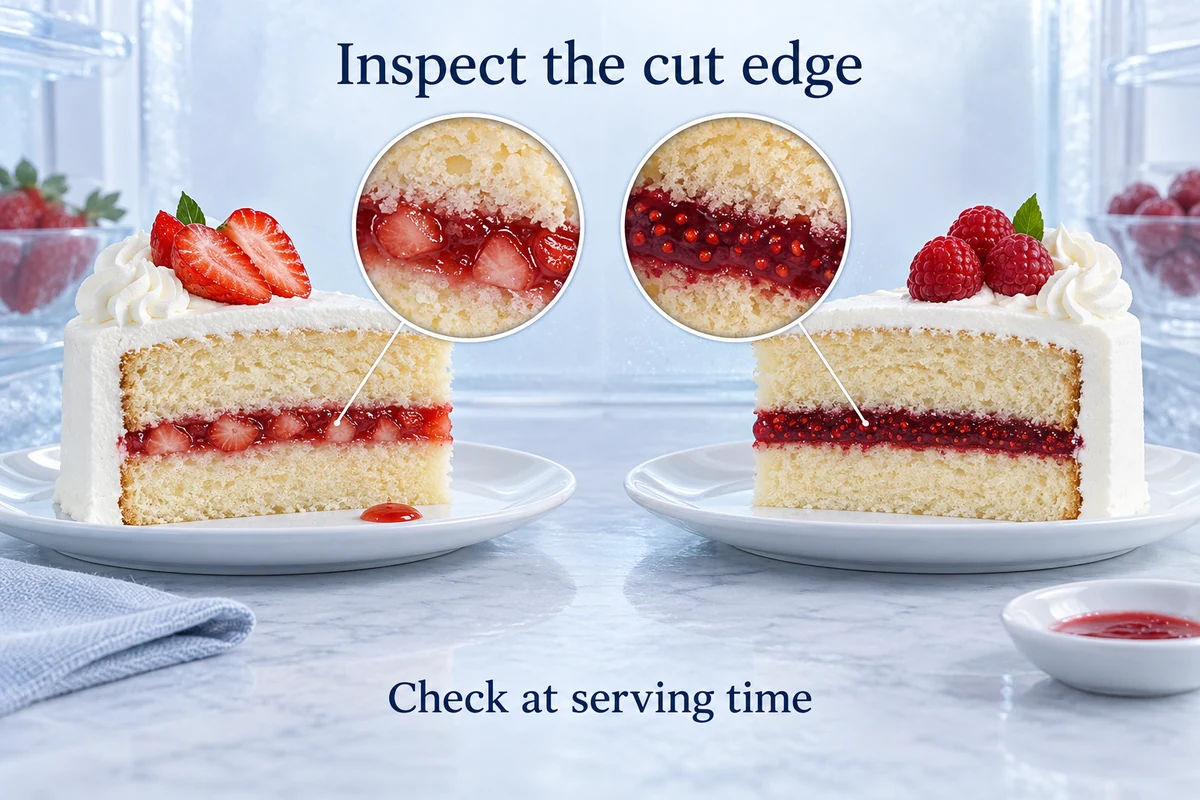
Look at the boundary between filling and sponge. Note whether the crumb is lightly colored, visibly soaked or still pleasant to eat. Color alone does not quantify moisture, so compare its texture as well. A thin red stain can be acceptable when the crumb remains sound; a wet collapsed boundary is a different observation.
Check layer movement without treating the cake roughly. After a clean cut, note whether the upper sponge stays aligned, whether filling flows onto the plate and whether the frosting rim remains intact. If the knife drags a large strawberry piece, review cut size before blaming the entire filling.
Keep perishable fillings and frostings refrigerated under their instructions. US FDA safe-food-handling guidance [4] advises keeping the refrigerator at 40°F or below. A structurally stable slice is not evidence of shelf stability, and this comparison does not assign a universal storage life to a custom cake.
A practical comparison for your own cake
Make a small comparison before committing to a celebration cake or a service batch. This is a proposed trial, not a report of tests we performed. Use the same sponge and compatible frosting, and prepare each fruit filling using a verified method appropriate to that fruit.
Write down starting fruit form, recipe, retained or discarded liquid, straining, cooled yield and filling quantity per layer. Use matching cake diameters and comparable filling depths. Record differences you cannot avoid rather than presenting the result as an exact fruit-for-fruit experiment.
Evaluate recognizable pieces, seed sensation, flavor balance, wet crumb and layer movement separately. Give each an observation, such as “small pieces cut cleanly” or “seed texture dominates the bite.” Do not compress five different questions into a single score for “quality,” because that hides what you need to change.
Repeat the comparison at the realistic service point. If the cake will be refrigerated overnight, that is the relevant check. If it will be transported, include a properly controlled transport and handling stage rather than judging only a stationary cake. Food safety and temperature control remain requirements in either fruit option, not variables to relax in pursuit of a preferred texture.
Choose product form for repeat preparation
For repeat bakery or foodservice use, we would write the successful form into the ingredient brief. For strawberries, that may mean a specified cut and unsweetened status; for raspberries, whole or broken condition and a clear seeded or seedless preparation route. A generic “berry filling” brief leaves too much of the finished dessert unspecified.
The frozen-fruit range is the common product context for this two-fruit decision. We connect the selected ingredient with its intended application through representative samples and specification approval. That helps keep the approved filling method and future ingredient comparison on the same basis.
For more detail on strawberry input forms, see whole versus sliced frozen strawberries for bakery fillings. It addresses the input-format choice; this comparison adds the raspberry alternative and the chilled layer cake’s complete structure. Preserve both distinctions when recording your preferred filling.
Explore the product forms behind this application.
Frozen Fruits →