


On this page
Yes, frozen strawberries can make strawberry lemonade. Choose the fruit handling first, then decide whether you want visible pieces, a pulpy drink or a smoother strained pour. Those are three different drinks even when they begin with the same fruit. Whole berries mainly give you fruit to see and eat; blending spreads the fruit through the liquid; straining removes some of that material.
The important condition is suitability for cold consumption. An ordinary bag of frozen fruit is not automatically ready to eat. Follow its preparation instructions and the food-safety advice that applies where you live. If cooking is required, prepare the fruit that way and cool it safely before mixing the cold drink. Lemon juice, rinsing, blending and thawing do not replace a required heat treatment.
Start with a small glass rather than a full pitcher. Get the strawberry character and drinking texture right before adding the last lemon juice or sweetener. Taste with the water and ice you actually plan to serve: a concentrated pink mixture can become a weak, sharp drink once a glassful of ice melts.
Check the strawberries before planning a cold drink
Read the whole pack, including preparation and storage instructions. Check whether it contains plain fruit, added sugar, syrup or other ingredients. A sweetened fruit preparation needs a different adjustment from unsweetened whole strawberries. A product described as an ingredient for cooking should be treated according to that use, even if the fruit looks clean and attractive.
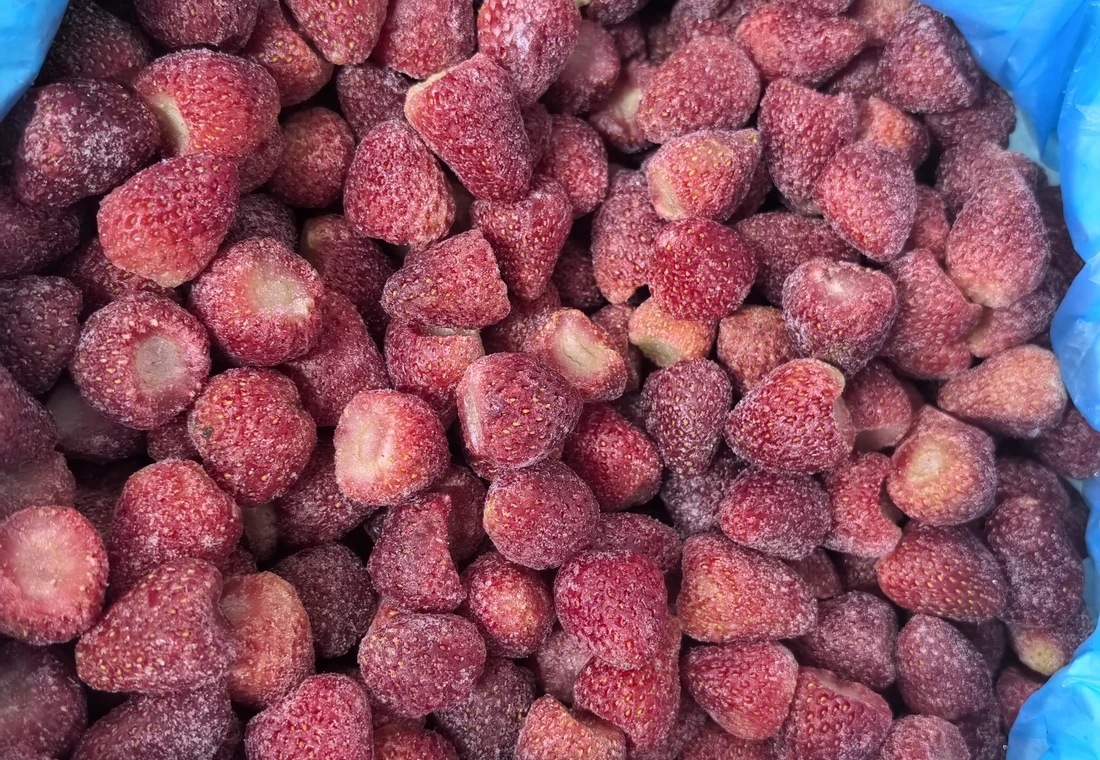
Whole frozen fruit; appearance alone does not establish cold-use suitability.
The Food Safety Authority of Ireland advises boiling imported frozen berries for one minute before consumption [1], following outbreaks associated with these products. That is specifically its advice for imported frozen berries, rather than a universal heating instruction for every type of frozen fruit in every country. Check local advice as well as the pack. If you cannot establish how your berries should be prepared, choose a fruit preparation explicitly suitable for the intended cold use.
Freezing is a preservation method, not proof that a food has received a kill step. USDA explains that microorganisms can become active again after thawing [2]. A freezer, blender or acidic drink mixture should not be treated as a substitute for the product’s required preparation. Keep the equipment, hands, containers and serving utensils clean throughout handling.
Where berries must be heated, follow the applicable instructions, then cool the prepared fruit promptly using suitable small containers. Keep the fruit liquid unless the chosen drink deliberately excludes it. A cooked strawberry base will not give exactly the same aroma or shape as an uncooked ready-to-eat preparation. That changes your drink choice; it is not a reason to skip preparation. Do not add untreated frozen fruit later as a garnish if the same preparation requirement applies to it.
Whole fruit, puree or strained liquid?
Choose by how you want the drink to behave in the glass. A pitcher with recognizable berries can be pleasant for serving with a spoon, but a narrow straw or dispenser makes loose pieces inconvenient. A puree gives a fruitier body and visible cloudiness. A strained base is useful when you want a smoother pour, while still allowing some fine material to pass through the sieve.

Illustrative comparison: fruit pieces, puree and strained liquid have different drinking textures.
| Fruit preparation | What remains in the drink | Useful choice when | What to check |
|---|---|---|---|
| Prepared whole or cut fruit | Recognizable pieces and their released liquid | You want fruit pieces as part of serving | Flavor in the liquid, piece distribution and pourability |
| Blended prepared fruit | Pulp, fine seeds and fruit liquid | You want a cloudy drink with body | Grit, foam and settling after standing |
| Blended then strained | Liquid and material small enough to pass the sieve | You prefer a smoother glass or easier dispenser use | Strainer opening, pressing pressure and liquid recovery |
Putting whole berries into lemonade is not the same as distributing all their fruit material through it. If the liquid tastes mostly of lemon while the berries taste strongly of strawberry, the fruit may be acting more as a garnish than as a flavor base. Cutting or gently crushing suitably prepared fruit exposes more of it to the liquid, but it also changes the appearance. Compare that option before deciding to use more fruit.
Blending is the more direct way to incorporate the fruit. Use enough of the recipe liquid to allow the blender to circulate properly, and follow its instructions for frozen ingredients and minimum loading. Avoid forcing solid fruit into equipment that is not designed for it. If the preparation has already been cooked and cooled, blend that chilled base instead. Watch for trapped air: a frothy surface immediately after blending can exaggerate the apparent volume and hide the texture underneath.
For the strained option, use a clean sieve over a bowl and work in manageable portions. Let it drain, then decide how firmly to press. Pressing more material through may recover more liquid but also admit more fine pulp. A kitchen sieve does not guarantee a completely clear drink. Do not promise a seed-free result until you have checked your actual fruit, sieve and method.
Keep the fruit liquid in the comparison
When frozen strawberries soften, red liquid can collect around them. If it belongs to the safely prepared fruit base, include it in the comparison unless you are specifically testing drained fruit. Pouring it away from one sample and retaining it in another changes more than the presence of fruit pieces. You are also changing how much fruit liquid enters the drink.
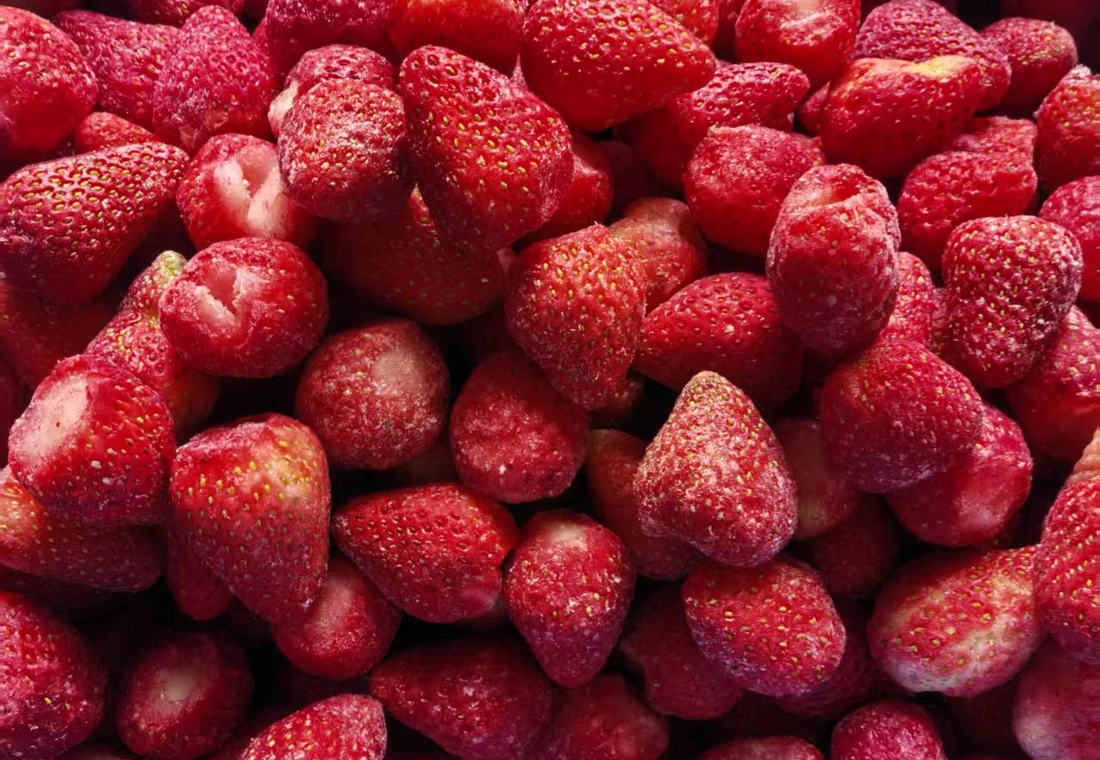
Use one fruit batch and account for its retained liquid when comparing methods.
We distinguish whole, cut and pureed strawberry forms because those forms change handling. Our frozen strawberry page gives product-form context; it does not establish that every supplied form is suitable for uncooked drinks. Intended use and preparation still need to match the particular product. For this lemonade comparison, select one batch and use the same preparation for all three methods.
Weighing the fruit is more repeatable than counting berries. A handful can contain very different sizes, while cups of whole fruit leave variable spaces between pieces. Record the fruit mass, whether released liquid was retained, and the amount of water used for blending. Keep that blending water within the planned drink water instead of adding it unnoticed on top.
If you drain for a particular method, record what was removed. The strawberry thaw-and-drain comparison explains why preparation and collection conditions matter. A household drink does not need a laboratory protocol, but it benefits from the same basic discipline: compare like with like. Otherwise, a method may seem weak simply because part of its fruit liquid went down the sink.
Adjust lemon and sweetness at the serving strength
Make the strawberry base first and add lemon juice gradually. Strawberries already contribute their own flavor and acidity, and batches vary. A fixed amount of lemon cannot guarantee the same balance for every bag. Taste the plain prepared fruit base in the planned water before using the full lemon amount from a familiar recipe.
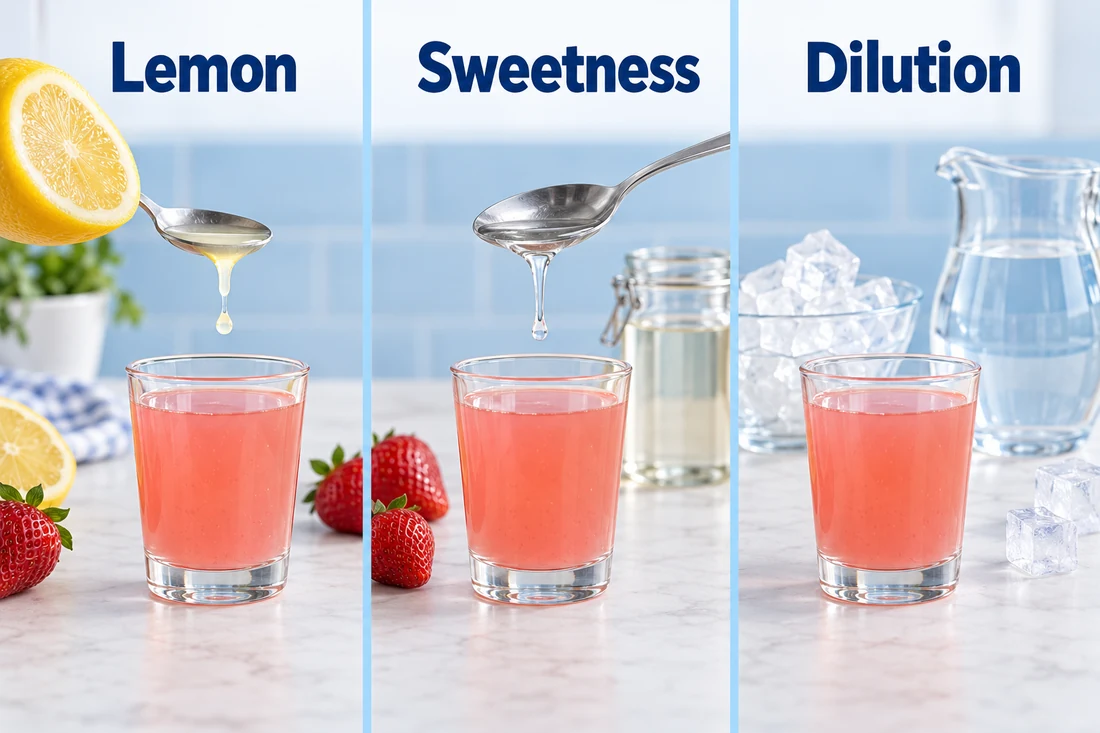
Taste at the planned serving strength and change one adjustment at a time.
Judge three things separately: strawberry character, sourness and sweetness. If the drink is strongly sour but clearly strawberry flavored, a small sweetener adjustment may help. If it is sweet and thin with little strawberry character, more syrup is unlikely to solve the missing fruit flavor. If it feels heavy or jam-like, a little water or a strained method may suit you better. Change one variable at a time so you know which adjustment worked.
A cooled sugar syrup is convenient because it disperses without undissolved crystals at the bottom. Other sweeteners have their own flavors and varying concentration. Use small measured additions rather than assuming that a spoonful of every sweetener is equivalent. If you begin with sweetened fruit or commercial lemonade, taste before adding more.
Leave space for ice dilution in the decision. You can chill the drink and use a modest amount of ice, or make a stronger base for a deliberately ice-heavy service. Neither choice is automatically correct. Compare a small serving with the planned ice rather than making the whole pitcher very concentrated and hoping it balances later. For sparkling lemonade, finish the fruit base first, chill it, then add the sparkling water gently near service to avoid unnecessary loss of carbonation.
Make a small comparison before filling a pitcher
This is a suggested comparison you can carry out, not a report of a kitchen trial. Prepare one batch of strawberries according to its label and applicable guidance. Use clean containers, a scale, a measuring jug, a spoon and your chosen blender or sieve. Keep the finished samples cold throughout the comparison.
- Divide equal weighed portions of the prepared fruit, including proportionate retained liquid, between three containers.
- Leave one portion as pieces, blend the second, and blend then strain the third. Record any liquid used to assist blending.
- Add the same initial lemon and sweetener amounts. Bring each sample to the same final liquid amount with water, accounting for the water already used.
- Taste each at the same cold serving condition. Note strawberry aroma, sourness, sweetness, seed or pulp feel and ease of pouring.
- Keep covered samples refrigerated and examine them again after a short, recorded interval. Stir gently and compare whether their texture is acceptable for your intended service.
Do not confuse a method comparison with an optimized recipe comparison. Equal starting ingredients help reveal the effect of preparation; after you choose a method, you may adjust the final recipe for that method. Straining removes retained solids, so its final yield and body can differ. Record that difference rather than forcing every method to look as though it uses the fruit equally.
Use simple notes such as “noticeable seeds,” “pieces block the pour,” “lemon overwhelms fruit,” or “needs stirring before the second glass.” These are more useful than an unexplained score out of ten. If several people taste, let them try the same small samples in a changed order. Personal preference is part of the decision, so ask which texture they would actually want to drink.
For a larger gathering, repeat the preferred method at a modest pitcher scale before scaling again. Blender circulation, sieve workload and the amount of ice do not always change neatly with batch size. A method that is easy for one glass may become slow when every portion needs pressing through a fine strainer.
What changes while the lemonade stands?
A pulpy lemonade can look even immediately after blending and develop a denser layer later. Some particles may gather at the bottom; others can remain suspended or float with trapped air. The amount and appearance depend on the fruit preparation, particle size and drink composition. A strained drink can still contain enough fine material to change appearance.
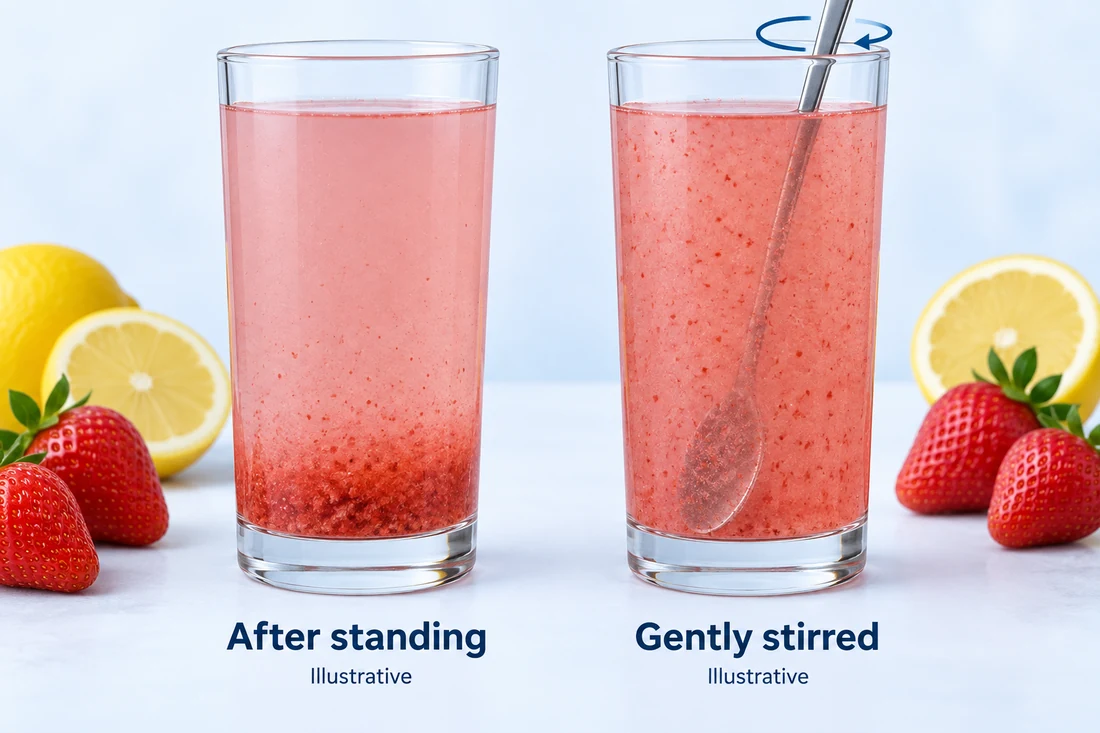
Illustrative settling and redistribution; appearance does not establish safety or shelf life.
Inspect the whole glass before deciding what has happened. Compare the surface, middle and bottom, then stir gently. If the drink returns to an acceptable texture, stirring before serving may be a practical answer. If the bottom layer feels gritty or the first and last glasses taste noticeably different, choose a finer strain or prepare smaller batches close to serving.
Use the actual serving container for a final check. A tall narrow glass makes layering more visible than a shallow bowl. A dispenser may hold sediment near its outlet, while a pitcher can be stirred before pouring. Check the last pour as well as the first: the remaining fruit pieces and pulp can make it a different drink.
Appearance and safety are separate questions. Normal-looking lemonade is not proof of safe handling, and stirring does not make an improperly handled drink safe. USDA recommends keeping perishable foods refrigerated at 40°F or below [3]. Cover the drink, refrigerate it promptly, and follow the ingredient storage instructions and local food-safety guidance. A short observation exercise is not a shelf-life study and cannot establish a multi-day storage limit.
Match the method to the glass and service
Choose prepared pieces for a spoon-friendly glass when you want the fruit to remain part of the experience. Choose puree when a cloudy, fuller drink is welcome and occasional stirring is practical. Choose a strained base when smooth pouring matters more than keeping all the fruit solids. None of these methods guarantees a particular flavor intensity; check the chosen batch at the final water and ice level.
If a recipe calls for blending frozen berries directly, first confirm that this use fits the product and your local guidance. When heat preparation is needed, make a cooled strawberry base and chill the finished drink with appropriate ice instead. You can still make strawberry lemonade; the safe preparation simply becomes part of its method.
The most useful recipe record is short: fruit mass and form, preparation, retained liquid, final water amount, lemon and sweetener additions, sieve or blender method, serving ice and the short-hold observation. Keep that note with the recipe. It lets you make a meaningful adjustment when the next bag of strawberries behaves differently.
Frozen strawberries
Explore the strawberry forms behind these preparation choices, including whole fruit and puree. Confirm the actual product instructions before cold use.
View strawberry forms →