


On this page
Yes. Frozen cauliflower rice can go straight into a fried-rice-style skillet. It is already cut into small pieces, so the central job is to heat it while giving its released water room to leave the pan. Keep the skillet uncovered, work in a layer the pan can handle, and add a modest amount of sauce after the cauliflower has stopped looking wet. You can then fold in cooked egg, vegetables, tofu or another prepared protein. Expect a vegetable dish with some rice-like separation, not the chew of cooked grain.
Two choices change the result most: how much frozen rice is loaded into the pan at once, and when watery ingredients are added. A crowded pan steams. A lightly loaded pan lets visible moisture evaporate. Either route may taste good, but only the latter gives the drier, more separate texture many people mean by “fried rice.” The precise cooking time depends on the product, pan, portion and package directions; use appearance and a fully heated finished dish rather than a universal minute count.

Frozen cauliflower rice shows the small cut form used for the pan trial.
Yes: start with the product state and pan
Use plain frozen riced cauliflower if you want control over seasoning and added liquid. Prepared cauliflower “fried rice” blends can contain sauce or vegetables already; follow their own label instead of treating them as a plain ingredient. If the bag contains a solid block, loosen it gently while still closed or separate it in the pan as it warms. Do not cut the package open with a knife over the food. Check whether the producer calls for cooking from frozen, and follow any heating instructions on the pack.
A wide nonstick skillet or wok is convenient because the same amount of rice occupies a shallower layer. Heat the pan, add a restrained amount of oil, and spread the frozen granules rather than piling them in the center. You should hear steady sizzling and see some steam. If there is a lake of liquid that does not reduce as you stir, the pan is overloaded or the heat is too low for the amount of cold product. Cook in batches, or remove some of the wet mixture and finish it separately. A larger burner alone is not a substitute for enough exposed pan surface.
The word “rice” describes the cut, not the behavior of starch. Cauliflower does not absorb sauce as cooked rice does, and it does not develop the same chewy interior. It can still carry the familiar aromatics, egg and savory finish. An original Birds Eye cauliflower fried rice recipe [1] adds its frozen cauliflower veggie rice directly to the wok, which confirms that direct-from-frozen cooking is a workable route. The condition is to control moisture as the mixed dish comes together.
Why frozen cauliflower rice gets wet in fried rice
Frozen vegetables release water as they heat. Small cauliflower pieces have substantial exposed surface and warm quickly, so that water becomes obvious in a skillet. The pan must supply enough heat to warm the cold pieces and evaporate released moisture. If pieces lie several layers deep, the lower ones sit in hot liquid while the upper ones steam. Long stirring in that state can soften the smallest particles before the liquid leaves. A lid traps steam and makes that outcome more likely when your aim is a dry stir-fry.
Fines matter too. A package with a high share of very small fragments can cook into a softer mass even when the larger particles remain distinct. Large irregular pieces do the opposite: they may retain a cauliflower bite while small crumbs around them turn soft. Neither lot is automatically defective. They simply need different handling and may suit different applications. An even cut makes pan behavior easier to repeat; a mixed cut asks you to judge texture, not only time.

Conceptual comparison: more open pan area gives released water a route to evaporate.
Do not try to correct every wet pan by adding more oil. Oil can improve surface contact and flavor, but it does not remove free water. The practical test is visual: separate granules should move across the pan with little liquid following the spoon. If the pan is still bubbling like a shallow boil, wait before adding sauce. If the cauliflower is already tender yet the pan remains wet, use a wider pan or a smaller batch next time rather than cooking the same batch until it loses all structure.
A reliable skillet sequence
Prepare the other ingredients before you open the frozen bag. Chop aromatics, beat the egg if using one, and have cooked protein ready. Cook raw meat, poultry, seafood or other ingredients that require a separate safety check according to their own instructions; do not rely on the brief cauliflower stir-fry to cook them safely. An egg can be scrambled in a clear section of the pan or cooked separately and folded in later. Separate cooking keeps the rice layer from becoming crowded while the egg sets.
Start with ingredients that need longer heat, such as firm diced vegetables, and move them out if the pan becomes full. Add the frozen cauliflower in a thin layer. Leave it briefly in contact with the pan, then toss and spread it again. Repeat until the visible released water has mostly left and the pieces are heated and tender enough for the intended bite. Add garlic, ginger or scallion at a stage where they will become fragrant without burning. A little soy sauce or another seasoning can go in near the end, followed by the prepared egg and other add-ins. Taste before adding salt because sauces may already contribute it.

Conceptual sequence keeps egg and add-ins separate until the rice surface dries.
Serve promptly if you want the most distinct pieces. As any moist cooked vegetable dish rests, steam condenses under a lid and sauce continues to coat the granules. If you are cooking multiple portions, transfer the finished batch to a shallow dish rather than stacking hot portions in a deep bowl while you finish the next pan. For planned leftovers, cool and refrigerate promptly under food-safety guidance and reheat thoroughly; sensory quality after reheating is a separate question from safe storage.
How pan load, sauce and add-ins change the result
A small amount of sauce can season a pan of dry cauliflower. The same sauce added before frozen pieces have shed their water joins that water and prolongs a simmer. Wait for released water to reduce before judging how much sauce the pan can take. Start with less than you think you need, toss, taste, and add more only if the dish remains separate. Thick or concentrated seasonings behave differently from thin, watery sauces. Sweet sauces can also brown or burn before excess vegetable water leaves, so they are poor substitutes for moisture management.
Other frozen vegetables add their own water and thermal load. Peas, carrots or a mixed vegetable blend can work, but a pan that handled cauliflower alone may become crowded once another frozen cup is added. Cook part of the blend first, drain a visibly wet addition, or use two batches. Fresh mushrooms and greens also shed liquid; give them time and pan space before the cauliflower goes in. Cooked chicken, tofu and egg mainly change how full the skillet becomes, so fold them in after the cauliflower is near its final texture.
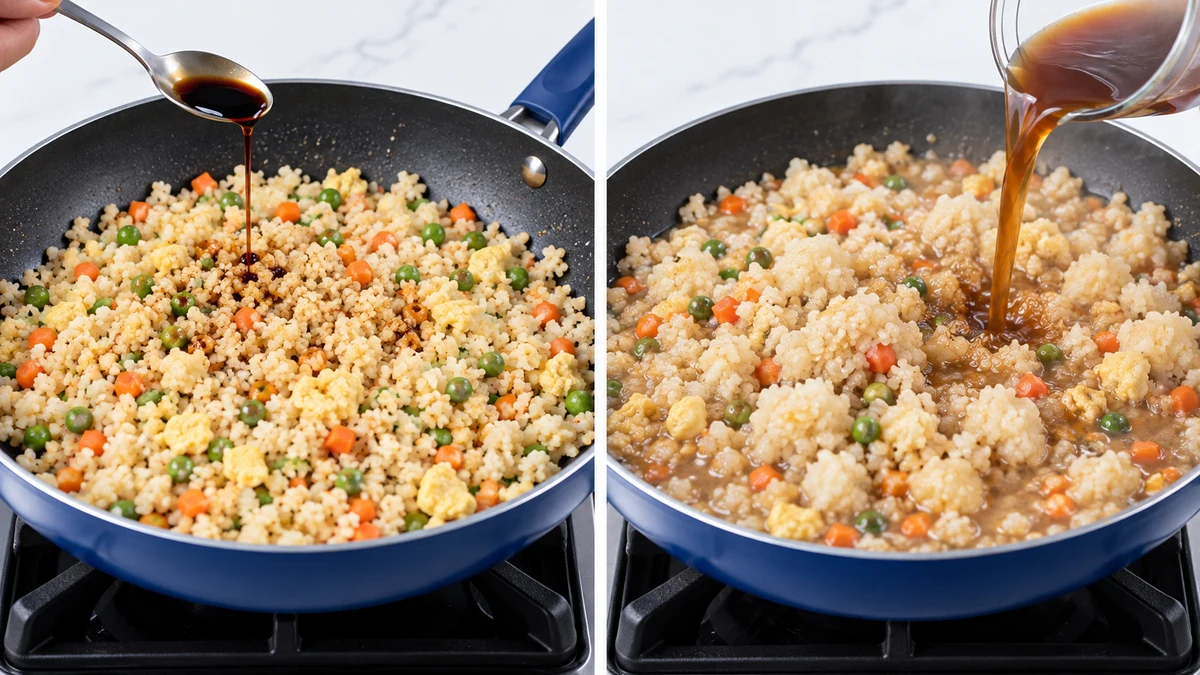
Conceptual comparison of sauce timing and the risk of pooled liquid.
The desired outcome should also guide the method. For a soft spoonable bowl, a little retained moisture may be welcome. For a dry meal-prep base or a vegetable side that mimics stir-fried rice, reduce the pan load and keep sauces restrained. If your first trial tastes good but looks wet, change one variable on the next batch. Replacing the entire ingredient list makes it impossible to learn whether the pan, sauce or rice cut caused the difference.
A controlled two-pan texture check
When you want a repeatable household method or are developing a foodservice portion, divide one bag into two equal portions while still frozen. Use the same pan, burner setting, oil amount and add-ins. Cook the first portion in a shallow layer; cook the second as a thicker mound. Record when each stops releasing obvious liquid, whether the pieces remain separate, and how the texture feels after sauce is added. This is a practical comparison, not a laboratory test and not a promise that one fixed setting works for every SKU.
To test sauce timing instead, keep the pan load identical. In one batch, add the same measured sauce while the cauliflower still looks wet. In the other, wait until the pan surface looks almost dry. Compare the amount of liquid left on the serving plate, clumping after a short rest, and flavor distribution. If you evaluate only the dish immediately off the heat, you can miss a sauce or steam problem that appears by the time it is served. Let the two samples rest for the same interval before tasting.
For a useful record, describe the raw product as well as the finished dish: cut appearance, ice clumps, large pieces and fines. Then write down pan diameter, portion weight, add-in weight and sauce amount. You do not need elaborate equipment. Consistent conditions allow the next trial to explain a change instead of merely producing another opinion. In our commercial discussions, that same logic helps separate a product-form question from a recipe-method question.
Mistakes and useful fixes
The skillet is full of water
Spread the mixture and leave the pan uncovered. If it remains deep, move part to a second hot pan. Do not add sauce until the free liquid has reduced. Next time start with a smaller frozen portion and pre-cook other wet ingredients. Squeezing thawed cauliflower in a towel is sometimes suggested for other recipes, but it is not automatically necessary for a skillet; it adds work and can crush a fine rice cut.
The pieces are soft but the dish is still bland
Season in layers: aromatics for fragrance, a modest concentrated sauce near the end, and a final taste check. More liquid is not the only way to add flavor. If you need a large volume of sauce for a specific dish, accept a softer texture or serve it as a sauced vegetable base. A dry fried-rice-style texture and a heavily sauced bowl are different targets.
The cauliflower browned before the center warmed
A few browned edges can be pleasant, but scorched crumbs and cold large particles point to uneven cut or overly aggressive heat. Lower the heat slightly, break up large frozen clumps, and stir at intervals. Follow the package’s cooking directions and check that the dish is heated through. The goal is controlled evaporation, not maximal pan temperature at any cost.
What ingredient specifications matter for repeat cooking
If you are making a menu item repeatedly, start with the exact cauliflower product form. “Riced” is more informative than “cauliflower” but still leaves questions about particle-size distribution, fines, ice clumps, blanching or preparation instructions, and pack size. A sample cooked in your own pan and sauce is the most direct way to find out whether the ingredient matches the final dish. The adjacent XMG article on particle size, fines and cooked yield helps inspect the raw cut; this page addresses the mixed skillet outcome.

The actual rice cut includes both coarse and fine pieces.
In a short application trial, keep the same pan, batch mass, oil and sauce. Compare how much the rice clumps after thawing in the pan, how much free water remains before sauce, and whether the plated serving has the separation you want. That converts “not soggy” into observable criteria. If a product is intended for a ready meal rather than pan service, evaluate it after the actual reheating and holding route as well. A successful fresh-pan result does not guarantee a successful packed-meal result.
We supply frozen cauliflower in rice-cut and other product-specific forms through our partner network. We can clarify particle size and form, coordinate a representative sample and connect your cooking feedback to the specification and packing proposal. Send your pan and sauce method, particle requirement, pack, quantity and destination; we will review an ingredient and sample path for your application trial.
References
Recipe and preparation context: Birds Eye: cauliflower fried rice with frozen veggie rice [1]; FDA guidance on ready-to-cook foods [2]. Always follow the specific frozen product’s label.
