


On this page
Yes, frozen pumpkin works in muffins, but the form matters. A recipe calling for pumpkin purée needs a smooth cooked purée. Frozen pumpkin cubes should be cooked until soft, puréed, cooled and then measured; they are not a direct one-for-one addition to the batter. Previously cooked frozen purée can be thawed and used after you check whether liquid has separated. The main baking risk is an unexpectedly watery or uneven purée, which can make the centre dense or leave wet patches. Keep the muffin recipe fixed while you learn how much prepared pumpkin it actually receives.
Quick answer. Identify whether your frozen pumpkin is raw cubes, cooked cubes or ready purée. Turn cubes into cooked, smooth purée first. Thaw purée safely, stir it and compare its thickness with the purée named in your muffin recipe. Measure the prepared purée, not the original frozen-bag weight, and bake a small test before changing flour or liquid.
The package form determines the first step
“Frozen pumpkin” is not one ingredient state. A bag of diced raw pumpkin still needs cooking. A bag of blanched or cooked pieces may need a shorter preparation route, but the label or supplier specification should tell you what the process was. Frozen pumpkin purée is already mechanically broken down and may only need safe thawing and mixing before use. A can of pumpkin purée can be useful as the reference in a recipe because many muffin formulas were developed around that consistent texture; pumpkin pie filling is a different sweetened, seasoned product and should not be confused with plain purée.
Look at the recipe’s ingredient line. If it names purée, it expects pumpkin dispersed throughout the batter. A frozen cube may soften during baking but it will not become the same uniform ingredient inside the muffin. It can leave a separate moist pocket, interfere with portioning and produce a different flavour distribution. That could be intentional in a chunky vegetable muffin, but it is not the normal substitution for a pumpkin-purée muffin. Decide which product you are making before converting the fruit form.
Penn State Extension describes separate freezing methods for cooked purée and pumpkin cubes. King Arthur Baking’s pumpkin muffin recipe specifies purée. When starting from frozen cubes, cook and purée them before following a muffin recipe designed for purée. A handful of cubes is not equivalent to a measured cup of smooth purée.

Cubes visible before cooking and puréeing.
From frozen cubes to a usable purée
Check the pack instructions and the cut size. Cook pieces by a suitable food-safe method until they are thoroughly soft, then mash or blend to an even consistency. Steaming or covered baking can limit added water compared with simmering in a large volume of water, but the exact method should fit the product and recipe. If the cubes were cooked before freezing, they may soften quickly; if raw, they need complete cooking. Avoid a fixed universal time because cube dimensions, starting condition and equipment change the result. The useful endpoint is a uniformly soft piece that can be puréed without hard fragments.
After cooking, look for obvious free liquid. It may come from thawing, added cooking water or moisture released as the pumpkin breaks down. Let the purée cool appropriately, then stir it before measuring. If it is clearly thinner than the purée the recipe expects, do not automatically pour it into the batter and hope baking evaporates the difference. You may drain it as an experimental preparation step for a refrigerator-used batter, or choose a cooking method that introduces less water next time. Record how much prepared purée remains. For any recipe that makes a safety or preservation claim, use its tested instructions rather than an improvised change.
Puree quality includes more than water. Strands, skin fragments and hard pieces can create an uneven crumb. A fine purée is better for a smooth pumpkin muffin; a rustic mash may be acceptable when that is the intended texture. Compare the ingredient at room or refrigerator temperature as specified by the recipe. A cold, thick purée can look different from a warm one. Keep the comparison temperature consistent before you decide that one sample is inherently drier.

Conceptual visual explaining cubed pumpkin becoming cooked puree then muffin batter.
Using purée that was frozen after cooking
Thaw the purée in the refrigerator or by another method consistent with safe handling and the recipe. The National Center for Home Food Preservation advises keeping food at safe temperatures during defrosting. A flattened freezer bag may thaw more evenly than a large solid block, but do not leave either on a warm counter for a long unattended period. Once thawed, knead or stir the purée so the sample is representative. If liquid separates, you now have a real measurement question: is the recipe’s stated amount meant to include that liquid, or is its reference purée a thick product with little free water?
For a home batch, the simplest comparison is to set a spoonful of thawed purée beside a spoonful of the product or reference texture used by the recipe. If the thawed sample pours while the reference holds a mound, expect a change in batter flow. For a product trial, weigh a portion before and after any draining and keep those values in the batch record. Measure the purée that actually enters the batter. Measuring the frozen pack and then silently discarding water can change the pumpkin amount without anyone noticing.
Avoid correcting the batter with unrelated changes all at once. If you reduce the purée, add flour, alter oil and extend bake time in one experiment, you will not know which change helped. First make a small batch with the recipe as written and a prepared purée with a documented moisture treatment. If the crumb is too wet, choose one next change, ideally one the recipe developer allows. This is more reliable than claiming that all frozen pumpkin needs a fixed amount of extra flour.
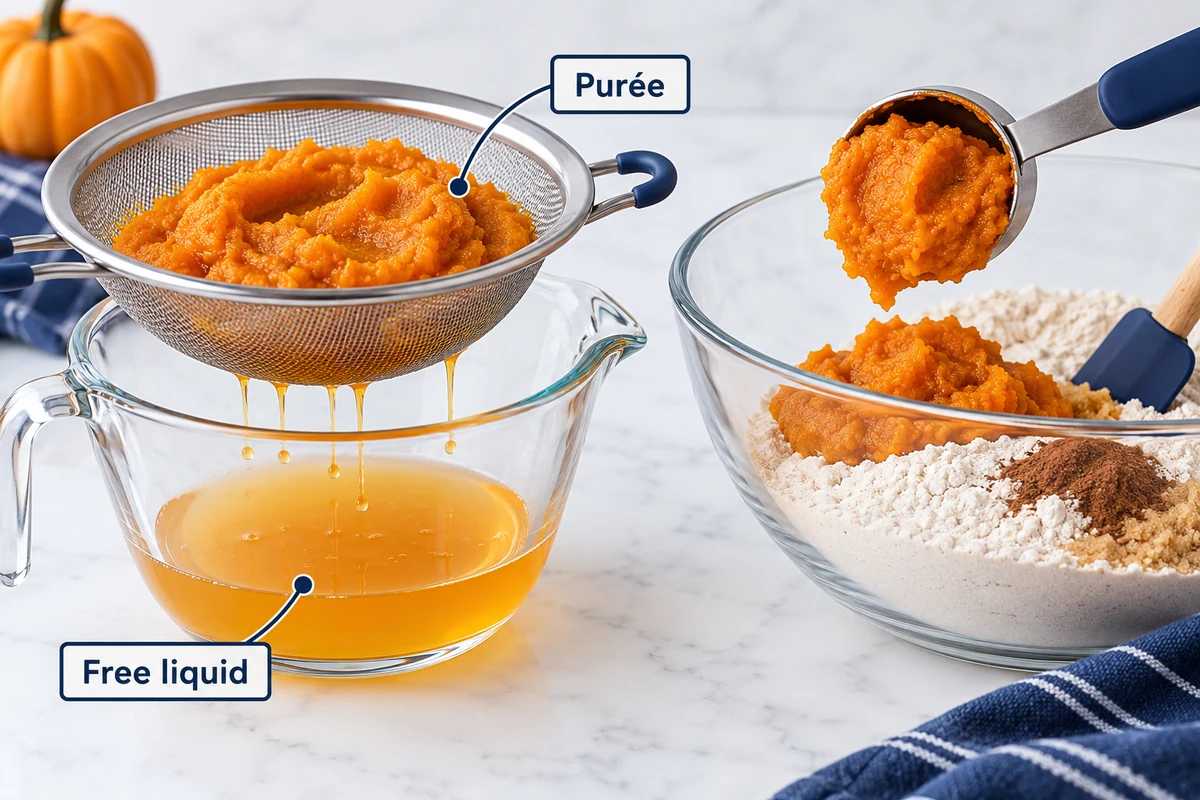
Conceptual visual explaining puree and separated liquid measured distinctly.
Moisture changes the batter before it changes the crumb
Pumpkin purée supplies flavour, colour, solids and water. Its moisture helps keep muffins tender, but excess free water can loosen the batter and slow the setting of the centre. King Arthur Baking describes concentrating pumpkin purée for certain bakes. Do not reduce every purée by half: a muffin recipe may be balanced around a particular thickness, and concentrating it also changes flavour and pumpkin solids per spoonful.
Watch the mixed batter. Does it hold a soft mound in the scoop, or flow quickly and leave a flat surface? Does it portion evenly, or does pumpkin liquid pool at the bowl bottom? These signs are more useful than the label “frozen.” If one batch contains purée with a higher free-liquid fraction, its batter may be looser even when the same nominal volume was added. If the muffins later have a damp line near the base or a dense centre, compare that line with the raw batter and prepared purée. Do not assume underbaking is the only cause.
Ingredient temperature also matters. A large cold block of purée folded into batter can leave uneven pockets and make mixing harder. Thaw and stir first, then use the ingredient at the temperature your recipe expects. Keep mixing gentle after the flour is incorporated. Overmixing quick-bread batter can affect texture, so repeatedly stirring to break a remaining frozen lump is a poor fix for insufficient ingredient preparation.
A useful side-by-side bake
Start with one reliable pumpkin muffin recipe and the same pan, portion weight and oven. Prepare two pumpkin inputs with a clear difference: for example, a thawed undrained purée and the same purée after a documented drain; or a purée made from steamed cubes and one from boiled cubes. Do not compare two unrelated brands and call the outcome a moisture experiment, because variety, sweetness and solids may differ too. Label the groups and record the exact prepared purée amount in each batter.
Before baking, record how the two batters flow from a scoop. After baking, cool the muffins for the same period and cut several from each group. Compare the centre crumb, the base, the pumpkin flavour and the way the muffin breaks when handled. A toothpick test should be interpreted with care: pumpkin itself can leave a moist trace, while genuinely raw batter looks different. Follow the recipe’s visual and timing instructions, and check more than one muffin because oven position can vary.
For a commercial application, repeat the preferred condition with another representative sample. A single bag may be unusually wet or unusually dry. Make an acceptance note for the prepared purée: appearance, free-liquid observation, approximate prepared yield under the defined method and finished muffin target. The supplier specification can then describe the frozen starting form while the bakery trial records the preparation and outcome. That is a better handoff than asking for “pumpkin suitable for muffins” without saying whether the bakery wants cubes or ready purée.
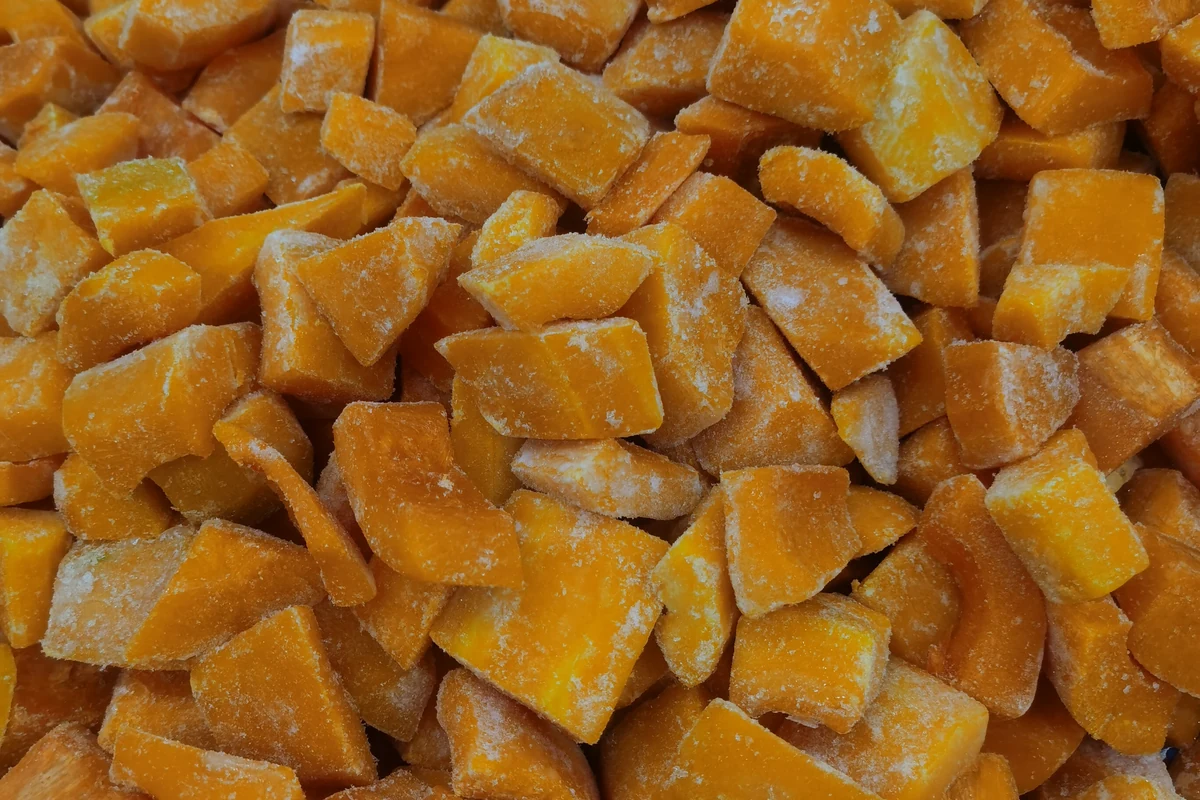
Frozen pumpkin cubes need a preparation step before they can replace a smooth purée.
Read the finished muffin, then adjust one thing
An even, tender crumb with pumpkin flavour throughout is a strong sign that the ingredient form and batter worked together. A visible cube-like wet spot says the pumpkin was not dispersed as expected. A dense strip at the base can point toward settling or a wetter batter; a dry, crumbly top can result from overcorrection. The observations are not a laboratory diagnosis, but they tell you what to test next. Keep a photograph of the cut face next to the ingredient and process notes rather than relying on memory.
If the muffin is damp, first confirm it was baked according to the recipe and that the oven was at its intended setting. Then inspect the prepared purée. If it is noticeably runnier than the reference, a defined drain or a less water-adding cooking method is a reasonable next trial. If the purée is normal but the muffin is still dense, the issue may be the overall recipe, mixing or portion size. If the muffin tastes weakly of pumpkin, merely increasing spice can hide the fact that a watery purée delivered fewer pumpkin solids per portion. Compare the actual ingredient basis before adjusting flavour.
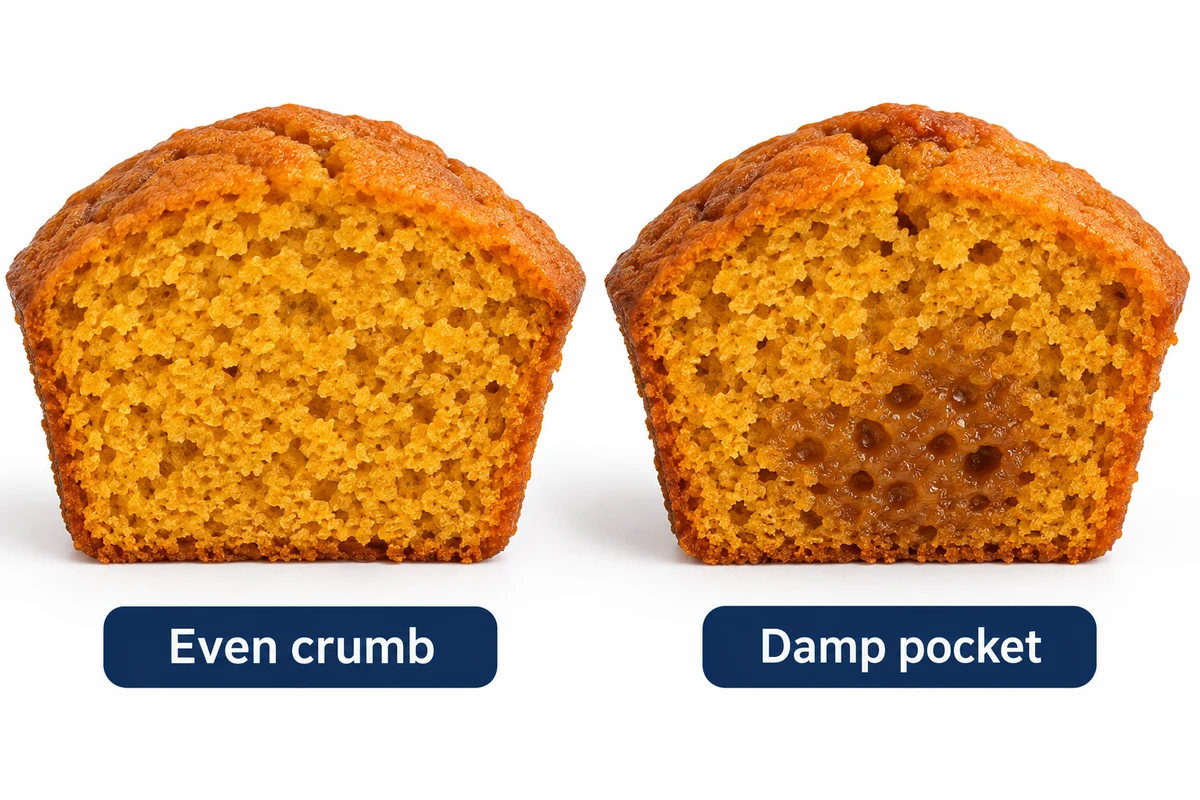
Conceptual visual explaining cut muffins with even and damp dense crumb.
Handle leftovers and preserve the right product
Keep thawing and cooled purée within safe handling guidance. If you make extra purée, freeze it in portions and label the preparation date and amount so the next recipe starts with a known ingredient. Penn State Extension cautions against home canning pumpkin purée because research-tested heat penetration is lacking; freezing is the appropriate home preservation route for purée. That safety distinction applies even when a jar of purée seems very thick. Muffins themselves have their own storage needs based on ingredients, filling and environment; follow a reliable recipe rather than applying the storage rule for raw pumpkin.
Commercial frozen pumpkin also has product-specific handling instructions and a defined specification. Check the label rather than assuming it has the same state as home-frozen cooked purée. The buyer’s cooking and baking process should be validated in the actual kitchen. A photograph of cubes can confirm a visible cut; it cannot prove their cooked yield, solids or finished muffin texture. Those require measurements and a representative bake.
When the ingredient form becomes a sourcing choice
For a bakery or food manufacturer, decide whether receiving cubes or purée makes more sense. Cubes give control over the purée preparation but add a cooking and yield step. Ready purée can simplify dosing when its solids, texture and packing suit the formula. Either way, send a sample through the real preparation method and compare the finished crumb. Our related pumpkin dry-matter and cooked-yield guide helps frame the ingredient-side comparison; this muffin trial tests the final baked use.
Discuss frozen pumpkin for a muffin trial
We supply frozen pumpkin through our partner network. We can review the cut and packing you need, clarify a written specification and coordinate a representative sample. Tell us whether your bakery makes purée from cubes or needs another specified form, plus the application, approximate quantity and destination. We will confirm available forms and sample options for your own bake assessment. Your team validates the recipe and finished muffin.
