


On this page
Yes, you can grill frozen pineapple chunks, but the easiest route is usually to thaw them under refrigeration, drain and dry their surfaces, then grill firm pieces on skewers or a grill pan. The fruit should be large enough to stay on the skewer or above the grate. Frozen pieces placed directly on a hot surface first have to melt surface ice, which can pool and delay browning. If you want to try a direct-from-frozen route, run a small pan or basket trial and assess released liquid, surface browning and the center before choosing it. It gives a different result from a dry piece held against hot metal.
Choose the route by the outcome you want. For visible grill marks and pieces that hold their shape, use intact, drained chunks and brief direct contact with a properly heated surface. For a sauced dish, foil packet or cooked topping, the moisture may be acceptable and direct-from-frozen handling may be convenient. There is no single cooking time that covers every chunk size, grill temperature and thaw state. Watch the surface, turn gently, and judge both browning and bite before adding a sweet glaze that may scorch.
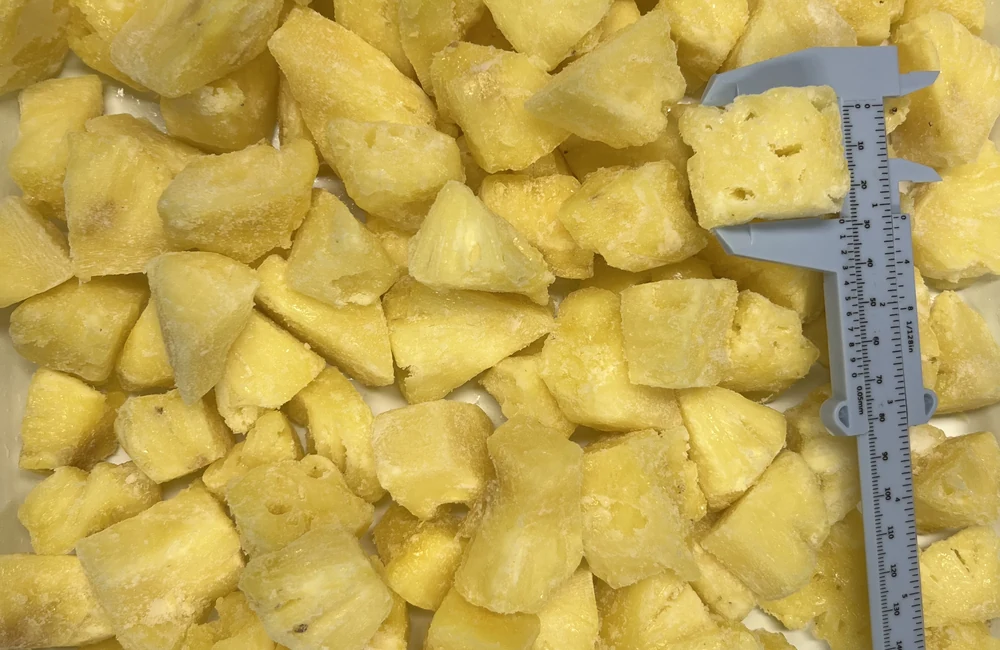
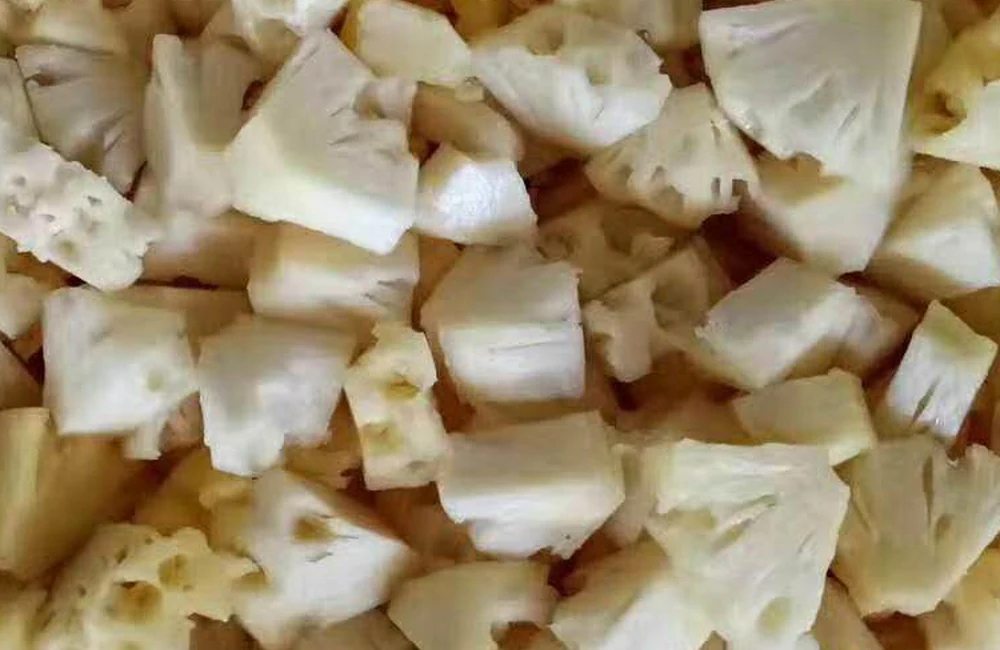
Irregular frozen pineapple chunks show why the chosen pieces need a skewer-fit check.
Yes: choose a route that fits the chunk
Frozen pineapple is generally sold as chunks, dice, rings or other cuts. A sturdy chunk can be threaded onto a skewer; a small dice is more likely to slip between grill bars and may be better in a perforated basket or hot pan. Rings present a broad contact surface but are a different product form. Start by looking at the actual frozen pieces instead of relying on a generic “pineapple” recipe. Break apart pieces without crushing them and set aside very small fragments for another use if the task is to create a tidy skewer.
Grilling is a surface-contact method. Fruit sugars and dry surface contact encourage attractive browning, but liquid released from melting frost or thawed fruit can make the pan behave like a shallow simmer. A grill with open grates can let some liquid fall away, while a solid grill pan holds it near the fruit. That is why the same bag can behave differently on two pieces of equipment. Clean, hot grates and a lightly oiled basket or pan help with release; avoid coating the fruit in a sugary glaze before you know how rapidly it browns.
Dole Foodservice’s grilled pineapple skewers [1] use thawed IQF pineapple chunks or tidbits. This is a frozen-product route after thawing; its grill settings and result belong to that recipe. The preparation state is an additional variable. A frozen chunk may brown on the outside while its center remains chilly, or it may lose enough juice that the surface never dries. Test the actual product and piece size in your intended equipment.
What freezing and thawing change at the grill
Freezing preserves pineapple for later use, but thawing can release juice and make some pieces more fragile. A chunk with a fibrous, intact structure may survive handling and skewering; a small, soft or broken piece may split as you thread it. Surface ice adds a second source of water. If that water reaches a grill pan, it takes heat to evaporate before the surface can brown effectively. The issue is not that frozen pineapple cannot be heated; it is that the browning phase starts later than it does for a drained surface.
Thawing in the refrigerator is a controllable preparation route. Keep the fruit in a food-safe covered container, then drain it in a colander before grilling. Do not leave a large bowl sitting warm for an extended period to force the thaw. The NCHFP fruit-thawing guidance [2] describes refrigeration as a safe thawing method; follow the actual product label and your kitchen’s food-safety plan for the relevant fruit product. For a quick household application, a recipe that cooks the fruit from frozen may avoid a separate thaw step, but the cooking surface still has to handle meltwater.
A released-juice observation can be useful. Let equal weights of two samples thaw in identical containers, drain for the same period, and compare free liquid and piece condition. Do not treat that simple kitchen observation as a formal yield or shelf-life result. The practical question for grilling is whether the remaining piece is firm enough for a skewer and dry enough on its surface to brown in a short direct-heat step.
Thawed and drained chunks on skewers
For a skewer, select chunks that are large and intact enough for the point to pass through without splitting them. Thaw them under refrigeration and let visible juice run away. Spread them on a clean towel or paper towel and blot rather than squeezing. A very soft piece can fall apart if you try to dry it aggressively. Thread through the center of each chunk and leave small spaces so heat can reach more than one face. If using wooden skewers, prepare them according to the grill or recipe instructions to reduce scorching.
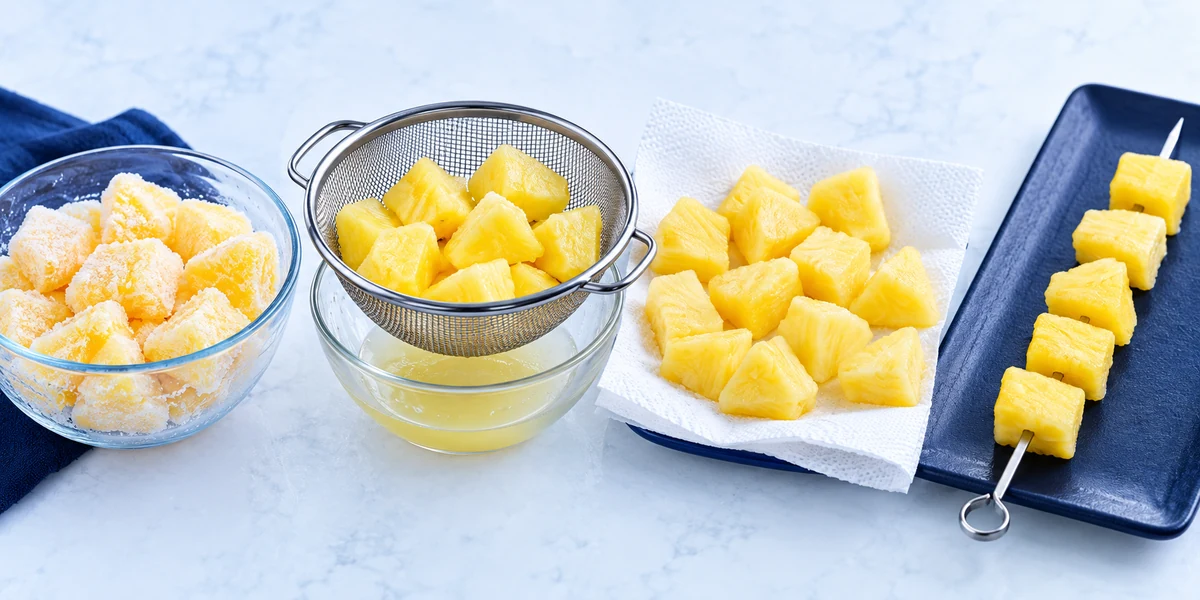
Conceptual sequence of moisture handling before direct heat.
Preheat the grill or grill pan according to the equipment instructions. Place the skewer so the fruit contacts the hot surface; turn gently once the first side releases and develops the browning you want. If pieces stick, tearing them off with force damages shape. Allow a little more contact time or adjust the surface preparation. A thin brush of neutral oil may help on a pan, but it cannot compensate for a puddle of thaw liquid. Add a sugar-rich glaze near the end if the recipe uses one and watch for rapid darkening.
Serve the grilled fruit as a topping, side or dessert component while the texture is appealing. When pineapple is going into a dish with meat, poultry or seafood, cook those foods to their own safe endpoint. Browned fruit is not evidence that the neighboring protein is cooked. Likewise, a fruit skewer used with raw protein needs proper separation and utensil hygiene. The pineapple question is about fruit handling and surface result, not a shortcut around ordinary grill safety.
A cautious direct-from-frozen grill-pan route
If you want to test a direct-from-frozen route, choose a grill pan, griddle or perforated basket that keeps small pieces contained. Evaluate a small batch before adopting it for service. Add only a shallow layer of frozen chunks. As frost melts, watch for pooling. Tilt or drain the pan safely as appropriate to the equipment, or let that liquid evaporate before seeking char. Do not overload the surface; a second cold layer can cool the pan and turn the first layer into a simmer. Once the surface dries, let the pieces make contact and turn gently. Their shape may soften before browning appears, so stop if the intended chunk presentation is being lost.
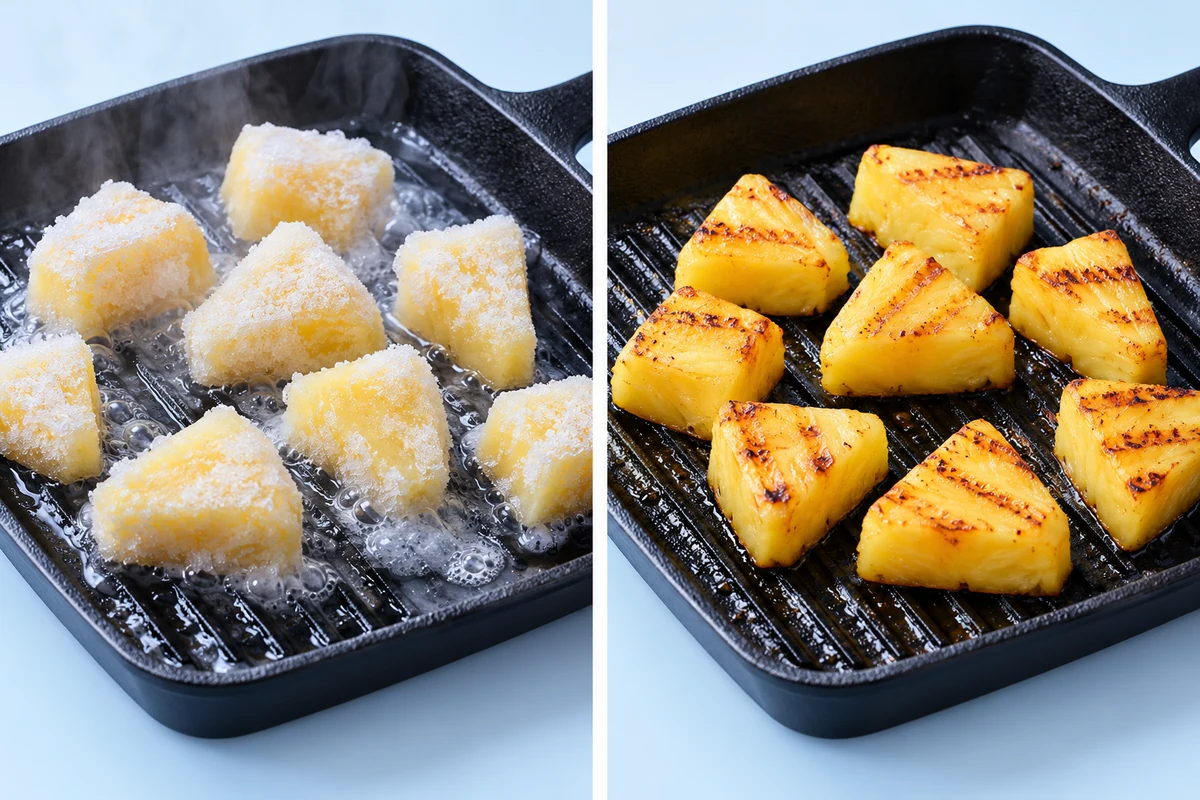
Conceptual physical comparison; browning varies by equipment and fruit.
This method is more forgiving when the pineapple will be chopped into a salsa, stirred into a cooked dish or used under a glaze. It is less predictable when the target is a neat, evenly marked skewer. Do not assume extra high heat solves a wet pan. It can scorch sugars on the exposed edge while deeper liquid remains. Use pan area, smaller portions and controlled turning before raising the heat aggressively.
A foil packet is another valid cooking method, but it steams and softens the fruit rather than creating the dry direct-contact browning of a grate. Name the desired result honestly. “Grilled pineapple” in a foil packet may be sweet and warm, yet it should not be judged by the same grill-mark criterion as an open skewer. Matching method to outcome saves more trial time than trying to force one route to do both jobs.
Compare browning, shape retention and bite
These are three separate observations. Browning is what the surface looks like. Shape retention is whether the chunk remains intact when turned, lifted and served. Bite is how fibrous, soft or juicy it feels. A darker surface does not guarantee a better center, and a firm chunk might hold a skewer without developing much color if it remains wet. Evaluate all three before deciding that a cut or preparation route succeeds.
For a small comparison, take one bag and divide it into equal portions of similar piece size. Thaw and drain one portion under refrigeration; leave the other frozen for a direct pan trial. Use the same equipment and comparable pan load. Note the free liquid that appears, the time until visible dry contact, the number of pieces that split, the browning pattern and the bite after a similar rest. This is an application test for your kitchen, not a claim that a specific supplier’s pineapple has been tested by XMG.
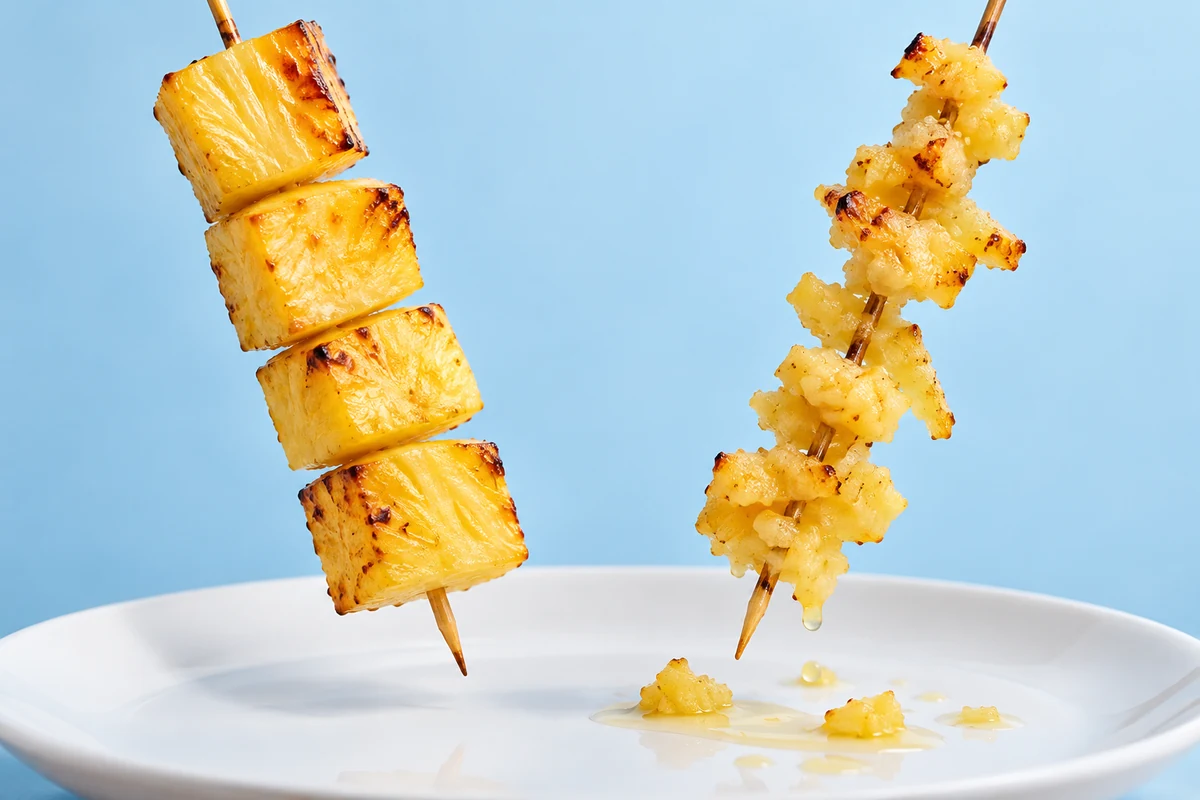
Conceptual outcome comparison for choosing cut and thaw route.
Record the serving use. Pieces that are too soft for skewers may still make an excellent hot topping. Very small fragments may caramelize quickly in a pan but vanish visually in a mixed plate. The preferred cut is the one that fits the presentation, not necessarily the largest available chunk. A mixed-size bag can be sorted for two uses, but if regular service needs one uniform skewer appearance, specify and sample that requirement.
Why cut size and core content matter
A cube-like chunk has more material around the skewer than a thin, irregular sliver. The latter can tear during threading or turning. Pieces from different parts of a pineapple can also differ in firmness and fibrous bite. The nearby XMG guide to core content and fibre in pineapple chunks explains how to inspect that ingredient quality. For grilling, the key question is what those raw differences do during direct heat and serving.
Pineapple cut form makes core and fibre variation worth reviewing before a grilling trial.
Very uniform-looking product photography is not a substitute for a sample. The actual lot can include pieces that thread beautifully and others that are better chopped. If skewer service is important, ask how the offered cut is described and inspect a representative sample. A size range alone will not predict browning because thawing, surface water and grill design still matter. Pair the ingredient check with a short application trial.
Our existing page on pineapple in bakery fillings addresses juice release and piece integrity inside a baked filling. A filling surrounds the fruit with batter or starch and often tolerates soft pieces differently. Open-grill surface color and skewer retention are separate decisions, which is why the grill test should be run on its own terms.
How XMG can help specify pineapple for grilling
If you need repeatable pineapple for skewers or a grilled topping, specify the frozen pineapple chunk or dice form and describe the final presentation. Include the target piece size, tolerance for broken fragments, pack, destination and equipment route. A sample should be thawed and grilled in the actual method, with notes on shape, released juice, browning and bite. This makes the selection more meaningful than asking for “good grilling pineapple” without a definition.
We can discuss available chunk forms and coordinate an ingredient sample through our specification and sampling process. We use your cut requirement, representative sample and application feedback to define the ingredient reference for the proposed order. The grill and recipe belong in the buyer’s test, where both can be observed under real service conditions.
We supply frozen pineapple in product-specific chunk and dice forms through our partner network. For a grilled application, we can clarify the cut and broken-piece requirement, coordinate a representative sample and review the pack for the proposed order. Send your skewer or pan route, target piece size, quantity and destination; we will review suitable ingredient options for your grill trial.
References
Technique and handling context: Dole Foodservice’s thawed IQF pineapple skewers [1]; NCHFP: refrigerator thawing for frozen fruit [2]. Follow the actual frozen fruit label and the food-safety plan for your kitchen.
