


On this page
Shelled edamame does not have one guaranteed firmness after holding in a grain bowl. The result depends on how the beans were prepared, how the bowl was assembled, whether sauce or steam contacts the beans, and the temperature and duration of service. A bowl kept hot may continue exposing the beans to heat; a chilled bowl follows a different cooling and serving path. Neither path can be ranked from the frozen specification alone.
For a useful comparison, start with one identified product lot, follow its package or agreed preparation instructions, and divide a prepared batch between the two service paths. Keep the grain, sauce, portion size, draining, container and observation points consistent. Record food temperature and elapsed time, then assess bean integrity and bite in the finished bowl. Separate sensory judgement from food-safety checks: an appealing bite, bright color or firm bean is not proof that food was handled safely.
Start with the bean you will serve
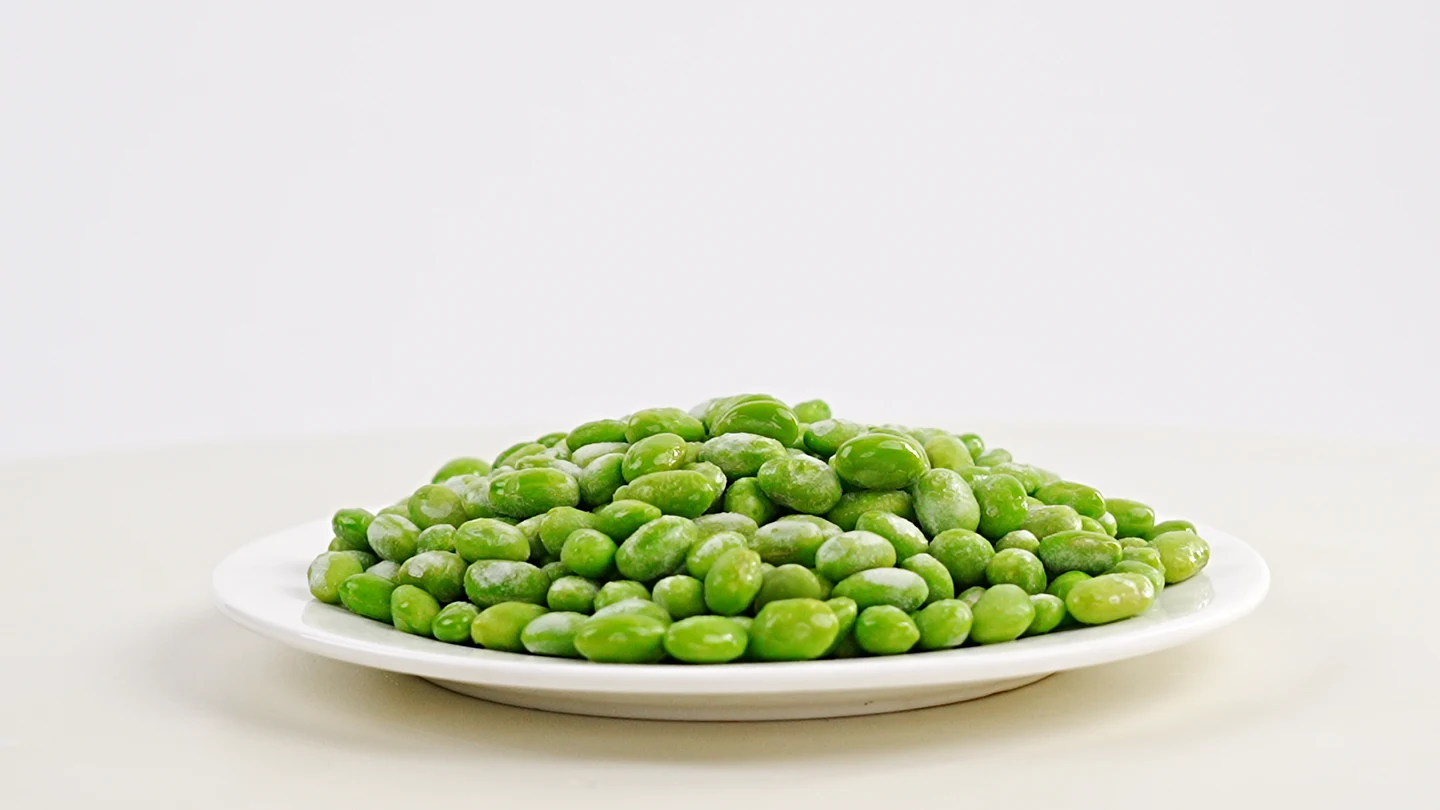
Approved unbranded product-library photograph identifies the shelled bean form; it does not show holding performance.
Confirm the form before the trial
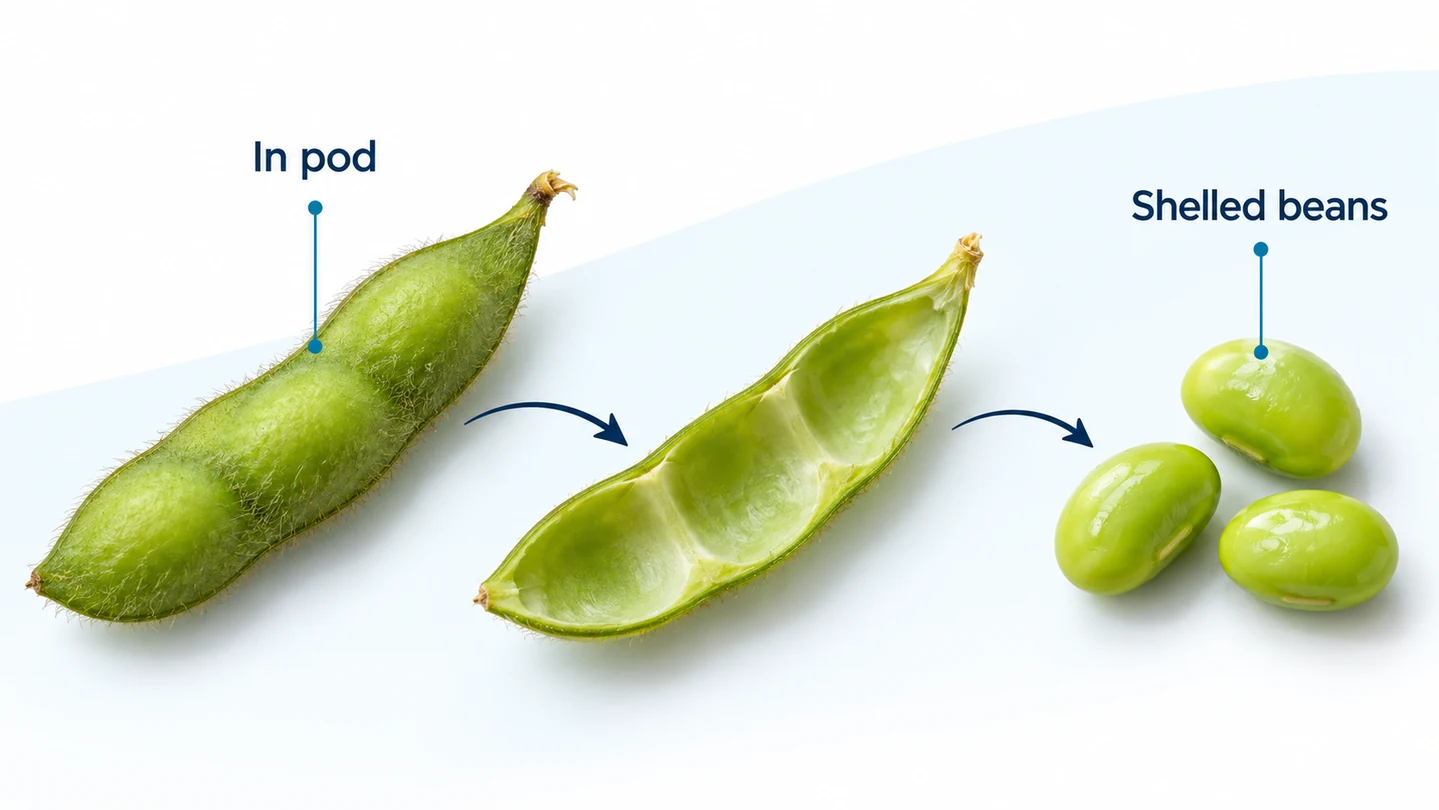
Conceptual illustration separates shelled beans from in-pod edamame for the grain-bowl test.
“Shelled edamame” tells you that the outer pod has been removed. It does not tell you whether the beans were peeled, salted, blanched to a particular endpoint, cooked for immediate use or prepared for a later process. Those details affect what enters your bowl and what further preparation the product needs. Confirm the physical form and the preparation directions for the item you received before comparing holding performance.
The incoming specification is a starting reference, not a prediction of the finished bite. XMG’s IQF edamame page lists in-pod, shelled and peeled-kernel forms and describes incoming texture and maturity requirements. Those attributes help identify the supplied product. They do not state how a cooked bean will feel after it has spent time with rice, grains, dressing or a hot holding unit.
Before comparing samples from different packs, check for whole and split beans, visibly different maturity, or an undocumented preparation step. Each can change the bite before the first holding observation. Record the form, lot reference, any label instruction, and the treatment you applied. If a supplier specification or sample approval sets a particular bean size or treatment, use that approved reference for both arms of the trial.
Do not use an in-pod serving sample as a substitute for a shelled-bean sample. Podded edamame has a different physical form and preparation route. Keep the shelling step out of a trial intended to compare shelled beans in bowls; otherwise, labor, bean damage and preparation time become additional variables. The XMG format comparison guide covers those format and recovery decisions separately.
Why preparation and serving temperature affect the result
Edamame is commonly blanched and cooled during processing before it is individually quick frozen. Virginia Cooperative Extension describes controlling blanching time and temperature to balance processing needs with pod texture, then cooling and draining the product before freezing. It also describes a separate sequence for bean kernels. These are processing examples, not a cooking schedule for every commercial pack. For the bowl trial, follow the directions and agreed specification for the actual product.
Further heating can change bean texture. A peer-reviewed study of commercially processed edamame, peas and lima beans compared thawed, microwave-heated and stove-cooked treatments. It found that the preparation and measurement method affected the texture readings. The researchers used refrigerated samples when relating their assessment to salad-bar service and noted that consumer perception can vary with serving temperature. A separate sensory study of edamame also controlled preparation, serving temperature and sample coding. Neither study compares hot-held and cold-held edamame inside grain bowls.
Neither study tells a buyer which grain-bowl route will produce firmer edamame. A longer or additional heating step may soften beans under particular conditions, while differences in starting product, moisture and surrounding ingredients can also affect the result. A dressing, hot grain base or covered pan may alter the surface condition and eating experience. Test whether the bean meets your bite and appearance brief at the point the customer eats the completed bowl.
Define the question before you split the batch
Decide whether you are comparing only the edamame during a separate hold, or the finished bowl during service. Those are different tests. Holding beans separately can help isolate their response to a service condition. Holding the completed bowl answers the menu question more directly because the beans contact the same grain base, dressing and toppings that will reach the customer. For a grain-bowl decision, use the finished recipe as the main assessment and treat a separate-bean comparison as a diagnostic step only when it helps explain a difference.
Write a one-sentence acceptance brief before the trial. For example: “At the end of the normal service window, the beans remain intact and have the bite our team accepts in this chilled rice bowl.” Describe firmness in terms the tasters can apply consistently. “Firm” could mean a clear bite through the bean, limited skin separation and no mushy or dry impression, but the team must agree which cues matter for the menu. A definition is more useful than a score with no anchor.
Use the same product lot and preparation for both paths when possible. If two lots or products are under evaluation, include them as separate factors and avoid pooling them into one hot-versus-cold result. Follow the actual preparation directions for each candidate. Do not force different products into an arbitrary identical cook time if their instructions differ; instead, record the preparation required to reach the approved ready-to-use state, then compare each under the relevant bowl process.
Control the conditions that can change bite
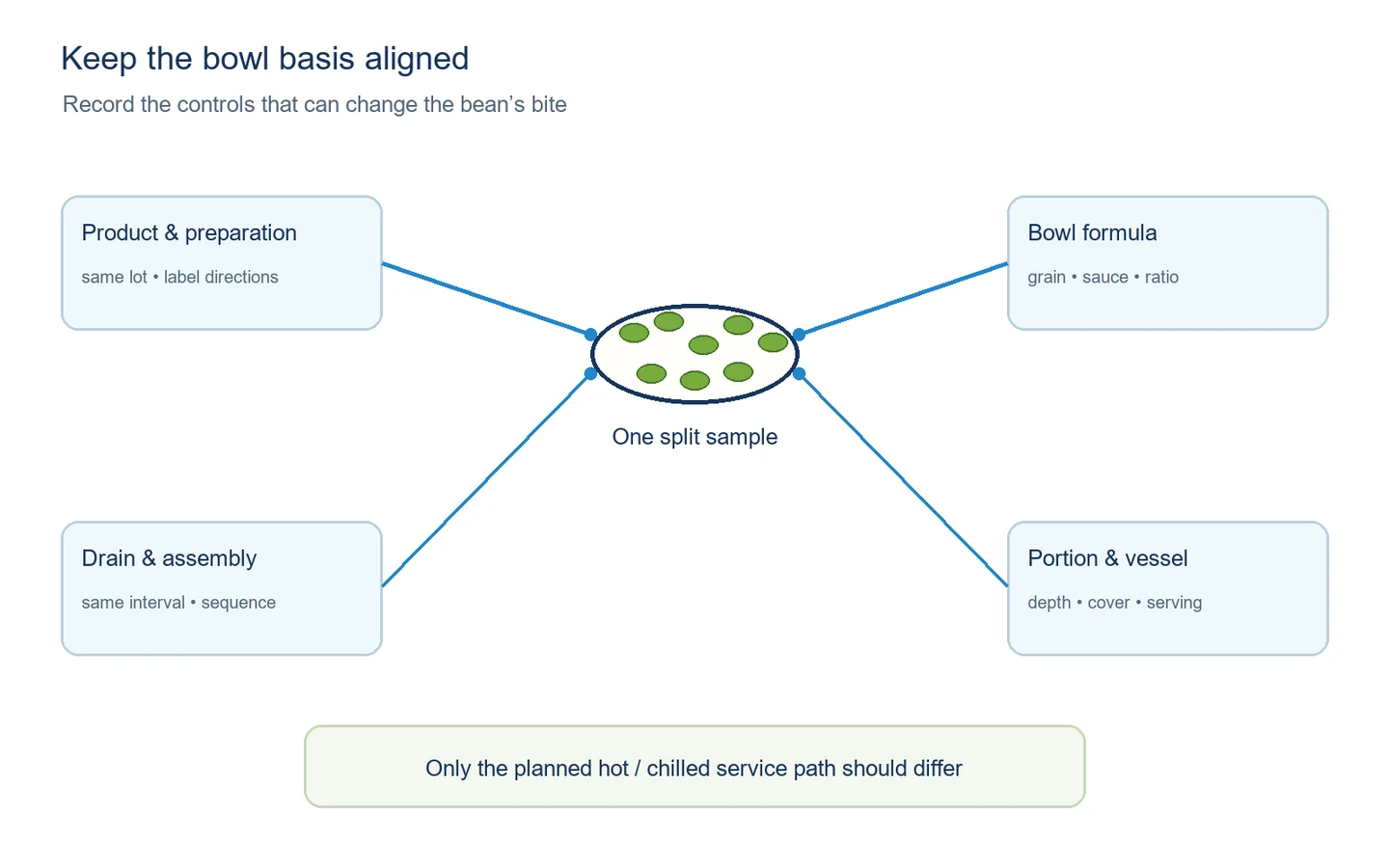
Authored method diagram keeps lot, portion, recipe and observation conditions tied to each trial branch.
Keep the recipe and handling constant: grain type and batch, edamame-to-grain ratio, dressing amount, salt or acid additions, drained condition, bowl depth, lid or cover, serving utensil and portion size. If the real hot and cold menu versions deliberately use different grain temperatures or dressings, those are part of the application. Record them as intentional differences and avoid attributing the whole outcome to holding temperature alone.
Build a paired hot and cold comparison
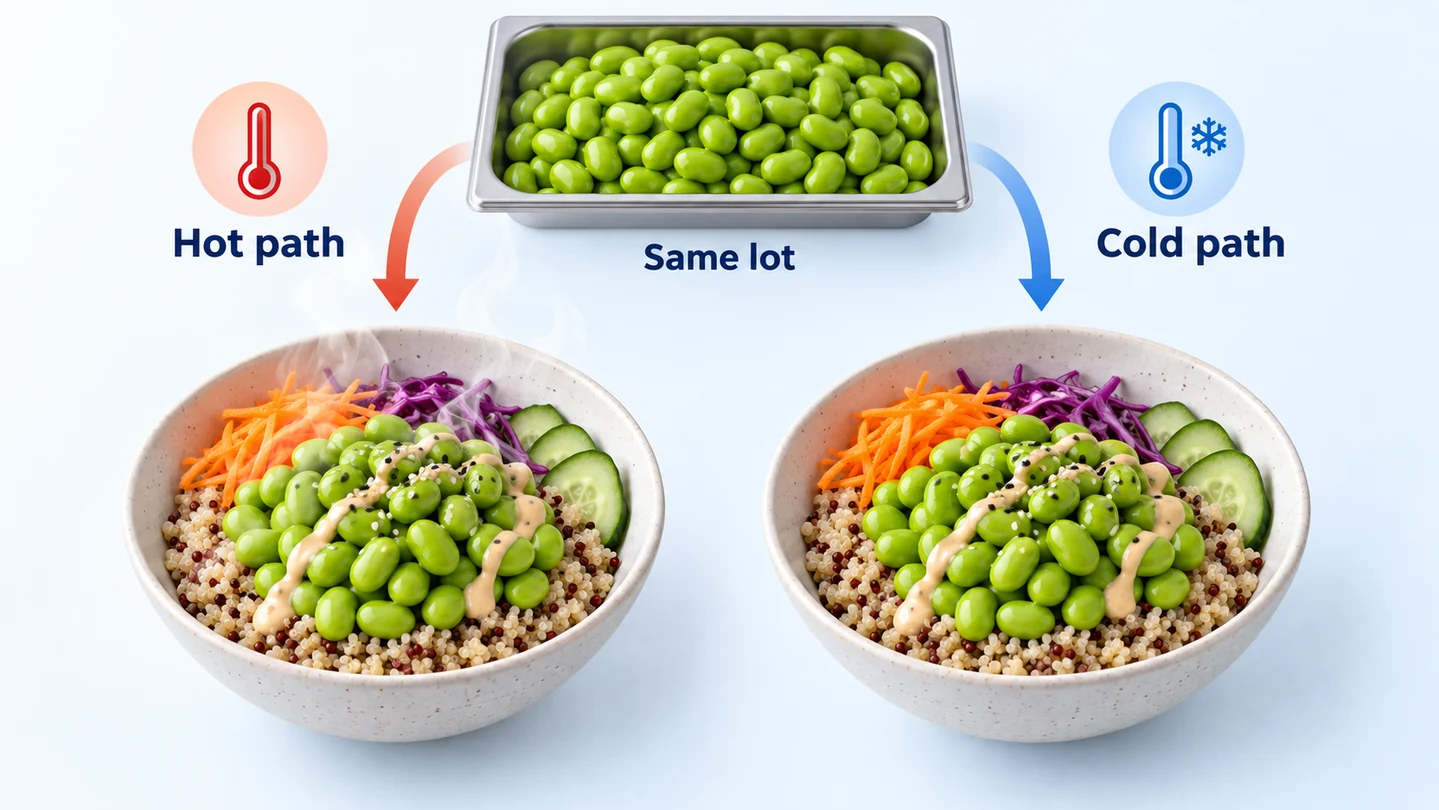
Conceptual matched-portion setup for testing the intended hot and cold grain-bowl routes; no result is shown.
Prepare enough of the identified product for the planned comparisons. Follow the applicable preparation instructions, drain in the same way, and allow the same interval between preparation and bowl assembly. Split the cooked batch into equal portions. Assemble each bowl using the same quantities and sequence, then send portions into the intended service paths. The goal is to change the service condition you are evaluating while keeping the other relevant steps alike.
Choose observation points that reflect your operation: the time the bowl is first ready for service, a representative point during the service period, and the latest point at which you would still serve it. These are proposed checkpoints, not universal holding limits. Set the planned interval from the actual menu or production process. Do not extend food holding beyond its approved safe process just to collect another sensory score.
At each observation, record the food temperature, elapsed time, bowl composition and any condition that changed. Measure the food itself with an appropriate calibrated probe when temperature records are required; equipment settings alone do not show the temperature at the center of a portion. Use the same measurement locations and procedure for matching samples. A warmer, cooler or probe position can otherwise make two nominally identical conditions look different on paper.
| Trial field | Hot-service bowl | Chilled-service bowl |
|---|---|---|
| Product | Record form, lot and preparation | Record the same fields |
| Recipe | Same grain, edamame ratio, dressing and toppings unless a menu difference is intentional | Same recipe basis; list any intentional menu difference |
| Portion and container | Record mass or agreed portion, depth and cover | Match portion and container where the menu allows |
| Service path | Record actual equipment, food temperature and elapsed time | Record cooling method, refrigerator/holding condition, food temperature and elapsed time |
| Texture observations | Record intact beans, skin condition and anchored bite notes | Use the same cues and scoring anchors |
| Safety record | Follow the applicable local food code and approved process | Follow the applicable local cooling and cold-holding rules |
If the bowl is assembled differently for hot and chilled service, do not hide that difference. State it in the record. You can run a second controlled check with the grain and dressing held constant to explore a suspected cause, then run the complete menu version to confirm the result customers will actually receive.
For a production team, the split point deserves its own note. Divide the prepared batch only after the same drain interval and mixing step, and alternate portions between the two branches rather than filling all hot bowls first and all cold bowls later. That helps avoid a gradual change in bean temperature or surface moisture becoming tangled with the service path. Mark the time of preparation, assembly, and each observation separately; “held for 30 minutes” is ambiguous if the clock starts at different stages in the two branches.
Decide in advance whether the test is a single screening run or a repeatable approval exercise. A screening run can identify obvious handling questions, but one bowl per condition gives little information about normal variation. For an approval exercise, prepare independent portions at each checkpoint and repeat on another day or production run. Keep the raw notes, including mixed opinions, because a single average score can hide a texture defect that matters to the menu.
Keep food safety separate from texture acceptance
Use the product’s preparation instructions and the rules that apply where the food is prepared and served. Frozen or previously blanched vegetables are not automatically ready to eat, and a desirable bite does not prove a safe preparation temperature. A temperature reading answers a safety or process-control question only when it is taken and interpreted under the applicable procedure; a sensory score answers an eating-quality question.
For United States retail and food-service operations, the 2026 FDA Food Code [1] is the current model code. It gives hot holding at 135°F (57°C) or above and cold holding at 41°F (5°C) or below for applicable time/temperature control for safety food. The Food Code is a model offered for adoption by jurisdictions; check the code actually adopted by the state or local authority and any product-specific process requirements. These values are safety controls, not temperatures chosen to optimize edamame firmness.
When an applicable food-safety process requires cooling, follow its time-and-temperature steps. The FDA model code’s cooked TCS-food cooling provision calls for cooling from 135°F to 70°F within two hours, and to 41°F or below within a total of six hours. Applicability depends on the food and process, and local rules may differ. Do not use a sensory experiment as a cooling procedure, or hold a sample in an unsafe range to make two serving temperatures easier to compare.
If you need to measure texture after a sample has reached a common temperature, plan that as a separate, controlled measurement step within the approved safety procedure. Keep a record of how the sample got there. Do not quietly cool the hot sample, reheat the cold sample or leave either out for an uncontrolled period: those extra steps alter the product and can invalidate the safety record as well as the texture comparison.
Measure texture without confusing it with temperature
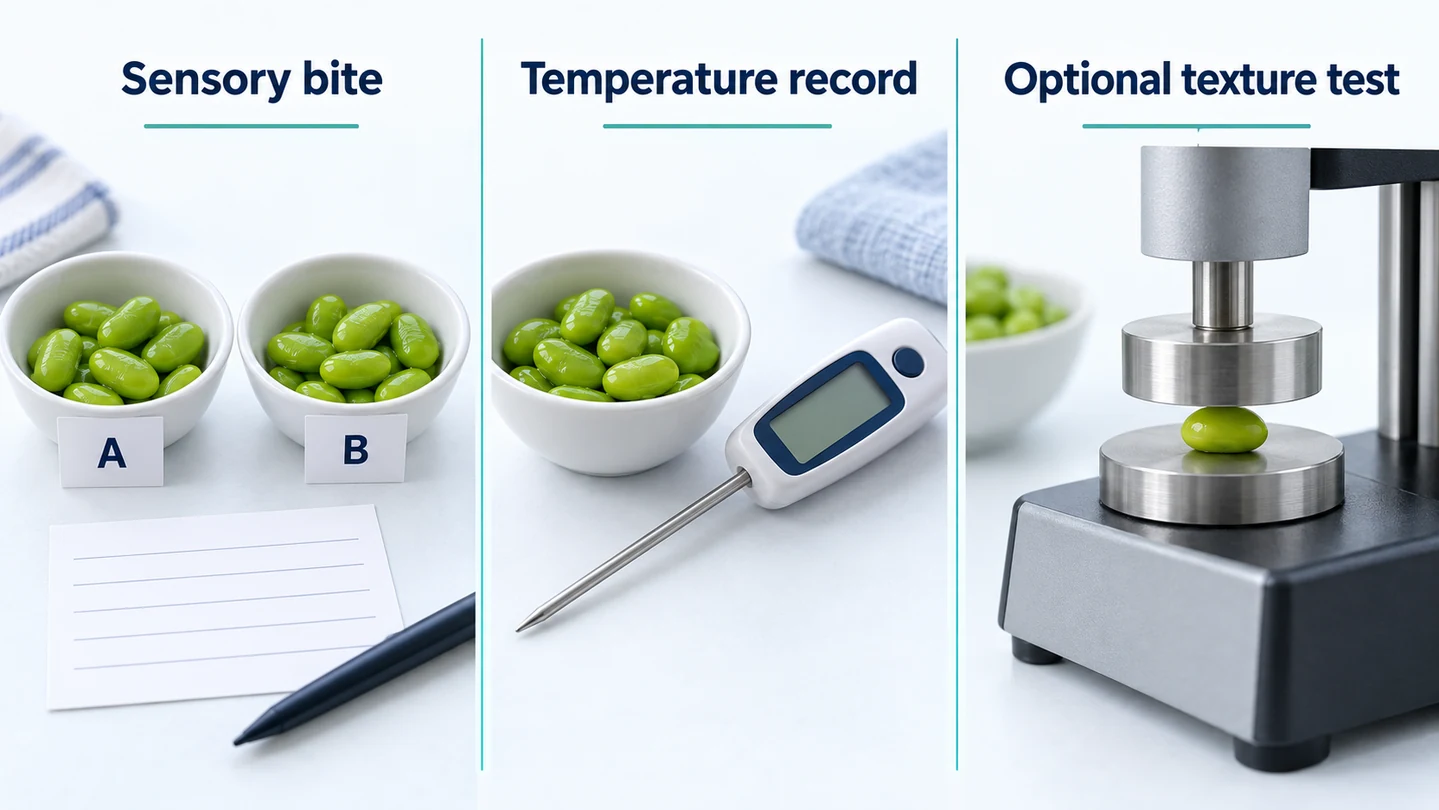
Conceptual illustration separates bite observation from temperature checks; it contains no measured values.
Use a small, consistent set of observations. Note whether beans remain whole, whether skins split or separate, whether the center feels dry or pasty, and how much bite is perceived in the finished bowl. Taste the bean with the same surrounding ingredients each time. Sauce on one sample and dry beans on another is not a fair comparison, even when the bean lot is identical.
For a team assessment, assign short codes and serve samples in a balanced order so tasters are not simply told which one “should” be firmer. A simple anchored scale can help: define what the low, target and high ends mean in your menu, and have tasters score firmness separately from overall liking. The scale is a local decision aid, not a validated industry standard. Record the temperature at serving because warmth and chill can affect how flavor and bite are perceived.
Instrument testing can add useful detail if a suitable method and equipment are available. In the 2023 legume comparison, compression and puncture did not respond identically to the treatment differences; compression detected more differences for edamame and lima beans in that study. Its authors also said further work was needed before a method could be adopted as a general quality-control standard for legume vegetables. The findings do not establish an acceptance threshold for your product or bowl.
If you use a texture analyzer, keep probe or platen, deformation, speed, sample temperature, bean orientation and sample count consistent. Ask a qualified laboratory or technical partner to define the method if an instrument result will become a purchasing specification. Use sensory assessment to answer the service question and instrumental readings to describe a defined mechanical response. Do not call one reading “firmness” without naming how it was obtained.
Turn observations into an application decision
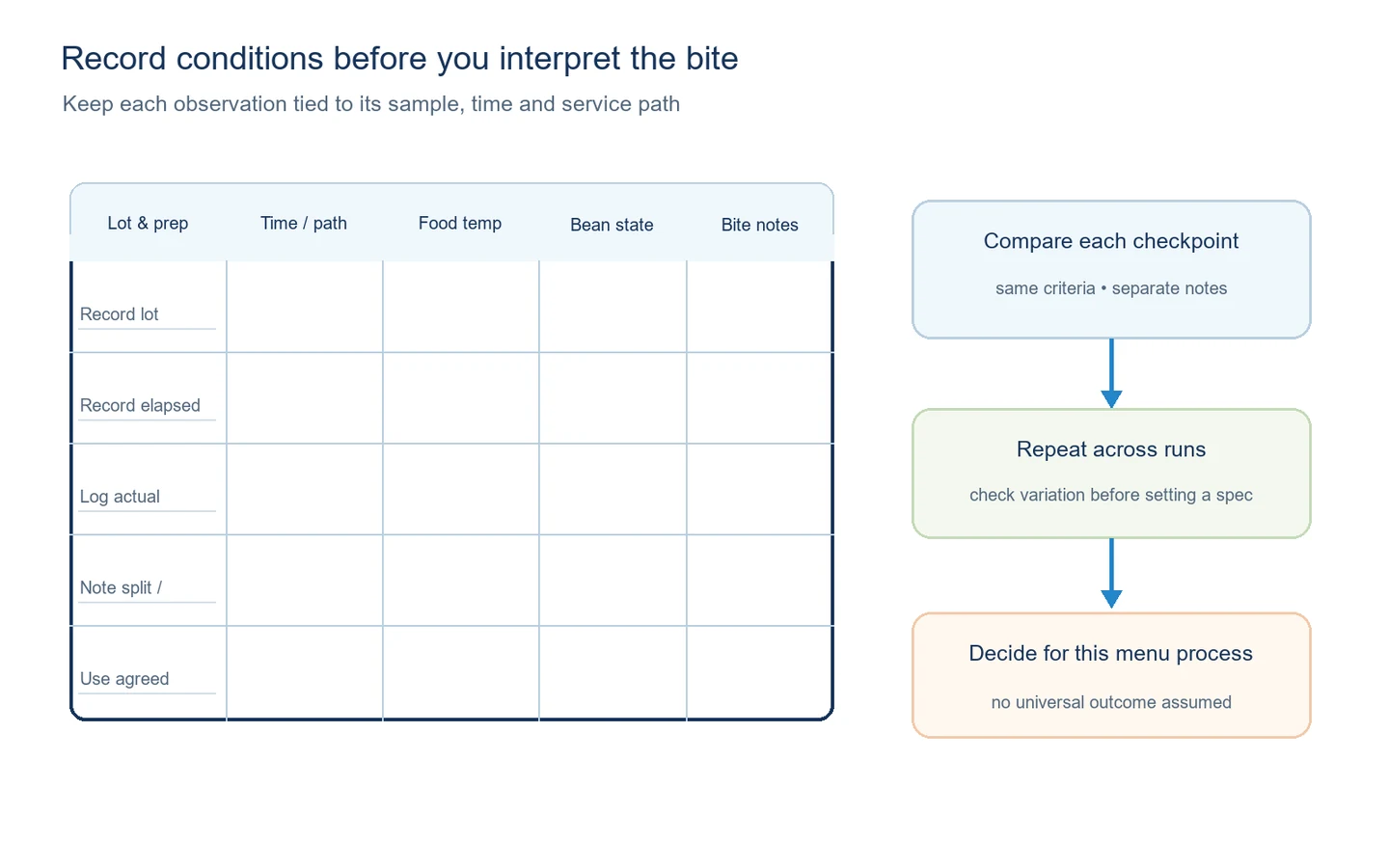
Blank conceptual decision framework for recording conditions and buyer acceptance criteria.
Look first for a repeatable difference at the intended serving point. If both routes meet the brief, the holding path may not be the deciding factor for that recipe and service window. If one route performs less well, check the preparation record, sample temperature, drain condition, sauce contact and portion depth before changing the product specification. A difference that appears only in one run may reflect process variation rather than a stable product effect.
Repeat the comparison across separate preparation runs and, where supply variation matters, more than one production lot. Keep the lot identity visible in the notes. Do not average away a problem that appears consistently in one lot, but do not call a one-off result a general characteristic of shelled edamame either. Record unusual split beans, excess surface water, dry edges, sauce pooling or uneven grain temperatures because these clues can explain why the bowl changes.
When scores disagree, look at the pattern before choosing a winner. If tasters consistently notice a difference but their preference splits, the two conditions may have distinct uses rather than one being universally better. If the instrumental reading changes while tasters report no meaningful difference in the finished recipe, keep the measurement as a diagnostic observation rather than elevating it to a menu requirement. Conversely, a recurring skin separation or mushy center may matter even when the average firmness score looks acceptable. Record the cue, its frequency, and the exact serving point where it occurred.
Also keep the service window realistic. A sample assessed immediately after preparation can answer a staging question, but it does not predict texture after the actual assembly and handoff sequence. If the menu includes transport, a display case, batch replenishment, or reheating, include that step only when it is part of the intended and approved process. Each added step should be logged because it changes the question the trial answers.
Use the smallest practical adjustment that matches the observed cause. You may change when the edamame is added, how thoroughly it is drained, whether it is dressed separately, the bowl assembly sequence or the holding container. Change one factor at a time for a diagnostic trial. Then confirm the preferred approach in the complete bowl and the real service equipment. If the recipe changes, recheck it: a different sauce, grain moisture or portion depth can change the result.
Set the acceptance rule with the people who own the product and service decision. A foodservice menu developer may prioritize bite at the last planned serving point. A prepared-meal team may care about texture after the full assembly, cooling, storage and regeneration sequence. The approved product use and final specification should name the condition that matters, rather than relying on a broad statement that the beans “hold well.”
What this comparison can and cannot establish
A well-controlled trial can show how a particular shelled-edamame lot performs in a defined grain-bowl recipe, under a recorded preparation and service process. It can help you decide whether the current handling steps meet your own texture brief, which variable deserves another check and what observations belong in a sample approval record.
It cannot establish a universal hot-versus-cold winner, predict every future lot, set a safe holding period on its own or prove that a different menu formula will perform the same way. The published texture research supports careful control of preparation and measurement conditions; it does not supply a result for your recipe. XMG’s product specification describes the supplied form and incoming quality requirements; it does not claim an unrecorded XMG bowl-holding test. Keep measured buyer results attached to the specific product, lot, recipe, method and conditions that produced them.
When you discuss a supply option with XMG, share the shelled form, intended bowl, preparation instructions, service path and the texture point you need to approve. We can review those requirements against the available edamame specification and coordinate a sample discussion. The sample must still be evaluated in your recipe and process before a final performance requirement is set.
Frozen Edamame
Review our frozen edamame range, product forms and specification options.
View Frozen Edamame →References
- [2] Virginia Cooperative Extension: Edamame in Virginia III — Handling and Processing from Harvest to Package
- [3] Miller et al. (2023), “Quantitative texture analysis comparison of three legumes,” Frontiers in Plant Science
- [4] Vieira et al. (2021), “Utilizing Consumer Perception of Edamame to Guide New Variety Development,” Frontiers in Sustainable Food Systems
- [1] FDA Food Code 2026↑
- XMG Food: IQF Frozen Edamame in Pods and Shelled Kernels
