


On this page
For a better bite, start with the finished dish, the form of bean in the pack, and its cooking directions. If you want a warm side with little free liquid, give the beans enough pan space for released water to leave. If you want a tender side, a moist-heat method followed by prompt draining may suit the dish. For a stew or sauced meal, that water may be part of the recipe. Neither a compulsory thaw nor a single minute count works for every pack, portion, pan, and target texture.
A cooked frozen bean can hold its shape without matching the snap of a fresh raw pod. Judge the bite at service, after the beans have completed the product’s required cooking and any sauce or holding step. A glossy pan at the end of cooking can become a wet plate several minutes later. Conversely, a soft bean is not necessarily a watery one. Keeping those observations separate helps you change the right part of the method.
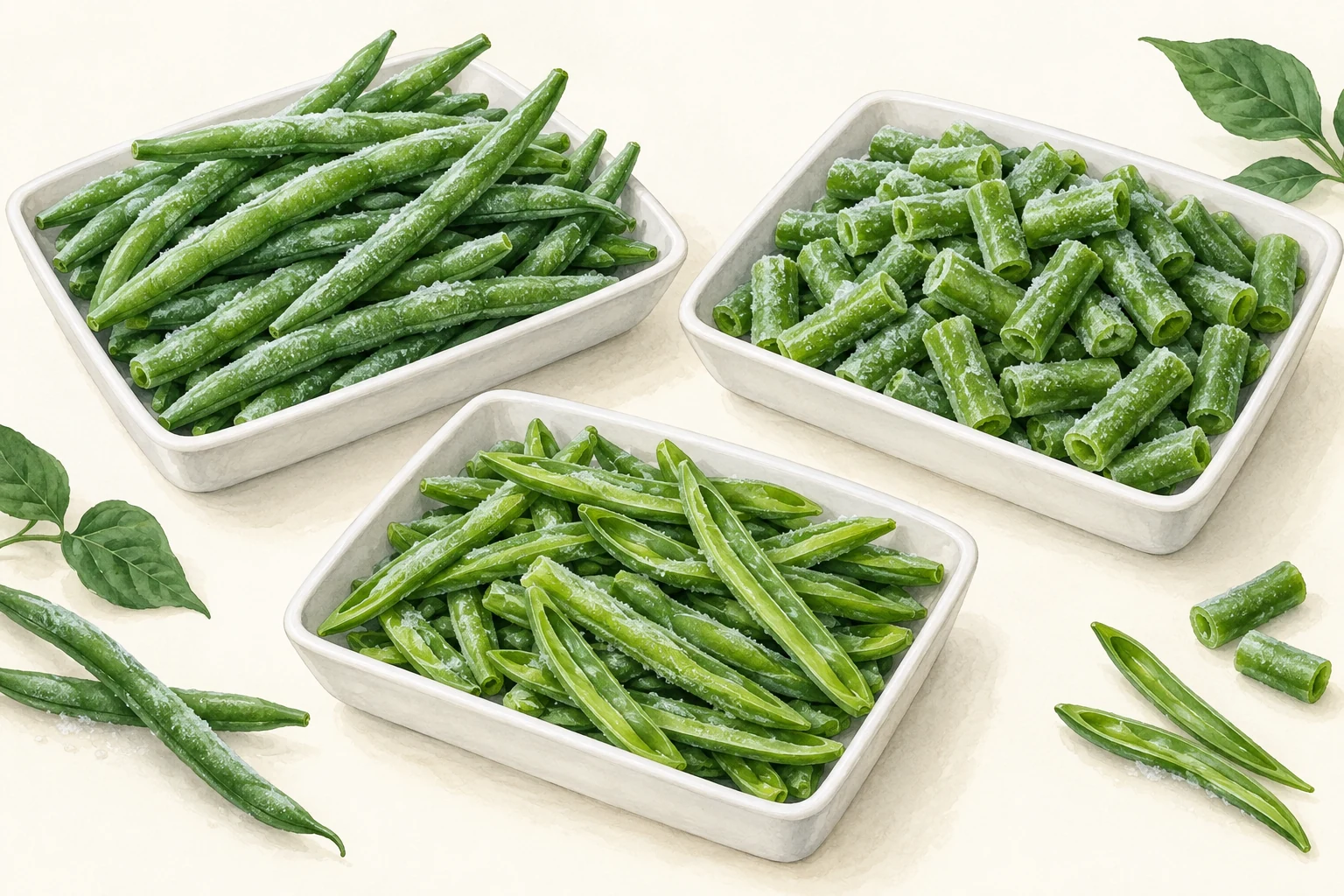
Whole, cross-cut and lengthwise-cut forms offer different shapes for a recipe.
Choose the bite before the method
Define what “better” means for this dish. A bean folded into a rice bowl may need to be tender enough to eat with the rest of the meal. A simple plated side may need separate pieces with no pool of liquid underneath. A soup can tolerate water that would be unwelcome in a pastry filling. Asking only for “crisp” or “not mushy” leaves the cook guessing about the actual endpoint.
We suggest describing the endpoint in visible, repeatable terms: intact pieces, an acceptable resistance when bitten, no standing water on a dry plate, and a sauce that still has the intended consistency at service. A prepared-meal developer might add the result after reheating and the intended holding interval.
Look at the preparation panel before you choose a route. Plain ready-to-cook beans, a seasoned side and a component of a prepared meal can have different directions. Follow the pack’s stated method, required heat and any stir or stand steps. The FDA’s guidance on ready-to-cook foods [1] explains why an appealing appearance is not proof that a product has received its required cooking. Texture adjustments should happen within a safe, supported preparation process.
Start with the actual bean form
Check whether the pack contains whole pods, short cross-cut pieces, or lengthwise-sliced beans. A “green bean” label alone does not tell you how the pieces will sit in the vessel or appear on the plate. Whole beans can make a clean side dish; shorter cuts are easier to distribute through a mixed dish; thin slices expose more cut surface. Those are geometry and use considerations, not a promise that one form will always cook faster or taste better.
Put a representative portion on a tray and note the visible mix of long pieces, short ends and fragments. A trial made from carefully chosen intact pods will not represent a serving that includes the full pack. The XMG guide to green-bean diameter and tough strings covers those incoming-product checks in detail. Here the question is what the supplied form does in your chosen preparation and final dish.
Piece size and load can change the cooking experience. Short pieces may be easier to stir evenly in a skillet, while whole pods may bridge across one another and create a thicker layer. A large frozen cluster may need to be separated as the product directions allow. Note the actual portion and vessel before attributing a poor result to the beans alone. If the last scoop from a bag contains a different mix of fragments from the first, compare representative portions rather than only the attractive pieces.
The Oregon State University Extension guide to freezing fruits and vegetables [2] describes several green-bean preparation forms. It is useful context for naming what you have, but home preservation instructions are not cooking directions for a commercial ready-to-cook pack. Keep the product’s own preparation information in charge of the final method.
Choose the route by the finished dish
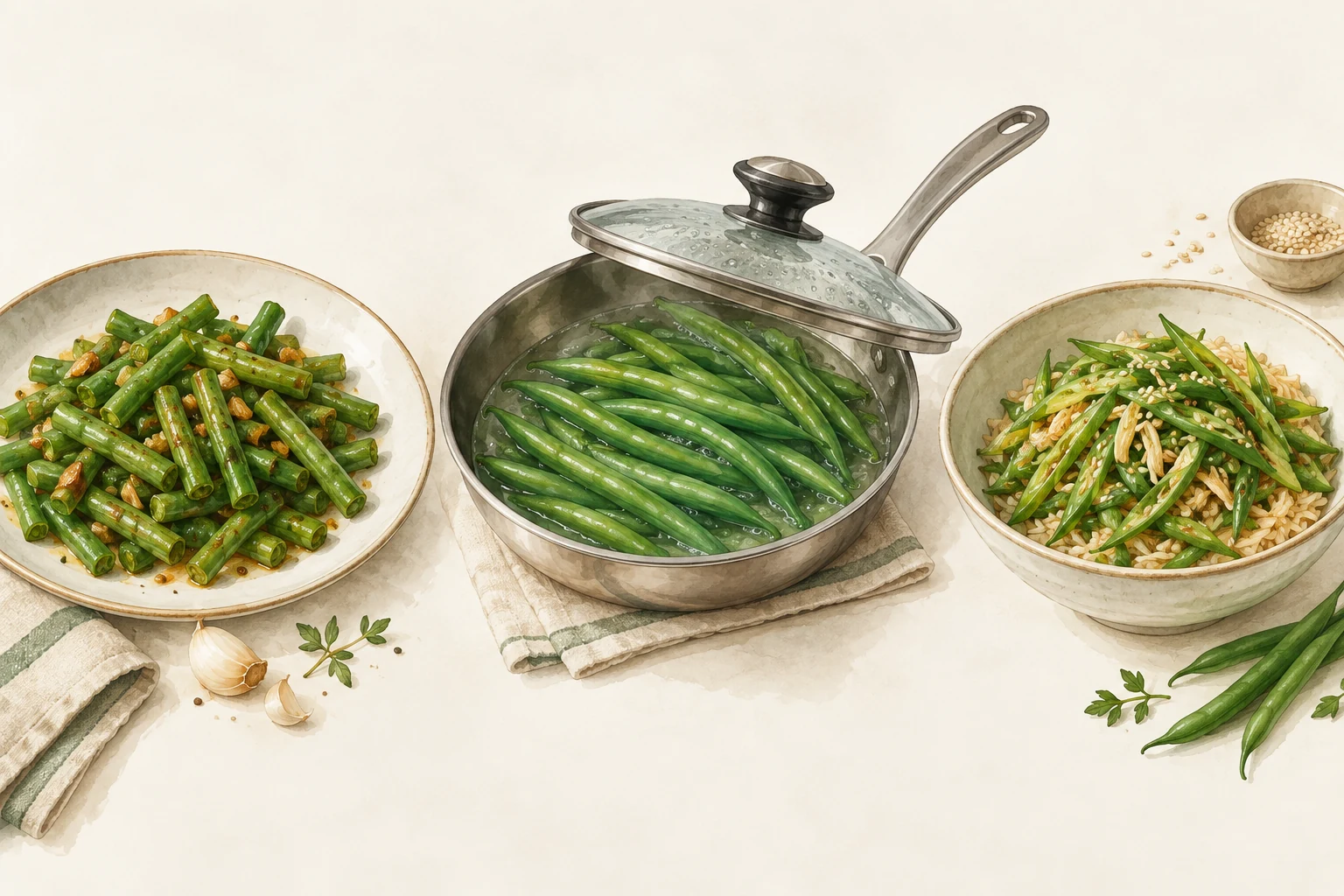
Set the target bite and moisture level from the finished dish.
The practical question is where moisture should go. Frozen beans bring ice and frozen plant tissue into a hot recipe. As they heat, water may appear on the pan surface, cling to the pods, or join a sauce. Managing that water helps the texture you perceive, but it does not reverse the tissue changes associated with freezing and cooking. Brown’s 1967 green-bean texture study investigated the effects of processing steps; it does not predict the bite of an untested commercial lot.
| Finished use | Useful first route to consider | What to check at service |
|---|---|---|
| Plain warm side with little free liquid | A supported shallow-pan method with manageable loading, or cook and drain as directed | Separate pieces, intended tenderness and no unwanted pool |
| Tender side with a softer bite | The pack’s supported moist-heat method, followed by draining if required | Evenly cooked pieces and no long wait in cooking water |
| Stir-fry or mixed bowl | A method compatible with the pack, then add sauce at the recipe’s intended point | Whether the bean stays distinct and the sauce remains balanced |
| Soup, stew or deliberately sauced dish | Direct addition when the product and recipe permit it | Cooking completion and final broth or sauce consistency |
| Low-liquid filling | Separate preparation and drainage when the recipe calls for it | Whether liquid appears later inside the finished filling |
This table is a route selector, not a set of universal cooking instructions. The same bean could suit two dishes by different methods, and a product with a specific preparation requirement may rule out a route entirely. If your main question is oven tray loading across frozen vegetables, see our separate roasting guide. For green beans, keep the finished bite and the bean form in view as you choose.
Thawing is a decision, not a ritual. A supported direct-from-frozen method may be convenient and work well for a sauce or a well-managed pan. Controlled thawing and draining can be useful when a recipe needs to measure or remove liquid before a final sauté. A Durham County Public Health frozen-green-bean recipe [3] demonstrates a thaw-and-drain route. It does not establish that all frozen beans must be thawed, or that its timing transfers to a different product and serving size. If you do thaw, use the handling method required for your food operation and the actual pack; do not leave the beans on a counter as an improvised drying step.
Use a skillet without trapping unnecessary water
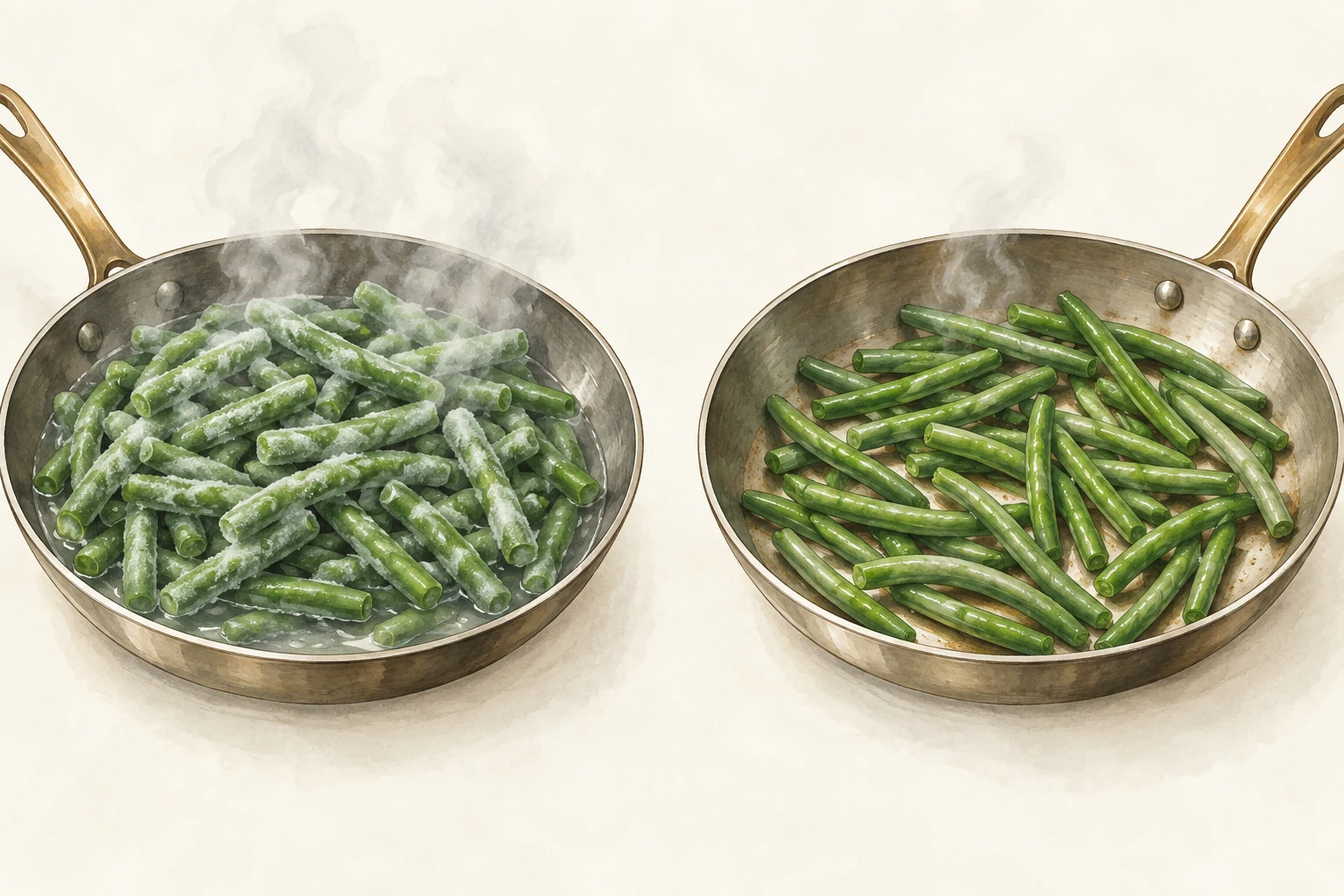
Pan load changes how much surface remains exposed as the beans heat.
For a pan side, choose an instruction or recipe that is suitable for the product. Start with a portion the skillet can hold in a reasonably shallow layer. If beans are piled high, the lower pieces can sit in liquid while the upper pieces steam, and you lose sight of what is happening at the pan surface. Two smaller batches may be easier to manage than a large mound. Record the mass and pan size if you are comparing methods for a menu.
Heating and reducing free liquid are separate jobs. A hot-looking pan does not mean every frozen piece has completed the required cooking. Equally, adding more oil does not remove water already released into the pan. Follow the needed heating step first, then assess whether an uncovered finish is appropriate and supported for the dish. Stir enough to expose the portion as the instructions require, while avoiding needless breakage of tender pieces.
Watch for three different sights. A thin film that quickly disappears can be normal during heating. A visible pool that remains under a crowded layer suggests the water has nowhere to go in that vessel at that load. A dry-looking pan followed by a wet plate points you toward sauce, garnish, condensation, or a holding step rather than the first minutes of cooking. These observations help locate a question; none, by itself, diagnoses the cause in the original frozen product.
If the recipe adds garlic, oil, seasoning or sauce, keep their amounts consistent when testing the bean method. A sauce can cover the pod surface and change perceived bite. Adding it early may be right for one dish and unhelpful for a plain side. Judge the complete dish after those ingredients are in place. Do not extend cooking simply to make a bean resemble a fresh raw pod; longer heating may soften it further while doing little for the sauce balance.
Use moist heat when tenderness is the goal
Moist heat is a deliberate choice when the desired result is tender beans rather than a browned surface. Follow the product’s saucepan, steaming, microwave or other supported directions, including its specified portion and completion steps. Prepare the draining or serving vessel in advance if liquid is meant to leave the dish. Leaving cooked beans in a hot pot of water is a different holding condition from draining them promptly.
A colander or drained insert can make this step easy to repeat. Let free liquid leave without squeezing or mashing the beans just to achieve a dry appearance. Then season or combine them as the recipe calls for. If a tender side is going straight to the plate, assess it promptly. If it will wait under a lid, assess a second portion after the real holding interval: condensed steam can collect even when the initial serving looked dry.
Moist heat can also serve a soup or stew, where the liquid is intentional. There, removing every trace of bean moisture is unnecessary. The useful checks are whether the beans receive the required cooking, whether their size and bite fit the rest of the recipe, and whether the final liquid has the planned concentration. A frozen ingredient added late to a thick sauce can cool and thin it; the recipe needs to account for that effect. Avoid calling a thinner sauce a defective bean without first measuring the recipe’s own additions and reduction.
Do not turn blanching before freezing into a ready-to-eat claim. [4] explains blanching as a quality preparation step, and the FDA distinguishes ready-to-cook foods from ready-to-eat ones. For a specific commercial product, the label and the food business’s cooking controls determine what to do. A bean that feels tender after partial heating still needs any required completion step.
Judge the result at service
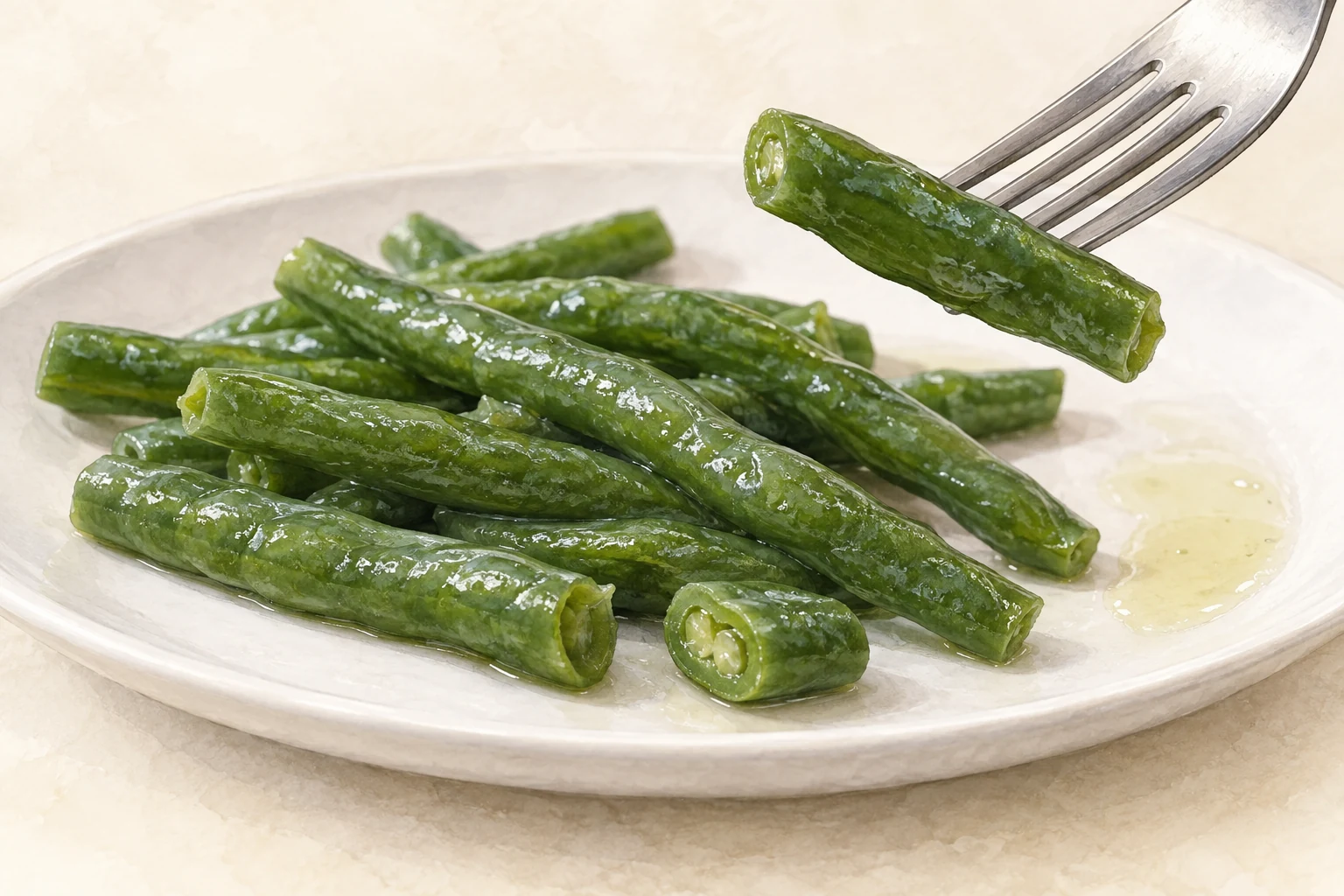
Look separately at intact pieces, cut interiors and free liquid on the plate.
Taste and appearance at the actual eating point. A bean may hold its shape but feel too soft for a particular menu, or feel acceptable while free water leaves a pool on the plate. Those are different adjustment paths. Note the bite of the pod wall, whether the centre is evenly heated, how easily pieces bend or break during normal handling, and whether cut pieces remain visually distinct. Then look under the serving portion for liquid.
If you are developing a plated side, compare a sample as it leaves the pan with another after the normal pass or delivery wait. Keep the same plate, cover and sauce. A lid or sealed takeaway pack can change visible condensation. If you are developing a stir-fry, assess the beans inside the complete sauce, not as a plain sample that never enters the final recipe. For a filling, assess the finished filling rather than only a drained bowl of beans before assembly.
The acceptance point should be realistic for frozen vegetables. Freezing and later cooking can change plant tissue, so demanding the sound and resistance of a fresh raw bean is a poor specification for many cooked dishes. “Tender but intact with no unwanted pool at service” is more actionable. It also gives a buyer and kitchen a shared question to test, instead of an adjective that each person interprets differently.
When a serving misses the target, change one controllable part of the route. If the pan has a pool, reduce the load or use a supported draining step. If the beans are dry but too soft, review the required cooking method, piece form and holding time without cutting short food-safety requirements. If the sauce thins only after assembly, change the integration step or sauce formulation. This is diagnosis through the dish, not a claim that any one variable will fix every pack.
Compare a small sample fairly
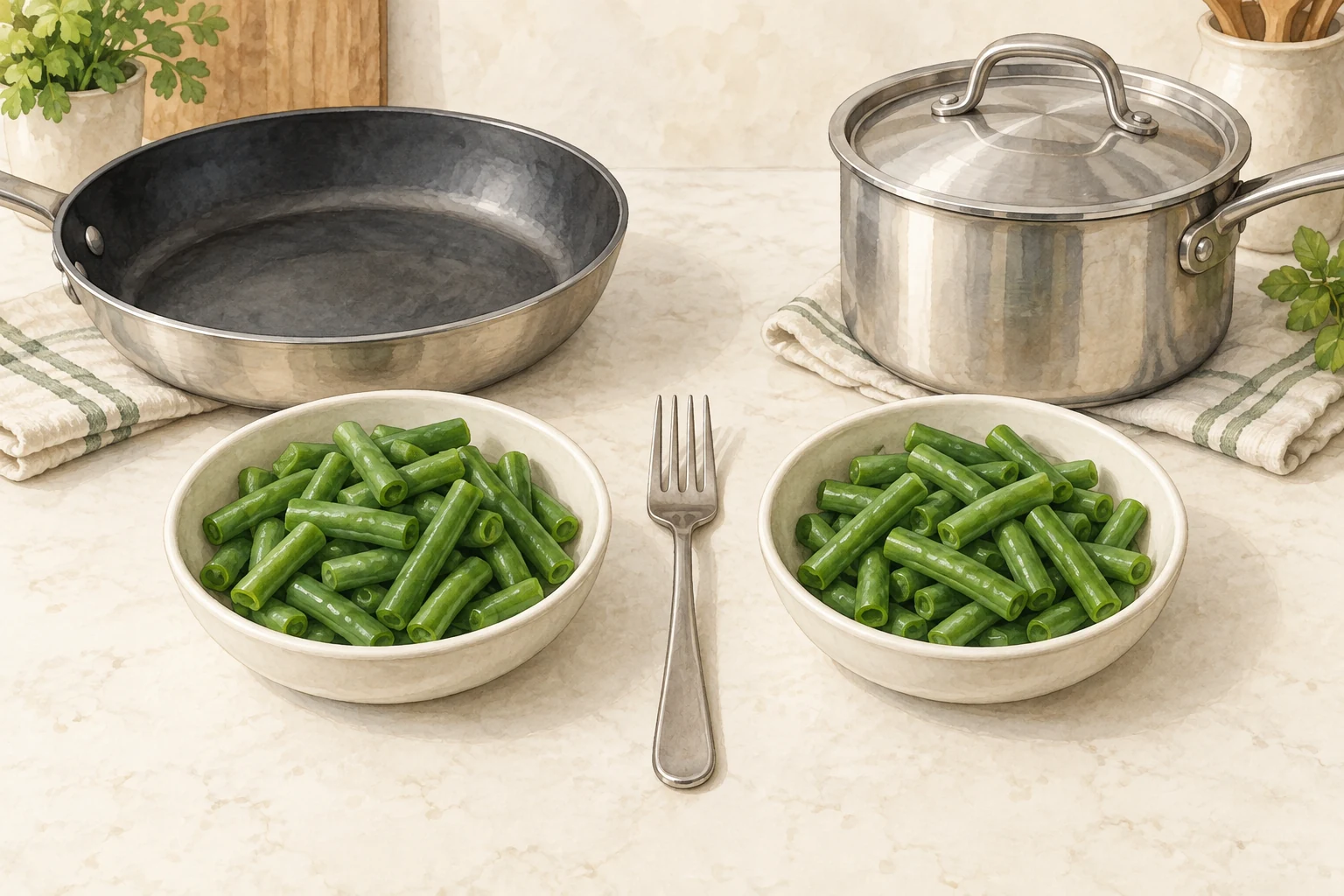
Use comparable portions and judge both routes at the same service point.
A useful kitchen comparison begins with one defined question, such as: “For this frozen cut-bean pack, which permitted route gives an acceptable bite and sauce consistency at our service time?” Use the same product and lot, comparable masses, the actual recipe, and the same endpoint. Record the vessel, load, starting state, sauce quantity, required preparation steps and holding interval. Change only the route or another single practical variable between samples.
For example, if both approaches are allowed, compare a supported direct-from-frozen pan route with a controlled thaw-and-drain preparation followed by the same final cooking method. Alternatively, compare two permitted pan loads while keeping the cooking sequence consistent. Do not describe the trial as “dry versus wet” until you have observed what happens. A small side-by-side trial can reveal a useful difference for your equipment and dish, but it cannot establish a universal winning method.
Check each sample’s required cooking completion before judging texture. At service, note intact-piece share, bite, visible free liquid, sauce thickness and any breakage during normal transfer. If the meal is held or reheated, repeat the observations at that real endpoint. Keep an image of the finished plate if it helps the team compare appearance, but pair it with written conditions. A photograph alone cannot tell you whether a sample was fully cooked or which variable changed.
If the small trial looks promising, repeat it at the intended service load. A skillet that keeps a test portion in one layer may be crowded during a lunch rush. Where the ingredient itself needs adjustment, discuss the available whole or cut form, piece range and packing with the supplier, then trial the confirmed sample in the actual recipe. Your own acceptance decision should rest on the dish served under your normal conditions.
Questions about frozen green-bean cooking
Should frozen green beans always be thawed before cooking?
No. Use the method supported by the actual product and suited to the dish. Direct-from-frozen cooking can fit many recipes. Controlled thawing and draining may help a recipe that needs to remove liquid before a final cook. Compare the finished result under your own conditions rather than applying one thaw rule to every pack.
Can frozen green beans stay firm in a stir-fry?
They can retain a useful, distinct bite, but a cooked frozen bean should not be promised the snap of a fresh raw pod. Form, pan load, cooking sequence, sauce and service wait all matter. Define the desired bite and test the supplied form in the completed stir-fry.
Why are my cooked green beans watery?
First locate the water: in a crowded pan, in the serving vessel, or in the sauce after holding. Those situations call for different changes. Check the pack’s method, actual load, drainage and recipe liquid before drawing a conclusion about the product. If the bean is soft without standing liquid, treat texture as a separate issue.
How long should frozen green beans cook?
Follow the directions for the specific product and method. Whole and cut forms, portion mass and equipment differ, and a general web time cannot replace the pack’s required cooking. For a kitchen trial, record the actual conditions and judge the bite only after required cooking is complete.
Browse our Food Knowledge articles, return to the IQF Frozen Green Beans page, or explore the frozen vegetable range.
Match the bean form to your kitchen trial
For a foodservice or prepared-meal brief, we can review the available whole or cut frozen green-bean forms against your dish and equipment. Define the form, packing, volume and destination first, then trial a confirmed sample under your own preparation conditions.
We coordinate product specification and order details with long-term partner factories. The finished-bite decision remains yours to check in the actual recipe and service setting.
Frozen Green Beans
Review our frozen green beans range, product forms and specification options.
View Frozen Green Beans →References and further reading
- Brown, M. S. Texture of frozen vegetables: Effect of freezing rate on green beans. Journal of the Science of Food and Agriculture 18, 77–81 (1967). DOI: 10.1002/jsfa.2740180209. The study provides processing context rather than a result for a current commercial pack.
- Durham County Public Health. [3] Sautéed green beans↑, an example using thawing and draining before the final sauté.
- Oregon State University Extension. [2] Freezing Fruits and Vegetables↑, for green-bean forms and preservation background.
- University of Minnesota Extension. [4] Preserving food at home: Freezing↑, for blanching and freezing background.
- US Food and Drug Administration. [1] Ready-to-cook food safety guidance↑.
