


On this page
Frozen broccoli is easiest to manage when you decide where its released water should go before you choose a cooking method. For a browned plated side, use a supported dry-heat method with enough space for moisture to escape. For tender florets, cook as the pack directs and drain promptly. For a soup, the liquid can be part of the dish. A quiche or another filling may need a separately cooked and drained ingredient. None of these routes turns frozen broccoli into fresh, raw broccoli, and one universal minute count cannot fit every floret size, load and appliance.
Start with the directions for the actual product in your hand. A plain, ready-to-cook floret pack may require a different method from a seasoned, sauced or oven-ready product. Follow its cooking instructions all the way through; colour, a browned edge or a taste of one small piece cannot replace them. Then judge the finished dish for free liquid and texture. A plate that looks dry when it leaves the pan may be wet after sauce, dressing or a service wait.

Original unbranded frozen-broccoli photograph. It shows the starting form, not a cooked result or a measured water-release test.
Choose the route by the finished dish

Conceptual guide: choose whether released water should evaporate, drain or remain in the recipe. It is not a record of a kitchen test.
The useful question is not simply “Should I thaw the broccoli?” It is “What should happen to the water when the broccoli reaches the recipe?” The same floret can be acceptable in a soup and disappointing on a dry plate. Choose a route that fits the finished use, then check that the product’s instructions and your equipment support it.
| Finished use | Where released water belongs | First preparation question |
|---|---|---|
| Browned plated side | Leave the uncovered cooking surface; no standing pool on the plate | Can the specified portion be spread with space on a suitable tray or in a suitable pan? |
| Tender side for prompt service | Drain away after the required heating | Can the cooked florets be drained and served without a long wet wait? |
| Quiche, pizza topping or another low-liquid filling | Be removed before the filling is assembled, where the recipe requires it | Does this recipe call for a separately prepared and drained broccoli ingredient? |
| Soup, curry or a deliberately sauced dish | Join the dish, subject to the recipe’s intended consistency | Is the extra liquid already allowed for in the sauce or broth? |
This is a route map, not a claim that one method is best for all packs. The XMG guide to roasting frozen vegetables goes into tray loading and oven troubleshooting. Here the focus is broccoli across several dishes, especially the decision to evaporate, drain or retain liquid. If you are developing a menu, write down the result you need: for example, separate intact florets at the pass, or chopped broccoli that stays within a filling. “Not watery” by itself does not identify an acceptance point.
Start with the actual product and portion

Original unbranded frozen-broccoli photograph. Visible piece forms can guide a portion description; cooking performance has not been measured here.
Read the preparation panel before choosing a pan. Confirm whether you have plain florets, cut broccoli, a blend or a product with sauce or coating. Look at the permitted methods, quantity, appliance mode, any instruction to stir or stand, and whether the product is to be cooked from frozen. The front of a pack may show a serving idea; the preparation panel carries the conditions for that particular food.
Next, look at the pieces in the portion you intend to cook. Large stems, compact crowns, tiny broken fragments and loose small pieces do not present the same geometry to heat. This observation helps you choose a fair trial and check the largest relevant pieces. It does not establish that a lot is defective. Our broccoli floret-size and stem-ratio guide explains how buyers define those forms for a specification; this article concerns what happens once that form enters a recipe.
A partly emptied bag can also produce a very different trial from a new one if the last portion contains more small pieces. Take the intended recipe mass and note what was included. Do not select only the most attractive crowns for a kitchen comparison, then expect the same appearance from a complete production portion. If loose ice or a solid cluster changes how the pack can be portioned, record it separately instead of calling every later liquid problem a cooking error.
Portion size matters because the same pan has a finite exposed surface. Doubling the broccoli while leaving the vessel unchanged changes the load. A method that allowed water to leave a small portion may leave a larger portion sitting in liquid. In professional kitchens, record the broccoli mass, vessel and batch size before concluding that a change of oven setting solved the issue.
Use dry heat when browned edges are the goal
For an oven-roasted side, begin with a plain product whose instructions or supported recipe allow that method. Preheat as directed, use a suitable shallow tray, and spread the specified portion so pieces have space rather than forming a mound. Visible gaps give released water an opportunity to leave the surface. A deep dish with overlapping florets creates a different environment, even when the oven display reads the same temperature.
Do not treat a dark crown as proof that a thick stem or the whole portion has completed its required cooking. Check the actual product directions and the largest relevant pieces. Likewise, extending the roast simply to dry a crowded tray may darken small tips while larger pieces change little. First correct the load or choose a supported method for that quantity. Follow the tray, liner and appliance makers’ handling limits if preheating cookware.
An air fryer is a different appliance with its own load and directions. Its circulating air can suit a small portion, but filling the basket to the rim can remove the advantage of exposed surfaces. If the pack gives no supported air-fryer method, do not convert an oven time by guesswork. Seek a suitable product recipe or use the stated preparation route.
Dry heat can reduce visible free water; it cannot guarantee the snap of fresh raw broccoli. Frozen plant tissue may be softer after cooking, and a wet finishing sauce can change the served surface again. Finish the required cooking first, then add optional liquid ingredients according to the recipe and assess the result at the point of eating. The detailed tray decisions belong in our separate roasting guide.
Use moist heat deliberately for a tender side
Steam or a brief saucepan method may be exactly right when the goal is a tender broccoli side rather than browned edges. Here the cooking water is part of the method, but it need not remain in the serving dish. [1] gives one frozen-broccoli saucepan example that ends with prompt draining. Its example does not set the correct amount of water or time for every commercial pack.
Set up the draining step before the broccoli is ready. A pot that is removed from heat but left full of hot water continues to leave the florets in liquid. A colander or an appropriate drained serving vessel makes that difference visible. Let excess water leave without pressing or crushing the crowns merely to create a dry appearance. Then season and serve under the intended conditions.
Steaming is not automatically a no-water result. Moisture can cling to crowns or collect when a large batch is moved into a deep covered pan. If the florets will later be mixed with sauce, decide whether the sauce recipe expects that retained moisture. If the broccoli is a stand-alone side, note the interval between draining and plating. A holding pan with a lid can collect condensation, and a longer hold can change what guests receive even when the first plate looked good.
Use the product’s required cook, stir and stand steps, especially for microwave preparation. The FDA’s ready-to-cook guidance [2] explains that the centre must receive the required cooking and that partial processing or a normal-looking exterior does not prove safety. Texture observations help improve a recipe; they do not authorize shortening a required cooking step.
In a skillet, separate heating from reducing liquid
A skillet can serve a quick hot dish, but it is easy to confuse a hot pan with an adequately heated piece of broccoli. A frozen floret may present a cold thick stem while the crown touches a hot surface. Choose a recipe or product instruction that accounts for the frozen starting state. When a covered heating step is called for, treat it as a way to heat the portion, then assess whether the following uncovered step allows the free liquid to reduce. Those are two different jobs.
Work with the batch the pan can handle. A thin layer gives the cook a view of liquid appearing and leaving. If a mound of broccoli makes that impossible, cook smaller batches or choose another supported method. Do not keep adding oil to a pool of released water and assume the problem is solved. Oil may affect coating and flavour, but it does not remove the liquid already present.
Add a wet sauce at the point the recipe needs it. In a stir-fry style dish, sauce placed in the pan before the broccoli has heated may make it hard to tell which liquid came from the ingredient and which came from the recipe. That does not make an early sauce addition wrong for every dish. It means the final sauce thickness must be evaluated with the broccoli actually included. For a glossy sauced dish, a little liquid may be welcome; for an uncovered plated side, it may not be.
Some cooks prefer fresh broccoli for a very crisp stir-fry because a frozen floret can soften as it heats. That is a legitimate recipe choice, not a reason to promise that higher heat will make every frozen lot fresh-crisp. Decide what texture the menu requires, then test the offered product in that process rather than describing “stir-fry suitable” from a pack photograph.
For a filling, decide whether broccoli needs drainage first
Quiche, pizza, frittata and pastry fillings can be sensitive to liquid released after assembly. A frozen portion placed directly into a soup has plenty of liquid around it by design; the same amount placed inside a dough or egg filling may change the finished structure. Consider what the recipe can absorb before deciding whether the broccoli needs separate preparation.
For a recipe that calls for prepared broccoli, follow the product’s cooking requirements and the recipe’s sequence, then drain before assembly if that is the specified route. A controlled thaw can help a developer measure and remove liquid before adding an ingredient to a low-moisture filling. It is not automatically necessary for a soup, curry or supported cook-from-frozen roast. Avoid leaving food at room temperature as an improvised drying step; apply the food business’s handling controls and the product directions.
Write down whether the recipe uses the drained broccoli alone or includes its released liquid. Otherwise a comparison between two formats can be misleading: one sample may be assessed after its liquid is discarded while another is measured with liquid still in the dish. If the broccoli is chopped after heating, record whether pieces break naturally during preparation or are deliberately cut. That changes the visible finished form and how moisture spreads through the filling.
Diagnose the watery result you actually see
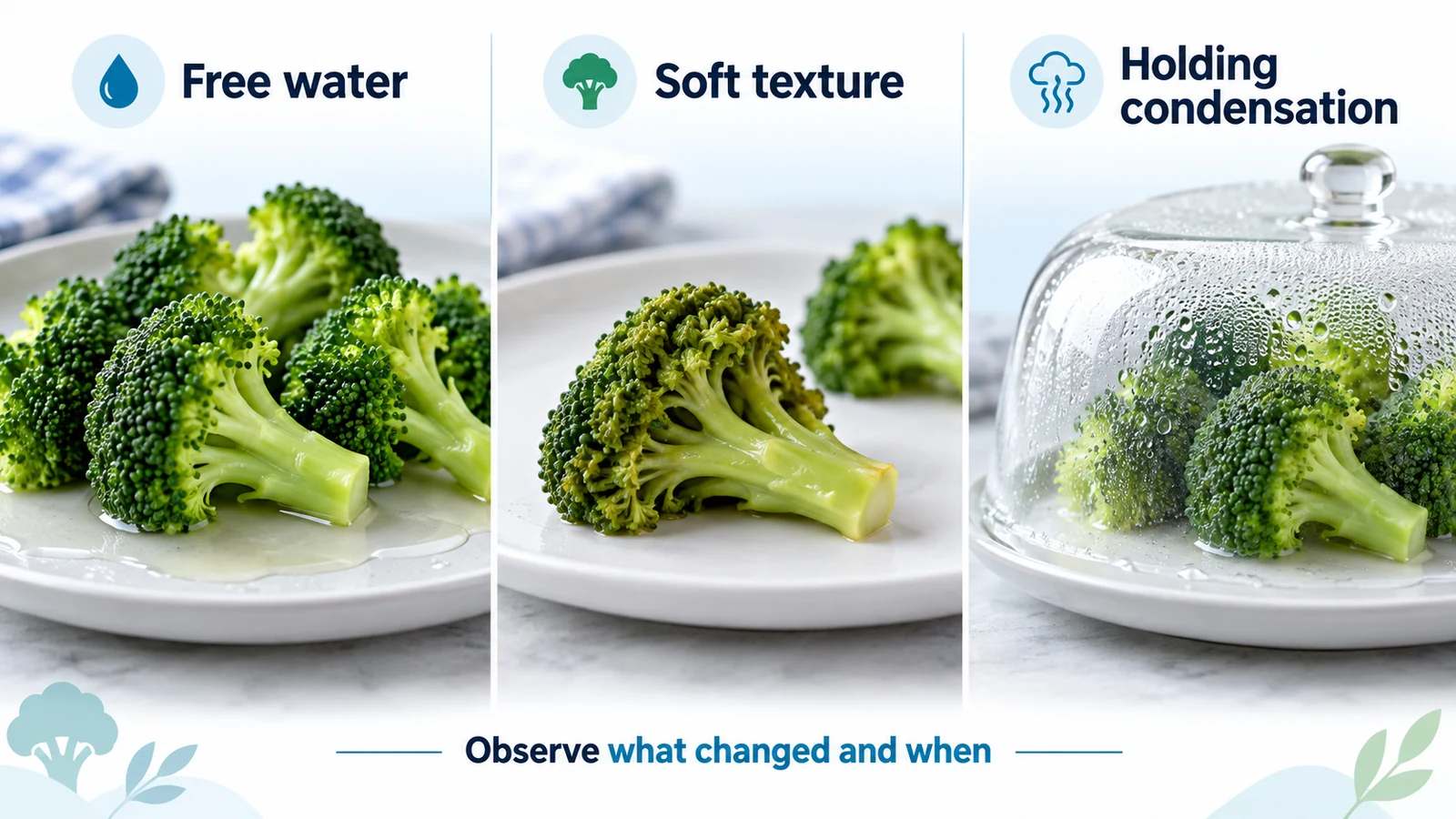
Conceptual comparison of three different observations. It does not identify a cause for any real product or batch.
“Watery florets” can name several different results. First identify where the liquid appears and when it appears. If there is a pool on the roasting tray, review load, arrangement and optional sauce. If a steamed batch is wet in the serving pan, review drainage and holding. If a filling becomes wet after baking, review how the ingredient was prepared and incorporated. A soft crown with no standing liquid is mainly a texture complaint, not the same as a puddle.
Freezing can change water retention in vegetable tissue. A primary study that included broccoli [3] compared ice-crystal forms and drip after controlled treatments. It supports the limited point that freezing and thawing conditions can affect drip and tissue structure. It does not tell us the amount of water your XMG, supermarket or restaurant pack will release, nor does it show that one wet plate identifies a particular manufacturing fault.
Look at the result at two moments: immediately after cooking and at actual service. A plated side may receive lemon juice, a sauce or condensation from a covered holding vessel. The food can also soften as it waits. Keep those observations separate, because reducing the tray load will not remove liquid added later at the pass, and draining will not necessarily restore tissue that is already soft.
If the same recipe behaves differently between deliveries, compare the product form, lot identity, portion and method before assigning a cause. Fragment share, crown and stem size, pack condition, starting temperature, batch load and the time to service are all worth recording. A broccoli product description can help a professional buyer start a discussion about the form offered; a photograph or product name alone does not establish its cooking performance.
Run a small controlled kitchen comparison
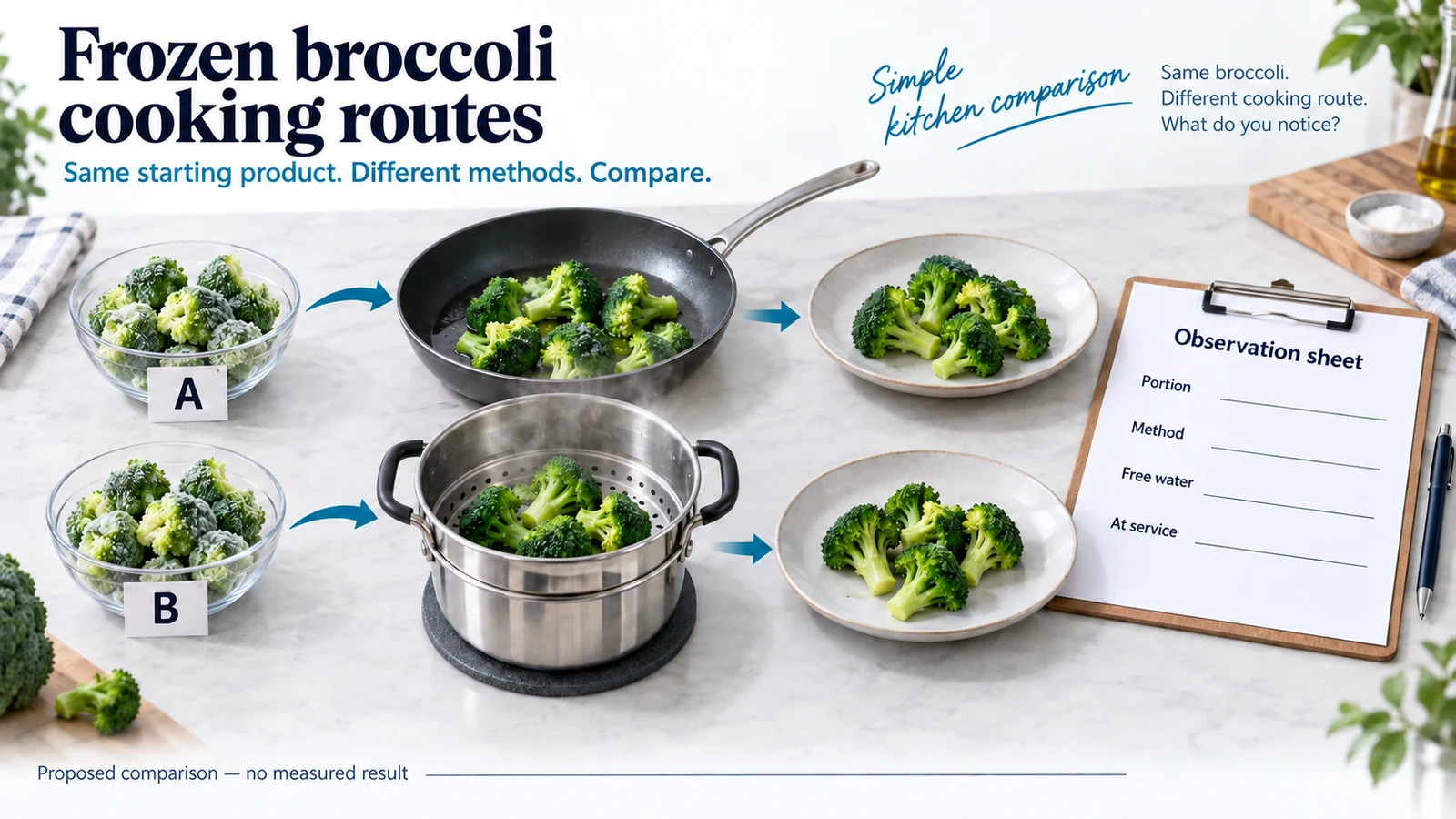
Proposed comparison only: the observation sheet is blank and no XMG cooking result is represented.
For foodservice or prepared-meal development, a useful trial begins with one question: “At our stated service point, which supported preparation leaves an acceptable amount of free liquid and an acceptable floret texture?” Choose a defined product and lot, weigh comparable portions, and record whether the sample contains mostly intact florets or many fragments. Use a method allowed by the product and suitable for the recipe. Then change one practical variable at a time.
For example, compare two supported batch loads in the same vessel, or compare the recipe’s drained preparation with its direct-add route if both are permitted. Keep the starting state, recipe mass, appliance, vessel, sauce amount and observation point explicit. Do not write down a preferred result before the trial. Check the complete cooking requirement for every portion, then note visible free liquid, crown and stem texture, breakage, sauce consistency and the result at service. A simple labelled photograph of the finished dish can support the notes, but should not replace them.
If a change helps a small batch, repeat it at the intended production load before calling it a menu standard. A tray that works for a test portion may be crowded when a full service order arrives. Record a mismatch as a process or product-development question and decide whether to adjust the method, the form or the recipe. This is a proposed comparison method; we have no XMG broccoli kitchen measurements or customer outcome to report here.
Match broccoli form to a professional menu
When a kitchen needs repeatable broccoli portions, define the form as well as the recipe. An intact floret side, chopped filling and blended soup can use different crown, stem and fragment mixes. We can discuss the available IQF frozen broccoli forms against the intended dish, pack format and destination, then confirm what sample and specification information applies to that inquiry. XMG Food coordinates supply with partner factories; the cooking decision remains yours to validate in your equipment and recipe.
Questions about cooking frozen broccoli
Should I always cook it from frozen?
No universal rule fits every recipe or pack. Many supported methods begin from frozen, while a low-liquid filling may require a separately prepared and drained ingredient. Follow the actual product directions and the recipe’s safe handling requirements.
Will thawing first remove the watery problem?
Thawing can make released liquid available to drain before assembly, but it also changes the ingredient’s starting texture and handling requirements. It will not repair a crowded roasting tray, an over-wet sauce or an unsuitable holding step. Test it only where the recipe and product allow it.
Is frozen broccoli ready to eat because it was blanched?
Do not infer that from the word “blanched” or from a bright colour. Frozen vegetables may be partially processed for quality; ready-to-cook products still require their stated preparation. The FDA [2] advises following the package cooking instructions throughout the food.
Browse more Food Knowledge articles or return to our IQF Frozen Broccoli product page for available forms and order details.
Frozen Broccoli
Review our frozen broccoli range, product forms and specification options.
View Frozen Broccoli →References and further reading
- Purdue Extension. [1] Broccoli factsheet↑, including one frozen-broccoli saucepan and draining example.
- Sawada and Fukuda. [3] Effects of the Shape of Intracellular Ice Crystals in Frozen Vegetables on Drip Loss after Thawing↑, 2018. Experimental scope includes broccoli; it is not an XMG lot test.
- US Food and Drug Administration. [2] Ready-to-cook food safety guidance↑.
- University of Minnesota Extension. [4] Preserving food at home: Freezing, for vegetable blanching and handling background.
